

Jiajin Bio: Pioneering Extrahepatic Oligonucleotide Delivery with a Differentiated AOC Platform in China

ChainGen Bio
Nucleic Acid-Conjugated Drug Developer
For small nucleic acid drugs, stability and delivery issues have long been bottlenecks hindering their development.
Nowadays, small nucleic acid drugs have achieved high stability through chemical modifications, and efficient liver-targeted delivery has been realized via conjugation technologies such as GalNAc. However, extrahepatic targeted delivery remains a challenging problem yet to be solved. With the resolution of this issue and the expansion of indications, the small nucleic acid drug sector is poised for a true breakthrough.
Currently, numerous overseas companies are focusing on the development of non-liver-targeted delivery technologies. ChainGen Bio, a newly established biotech company in China, stands out in this field.ChainGen Bio is among the first companies in China dedicated to the research and development of oligonucleotide conjugate drugs, focusing on achieving extrahepatic delivery of small nucleic acids through conjugation strategies. The company will prioritize therapeutic areas such as rare diseases, oncology, and central nervous system disorders to drive innovation in its platform technology.Recently, VCBeat New Medicine spoke with Wu Hao, Founder and CEO of ChainGen Bio, about the company’s current development status.
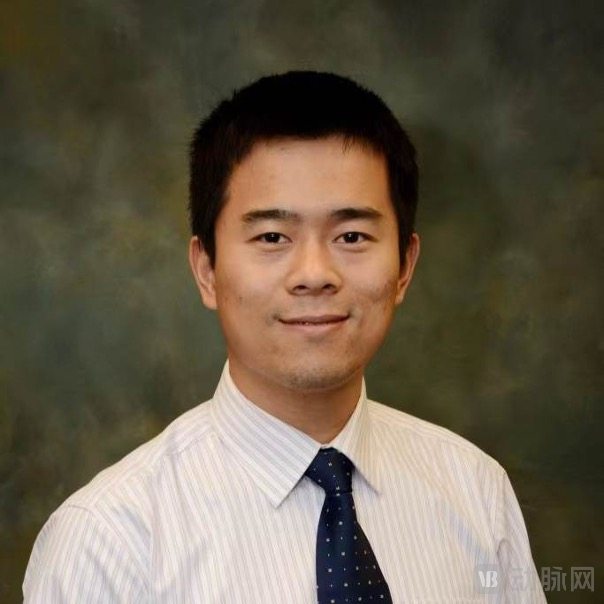
Wu Hao, Founder and CEO of ChainGen Biopharma Ltd.
He earned his bachelor’s degree from Tsinghua University and his Ph.D. from the College of Pharmacy at the University of Tennessee. He has previously held positions at NGM, Novo Nordisk, WuXi Biologics, Deerfield Management, and Tonghe Yucheng, bringing extensive experience in drug research and development as well as industrialization.
From ADC to AOC: Exploring the Differentiated ChainGen Bio
“IP, innovative ideas, and a like-minded team are the core of founding a biotech company.” This is the profound insight Wu Hao developed through his past work experience. The establishment of ChainGen Bio is the result born from this philosophy.
In 2013, after earning his Ph.D. in Pharmacy from the University of Tennessee, Wu Hao embarked on a journey of new drug development that spanned more than five years. He first joined NGM Biopharmaceuticals, a U.S.-based biopharmaceutical company, to engage in drug R&D. At the time, NGM was a small biotech firm with only 30 employees, yet it possessed unique innovative capabilities in drug development. It became the first company to identify the receptors for GDF15 and GLP-1, and developed multiple product pipelines targeting metabolic diseases, oncology, and ophthalmic conditions. During his tenure, Wu Hao was deeply influenced by NGM’s culture of innovation, which shaped his perspective on new drug development: “Biotech companies must pursue original or significantly differentiated technological innovations to achieve breakthroughs.” After leaving NGM, Wu Hao joined the Novo Nordisk Research Center China, where he continued his work in drug discovery.
After accumulating over five years of experience in new drug development, Wu Hao joined WuXi Biologics in 2016 to lead the development of lyophilized formulations for antibody-drug conjugates (ADCs). At that time, the ADC sector was just emerging in China, presenting both an opportunity and a challenge for WuXi Biologics, which specialized in monoclonal antibody drugs. Due to their poor stability, ADCs are unsuitable for formulation as injectable solutions, necessitating the establishment of a lyophilization technology platform. As one of the few PhDs in pharmaceutics within the company, and leveraging the advanced lyophilization process training system at the University of Tennessee, Wu Hao became the project leader for ADC lyophilized formulation development at WuXi Biologics.
It was at WuXi Biologics that Wu Hao first conceived the idea of starting his own business. However, he realized that having always operated within a mature pharmaceutical system, he had accumulated substantial expertise in drug development but lacked experience in building a company from the ground up. Consequently, he decided to work at an investment firm, hoping it would benefit his future entrepreneurial endeavors.
After leaving WuXi Biologics, Wu Hao successively joined the renowned investment firms Deerfield Management and Tonghe Yucheng. At Deerfield, he participated in the creation and incubation of numerous projects through joint ventures established with major U.S. universities. There, Wu Hao witnessed the translation of many scientific achievements into commercial applications and gained insight into the agility inherent in entrepreneurial ventures. He once managed a project that completed company registration, early-stage product concept validation, and intellectual property (IP) filings, even before the project team had any full-time staff. “That experience taught me that the core of a biotech company lies in its innovative ideas and IP,” Wu Hao recalled.
In addition to accumulating entrepreneurial experience, Wu Hao’s greatest aspiration is to achieve technological innovation.During the pioneering phase of WuXi Biologics’ lyophilized formulation technology platform, he continually pondered a question: besides delivering toxins, what else can antibodies deliver?At that time, small nucleic acid drugs were emerging and gaining significant traction within China’s pharmaceutical industry; however, the sector faced challenges in innovating delivery technologies, particularly failing to achieve breakthroughs in non-hepatic targeted delivery. This situation aligned with Wu Hao’s perspective, leading him to explore whether antibody–oligonucleotide conjugates (AOCs) could enable non-hepatic targeted delivery of small nucleic acid therapeutics.
Evidence has shown that AOC drugs represent a promising blue-ocean market.Currently, there are four major companies globally developing antibody-oligonucleotide conjugates (AOCs): Avidity Biosciences, Dyne Therapeutics, Tallc, and Denali. Among them, Avidity’s product AOC1001 has been approved for clinical trials. In China, however, the development of this technology remains a blank slate. Leveraging the experience and technical know-how accumulated in antibody-drug conjugate (ADC) development, Wu Hao aims to make significant strides in this field with his team.
In early 2022, Wu Hao gathered like-minded partners, including alumni from Tsinghua University and the University of Tennessee, as well as former colleagues from WuXi Biologics, to jointly establish ChainGen Bio. They aim to leverage antibodies as a starting point to achieve extrahepatic delivery of small nucleic acids via conjugation technologies, beginning with rare diseases to provide patients with more treatment options and opportunities.
Site-Specific Conjugation Combined with Click Chemistry: Building a Non-Hepatic Targeted Delivery Technology Platform
Compared with the relatively mature toxin delivery technology, antibody-nucleic acid conjugation technology is more complex and faces more challenges in design and process development.
Drug design strategy and proof of concept were the biggest challenges ChainGen Bio encountered in the first few months after its establishment.
Wu Hao introduced,The development of AOC drugs faces three major challenges.In molecular design,AOCs possess characteristics such as high molecular weight, hydrophilicity, and negative charge, which can affect plasma half-life and antibody-antigen binding, thereby hindering drug developability and stability.In process synthesis,Domestic CRO companies have not undertaken similar projects, making it difficult to explore and optimize manufacturing processes; furthermore, the necessity of importing many raw materials from abroad increases the complexity of drug process development.In terms of proof of concept,Animal models for rare diseases are scarce, and the mutated genes in humans may differ from those in animals. Consequently, companies must forge their own path when conducting pharmacodynamic evaluations.
Despite the numerous challenges in AOC drug development, ChainGen Bio has not retreated but has instead carved out a differentiated path.
In terms of delivery, ChainGen Bio focuses on non-liver-targeted delivery, specializing in rare diseases affecting the muscles and nervous system.In building its antibody-nucleic acid conjugation technology platform, ChainGen Bio incorporates site-specific conjugation methods used in ADC drug design and integrates click chemistry technology.This differs from the random conjugation approach employed by its benchmark competitor, Avidity. Site-specific conjugation facilitates the development of Antibody-Oligonucleotide Conjugate (AOC) molecules with higher purity, greater yield, enhanced affinity, faster onset of action, and superior efficacy. Centered on small nucleic acid therapeutics, ChainGen Bio has established a proprietary platform for design screening and off-target assessment. The synergistic integration of these two platforms ensures that ChainGen Bio maintains distinct advantages in raw material sourcing compared to other companies.
These differentiations complement ChainGen Bio’s underlying logic of “following the technology.” Wu Hao has always believed that ChainGen Bio must continuously self-correct and innovate technologically, flexibly selecting more suitable paths. “The molecules we are currently developing have actually diverged from those initially presented to investors, but this divergence is based on scientific discussions grounded in existing data, so we have also received substantial support from our investors.” Such differences are likewise evident at Avidity, which has undergone significant changes in its linker and payload design. In Wu Hao’s view, ChainGen Bio’s entrepreneurial philosophy of “bold experimentation with careful trial-and-error” will drive the company’s innovation.
Supported by the technological platform,ChainGen Bio initiated its product pipeline development with a focus on rare muscular diseases. Its core pipeline candidate, CGB1001, is indicated for the treatment of myotonic dystrophy type 1 (DM1).Currently, over a thousand cases of DM1 have been reported in China, yet there is no approved cure either domestically or internationally. CGB1001 has demonstrated positive results in preclinical animal studies and is scheduled to advance to the Preclinical Candidate (PCC) stage in 2023, with a rapid initiation of the Investigational New Drug (IND) application process.
Future: Intensify efforts in peptide conjugation technology and attract more talent to join
ChainGen Bio is not a company limited to the research and development of antibody-conjugated nucleic acid drugs, Wu Hao told VCBeat New Medicine. TheyHas already begun laying out the construction of a peptide conjugation technology platform and the development of its product pipeline.
Compared with antibody delivery, peptides have a lower molecular weight, yet the technical barriers remain equally high. Wu Hao believes that the strategic focus on peptide conjugation technology is driven by the distinct advantages antibodies and peptides offer across different indications; for instance, peptide molecules are more suitable for brain diseases requiring penetration of the blood-brain barrier. ChainGen Bio aims to establish a diversified carrier platform to meet the needs of various indications and delivery requirements.
Currently,ChainGen Bio has established collaborations with the Shanghai Institute of Materia Medica and Fudan University to conduct cyclic peptide molecular design and computer-aided design.Some promising data have been obtained, and further optimization efforts will follow.ChainGen Bio’s peptide-related pipeline is ready, initially targeting Duchenne muscular dystrophy (DMD), and is currently in the preclinical stage.
Regarding future plans, Wu Hao aims to expedite the advancement of CGB1001 to the Investigational New Drug (IND) stage, thereby transitioning ChainGen Bio from a preclinical biotech company to a clinical-stage biotech. In the long term, ChainGen Bio will continue to expand and strengthen its XOC technology platform, diversifying its portfolio of antibody and peptide carriers, while driving innovation in its payload platform through technologies such as gene editing. Building on this foundation, ChainGen Bio will extend its reach beyond muscle-related indications to establish a broad presence in additional therapeutic areas, including central nervous system (CNS) disorders and oncology.
In addition to technological and pipeline planning, talent is crucial to the company. Wu Hao looks forward to welcoming outstanding individuals: “We place greater emphasis on a candidate’s learning and critical thinking abilities, and we are confident that our internal training programs will foster professional growth for all employees. We hope more like-minded colleagues will join us in pursuing meaningful work.”