

Genecast Launches Digital Solution 'Liang Jian' to Empower Real-World Evidence Research and Translation
On December 16, the “Tianjin Pilot Free Trade Zone Medical Ecosystem Cooperation and Development Forum,” hosted by the Tianjin Pilot Free Trade Zone International Institute for Innovative Personalized Medicine (hereinafter referred to as the “Institute”), was successfully held in the Tianjin Port Bonded Area (Airport Area of the Tianjin Pilot Free Trade Zone). Centered on the theme “Practice · Innovation · Connection,” the forum summarized the phased achievements in establishing import channels for clinically urgent drugs and building a real-world study platform. Leveraging the Tianjin Pilot Free Trade Zone as a platform for innovative development practices, the forum integrated resources across the industry chain to explore data integration and innovative development in medicine and health, thereby ensuring that tangible healthcare benefits are delivered within the Tianjin Pilot Free Trade Zone. The event attracted distinguished experts and scholars from the healthcare sector, medical institutions, and enterprises such as Genecast Biotechnology.
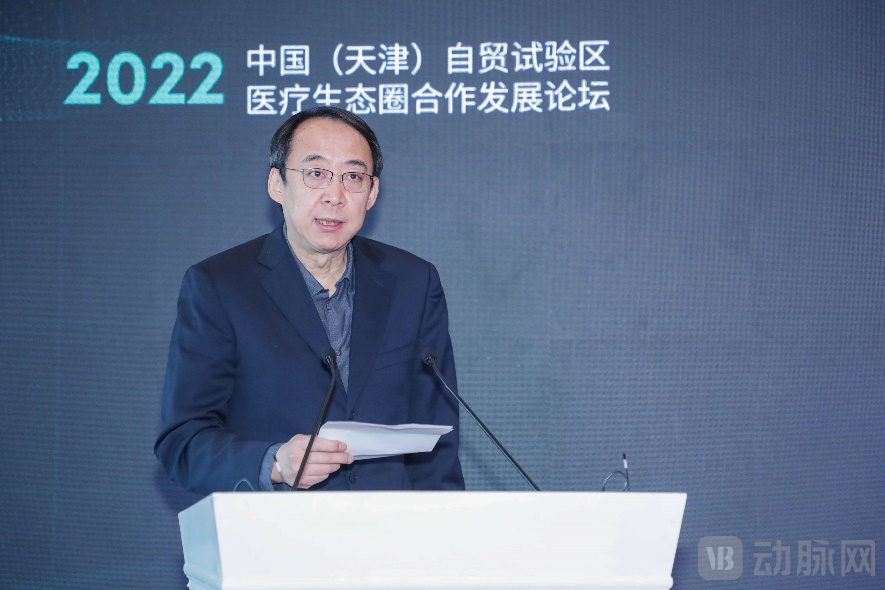
Hao Jihui, President of Tianjin Medical University Cancer Institute and Hospital and Chairman of the International Institute for Innovative Personalized Medicine, delivered the opening keynote address. President Hao emphasized that the development of the healthcare industry and the continuous improvement of the biopharmaceutical sector require multi-sectoral collaboration. The government should provide policy guidance, medical institutions should serve as practical application scenarios, and the participation of leading enterprises will inevitably promote horizontal synergy. Leveraging its own strengths, the Institute aims to act as a strategic advisor to the government, build platforms for all stakeholders, coordinate professional talent in the medical field, focus on key research directions, and fully utilize the policy advantages of the Pilot Free Trade Zone. It will continue to explore advanced technologies such as “medical big data mining and application” and “artificial intelligence” to promote the development and innovation of biomedicine, offer recommendations for the high-quality development of the biopharmaceutical industry, amplify Tianjin’s innovative voice in the bioeconomy, contribute Tianjin’s solutions, and jointly advance the innovative development of China’s biotechnology and biopharmaceutical sectors.
Kou Xiaoshuang, Deputy Director of the Administrative Committee of Tianjin Port Free Trade Zone, introduced to the attendees the advantages of the Pilot Free Trade Zone and its work achievements in recent years. She proposed taking the holding of this forum as an opportunity to continuously advance the construction of a green channel for the import of clinically urgent drugs in the Airport Area, build citywide consensus, and elevate it to a key business sector supported by the Tianjin Municipal Government. Efforts should be made to support clinically urgent drugs and Tianjin’s Huiminbao insurance products, jointly promote the market launch and adoption of clinically urgent drugs and special drug insurance products, and facilitate strategic cooperation between the Airport Area and hospitals with relevant needs across the Beijing-Tianjin-Hebei region and even Northern China, leveraging its successful experiences and practices to benefit a broader population. It is believed that on the fertile ground of the Free Trade Zone, more outstanding medical and health enterprises will cluster and develop, more advanced products and technologies will emerge and be applied, thereby benefiting more patients and families.
During the forum, Zhenhe Technology and the Research Institute formally signed a Strategic Cooperation Memorandum. Under the memorandum, guided by governments at all levels in the Tianjin Pilot Free Trade Zone, Zhenhe Technology will collaborate with the Research Institute to explore the utilization of real-world data (RWD), promote its application in assessing the safety and efficacy of pharmaceuticals and medical devices for registration and listing purposes, and carry out multiple initiatives including real-world evidence research, digital healthcare product development, and algorithm innovation.
As a representative enterprise in the precision oncology testing industry, Ma Guosheng, Executive Vice President of Genetron Health, introduced the company’s comprehensive advantages at the forum. During the subsequent roundtable discussion on “The Development of Real-World Applications in Tianjin,” he also acknowledged that real-world studies (RWS) face certain challenges, most notably the difficulty in obtaining high-quality, end-to-end real-world data and conducting multicenter real-world studies. Real-world studies are generally patient-centered rather than focused on pharmaceuticals or medical devices; thus, corporate willingness to invest is one of the key issues. RWS requires large sample sizes, often involving multicenter events, making data collection difficult and labor-intensive, with significant data heterogeneity. These studies demand more rigorous statistical methods than traditional research and are predominantly retrospective analyses, which challenges the hierarchy of evidence. Faced with these numerous issues, the implementation of real-world studies encounters considerable resistance. Addressing these challenges requires concerted efforts from multiple stakeholders to promote the development of real-world research.
In fact, Genetron Health has undertaken extensive work in real-world data research in recent years, launching digital solutions centered on precision oncology diagnosis and treatment. Within Genetron’s digital ecosystem, PanZhenYan®, the big data management platform for oncology research, serves as a professional “toolkit” in scientific research, efficiently performing data collection and governance while enabling intelligent data analysis and automated report generation. TaiBo®, the multi-omics precision oncology clinical decision support system, innovatively integrates five core components: intelligent multidisciplinary consultation, digital standardized treatment recommendations, preoperative clinical staging assessment, personalized clinical trial matching, and intelligent retrieval of tumor genomic evidence. Acting as a “digital assistant” for physicians, TaiBo® provides more focused and efficient clinical decision support. As intelligent platforms for data collection and governance, these two digital products help improve medical service quality and enhance operational efficiency.
Leveraging the research institute’s platform, Zhenhe Technology’s digital solutions can empower the government to implement data regulation; assist hospitals in launching more real-world study projects; and accelerate drug development for pharmaceutical companies. This multi-party collaboration among the government, hospitals, pharmaceutical companies, and diagnostic firms is poised to establish a closed loop from “data collection” to “research” and finally to “application,” playing a pivotal role in clinical diagnosis and treatment, new drug development, market access, and regulatory cooperation, thereby pioneering the maximization of real-world data utilization.
Personalized medicine leverages digitalization to maximize the efficacy of limited healthcare resources. We look forward to seizing this opportunity for collaboration, and with the high regard and strong support from governments at all levels in Tianjin, Genetron Health will actively leverage its advantages in the field of precision oncology diagnosis and treatment. We aim to assist the Research Institute in conducting real-world data studies, promote the pioneering adoption and pilot implementation of high-quality diagnostic and therapeutic products and technologies, and meet the needs of more patients by enabling them to access the latest international drugs, advanced medical devices, and technologies without leaving the country, thereby contributing to the “Healthy China 2030” initiative.