

Shukun Technology Showcases Five Award-Winning AI Solutions at the 3rd China Medical Imaging AI Conference Amid IPO Filing

SHUKUN
Provider of Intelligent Products and Innovative Solutions
From conceptual discussions and technical expositions to the increasing deployment of AI technologies with diverse product forms in clinical settings; from optimistic aspirations to a return to rationality and calm; from the continuous emergence of startups to leading companies sequentially filing prospectuses, medical imaging AI has overcome numerous hurdles, achieving breakthroughs from zero to one. It is now entering a new phase characterized by competition for clinical scenarios and accelerated implementation.
The China Medical Imaging AI Conference serves as an in-depth industry observer, documenting every critical milestone in the development of the medical imaging AI sector while bringing together experts from government, industry, academia, research, and clinical application. Through sharing and dialogue, it seeks to identify the most profound challenges facing the industry, pinpoint directions for solutions, and ultimately drive positive progress in the field.
The 3rd China Medical Imaging AI Conference, held on December 17–18 this year, remains the same in this regard. The difference lies in the improvement of current policies and regulations related to AI development, as well as the increased diversity of domestic medical imaging AI products.This year’s conference featured deeper exploration of product innovation and commercialization, along with a focused effort on addressing the challenges facing the medical imaging AI industry on the eve of its value leap.
The conference not only hosted multiple online seminars on the latest technologies in imaging equipment, interdisciplinary symposia on intelligent multi-site imaging, and closed-door workshops on various hot topics, but also introduced new segments for the first time, including the “AI Pathfinder + Hui Zai Jiuzhou Project Showcase Symposium” and the “Zhi Zai Jiuzhou Project Showcase Symposium.” These sessions featured specially invited founders of leading AI companies to share their entrepreneurial journeys, practical experiences, and personal insights.
At the conference, SHUKUN, as the only medical AI company currently holding both NMPA Class III certifications and MDR CE approvals across the three critical therapeutic areas of cardiology, thoracic imaging, and neurology, naturally offered valuable insights into the problems and challenges encountered in the practical application of current medical imaging AI products. Through various sessions, including roundtable discussions, keynote speeches, showcases of outstanding case studies, and presentations on innovative technologies, SHUKUN shared its latest practical experiences and technological achievements. Its strategic layout has also provided reference ideas to some extent for addressing the difficulties currently facing the medical imaging AI industry.
According to conference statistics, as of December this year, the National Medical Products Administration has approved 41 AI products related to medical imaging, among which 10 have obtained CE and FDA certifications.Data reveals that AI for medical imaging has not only successfully navigated the regulatory approval process, but also seen its product offerings become increasingly diverse, indicating that the industry has reached a new tipping point. However, this also means that companies will face new challenges: they must break away from established patterns and paradigms to identify new avenues for growth and market positioning.
“This year, the AI penetration rate in large hospitals in China is approximately 15%.“Although commercial deployment is accelerating, medical imaging AI still faces numerous challenges. Companies in the medical imaging AI sector should accelerate the development of a ‘vertical-and-horizontal’ business layout, continuously enhance the clinical and commercial value of their AI products, and establish disease-centered, intelligent, and standardized clinical workflows.” In his keynote address, “Reflections on Expanding the Frontiers of Medical Imaging AI,” Liu Shiyuan—Chairman of the Chinese Society of Radiology, Chairman of the China Medical Imaging AI Industry-Academia-Research-Application Innovation Alliance, and Director of the Department of Radiology at Shanghai Changzheng Hospital—shared his insights on how enterprises can break through the current developmental impasse.
Among these, the “one vertical, one horizontal” business layout mentioned by Liu Shiyuan is particularly noteworthy.From a micro perspective, this can be understood as a strategic layout covering a wide range of diseases and encompassing the entire continuum of care, including disease screening, diagnosis, treatment, and management. From a macro perspective, it reflects the broader future trends in AI development: multi-disease applications, end-to-end process integration, platform-based ecosystems, the convergence of software and hardware, and the seamless integration of online and offline services.
Currently, some medical AI companies are developing artificial intelligence solutions based on this direction. Starting from the intrinsic logic of medicine and combining observations of specific pain points in clinical departments, they have adopted a “vertical-and-horizontal” business layout. This approach is not only key to helping healthcare institutions achieve a leap from quantitative change to qualitative transformation, but also crucial for these enterprises to complete their value transition and enter a new era.
At the keynote forum on “Technological Innovation and Smart Device Services for a Healthy China,” Mao Xinsheng, Founder and Chairman of SHUKUN, joined multiple guests from companies such as GE, Philips, and Siemens to discuss industry development trends and pathways. He also responded to Liu Shiyuan’s questions on “how to accurately select clinical scenarios” and “how AI can address the uneven distribution of national medical resources.”
Mao Xinsheng remarked: “As a high-tech company, the most critical aspect of solution development is to meet customer needs and truly understand their pain points. Only on this basis can we accurately identify valuable applications and leverage new technologies to create irresistible value for customers, which is the foundation of the enterprise’s survival and growth.Furthermore, integrating and optimizing physicians’ workflows through technologies such as data analytics and algorithms, as well as expanding application scenarios via collaborative co-creation, are key strategies for medical imaging AI to generate value. This holds true even for primary healthcare institutions with relatively scarce medical resources; only by deeply understanding their pain points can their challenges be effectively addressed.
SHUKUN, which has established an original technology platform for the “Digital Human,” is advancing in this direction. By breaking through the limitations of single departments and single modalities, and focusing on patients’ physiological functions from a holistic perspective, it has developed more precise and convenient smart healthcare solutions.Through continuous product innovation and iteration, the company has implemented its solutions in over 2,000 hospitals. It has also achieved remarkable success in R&D innovation and regulatory approval, securing NMPA Class III certifications and MDR CE marks for its products in the three key therapeutic areas of cardiology, thoracic surgery, and neurology.
In fact, since its inception, SHUKUN has been committed to addressing the social issues of physician shortages and unequal distribution of medical resources. The company’s current achievements are attributable to two key factors: first, its keen insight into strategic direction in the early stages, and second, its steadfast commitment to independent, original technological innovation.
By leveraging its proprietary, independently developed technologies as the core foundation, SHUKUN has established a “Digital Human” technology platform that deeply integrates medical knowledge with artificial intelligence capabilities. Building upon this platform, the company has created a comprehensive suite of AI-powered medical imaging products covering disease screening, diagnosis, treatment selection, and planning. This suite integrates specialized digital doctors for various anatomical regions—including the “Digital Heart,” “Digital Brain,” “Digital Chest,” “Digital Abdomen,” and “Digital Musculoskeletal System”—thereby realizing a platform-based vision for imaging AI to address healthcare scenarios characterized by complex clinical contexts, high levels of specialization, and stringent accuracy requirements.
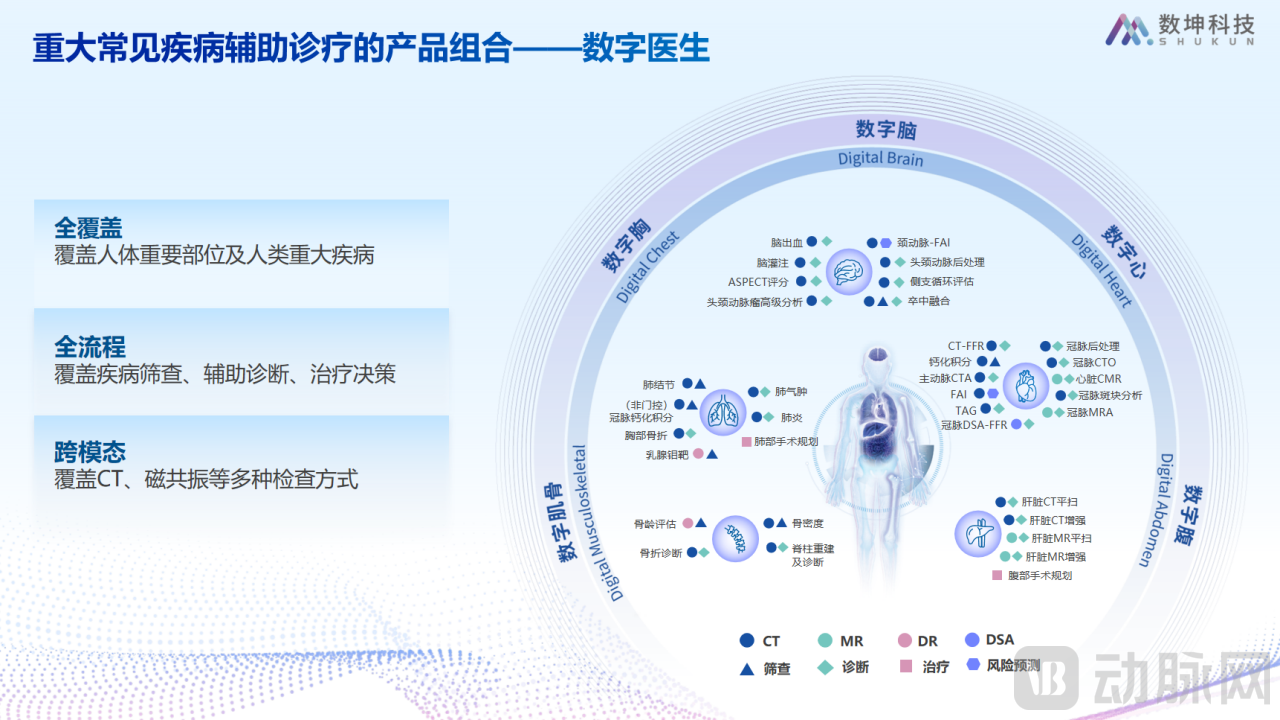
Today, the “Digital Human” serves as the “smart brain” and engine of healthcare, helping SHUKUN secure hundreds of invention patents.At this conference, SHUKUN, recognized as an individual and enterprise that has made outstanding contributions to the development of medical imaging artificial intelligence in China, delivered the “Shaking the Nine Provinces” speech as a pioneer in medical imaging AI.
In his speech, Mao Xinsheng shared with attendees SHUKUN’s original mission and years of practical experience in entering the field of medical imaging artificial intelligence. He noted that SHUKUN was able to develop its Digital Doctor and Digital Human technology platforms within just five years, achieving high-frequency, sticky daily usage across thousands of institutions nationwide, becauseSince its inception, the company has been committed to addressing societal challenges such as physician shortages and the unequal distribution of medical resources. This original mission has served as its strongest driving force.
In the course of product application and practice, SHUKUN has recognized that platform-based products can better create a “closed-loop value” for health management, further enhancing clinical diagnostic efficiency and truly achieving personalized and precise diagnosis.
From the outset, SHUKUN has believed that healthcare institutions need an exceptional assistant to address the substantial volume of repetitive and complex tasks faced by physicians through standardized, high-quality human-AI collaborative care. This approach enables doctors to devote more time and energy to patient care and the management of complex and challenging cases. Meanwhile, Digital Doctors can extend expert-level capabilities to primary care settings, empowering grassroots physicians to leverage the expertise of specialists. Furthermore, Digital Doctors provide a standardized technological infrastructure to facilitate the mutual recognition of consistent examination and diagnostic results across institutions.
Regarding the achievements made by SHUKUN,Mao Xinsheng believes that Chinese technology companies should possess a spirit of originality and the ambition to lead globally.To achieve independent innovation, it is essential to adopt a pragmatic approach, engage in-depth with clinical practitioners, interact with government bodies, and foster collaboration and exchange with industry peers. We must firmly believe that AI technology will become a critical component of the digital healthcare infrastructure. Only in this way can we truly support the development of the digital economy and the implementation of the Healthy China strategy while achieving independent innovation, thereby promoting the sound and sustainable development of the industry.
It is worth noting that this conference featured, for the first time, sessions such as the “AI Pathfinder + Hui Zai Jiuzhou Project Showcase and Seminar” and the “Zhi Zai Jiuzhou Project Showcase and Seminar.”, with the aim of jointly identifying innovative projects that deliver “closed-loop value” to users through the sharing of outstanding case studies, while disseminating product R&D expertise and innovation trends to the industry, thereby finding solutions to break the current homogenization challenge in the medical imaging AI sector.
SHUKUN was featured across all categories of outstanding cases, including the “Shaking Up China” case studies, the “AI for Clinical Practice” project sharing under the “Smart China” initiative, and the showcase of excellent AI-enabled primary healthcare cases under the “Benefiting China” program. The five outstanding cases recognized for the company also received acclaim and commendation from experts. Notably, SHUKUN was the only enterprise shortlisted with two cases in the “Smart China” case selection campaign.
The company’s submission, “Software for Assisted Diagnosis of Focal Liver Lesions,” was recognized as a “Pioneering Innovation Team for Groundbreaking Exploration in Leveraging Medical Imaging to Support Clinical Practice.” Its collaborative project with Beijing Xuanwu Hospital, “Research and Application of an AI-Assisted Diagnostic System in Head and Neck CTA,” was honored as a “Peak Innovation Team Representing the Highest Level of Industry R&D Excellence.”
During a project sharing session at SHUKUN, VCBeat learned that the “Auxiliary Diagnostic Software for Focal Liver Lesions,” built on a neural network algorithm with 4 billion parameters, can identify lesions across different imaging sequences, automatically extract lesion features, and generate structured reports, ultimately achieving automated, intelligent, and standardized diagnosis of liver diseases.
Its most significant innovation lies in the solution’s capabilities for automatic multi-sequence recognition and layout formatting; annotation and registration based on anatomical structures to overcome challenges posed by slice thickness and respiration; and linked multi-sequence image review guided by anatomical location. For complex lesions, AI-enabled soft subtraction technology assists in diagnosis, while additional technological innovations such as multi-parametric analysis are provided. These features effectively address clinical challenges, including stringent scanning requirements, difficulties in image interpretation, and complex lesion analysis.
“AI Diagnostic Platform for Head and Neck Artery CTA” is an innovative breakthrough developed by SHUKUN to address the severe situation of cerebrovascular diseases in China.
After identifying pain points in traditional workstations—specifically, the prolonged post-processing time and inconsistent results due to manual operations associated with direct volume rendering and maximum intensity projection (MIP) methods—the team pioneered a deep learning-based approach. This innovation enables intelligent reconstruction of head and neck CTA from a single contrast-enhanced scan sequence, thereby reducing patient radiation dose. It achieves AI-driven automatic and precise segmentation, intelligent bone removal, automated vessel naming, and lesion localization. Furthermore, it integrates three major innovations into a one-stop workflow: head and neck CTA image post-processing, structured reporting, and film printing. By lowering the diagnostic threshold for physicians and simplifying operational complexity for technicians, this solution improves examination success rates while facilitating early screening, diagnosis, and treatment of stroke patients. The multi-center clinical validation results for this head and neck AI technology were prominently published in a Nature subsidiary journal. Moreover, the "Head and Neck CT Angiography Image-Assisted Evaluation Software" is the only medical imaging AI product in the industry to have obtained both the NMPA Class III certification and the MDR CE certification.
In the “Hui Zai Jiuzhou” awards, SHUKUN was shortlisted for two outstanding cases once again. Its collaborative project with Philips, “Application of 1024-Matrix High-Definition Targeted Scanning in AI-Based Lung Cancer Screening,” received the “Pioneering Team Award for Empowering Primary Healthcare with Technology.” Meanwhile, “One-Stop Stroke AI: Supporting the Western Region’s Million Disability-Reduction Initiative” was recognized as the sole “Icebreaking Navigator” case at this year’s conference.
It is reported that SHUKUN’s research achievements in Digital Heart, Digital Brain, and Digital Chest have all been published in top-tier scientific journals, each with an impact factor exceeding 12. This award highlights that SHUKUN continues to prioritize independent innovation, focusing its exploration on the “Digital Human” framework to address genuine clinical pain points, thereby achieving digital coverage of more anatomical regions.
At the conclusion of the conference, Zheng Chao, Chief Technology Officer of SHUKUN, and Liao Fangzhou, Algorithm Director and AI Scientist at SHUKUN, delivered presentations on “Construction and Frontier Applications of AI Algorithms for the Head and Neck” and “Construction and Frontier Applications of AI Algorithms for the Liver,” respectively. During their presentations, it became evident thatSHUKUN’s ability to achieve effective and sustained innovation rests on two key factors: possessing proprietary, original core technologies, and delivering products and models grounded in actual clinical needs.
Zheng Chao once revealed to VCBeat that, in the process of product innovation and iteration, integration with clinical practice has always been a crucial aspect of medical AI innovation and iteration. For enterprises,Innovation must be integrated with clinical practice to build a platform-based product ecosystem that delivers closed-loop value for specific scenarios.By enhancing R&D capabilities, refining products, and expanding partnerships, we aim to achieve innovation goals, ensuring that innovative technologies truly meet clinical needs and are integrated into the entire workflow of screening, diagnosis, and treatment for physicians.
An analysis of SHUKUN’s strategic approach reveals that for leading enterprises, product innovation and R&D must be guided by the need to address China’s public health demands. Furthermore, while maintaining the competitiveness of individual products, leveraging a platform-based product ecosystem to deliver “closed-loop value” to users is key to unlocking the next blue-ocean market and fully realizing the value of medical AI.
Quoting a statement made by Liu Shiyuan this year at the roundtable forum “Imaging AI Implementation and Future Prospects from Multiple Perspectives”: “Truly promising AI products must originate from actual urgent clinical needs, address multi-task and multi-dimensional problems based on clinical scenarios, and provide comprehensive examination results organized by anatomical region and organ. This is what clinicians expect from AI products.”
Based on SHUKUN’s explorations, the company has undoubtedly taken a step forward in this regard.