Offshore OFFSHORE Global Early-Stage Medical Projects Roadshow Concludes with Strong Interest from Leading International VCs
Recently, to help more overseas startups establish their presence in China,Haikou National High-Tech Industrial Development ZoneCombinationVCBeat, British Consulate-General in ShanghaiCo-hosted“Offshore · Global Early-Stage Healthcare Projects Online Roadshow”。
Prior to the roadshow, Haikou National High-Tech Industrial Development Zone conducted an investment promotion presentation. The zone will adhere to high-level planning, high-standard positioning, and high-quality advancement, leverage the policies of the Hainan Free Trade Port, optimize investment services, and strive to attract a cluster of high-quality overseas enterprises with significant visibility in the Free Trade Port to the industrial park.
Gray Hunt, Life Sciences and Healthcare Consul, British Consulate-General in ShanghaiAttending the roadshow and delivering a speech, he stated that the United Kingdom places great emphasis on medical innovation, with support ranging from universities to the government, which has fostered the emergence of many outstanding medical research projects. For the UK, the Chinese market holds a pivotal position. Looking ahead, he expressed hope that more enterprises from both China and the UK will establish partnerships to jointly advance in the field of medical innovation.

Focusing on Cutting-Edge Innovation: Five Frontier Projects Meet Capital Face-to-Face
This roadshow featured five early-stage projects from the United Kingdom, Canada, and Israel, spanning cutting-edge fields such as gene therapy, ophthalmology, cardiovascular disease, and diagnostics.
■ Stem Cell Medicine: Focused on gene therapy, with ongoing R&D of drugs for cancer treatment and neuropathic pain relief
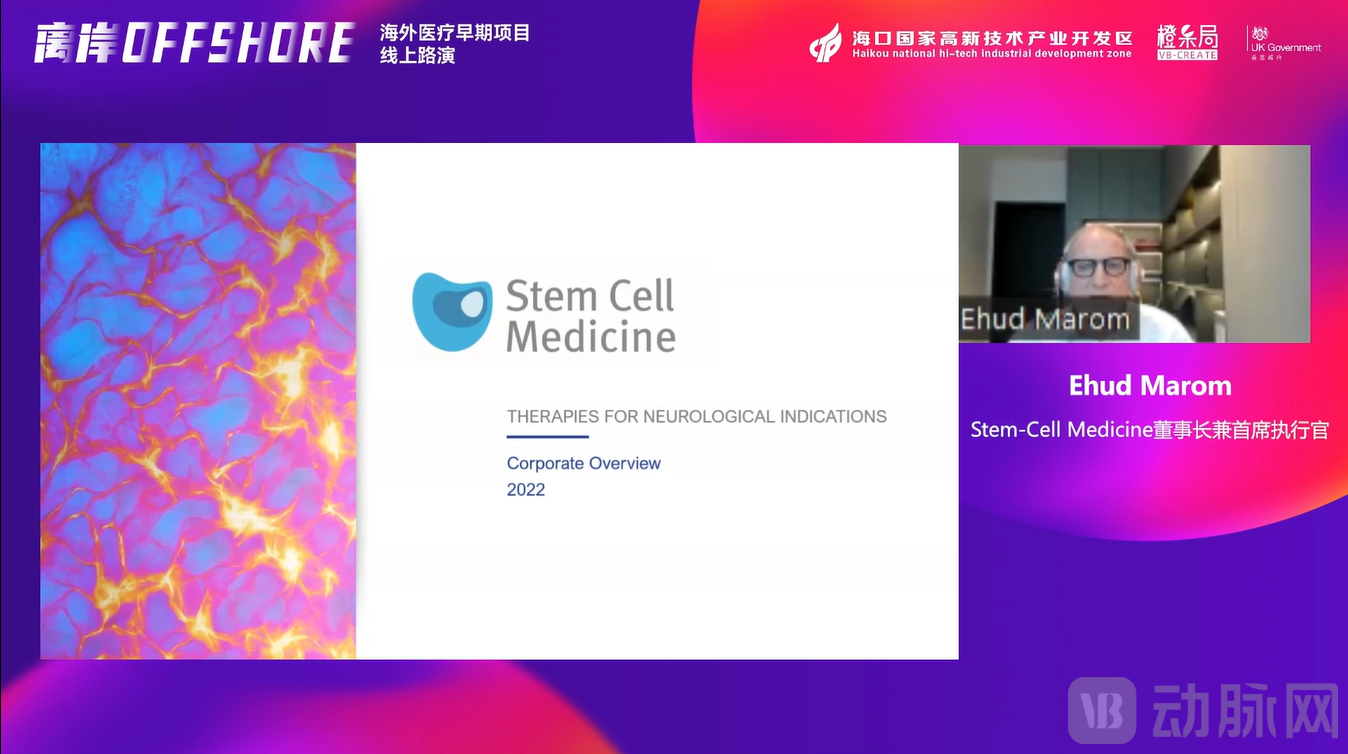
▲ Ehud Marom, Chairman and CEO of Stem-Cell Medicine
Stem-Cell Medicine is a cell therapy developer focused on stem cells, exosomes, and BMP-antagonist molecules for the treatment of neurological diseases. The company specializes in developing cell therapy products as standalone treatments or in combination with pharmaceuticals. It has currently developed drug candidates for cancer treatment and neuropathic pain relief, as well as a skincare product pipeline.
At this stage, Stem-Cell Medicine is seeking suitable Chinese investors for collaboration to facilitate the acquisition of clinical data and further technological upgrades. Upon reaching a partnership agreement, Stem-Cell Medicine is willing to transfer its technology, enabling simultaneous achievements in China and advancing the development of new drugs based on novel molecules, stem cells, exosomes, and gene therapies.
■ I-RNA: Focused on the diagnosis and treatment of diabetic retinopathy; currently developing a healthcare payment app
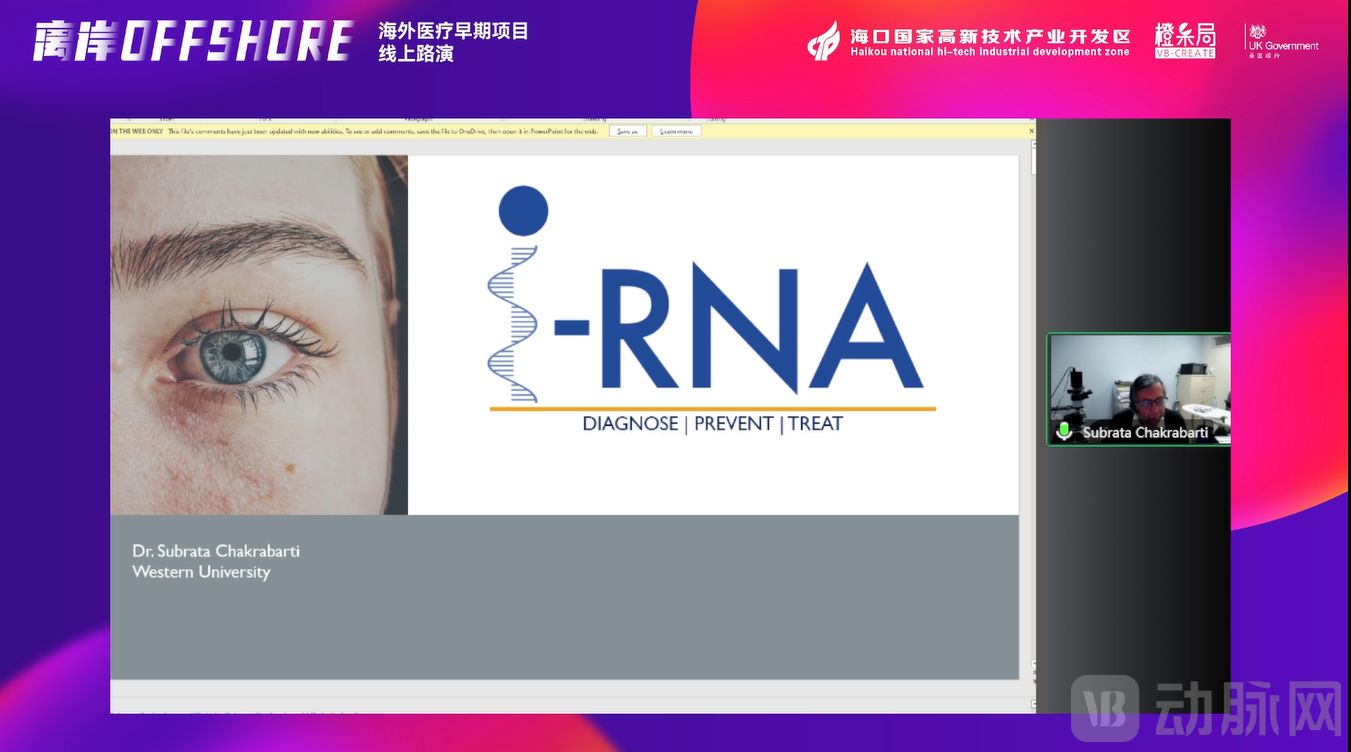
▲ Subrata Chakrabart, Founder of I-RNA
I-RNA is a developer of therapeutics and diagnostics targeting long non-coding RNAs (lncRNAs) for diabetic retinopathy. The company has identified that the lncRNA HOTAIR plays a significant role in the pathogenesis of diabetic retinopathy and has developed an siRNA-based therapy accordingly, which has completed animal studies. Additionally, I-RNA has developed a PCR-based serum non-coding RNA detection panel for the diagnosis of diabetic retinopathy.
It is reported that I-RNA has integrated these research findings into a laboratory test kit, facilitating the diagnosis of diabetes in laboratories and hospitals. Meanwhile, clinical data will be fed back to I-RNA to support product upgrades and iterations. Currently, I-RNA is developing a paid mobile application to provide guidance for diabetic patients and use algorithms to recommend suitable ophthalmologists for the treatment of diabetic retinopathy.
At this stage, I-RNA is actively seeking partners and aims to secure $2.5 million in financing. In exchange, I-RNA will offer 5% equity in the company. According to Subrata Chakrabart, the $2.5 million will be allocated to marketing efforts and product upgrades.
■ OXSIGHT: Provides visual aids for patients with low vision and is currently expanding its business in the Chinese market.
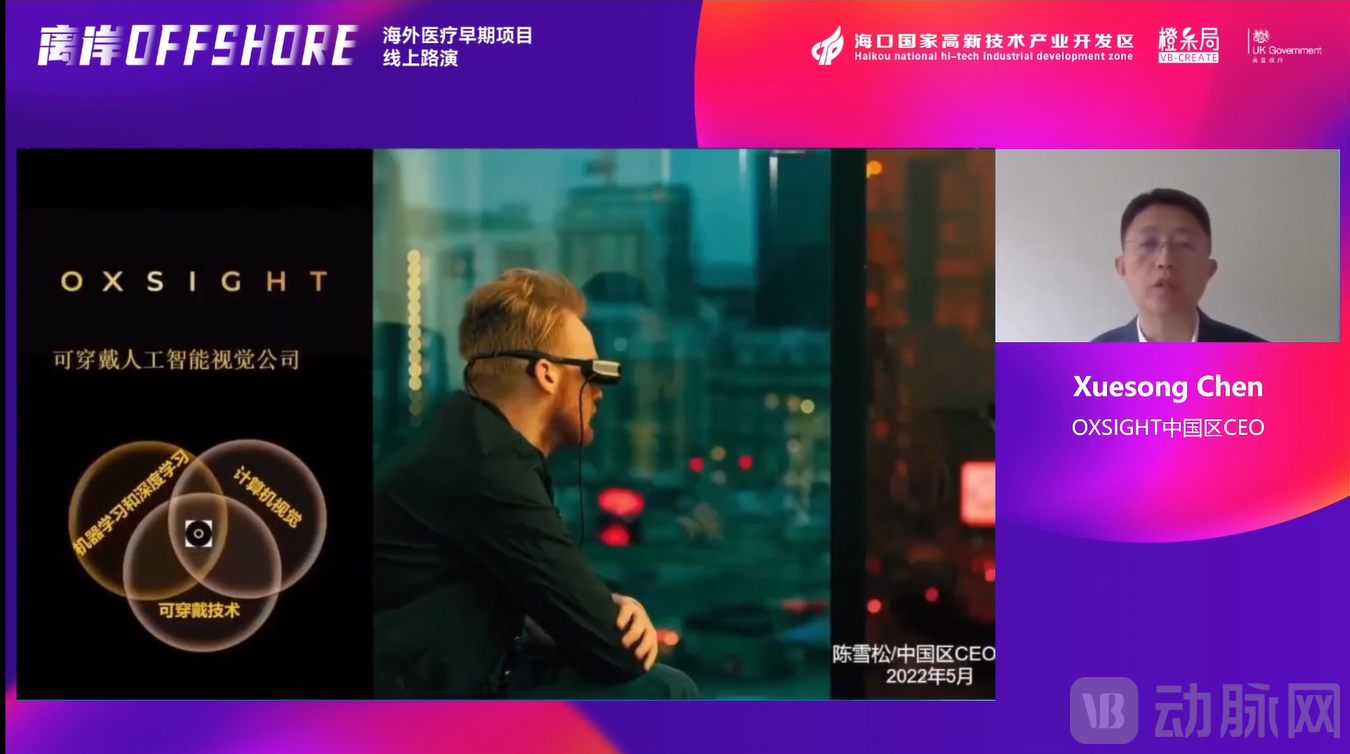
▲ Robinson Chen, CEO of Oxford Enterprise China
OXSIGHT is a research, development, and manufacturing company originating from the University of Oxford in the UK, focusing on the “OXSIGHT Smart Bionic Glasses.” Its core scientific research lies in the seamless integration of three technologies: “machine learning and deep learning,” “wearable technology,” and “machine vision.” The Smart Bionic Glasses represent a globally pioneering new product category by OXSIGHT. Developed based on wearable AI vision technology, this “cutting-edge” product is designed for individuals with low vision (visual impairment). It helps patients suffering from “visual field loss” due to conditions such as “macular degeneration” and “glaucoma” to “see the world again.”
Currently, the “OXSIGHT Smart Bionic Glasses” have been launched in two major series, catering to patients with peripheral visual field loss and those with central visual field loss, respectively. The product has obtained FDA clearance in the United States, CE certification in Europe, and China Compulsory Certification (3C). It has also been recommended by experts from renowned hospitals both domestically and internationally, including Moorfields Eye Hospital in the UK, the Eye & ENT Hospital of Fudan University, and the Zhongshan Ophthalmic Center of Sun Yat-sen University.
At this stage, OXSIGHT has expanded its business into five countries and regions worldwide. Next, OXSIGHT seeks to secure financing to upgrade its core team in China, continue optimizing and developing product hardware, and strengthen its market coverage in China.
■ Oxford Cardiomox: Developing non-invasive magnetocardiography systems; currently undergoing market promotion
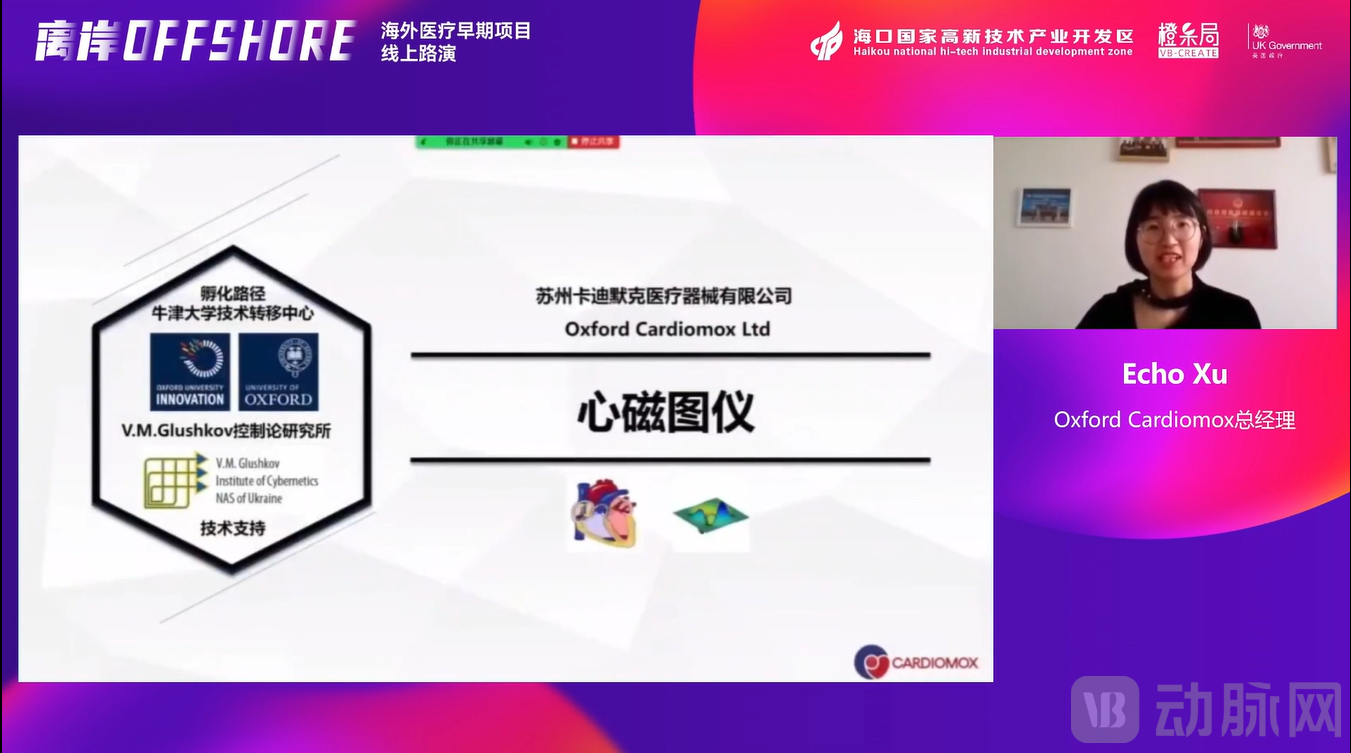
▲ Echo Xu, General Manager of Oxford Cardiomox
Oxford Cardiomox is a research, development, and manufacturing company focused on non-invasive cardiac diagnostic equipment—specifically, magnetocardiography (MCG) systems. An MCG system can be conceptualized as an aggregate of countless electrocardiogram (ECG) recorders within the body. It is used for the early diagnosis of acute and chronic myocardial ischemia, detection of viable myocardium within infarcted areas after myocardial infarction, assessment of the risk level for malignant arrhythmias, and follow-up monitoring of patients with coronary heart disease undergoing treatment (including pharmacological therapy, coronary stenting, and coronary artery bypass grafting).
According to Echo Xu, the magnetocardiograph (MCG) is non-invasive and emits no radiation during diagnosis, as it only measures the physiological magnetic fields above the thoracic cavity. Therefore, the examination is entirely risk-free and can be repeated as often as clinically indicated. Oxford Cardiomox has established a standard atlas based on 20,000 cases, enabling the MCG to accurately identify 13 typical types of heart disease, thereby improving diagnostic efficiency and accuracy.
Currently, Oxford Cardiomox is in the market cultivation stage, primarily targeting sales to Grade 3A hospitals. As a next step, Oxford Cardiomox plans to raise RMB 30 million for device optimization, team development, and market promotion.
■ Seroxo: Developing real-time immunoassay technology for sepsis; currently raising Series A funding

▲ Xiaomeng Li, Co-founder and Head of Clinical Research at Seroxo
Seroxo is a developer and manufacturer focused on LIT, a real-time immunodiagnostic technology for sepsis, and has provided real-time immune testing to 50 million sepsis patients worldwide. Its diagnostic device, integrated with a digital app and online platform, enables healthcare professionals to achieve over 99% accuracy in sepsis diagnosis and prognosis within 10 minutes using a small sample of capillary blood from a finger prick, while also facilitating data tracking and sharing.
The device has been patented in the United States, Europe, and China, and is currently undergoing FDA and UKCA certification. It is expected to enter the Chinese market in 2025. Seroxo is currently conducting its Series A financing round, with a target of $9 million. The funds will be used for subsequent product approvals, research and development, and team expansion.
Following the roadshow, heads of venture capital firms including Legend Capital, Hillhouse Capital, Lilly Asia Ventures, CAS Star, and Yuansheng Venture Capital participated in a closed-door session, engaging in in-depth discussions with the project team.
Enterprises in Haikou High-Tech Industrial Park are also engaging with high-quality projects to seek collaboration opportunities.
Looking Ahead: Anticipating Greater Integration of Medical Innovations from Home and Abroad
In the past year or two, China’s medical innovation capabilities have risen rapidly, attracting many overseas medical innovation startups to take root and grow quickly in the Chinese market.
From the R&D perspective, collaboration between domestic and overseas research institutions and universities is becoming increasingly close. In the past one to two years, many overseas enterprises have successively established R&D centers or innovation centers in China, aiming to secure a foothold in China’s medical innovation market.
From the investment perspective, on one hand, a significant amount of overseas capital is flowing into the domestic market, with a primary focus on early-stage healthcare projects; on the other hand, many domestic investors are continuously expanding into overseas markets, having invested in numerous innovative healthcare targets abroad in the past one to two years.
From an industry perspective, many Chinese healthcare companies are establishing R&D centers overseas and accelerating the global expansion of their core products. Meanwhile, numerous local governments and industrial parks are intensifying efforts to attract overseas medical innovation projects through various approaches, speeding up their implementation to make them a key pillar of the healthcare industry.
The “Offshore · Overseas Medical Early-Stage Projects Online Roadshow” was merely a modest pilot. Moving forward, innovation resource connectors such as Haikou National High-Tech Industrial Development Zone, VCBeat Chengguo Bureau, and the British Consulate-General in Shanghai will continue to serve as a window for the integration of Chinese and overseas medical innovation forces, thereby promoting the development of outstanding medical projects both domestically and internationally.
Project Coordination
If you are interested in the projects presented in this roadshow, please scan the QR code below to complete the form. A staff member will follow up to facilitate further engagement.

Roadshow Replay
To rewatch the full video of the project pitch, please scan the QR code below and click to view.