

Surui Medical Files IPO Prospectus, Aiming to Disrupt the Surgical Robot Market with Proprietary Single-Port Technology
Over the past two decades, surgical robots have revolutionized surgical procedures, and their significant clinical utility has also yielded substantial commercial returns worldwide.
According to Frost & Sullivan, the global surgical robot market size increased from $3 billion in 2015 to $8.32 billion in 2020, with a compound annual growth rate (CAGR) of 22.6%. It is estimated to reach $33.59 billion by 2026, with a CAGR of 26.2%.
In addition to clinical and commercial value, surgical robots also hold pioneering significance within the healthcare industry. They are listed as a sector requiring accelerated development in the “Made in China 2025” plan issued by the State Council. Surgical robots have become a focal point for technology, industry, and investment in China.
However, the rapidly growing surgical robot market is currently dominated entirely by the da Vinci Surgical System. Although numerous domestic companies have entered the field and several have obtained regulatory approval, they still lag behind the da Vinci Surgical System in terms of commercialization and market influence.
The domestic surgical robot sector, facing commercialization challenges, has also been questioned for being overheated. As the industry returns to rationality and competes with giants, how will Chinese-made surgical robots achieve overtaking on a bend? VCBeat interviewed the founding team of Beijing ShuRui and its clinical collaboration experts.
Reviewing the history of surgical robot development, the first-generation prototype of a surgical robot emerged in 1980, prior to the advent of the da Vinci Surgical System.
The earliest surgical robots were developed to address the need for camera holding during laparoscopic surgery, enabling surgeons to control surgical instruments via foot pedals. However, this generation of surgical robots failed to gain widespread market acceptance, primarily because it required surgeons to support their body weight with one leg while using the other to operate the foot pedal for camera adjustment and field-of-view control, posing a significant physical challenge.
In 1998, the second-generation surgical robotic system, the ZEUS System, was introduced, with its robotic arms integrating both surgical and endoscopic functionalities. Compared to camera-holding surgical robots, the ZEUS System offered the advantage of allowing surgeons to perform laparoscopic procedures while seated.
The da Vinci Surgical System was successfully developed by Intuitive Surgical in 1999, and the Zeus Robotic Surgical System and the da Vinci Surgical System were integrated into a single company after a prolonged patent dispute.
During large-scale commercialization, this design, which significantly reduces physician fatigue, quickly gained recognition. Studies have shown that 70% of the success of the da Vinci Surgical System is attributed to reduced physician fatigue and improved operational comfort, while the remaining 30% stems from enhanced precision and flexibility in surgical maneuvers.
Over the past two decades of surgical robot development, new entrants have continuously emerged. In 2016, with the expiration of the ZEUS surgical robot patents, surgical robots such as CMR Surgical from the UK and Medtronic’s Hugo gradually entered the market. These laparoscopic surgical robots differ from the da Vinci Surgical System in that they adopt a modular design, with each cart equipped with a separate robotic arm.
Although this modular design mitigates patent risks, it compromises clinical convenience to some extent and has not yet successfully displaced the da Vinci Surgical System. To date, the da Vinci multi-port laparoscopic surgical robot has long held over 99% of the market share.
A Microcosm of Two Decades of Development in Laparoscopic Surgical Robots Reveals That Merely Imitating the da Vinci Surgical Robot Makes It Difficult to Truly Surpass Intuitive Surgical.
After Two Golden Decades, the da Vinci Surgical Robot Begins to Show Signs of Growth Fatigue. The Laparoscopic Surgical Robot Industry Reaches a Turning Point. Where Will the Next Technological Inflection Point for the Laparoscopic Surgical Robot Industry Lie?
After graduating from Tsinghua University, Professor Xu Kai went to the United States for further studies. At that time, his mentor, Professor Russell Taylor, known as the father of medical robotics, stated that single-port surgical robots represent the future of surgical robotics.
Single-port surgery is a type of laparoscopic procedure. Its advantages lie in the use of only one skin incision; when performed via the umbilicus, it leaves virtually no visible scar, resulting in minimal trauma, faster recovery, and superior cosmetic outcomes. However, due to the “chopstick effect,” where instruments interfere with each other during traditional manual single-port surgery, operative manipulation is challenging. Consequently, without robotic assistance, manual single-port surgery is primarily limited to relatively simple procedures, such as cholecystectomy and cyst fenestration.
Professor Wang Linhui from the Department of Urology at Changhai Hospital stated: Compared with multi-port laparoscopic surgery, single-port laparoscopic surgery offers advantages such as less postoperative pain, minimal cosmetic damage to the body surface, and faster postoperative recovery. However, single-port laparoscopic surgery poses extremely high technical challenges for surgeons. Due to limitations in instrumentation, single-port laparoscopy still faces some difficult-to-resolve issues, including the loss of the operative triangle for main surgical instruments and mutual interference or “clashing” between the endoscope and other surgical instruments during the procedure. These problems have hindered the widespread adoption and promotion of single-port laparoscopic technology.
What Kind of Surgical Instruments Can Drive the Development of Single-Port Surgery?
Professor Wang Linhui believes that medical progress is inseparable from scientific and technological advancements. Among the myriad of emerging technologies, products that ultimately gain widespread recognition typically possess three key characteristics: first, safety; second, alignment with surgeons’ needs, offering comfort and high efficiency in use; and third, affordable pricing. The ideal scenario is to integrate the needs of technology inventors, physicians, and patients, thereby achieving a balance among the medical, industrial, and commercial sectors.
Professor Xu Kai and his mentor are optimistic about single-port surgical robots for the following reason: “In our view, single-port surgical robots address the fundamental challenge of the extremely high operational difficulty faced by surgeons performing single-port laparoscopic surgery. Many leading surgeons believe that multi-port surgical robots do not enable them to perform procedures beyond their manual capabilities; their advantages lie largely in reducing physicians’ physical workload. In contrast, with single-port surgery, surgeons can leverage robotic assistance to accomplish complex procedures that were previously very difficult to perform manually via a single port.”
If multi-port surgical robots are the icing on the cake for surgeons, then single-port surgical robots are a godsend.
Intuitive Surgical is also actively expanding its presence in the single-port surgical robot market. Its da Vinci SP system is the only single-port surgical robot system approved for marketing worldwide. Due to export restrictions on its advanced technology, the SP single-port system has not yet entered the Chinese market.
In the surgical robotics market, where product competitiveness is heavily emphasized, how can domestic companies secure a foothold in the single-port surgical robotics segment?
Professor Xu Kai recognized early on that merely imitating multi-port laparoscopic surgical robots would make it extremely difficult to surpass the da Vinci multi-port surgical system without infringing on patents or compromising clinical convenience. Therefore, for Chinese enterprises to make significant strides in the field of surgical robotics, innovation through change is the only path to opportunity. Consequently, Professor Xu Kai chose to focus on the single-port surgical robot sector.
Upon returning to China, Professor Xu Kai continued his dedicated research into the various scientific and technical challenges associated with single-port surgical robots that had remained unresolved in his U.S. laboratory. Leveraging Shanghai Jiao Tong University’s policy of “independent commercialization of scientific and technological achievements,” he founded ShuRui.
As a rising domestic player, Shurui has achieved a breakthrough in "deformable dual-continuum mechanism" technology, enabling the robot's snake-like surgical arm to enter through a single incision and perform full-dimensional, high-load, flexible, and precise movements within the patient's body.
What makes the “snake-like surgical arm” technology unique? Professor Xu Kai stated, “In simple terms, a continuum mechanism is one without fixed joints, undergoing continuous deformation as a whole. This differs significantly from the hinged joint configuration used in the da Vinci single-port surgical robot, where each pair of joint hinges is driven by a pair of steel cables, with one side tightening and the other loosening to adjust the joint orientation.”
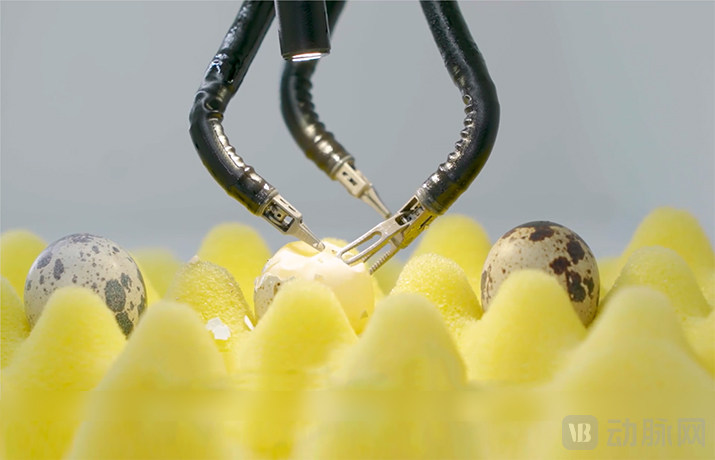
In contrast, serpentine surgical arms employ biomimetic technology, akin to pythons in nature, offering flexible and powerful movement. Their operating principle relies on the coordinated action of muscles surrounding the spine when the snake exerts force. The Surgerii single-port surgical robot leverages this principle. Around the central spine of the Surgerii robot are arranged numerous superelastic nickel-titanium alloy rods. This design ensures consistent instrument performance across all directions of motion while maintaining adequate force during surgery.
Leveraging its fully independently developed "dual-continuum mechanism" technology, the Surgerii surgical robot features high-rigidity serpentine surgical arms that deliver flexible and precise movements. These arms can perform complex surgical procedures within confined spaces, achieving independent, full-dimensional "6+1" degrees of freedom inside the patient's body. Meanwhile, the external robotic arms remain stationary during surgery, thereby eliminating the inherent risks of collision associated with the external arms of multi-port surgical robots and enhancing procedural safety.
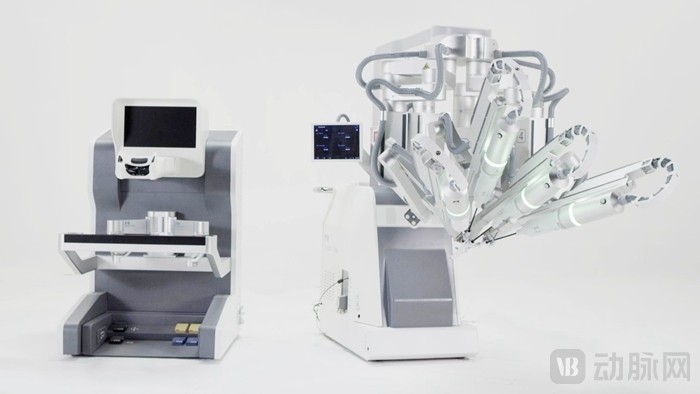
This snake-like surgical arm structure and technology ensure flexibility and operational space in clinical applications. Moreover, over 500 patents have been filed or granted globally for this technology, establishing a comprehensive intellectual property barrier that completely circumvents Da Vinci’s technological monopoly.
Currently, the Shurui serpentine-arm single-port surgical robot has completed clinical trials in urology and is undergoing further clinical trials in multiple departments, including gynecology and general surgery.
In the arena of medical technology, clinical efficacy is the litmus test for all products. How did the Shurui single-port surgical robot perform in clinical trials?
Currently, Shurui has completed urological clinical trials at four centers, performing nearly 200 single-port robotic surgeries. These procedures primarily included complex techniques such as radical prostatectomy, partial nephrectomy for renal cell carcinoma, ureteroplasty for ureteral stricture, and adrenalectomy for adrenal tumors, thereby covering the majority of urological surgical procedures.
From a clinical outcomes perspective, Professor Wang Linhui, the Principal Investigator of the clinical trial, stated: “Surgeries performed with the assistance of the Shurui robotic system proceeded smoothly and safely, without the need to convert to alternative surgical approaches. Clinical trial results demonstrated that, across various surgical procedures, surgeries conducted using the Shurui single-port robotic system were associated with minimal intraoperative blood loss, reduced surgical trauma, and accelerated postoperative recovery. The operating surgeons reported a high level of ergonomic comfort, with excellent operational experience even during complex procedures. Taking radical nephrectomy as an example, in nephron-sparing surgeries, the kidney preservation success rate was very high, achieving favorable oncological outcomes, ideal protection of renal function, and quicker patient recovery.”
Regarding device evaluation, Professor Wang Linhui stated: “The Shurui single-port surgical robot demonstrates strong performance across multiple dimensions, including comprehensive procedural coverage, safety, and operational smoothness. Single-port technology not only aligns with patient interests by causing less trauma, but also significantly reduces the technical demands on surgeons, enhances safety, and meets the value expectations of various stakeholders.”
During the industrialization of single-port surgical robots, Professor Xu Kai encountered numerous challenges; however, by building a foundational technology platform from the ground up, he has created greater room for ShuRui to expand its application scenarios.
Leveraging its single-port surgical robot technology platform, ShuRui is also exploring additional surgical procedures and products, such as natural orifice surgical robots.
The commercialization of surgical robots is a topic of significant industry interest. Discussing commercialization, Mr. Zhao Lei, Chief Commercial Officer and Director at ShuRui, believes that the core of commercialization lies in the value generated by the product’s actual clinical application. The core logic behind ShuRui’s commercialization strategy is also based on the realization and maximization of product value.
Mr. Zhao Lei believes that, driven by patient and clinical needs as well as technological advancements, the application of laparoscopic surgical robots will evolve from the current mainstream multi-port approach to single-port procedures, and even to natural orifice transluminal endoscopic surgery (NOTES). In the global surgical robot market, the da Vinci multi-port laparoscopic surgical robot was once considered the market ceiling. However, with continuous progress in minimally invasive surgical techniques, achieving smaller trauma for patients through single-port access has become the future development trend. Under these circumstances, the da Vinci multi-port robot no longer holds a leading advantage. Meanwhile, there is still room for further improvement in the clinical performance and indications of the da Vinci Single-Port (SP) system, and the market potential of single-port surgical robots has not been fully tapped. This presents Surgerii with an opportunity to overtake competitors in the field of laparoscopic robotics.ShuRui Surgical Robot is the first single-port laparoscopic robot in China to pass the Special Review Procedure for Innovative Medical Devices. ShuRui is also highly likely to become the first company in China and the second globally to obtain commercialization approval for a single-port laparoscopic robot.。
Mr. Zhao Lei stated, “From a commercial value perspective, single-port surgical robots offer significant benefits to hospitals, physicians, and patients alike.” For patients, the greatest advantage of single-port surgical robots is minimal invasiveness and reduced scarring. For physicians, these systems can drive clinical and research innovation, enabling the exploration of new surgical techniques assisted by single-port robotics and leading to new advances in clinical research. This entirely new technological platform presents opportunities to produce innovative research findings of substantial significance. For hospitals, adopting domestically developed, innovative single-port surgical robots holds greater economic value; Shurui aims to leverage fully indigenous, original innovative technologies to reduce procurement and operational costs for hospitals. We are optimistic about the market potential of single-port surgical robots that deliver value to multiple stakeholders, which will ultimately be fully realized.
Surgerii not only prevails with its revolutionary core technologies but also places great emphasis on innovation and standardization in product application. Mr. Zhao Lei introduced that Surgerii will continue to promote technological and clinical innovations through strategic industry-academia-research-application collaborations with top-tier hospitals across China, exploring and expanding the clinical application potential of single-port surgical robots. Meanwhile, it is jointly establishing training centers with leading provincial hospitals to promote standardized applications and benefit patients. Currently, several training centers co-established with renowned hospitals have begun operations, and further investment in training center construction will continue next year, laying the foundation for future commercialization.
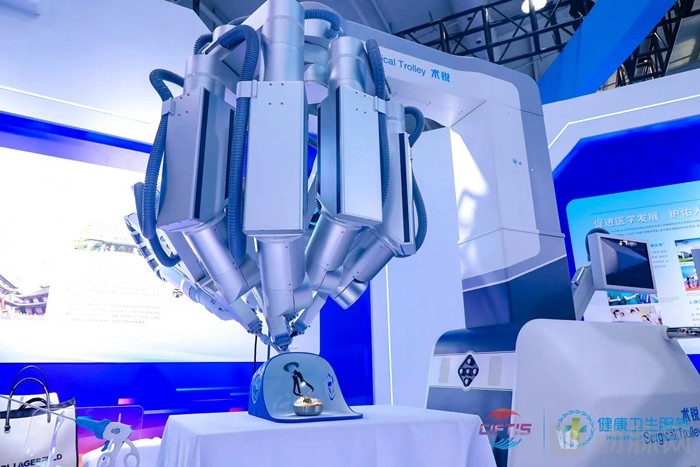
Minimally invasive surgery represents a major direction in the evolution of surgical practice, and single-port surgical robots are poised to lead a new wave of minimally invasive procedures. Historically, few Chinese enterprises have emerged as leaders during technological booms. However, with the maturation of the industrial chain and a cohort of practitioners with years of experience in surgical robotics dedicating themselves to independent innovation while closely collaborating with clinical research, the rise of China’s domestic surgical robot industry has become unstoppable.