

What Do This Year's Billion-Yuan Angel-Funded Startups Look Like?
In the past year or two, the investment fervor for early-stage healthcare projects has been self-evident, accompanied by a substantial influx of capital. According to incomplete statistics from VCBeat’s Orange Fruit Bureau, as of December 20, 2022, China’s healthcare sector had completed a total of 187 early-stage (seed and angel round) financing deals this year, among which 19 deals exceeded RMB 100 million, accounting for 10%.
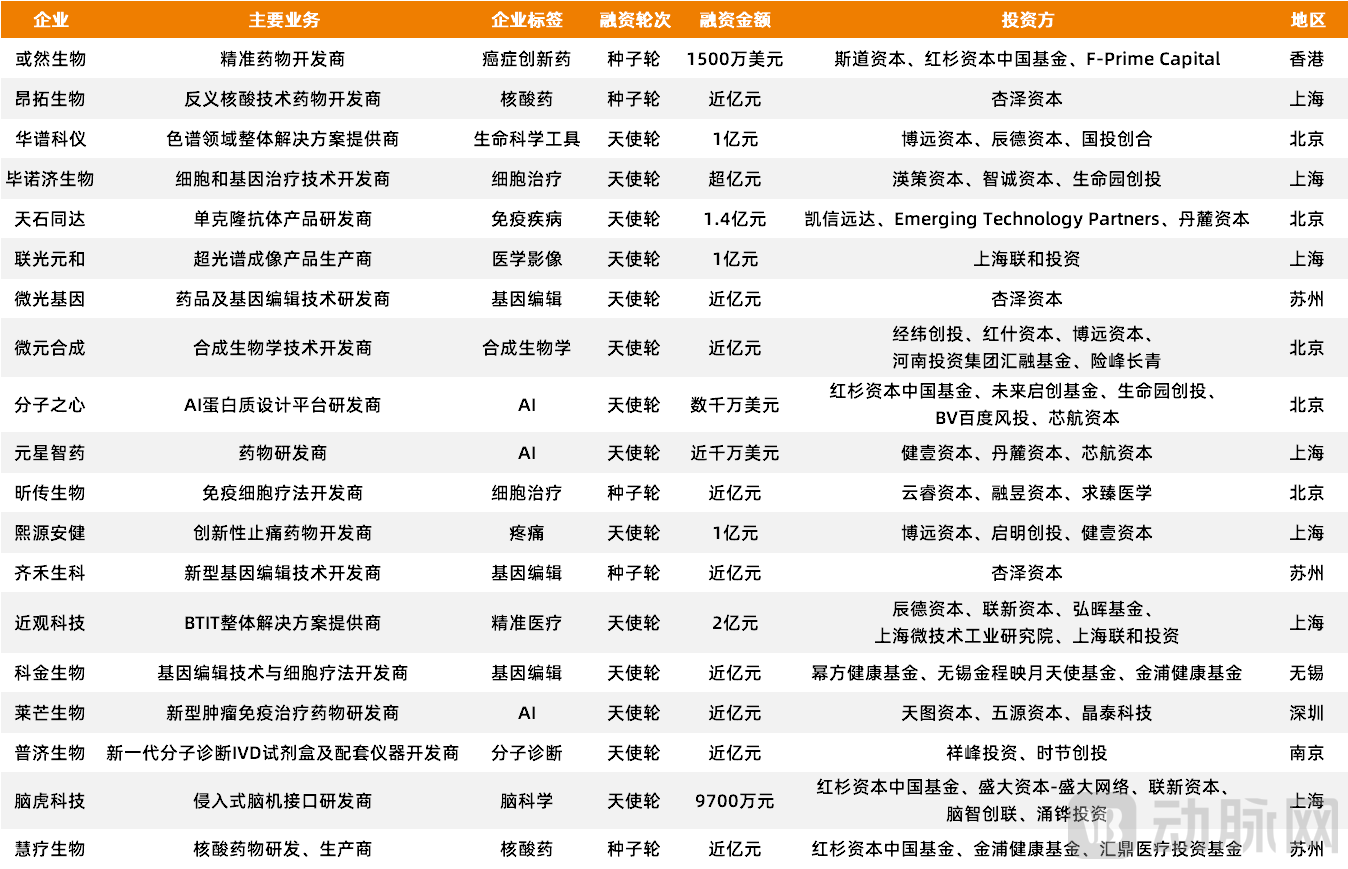
In fact, these financing rounds amounting to hundreds of millions of yuan can well be considered “sky-high deals” for early-stage healthcare projects. It is worth noting that four or five years ago, most early-stage healthcare financings were in the range of millions of yuan; however, in the past one to two years, with the rapid development of the healthcare industry, early-stage healthcare financings have basically reached the tens of millions of yuan level, and there have even been numerous early-stage financing deals in the hundreds of millions of yuan.
However, in 2022, influenced by multiple factors such as the pandemic and the gradual deflation of industry bubbles, the fervor in the healthcare venture capital sector declined significantly compared to the previous two years. Particularly in the second half of the year, the industry was buffeted by successive waves of “cold air.” Consequently, many professionals have stated that it would be commendable enough for healthcare companies merely to “survive” this year.
Yet a subset of healthcare startups has chosen to “go against the headwinds,” securing angel financing this year with amounts reaching hundreds of millions of yuan. What exactly underpins their strong “fund-raising appeal”? VCBeat’s Orange Fruit Desk offers an analysis.
Scientists Remain the "Main Force" in Entrepreneurship, Overseas Scientists Become "Hot Commodities"
According to statistics, among the 19 healthcare companies that secured angel financing exceeding RMB 100 million this year (as of December 20, 2022), only two were founded by non-scientists, while the other 17 were founded by individuals from top domestic and international universities and research institutions.
This aligns closely with the prevailing narrative of “scientist entrepreneurship” in the current healthcare sector. On one hand, China’s healthcare industry is entering a critical phase where indigenous innovation is essential to accelerate the substitution of imported products with domestically produced alternatives. On the other hand, the market environment is continuously providing bottom-up support to facilitate scientists’ entrepreneurial endeavors.
However, entrepreneurship is not the forte of scientists, particularly for those based in China. As the wave of scientist-led startups in China has only just begun to rise, the supporting infrastructure and overall ecosystem remain underdeveloped. Consequently, for the vast majority of Chinese scientists, there is still a considerable gap to bridge, both in terms of technical commercialization and in their capabilities as corporate founders. Only a rare few have successfully made the transition.
Therefore, while investment institutions continue to focus on domestic scientists, they are also turning their attention to overseas scientists. Statistics show that among 19 startups that secured angel financing exceeding RMB 100 million, eight were founded by overseas scientists returning to China. For instance, Probio Therapeutics, which announced the completion of a $15 million seed financing round this year, was co-founded by Dr. Yang Shi, a Professor of Epigenetics at the University of Oxford and the Ludwig Institute for Cancer Research. Dr. Shi is also a Fellow of the American Academy of Arts and Sciences and a Member of the U.S. National Academy of Medicine.
In addition, there is Antuo Bio, which completed a seed funding round of nearly RMB 100 million this year. Its two co-founders, Dr. Xuehai Liang and Dr. Yanfeng Wang, both have extensive overseas experience. Dr. Xuehai Liang is a senior expert in the field of antisense nucleic acid therapeutics and previously served as the head of the core technology department at Ionis. Dr. Yanfeng Wang is a senior expert in drug development, with many years of in-depth experience at Merck, Novartis, and Ionis prior to founding the company, where he led the DMPK and Clinical Pharmacology departments.
In recent years, the return of overseas scientists to China has become commonplace in the healthcare sector. Many domestic research institutions and universities are actively recruiting these talents, aiming to appoint them as principal investigators who lead cutting-edge scientific research and mentor young scientists. Additionally, there is a strong emphasis on accelerating the commercialization of their research achievements within the Chinese market. Currently, scientists with overseas backgrounds are attracting more attention from the venture capital and investment community than their domestically trained counterparts.
Focusing on critical clinical needs while exploring new scenarios for medical-engineering integration
According to statistics, all 19 healthcare companies that secured angel financing exceeding RMB 100 million this year (as of December 20, 2022) are hard-tech enterprises, including 12 biopharmaceutical companies and 5 medical device companies. Further analysis of these startups by Orange Bureau reveals the following trends:
· From the perspective of application scenarios, oncology treatment remains the main focus, while rare diseases are gradually gaining market visibility.
According to statistics, among the 19 startups that have secured angel financing exceeding RMB 100 million, 12 have focused their application scenarios on oncology treatment. For instance, Binuoji Biotechnology, which completed over RMB 100 million in angel financing this year, is deeply engaged in innovative T-cell therapies and currently focuses on the treatment of solid tumors. Additionally, Xinchuan Biotechnology, which closed a seed round of nearly RMB 100 million this year, leverages its comprehensively innovative iPSC-CAR immune cell therapy and high-throughput organoid screening technology to deeply focus on treating prevalent cancers such as lung cancer, liver cancer, colorectal cancer, and B-cell lymphoma.
However, oncology is not the only area of focus; in recent years, rare diseases have gradually emerged as a new driving force in the early-stage healthcare market. Among the 19 startups that secured angel financing exceeding RMB 100 million this year, two are focused on rare disease treatments: Kejin Biotechnology, which completed an angel round of nearly RMB 100 million this year, and Antuo Biotechnology, mentioned earlier.
Kejin Biologics focuses on treating rare diseases using gene editing technology and cell therapy, and is currently advancing the IND applications for its first rare disease product pipeline—pyruvate kinase deficiency—in both China and Europe. Antuo Biologics, on the other hand, develops nucleic acid drugs for severe rare diseases based on antisense oligonucleotide technology, modulating gene expression up or down according to disease mechanisms.
Although rare diseases have garnered significant attention, delving into this field presents substantial challenges. On one hand, clinical research and patient enrollment face immense difficulties due to limited understanding of disease pathogenesis and insufficient sample sizes. On the other hand, issues related to reimbursement systems and patent protection periods pose significant hurdles. The patient population for rare diseases is small, and given the high cost of medications, only a negligible fraction can truly afford them. Furthermore, once patent protection expires, other pharmaceutical companies can freely leverage these innovations and rapidly capture market share by offering lower-priced alternatives. At that point, the original innovator loses its competitive edge, inevitably leading to a “cliff-like” drop in revenue.
However, we must also recognize the positive developments. Since nusinersen sodium injection suddenly gained widespread attention in China, rare diseases have received heightened focus across policy, research, and industrial sectors. On the policy front, review and approval processes have been optimized to promote clinical trial data research and intellectual property protection. On the payment front, more than 10 drugs for rare diseases have been included in the national medical insurance list over the past one to two years, while regions such as Beijing, Shanghai, Guangdong, and Sichuan are actively exploring diverse payment models for rare disease medications. Finally, on the industrial front, numerous research institutions and enterprises are intensifying their research efforts on rare diseases, with capital increasingly flowing into this emerging field.
It is reported that China has a substantial population of patients with rare diseases. According to the latest data, there are currently approximately 20 million rare disease patients in China, with over 200,000 new cases diagnosed each year, half of whom are children. However, at present, medications for rare diseases in China rely primarily on imports. Therefore, it is essential to continuously inject innovative forces into this “rare” field, thereby promoting the market entry of more domestically produced rare disease drugs and making them accessible to the general public.
· In terms of specific subsectors, gene editing has garnered the most attention, while hot fields such as nucleic acid therapeutics, brain science, and synthetic biology remain at high levels of interest.
According to statistics, the 19 startups that secured angel financing exceeding RMB 100 million are primarily concentrated in hot sectors within the current medical field, such as gene editing, cell therapy, nucleic acid drugs, brain science, and synthetic biology. Among these, gene editing is the most prominent sector, with three startups—Weiguang Gene, Qihe Bioscience, and Kejin Biotech—each securing angel financing of over RMB 100 million this year.
After years of technological accumulation and development, gene editing has evolved from early Zinc Finger Nuclease (ZFN) and TALEN technologies to more programmable approaches such as CRISPR, Base Editing, and Prime Editing. It is currently experiencing rapid growth across multiple application areas, including agricultural biotechnology breeding, biopharmaceuticals, and synthetic biology. The prestigious international academic journal Nature also listed precise genome editing technologies as one of the seven notable technologies to watch in 2022.
However, on a global scale, gene editing technology remains in its early stages of development. This is particularly true in China, where there is currently a lack of gene editing technologies with independent intellectual property rights. Moreover, the majority of existing research is focused on applied studies, with very few companies and researchers dedicated to bridging the gap from core gene editing technologies to their practical applications. In addition, ethical considerations, regulatory oversight, and legal frameworks governing the application of gene editing in China are still in an exploratory phase and require further refinement in the future.
In fact, gene editing is not the only area attracting significant attention; other hot sectors from the past couple of years, such as nucleic acid therapeutics, brain science, and synthetic biology, have also begun to yield results this year. Taking nucleic acid therapeutics as an example, the COVID-19 pandemic that swept across the globe has prompted the pharmaceutical industry to reevaluate nucleic acid technologies. In line with global trends, the development of China’s nucleic acid drug sector over the past three years has further clarified the current challenges facing this technology: delivery systems, patents, talent, and technical platforms.
Huiliao Biopharma, a “new star” in the nucleic acid therapeutics sector that secured nearly RMB 100 million in seed financing within just six months of its establishment this year, is betting on non-LNP delivery technologies. The company has targeted the most challenging aspect of nucleic acid drugs—widely recognized as the key to achieving “overtaking on a bend”—namely, delivery technology. It is pursuing a globally leading yet unvalidated approach: a CLS delivery system primarily composed of proteins, which the industry regards as the second-generation technology for nucleic acid therapeutics following LNP. Currently, Huiliao Biopharma is strategically filing its core patent portfolio both domestically and through the Patent Cooperation Treaty (PCT).
· From a future-oriented perspective, scientists and venture capital firms are exploring more possibilities for integrating innovative technologies with medical scenarios.
Each influx of innovative technologies has brought disruptive changes to the healthcare sector. For instance, after internet technology made significant inroads into healthcare in 2014, the industry rapidly entered a new phase. Every application scenario—from research and development to diagnosis and treatment, and further to payment—was redefined, injecting new vitality into the field.
Currently, both scientists and industry players—primarily investment institutions—are seeking new breakthroughs, leading to an increasing number of cutting-edge technologies being integrated into medical scenarios. A case in point is Yuanxing Zhiyao, which completed a nearly $10 million angel financing round this year. It is the first startup in China to apply AI knowledge graphs combined with multi-omics analysis technologies to address aging-related issues.
In addition, there is Lian Guang Yuan He, which completed a RMB 100 million angel financing round this year. As a manufacturer of hyperspectral imaging products, the company is dedicated to developing a series of products across three major segments: spectral imaging, light source systems, and optical processing technologies. It aims to provide core strength for Chinese manufacturing in the fields of scientific instruments and advanced processing, while actively participating in global competition for top-tier scientific research instruments and high-end equipment.
In fact, although the integration of innovative technologies with medical scenarios has seen some progress in recent years, it remains far from sufficient. The convergence of medicine and engineering holds immense potential for future development, awaiting exploration by scientists and recognition by venture capital firms.
Sequoia “Takes the Lead” as Investors Become More Diversified and Sophisticated
“Investing early” has long become the consensus among investment institutions. According to statistics, in the 19 early-stage financing deals exceeding RMB 100 million that occurred this year, a total of 47 venture capital firms participated. Among them, Sequoia Capital China Fund participated in four deals, investing in Oran Biotech, Molecule Mind, NeuroXess, and HuiLiao Bio respectively.
In fact, Sequoia Capital has not only stood out in angel financing rounds exceeding RMB 100 million; throughout 2022, it demonstrated keen insight and strong execution capabilities in early-stage healthcare projects. As of December 20, 2022, Sequoia had completed 11 early-stage financing deals in the healthcare sector, making it the most active investor among all institutions. Its investments primarily focused on hot sectors such as nucleic acid therapeutics, synthetic biology, brain science, and precision instruments.
In fact, as early as 2018, Sequoia had already begun to “make moves” in early-stage healthcare investments. It took the lead in establishing Sequoia China Seed Fund in 2018 and, over the past nearly four years, has invested in dozens of early-stage healthcare companies, many of which have progressed to the growth stage, with several becoming industry unicorns.
A deeper analysis of Sequoia’s early-stage healthcare investment logic reveals that it is not only equipped with substantial financial strength and keen industry insights, but also continuously experimenting with linking key scientific resources and enhancing post-investment services. For instance, the inaugural Life Science or Medicine Award presented this year by the World Laureates Association was exclusively endowed by Sequoia. The award aims to connect with more scientists in the global healthcare sector and continually identify new opportunities at the intersection of medicine and engineering.
In terms of post-investment service capabilities, Sequoia has internally established six major modules, including startup empowerment, brand marketing and event support, human capital enablement, and technology empowerment. These modules cover all stages of corporate development, offering a suite of solutions that range from universal to deep, personalized support—spanning foundational areas such as human resources, marketing, and organizational management, to more advanced needs like financing management, industry matchmaking, and digital transformation.
According to Yang Yunxia, a partner at Sequoia China, more than 200 of the firm’s nearly 300 team members are dedicated to providing services to its portfolio companies. This is highly necessary, as early-stage healthcare startups often need a trusted “partner” capable of addressing multiple challenges even more than they need capital.
This is because early-stage medical projects encounter a variety of challenges as they move forward, such as strategy formulation, team building, product development, patent layout, and commercial translation. Each of these challenges has the potential to become the final straw that breaks the camel’s back for startups. Therefore, in their early stages, startups are in greater need of investment institutions with the composite ability to solve various practical problems.
Of course, in addition to Sequoia Capital, top-tier firms such as Matrix Partners China, Xingze Capital, Baidu Ventures, Qiming Venture Partners, Chende Capital, Danlu Capital, Honghui Fund, and Jinpu Health Fund are also actively positioning themselves in the early-stage healthcare market. Beyond these established players, some “new faces” have emerged among early-stage healthcare investors. These include the Shanghai Institute of Microsystem and Information Technology (backed by research institutions), Life Park Venture Capital and Henan Investment Group’s Huirong Fund (spearheaded by local governments or industrial parks), as well as Shanda Capital, an arm of the game developer Shanda Networks. All of them are participating in this wave of early-stage medical innovation in their own unique ways.
Regardless of who they are, anyone entering the early-stage medical investment market must possess several core competencies. These include establishing an investment thesis for early-stage ventures that aligns with their own strengths; carefully selecting therapeutic areas and investment targets; mastering the “language of scientists” to facilitate efficient communication with researchers; refining post-investment capabilities to build an innovation ecosystem suited to their specific needs; and finally, adopting a long-term perspective. Both in selecting early-stage project targets and for the institution itself, it is essential to take a rational, long-view approach aimed at pursuing long-term returns.
Which startup will be the next to secure RMB 100 million in financing?
Following Weiyuan Synthesis’s completion of a nearly RMB 100 million angel financing round this year, led by Matrix Partners China, Dr. Tao Yong, Director of the Key Laboratory of Microbial Physiology and Metabolism at the Institute of Microbiology, Chinese Academy of Sciences, stated, “As manufacturers of substances, latecomers seeking development opportunities amid fierce competition from established industry giants must remain clear-headed about the value they create. While current entrepreneurs have told many compelling stories that greatly expand the imaginative possibilities for the future of synthetic biology, entrepreneurship is not scientific research. Entrepreneurs need to aim high, but more importantly, they must stay grounded. Early-stage product selection does not necessarily require a massive market, but it must feature sufficiently high technical barriers. Possessing technology that is globally leading or exclusively available worldwide can not only instill confidence in investors but also secure adequate time and space for the company’s growth and expansion.”
This is indeed the case. China’s healthcare sector is entering a phase that demands “genuine innovation,” meaning technologies must first possess originality and then be applied to clinical scenarios with substantial unmet needs. However, entrepreneurship is not a one-off transaction but a long-term process. Therefore, possessing cutting-edge technology serves merely as a “stepping stone”; building a lasting enterprise requires scientists to develop multifaceted capabilities in their role as entrepreneurs.