

OrbusNeich Medical Successfully Lists on HKEX, Setting a Benchmark for Chinese Vascular Intervention Device Makers Going Global

OrbusNeich
Cardiac Interventional Treatment Product R&D and Production Manufacturer
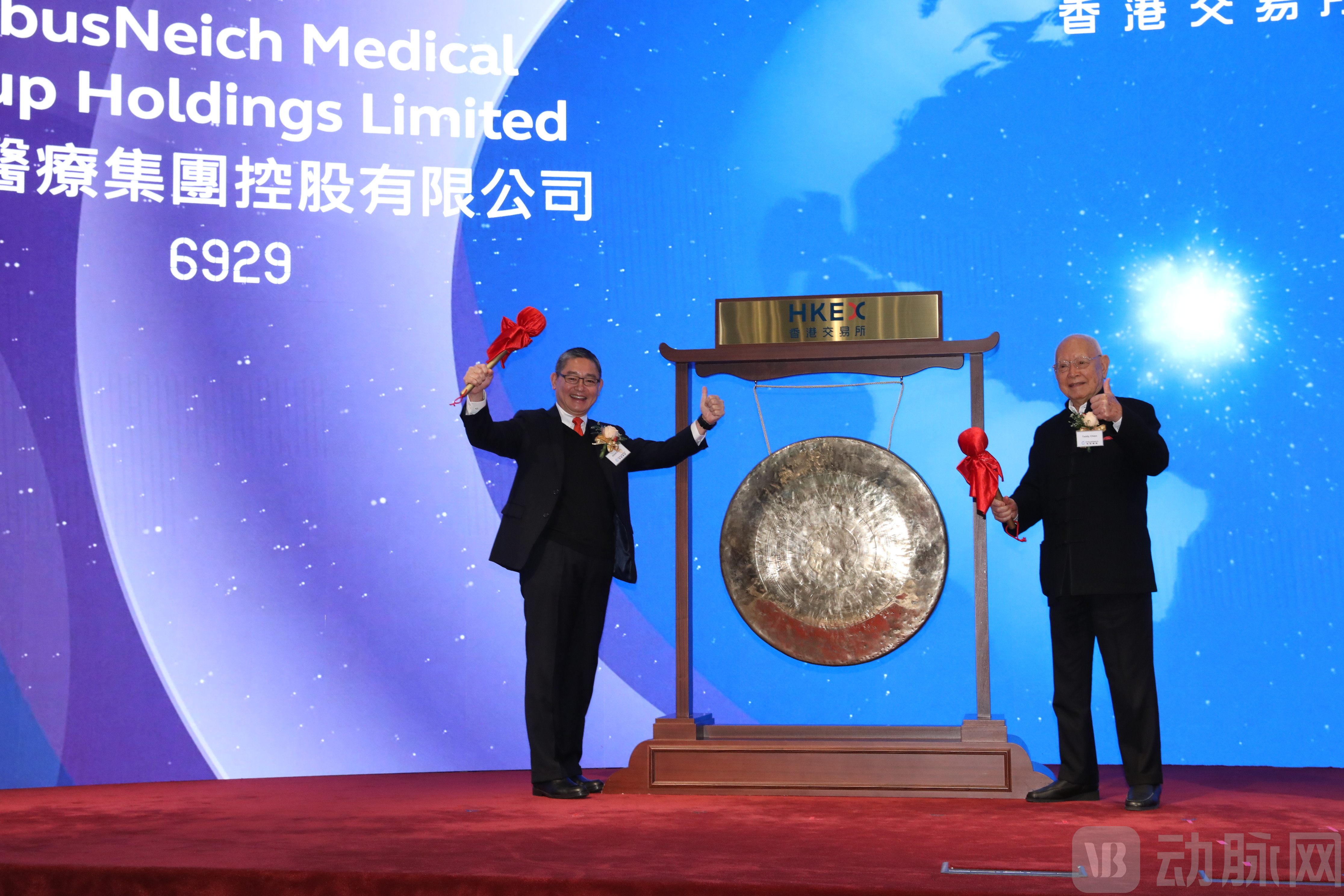
On December 23, OrbusNeich was officially listed on the Main Board of the Hong Kong Stock Exchange. The opening price was HK$8.8, and the closing price on the same day was HK$9.15, representing a 3.98% increase. The total market capitalization reached HK$7.574 billion.
According to available information, OrbusNeich was founded in 2000 and is headquartered in Hong Kong, China. It is an innovative global enterprise specializing in vascular interventional medical devices, with production and R&D bases in China, the Netherlands, and the United States, and branches distributed worldwide. Currently, OrbusNeich has more than 40 products approved for sale globally, including semi-compliant balloons, dedicated catheters, scoring balloons, and non-compliant balloons, covering all major therapeutic procedures in PCI and PTA surgeries.
OrbusNeich is also actively expanding its business in the fields of neurovascular intervention and structural heart disease, with products such as valvuloplasty balloon catheters, balloon-expandable heart valves, next-generation heart valves, neuro balloons, neuro microcatheters, and neuro occlusion balloons currently under research and development.
In addition, leveraging its robust global commercialization capabilities, OrbusNeich holds a leading position in major markets worldwide. Based on 2021 PCI balloon sales volume, OrbusNeich ranked second in Japan, fourth in Europe, and sixth in both the United States and China. In the PTA balloon market, OrbusNeich also maintains a competitive advantage, with its product sales ranking third in Japan and fourth in the United States.
Overall, OrbusNeich is the only company headquartered in China that ranks among the top six in market share within major overseas PCI markets, including Europe, the United States, and Japan. At a time when centralized procurement has become normalized and prices for vascular intervention products have dropped significantly, OrbusNeich provides a benchmark case for Chinese medical device companies seeking to expand globally.
A review of OrbusNeich's financial data reveals three major characteristics.
First, although affected by the pandemic and the global environment,OrbusNeich’s Revenue Continues to Maintain Rapid GrowthFrom 2019 to 2021, OrbusNeich’s revenue reached US$96.34 million, US$88.47 million, and US$116 million, respectively. In the first half of 2021 and the first half of 2022, its revenue amounted to approximately US$57.34 million and US$68.85 million, respectively. In terms of growth rate, OrbusNeich’s revenue increased by 31.6% year-on-year in 2021, and maintained a 20.1% growth in the first half of 2022 compared with the same period of the previous year.
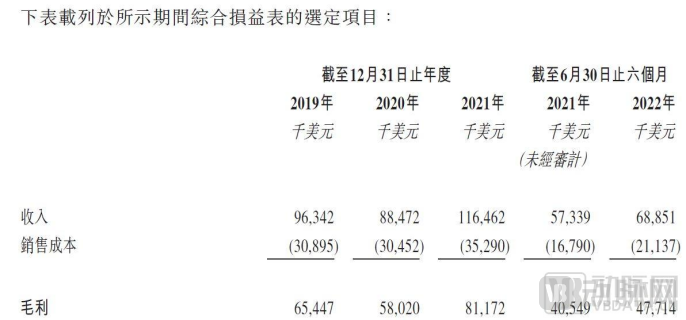
Second, compared with other listed medical device companies that are not yet profitable,OrbusNeich Demonstrates Exceptional Profitability. In 2021, OrbusNeich’s adjusted annual profit was approximately US$21.4 million, representing a year-on-year increase of 201.4% compared with 2020; in the first half of 2022, despite a high base, adjusted profit still maintained a year-on-year growth of 23.6%, reaching US$13.6 million.
Third,OrbusNeich Demonstrates Strong Globalization Capabilities, with Overseas Revenue Accounting for Nearly 95%From 2019 to the first half of 2022, OrbusNeich’s overseas revenue accounted for 80%–95% of its total revenue. In the first half of 2022, revenue from Japan and from Europe, the Middle East, and Africa (EMEA) each represented approximately 25% and 24% of total revenue, respectively. Meanwhile, the share of revenue from the U.S. market, which OrbusNeich only entered in 2017, rose significantly from 4.5% in 2019 to approximately 10.2% in the first half of 2022.
Notably, OrbusNeich not only focuses on overseas markets but has also achieved breakthroughs in the international arena. It is worth noting that Chinese manufacturers of high-value consumables have long struggled to penetrate overseas markets due to high entry barriers, intense competition, stringent localization requirements, and the high market concentration of PCI and PTA balloon segments.
Statistical data shows that four companies monopolize 88% of the Japanese PCI balloon market, while six companies monopolize 97% of the European PCI balloon market; five companies monopolize 97% of the European PTA balloon market...
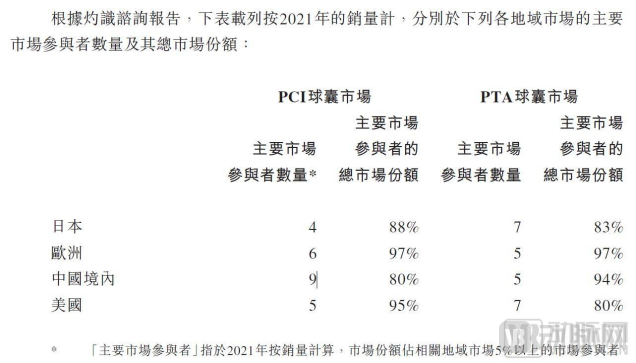
OrbusNeich holds a leading position in major international markets, including Europe, Japan, the United States, and China. Based on 2021 sales volume, OrbusNeich ranked second in the Japanese market and fourth in the European market for PCI balloons, while ranking sixth in both the Chinese domestic and U.S. markets. For PTA balloons, the company ranked third in Japan and fourth in the United States.
OrbusNeich stands shoulder to shoulder with leading medical device giants and has become one of the dominant players in the PCI and PTA balloon markets, owing to its exceptionally strong global commercialization capabilities.
In the highly competitive international market with high entry barriers, OrbusNeich already has more than 40 products sold globally, including 25 products approved by Japan’s PMDA, 22 products bearing the EU CE mark, 14 products approved by the U.S. FDA, and 15 products approved by China’s National Medical Products Administration.
It should be noted that product approval is merely the first step in entering overseas markets; subsequent efforts must focus on hospital formulary inclusion, gaining recognition from hospitals and experts, enhancing brand equity, and expanding sales volume.
In response, when OrbusNeich first entered overseas markets, it initially broke through the encirclement of industry giants and increased hospital coverage by leveraging its unique products. For instance, upon entering the U.S. market, OrbusNeich launched the chronic total occlusion (CTO) balloon with the smallest diameter available on the market, earning recognition from hospitals and experts. In other newly entered markets, OrbusNeich also introduced innovative products such as the Sapphire II Pro CTO balloon with the lowest profile and the market’s exclusive dual-therapy stent, thereby penetrating these markets by capitalizing on the clinical advantages of its products.
After securing a certain market share, OrbusNeich began to facilitate the launch of new products in mature markets, driving rapid revenue growth. For instance, in Japan, a market where OrbusNeich holds a competitive advantage, the company introduced new guide extension catheters to complement its existing portfolio of balloons and stents. These new products can be combined with existing offerings to create one-stop solutions, thereby enhancing overall product competitiveness.
Furthermore, in mature markets, OrbusNeich maintains its existing market share by upgrading its product portfolio and launching higher-performance products.
In summary, OrbusNeich first broke into the market and gained favor by leveraging its core differentiated products. It then launched complementary products, utilizing its core offerings to facilitate their adoption in hospitals, thereby creating a one-stop solution and enhancing product competitiveness. Finally, through continuous innovation and product iteration, it introduced new products to capture and expand its market share.
To date, OrbusNeich’s core business focuses on interventional devices for PCI/PTA procedures, including standard balloons, scoring balloons, CTO balloons, drug-coated balloons, bare-metal stents, drug-eluting stents, and microcatheters.
According to a Frost & Sullivan report, the market size of interventional devices for PCI/PTA procedures is expected to grow steadily. In China, the usage volume of PCI balloons increased from 874,000 units in 2015 to 2.1 million units in 2021, and is projected to further rise to 6.4 million units by 2030. The domestic market size of PTA interventional devices grew from RMB 167 million in 2015 to RMB 280 million in 2021, and is expected to reach USD 977 million by 2030.
Despite the rapid market growth, both major subsectors of interventional devices for PCI and PTA procedures face multifaceted challenges.
In the global PCI/PTA balloon market, key players such as Medtronic, Abbott, and Boston Scientific enhance their competitiveness by continuously iterating and updating existing products while innovating to develop next-generation offerings. Under these circumstances, older-generation products will gradually be phased out, and companies that fail to engage in innovation will also be eliminated from the market—much like how the market share of bare-metal stents shrank dramatically following the introduction of drug-eluting stents. Therefore, intense market competition necessitates that industry participants continually increase their R&D investment and upgrade their product portfolios.
In response to this situation, OrbusNeich has built a diversified portfolio of PCI/PTA procedural products by expanding its product lines and upgrading its existing product mix, thereby enhancing its market competitiveness.
Specifically, OrbusNeich continues to upgrade its existing products, such as the fourth-generation Sapphire balloon series, the next-generation Jade II series PTA balloons, and the Teleport II microcatheter currently under development, while also tailoring the ScoreFlex II series scoring balloons for the Japanese market.
Meanwhile, OrbusNeich is also expanding its product portfolio across different series. For instance, its developed ECMO left ventricular assist device is currently in the preclinical stage. The company is also developing a next-generation sirolimus-coated drug-eluting balloon product, which can accurately deliver sufficient doses of active pharmaceutical ingredients to the lesion site, thereby reducing the risk of thrombosis and promoting lesion repair.
Through continuous innovation, OrbusNeich has maintained its competitiveness in the global PCI/PTA balloon market.
Secondly, public awareness of the disease is low, resulting in a low penetration rate of surgical interventions. In 2021, the penetration rate of percutaneous transluminal angioplasty (PTA) interventions in China was 0.6%, significantly lower than the 6.7% for percutaneous coronary intervention (PCI).
In response to the common challenges facing this industry, OrbusNeich plans to strengthen public education to raise awareness of the severity of peripheral artery disease (PAD) and promote physician-focused educational initiatives. Great journeys begin with single steps. With educational and promotional efforts by industry players such as OrbusNeich, the penetration rate of percutaneous transluminal angioplasty (PTA) interventions is expected to rise rapidly.
Finally, governments worldwide will use relevant policies to cap the prices of medical device products and limit corporate profit margins. For instance, China has implemented normalized centralized procurement, while countries such as Japan and the United States also have corresponding policies that affect the profit margins of medical device products.
OrbusNeich stated, “Volume-based procurement has undoubtedly brought significant opportunities to the company. Currently, the top four brands in China’s PCI balloon market are all from overseas, accounting for approximately 70% of the entire Chinese balloon market. The localization of medical devices is a major trend, so there is still substantial room for market growth for domestically produced products. With our strong reputation in key overseas markets such as Japan, Europe, and the United States, we are well-positioned to capitalize on the process of domestic substitution.”
OrbusNeich’s global footprint also gives it a natural advantage in mitigating policy-related risks. To date, OrbusNeich’s products have been sold in more than 70 countries worldwide, with its R&D expenses spread across this vast market base. As a result, OrbusNeich can draw on many other national and regional markets to navigate changes in any single market with ease.
In addition to expanding its diverse product lines and upgrading its existing product portfolio, OrbusNeich is also strategically positioning itself in the fields of structural heart disease and neurointervention.
For example, in the field of interventional structural heart disease, OrbusNeich established a joint venture with its partner in 2020 to develop, manufacture, and market heart valve products. According to reports, the joint venture’s first commercialized product, TricValve, is the world’s first pre-loaded bicaval stent valve system designed for the treatment of severe tricuspid regurgitation. Meanwhile, the joint venture is also concurrently developing a diverse product portfolio that includes aortic valve replacement, mitral valve replacement, and pulmonary valve replacement solutions. In addition, OrbusNeich is collaborating with its partner to co-develop balloon-expandable heart valves and next-generation heart valve products.
In the field of neurointervention, OrbusNeich’s products—including neuro balloons, neuro microcatheters, neuro occlusion balloons, and drug-coated neuro balloons—have entered various stages of research and development or regulatory registration, with the neuro balloon expected to receive approval around the end of the year.
It is worth noting that the structural heart disease and neurointerventional sectors both have numerous market participants in China, leading to extremely fierce competition. According to incomplete statistics from VCBeat, there are over 25 companies in the neurointerventional field, with most adopting a platform-based strategy, resulting in significant homogenization of domestically produced neurointerventional products.
In light of the current market landscape, OrbusNeich has chosen to bet on the fields of structural heart disease and neurointervention. This decision is driven by two key factors: first, its R&D products are “derived from clinical practice and applied in clinical settings,” aiming to address unmet clinical needs for which there are currently no superior solutions on the market; second, OrbusNeich possesses strong global commercialization capabilities, allowing it to leverage its channel advantages and clinical product benefits to expand worldwide, thereby competing in international markets rather than engaging in cutthroat competition solely within the domestic market.
Leveraging OrbusNeich’s innovative strength, channel capabilities, and high-quality innovative products that meet clinical needs, the company will accelerate the global expansion of its medical devices in the fields of structural heart disease and neurointervention.
From the three major dimensions of commercialization capability, innovation strength, and product strategic layout, OrbusNeich’s prospects are promising.
In terms of commercialization capabilities, OrbusNeich has established a comprehensive global sales network combining direct sales and distribution, enabling its products to reach over 70 countries and regions worldwide.
In terms of innovation strength, OrbusNeich has pioneered multiple proprietary technologies, such as its world-leading antibody coating technology with “healing-promoting” functions, and has secured over 100 granted patents across major global jurisdictions, including 32 in the United States and 45 in China.
In terms of strategic layout, OrbusNeich not only consolidates its position in the PCI/PTA balloon market but also prioritizes expansion into the emerging markets of structural heart disease and neurointerventional procedures, thereby breaking through growth ceilings.
Therefore, we believe that with the market launch of OrbusNeich’s innovative products in the fields of interventional structural heart disease and neurointervention, the company will gain two powerful engines to rapidly expand its business scale.
OrbusNeich’s 20-year development journey has set a benchmark for Chinese medical device companies expanding into global markets. Its successful listing on the Main Board of the Hong Kong Stock Exchange marks the beginning of a new chapter. Let us witness its future path together!