

Bridging the Last Mile in Cancer Care: A Digital Therapeutics Approach to Overcome Undertreated Cancer Pain in China
The five-year survival rate for cancer is a key indicator reflecting a country’s capacity in cancer diagnosis and treatment. Publicly available data show that China’s five-year survival rate was approximately 40.5% in 2020, whereas the United States achieved a rate of 70% in 2018.
To close the survival rate gap, state-led major cancer screening programs are being systematically advanced, while pharmaceutical and medical device companies continue to achieve breakthroughs and innovations in radiotherapy, chemotherapy, and targeted therapy, propelling China’s anti-tumor treatment technologies to a leading international level.
The establishment of an effective prevention and control system will inevitably lead to a continuous improvement in the survival rates of cancer patients; however, certain deficiencies still remain within this system.
As the central focus of every cancer-fighting effort, patients’ quality of life determines the efficacy of anti-tumor therapy. However, few pay attention to what patients endure beyond surgery and chemoradiotherapy, nor is it easy to gauge how the onset of “cancer pain” transforms the lives of those with cancer.
It is commonly believed that cancer pain occurs only in the advanced stages of malignancy; however, data presented in Diagnosis and Treatment of Refractory Cancer Pain indicate that 25% of patients with early-stage tumors experience cancer pain, the prevalence rises to 33% during post-treatment and stable phases, and reaches 60%–80% in advanced stages.
Cancer Pain Can Occur in Any Cancer Patient.
For the pain caused by cancer, different tumor patients experience varying sensations, but a common thread is hidden in every patient's words: it is an unbearable pain.
“Breakthrough pain was simply like childbirth. It would start at a fixed time each day, causing me to cry out and scream in agony, feeling as if I were on the verge of death. Initially, breakthrough pain occurred once a day, lasting half an hour; later it extended to one hour, and then to three hours. It was truly excruciating!”
“I am now in such severe pain that I can barely walk; at times, I cannot even stand up, and once standing, I am unable to sit back down. During sleep, any sudden muscle twitch triggers excruciating pain. Using the toilet has become a severe ordeal for me; each time I finish, the back pain is so intense that it brings me to tears.”
It is important to note that cancer pain is not rare in clinical practice. On the contrary, among the 4.57 million new cancer cases in China in 2020, 60%–80% experienced severe pain and extreme suffering.
In a speech, Dr. Wang Jiejun, Director of the Department of Oncology at Shanghai Changzheng Hospital, provided a comprehensive overview of the negative impacts of cancer pain: “Cancer pain, along with associated symptoms such as nausea, vomiting, cachexia, and emotional disorders, gradually undermines patients’ will to fight against cancer and leads to reduced adherence to anti-tumor treatments. For instance, cachexia can decrease patients’ tolerance to treatment, prolong hospital stays, and increase adverse reactions, thereby affecting subsequent cancer therapy.”
“If we fail to manage cancer pain, we cannot effectively treat the tumor.”
Faced with the particularly challenging issue of cancer pain, the World Health Organization (WHO) long ago proposed the Three-Step Analgesic Ladder principle. This approach categorizes analgesics into three steps: non-opioid, weak opioid, and strong opioid medications. Treatment begins primarily with non-opioid analgesics (Step 1); if pain remains uncontrolled, small doses of weak opioids (Step 2) are added sequentially, followed by strong opioid analgesics (Step 3) as needed.
Theoretically, strict adherence to the three-step analgesic ladder principle can effectively alleviate or even completely resolve pain symptoms in 80%–90% of cancer patients. However, empirical studies indicate that 31%–65% of cancer-related pain remains inadequately controlled under the guidance of this principle. This is largely attributable to the fact that the medication adherence rate among cancer pain patients, in terms of voluntarily following medical advice for analgesic use, is only 26.14%.
Addressing cancer pain hinges on improving patient adherence.
Multiple factors contribute to poor adherence. Misconceptions about medications, misconceptions about pain, the adverse impact of negative emotions, and the absence of reminder and monitoring mechanisms can all lead patients to refuse medication.
Since childhood, when facing injections or intravenous infusions, our parents often encouraged us not to fear pain, positioning the crying and fussing caused by pain as the opposite of bravery. This early education was so deeply ingrained that, as we grow older and begin to endure the ravages of disease, many patients still feel ashamed to even mention the word “pain.”
However, in the face of cancer pain, patients’ endurance based on misconceptions does not help control the pain; instead, it may lead to psychological and emotional behavioral changes, and even damage sensory nerves, resulting in refractory cancer pain.
“Many patients do not regard pain as a disease, but merely as a symptom, believing that it will resolve if they simply endure it. However, once acute pain transitions into chronic pain, the overall pain experience becomes entirely different. While acute pain serves a protective function for the human body, chronic pain not only lacks this protective benefit but also leads to damage in descending neural pathways and dysregulation of modulatory mechanisms,” Director Wang Jiejun told VCBeat.
More critically, there are widespread misconceptions about medications among both physicians and patients.
According to the World Health Organization guidelines, opioids (including morphine, oxycodone, and hydromorphone) can be used as first-line treatment for moderate-to-severe cancer-related pain, providing effective relief for 90% of patients with severe cancer-related pain. However, due to the close association of these drugs with opium poppies and the negative social impacts resulting from their abuse, many patients harbor an almost instinctive fear of such medications.
“This painkiller should not be taken long-term, as prolonged use can lead to addiction, making it difficult to quit later, much like with illicit drug use. Although it provides relief now, long-term use will result in drug dependence.”
“I’ve heard that this drug has significant side effects and can even shorten lifespan. I myself experience dizziness when taking it, and before the illness is even cured,”
“It’s more likely that this medication will first wreck my body.”
Furthermore, determining whether to use opioids and identifying the optimal dosage represent significant challenges for healthcare professionals in China, thereby leading to their reluctance to prescribe these medications.
“Once, I had my mother take a 40-milligram dose of oxycodone. That day, she vomited up her breakfast, lunch, and dinner—all in projectile fashion—so violently that she couldn’t even make it to the bathroom in time. She felt drowsy and groggy all day long. After that, my mother never dared to urge me to take painkillers again.”
Overall, the inadequate understanding of opioids among both physicians and patients has led to relatively backward pain management in China. The International Narcotics Control Board evaluates a country’s pain management performance based on its consumption of medical morphine; China ranked 83rd in 2012 but slipped to 105th by 2019. To revitalize cancer pain management in China, changes are needed not only from patients.
From a results-oriented perspective, there are essentially two approaches to improving adherence: first, eliminating public misconceptions about opioids; and second, identifying effective methods for the precise assessment and high-frequency management of cancer pain.
The dissemination of authoritative medical knowledge typically involves expert teams reaching consensus and developing guidelines, which are then conveyed to patients through face-to-face interactions. However, since cancer patients rely heavily on their families in their fight against the disease, a more effective approach is to leverage the internet to deliver broader-reaching health education.
Domestic internet-based science popularization platforms have reached a relatively mature stage of development. Platforms established by internet companies, such as Tencent Medical Classic and Baidu Health Medical Classic, have launched corresponding content with the support of authoritative experts, effectively expanding the reach of information on cancer pain.
Many physicians are also striving to enhance patients’ understanding of cancer pain. For instance, Dr. Azizoddin at the University of Oklahoma developed a mobile application called “STAMP” for opioid management in patients with advanced-stage cancer pain. The app delivers education on both pharmacological and non-pharmacological aspects of pain self-management through animated videos, visually enhanced educational texts, self-management challenge quizzes, and audio-guided relaxation exercises. It also provides personalized guidance and recommendations based on patients’ symptom reports, aiming to meet their needs as accurately as possible.
In this process, the Internet, as a medium, has not only expanded the reach of cancer pain management knowledge but also extended treatment beyond the hospital setting, enabling patients to participate more intuitively and deeply in monitoring and education.
However, dissemination and monitoring alone are insufficient to achieve effective cancer pain management. Since cancer pain cannot be quantitatively analyzed through imaging modalities such as CT or MRI, it relies on patients’ qualitative self-reports based on sensory experiences. Consequently, the resulting assessments are often subjective and subject to time lags. Therefore, to evaluate variations in the severity of cancer pain episodes over time and administer appropriate medication dosages, healthcare professionals must conduct quantitative cancer pain assessments at regular intervals.
From this perspective, cancer pain management shares similarities with the management of venous thromboembolism (VTE). Both require validated scales for severity assessment and intelligent tools to supplement monitoring frequency. Leveraging the established experience in VTE management, cancer pain management can integrate out-of-hospital assessments into a comprehensive, smart in-hospital management framework.
In the view of Director Wang Jiejun, digital therapeutics for cancer pain may address both needs. Leveraging technologies such as the internet, the Internet of Things (IoT), and 5G, digital therapeutics can not only meet the various in-hospital assessment requirements for cancer pain management but also enable assessment and monitoring outside the hospital, thereby integrating online and offline processes as well as in-hospital and out-of-hospital care to achieve truly comprehensive cancer pain management.
“Current assessment plays a significant role in pain evaluation. By integrating factors such as sleep disorders, mood disorders, and limb functional impairments, a systematic and multidimensional comprehensive assessment can be formed. This approach enables dynamic monitoring of the patient’s condition during treatment and facilitates timely adjustments to the therapeutic regimen. Meanwhile, to ensure patients receive more consistent, standardized care, this tool is also needed to standardize physicians’ treatment protocols.”
Revisiting the Treatment of Cancer Pain After Assessment. This is a multidisciplinary collaborative effort. First, cancer pain should be regarded as a chronic disease requiring long-term management. Second, analgesia and pain treatment must be managed in an integrated manner, with different therapeutic approaches tailored to specific clinical scenarios. Finally, coordination between in-hospital and out-of-hospital care is essential. Many patients experience significant deterioration after discharge despite effective in-hospital treatment. Therefore, establishing an effective management platform that bridges hospital and community care is critically important for patients.
Furthermore, to address the deficiency in quantitative assessment of cancer pain, Director Wang Jiejun developed an intelligent pain assessment tool named BTS6D. This tool enables patients to assess pain intensity and its impact on limb function, emotions, sleep, and other factors within one and a half minutes. It helps alleviate the pressure caused by the shortage of medical resources for cancer pain assessment, compensates for the lack of “high-frequency” assessments in traditional cancer pain evaluation, and assists physicians in establishing timely and effective diagnosis and treatment plans.
A study of trial data involving 40 hospitals and 2,000 patients showed no statistically significant difference between the BTS6D pain assessment and traditional pain assessment questionnaires. The accuracy rate for predicting breakthrough pain was as high as 98.9%, and the diagnostic accuracy for neuropathic pain reached 97.7%. Furthermore, BTS demonstrated significant advantages in questionnaire completion time, ease of use, and patient preference, with statistically significant differences observed.
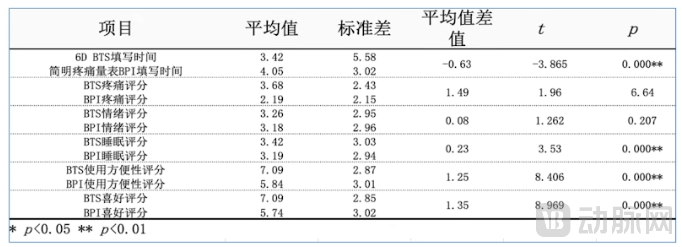
Comparative Study of the 6D Pain Assessment Tool (BTS) versus the Brief Pain Inventory (BPI) for Pain Assessment (Phase Summary)
Notably, with richer data support for pain assessment tools, AI-driven algorithms may be able to predict the onset of cancer pain before it occurs. Multiple studies are currently directed toward this goal. In the future, patients may be able to fight tumors without enduring any pain, thereby managing cancer treatment with greater dignity.
Although the treatment of cancer pain is merely a process of “assessment plus medication,” ensuring that this logic is effectively implemented for patients requires that every stakeholder—governments, hospitals, physicians, patients, and even enterprises—play a pivotal role within their respective responsibilities.
Enterprises are currently in a disadvantaged position. Cancer pain management represents a market with immense potential, but due to challenges such as limited disease awareness and technological constraints, only a handful of companies are willing to assume the risks of entering this field.
Regarding interventional therapy for morphine overdose, only the ultrasound-guided celiac plexus injection needle developed by Cook Medical in the United States has received approval from China's National Medical Products Administration (NMPA). This device enables ultrasound-guided blockade of pain nerves innervating abdominal organs, and there are very few domestic competitors.
The same holds true for digital therapeutics. Although the pain management sector has attracted numerous players—with established overseas companies such as Hinge Health, Kaia Health, and N1-Headache boasting a decade of operational experience, and domestic enterprises like Xinyun Medical, Hepu Medical, and Tengkai Health experiencing robust growth—the quantitative measurement and assessment of cancer pain demand higher accuracy in disease evaluation compared to musculoskeletal pain or migraines. Consequently, most companies have been deterred from conducting in-depth research in this area.
However, risks also bring opportunities. As long as cancer pain exists, the need for its management will persist. With the gradual shift in perceptions, more patients are bound to engage in scientifically supported cancer pain management. At that point, the potential of this discipline will be unleashed over time.
Reference Article:
1. Expert Consensus on Refractory Cancer Pain (2017 Edition)
2. Research Progress on the Pathogenesis and Treatment of Cancer Pain: Tan Mingliang, Cheng Cheng, Wang Chunmei, Wang Ting, Tang Ying
3. Progress in the Application of Mobile Health in Transitional Care for Cancer Pain Wang Songmei Tian Chang Yue Lin Zhao Yajie Hou Yingge Song Ying Yan Ling
4. A Qualitative Study on the Reasons for Medication Non-adherence in Cancer Pain Patients Ou Na, Hu Xiaoping, Qi Sanyang, Tang Sanyuan
5. Wang Jiejun, Shanghai Changzheng Hospital: Digital Therapeutics Empower Comprehensive Management of Cancer Pain – Yuanyi Capital