

HealthSnap: AI-Powered Smartphone Selfie Enables 30-Second, Medical-Grade Monitoring of Four Vital Signs
As the COVID-19 pandemic persisted, successive editions of the Diagnosis and Treatment Protocol for Novel Coronavirus Pneumonia have stated that patients with a blood oxygen saturation level below 93% are classified as having severe disease and require assisted respiratory therapy.
Following Lianhua Qingwen, ibuprofen, and antigen test kits, pulse oximeters have become another epidemic prevention product in short supply.
Recently, VCBeat discovered aWeChat Mini Program “HealthSnap”, simply take a 30-second selfie with your smartphone in a well-lit area to achieve medical-grade precisionBlood Oxygen Saturation, Heart Rate, Heart Rate Variability, Respiratory Rate4 Major Vital Signs Monitoring.
Eager to share our findings with VCBeat readers as soon as possible and driven by curiosity about this company, we reached out to"Health Snap" Mini Program'sFounder: Cao Xiaolei。
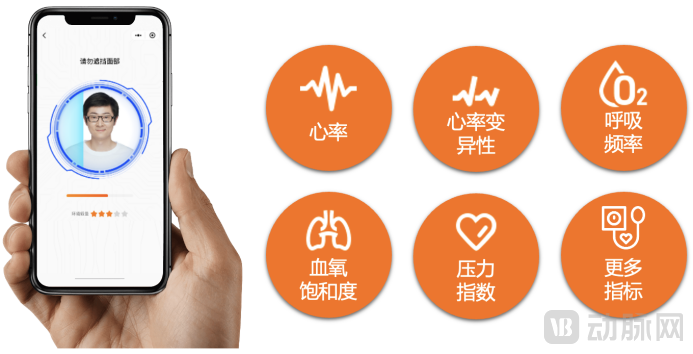
“Health Snap” is a leading contactless health monitoring tool in China. By simply using the selfie function of a smartphone, it can capture data on four vital signs—blood oxygen saturation, heart rate, heart rate variability, and respiratory rate—within 30 seconds, meeting the needs for home-based health monitoring.
HealthPai is committed to driving the software transformation of home medical devices and pioneering innovations in health monitoring and management.
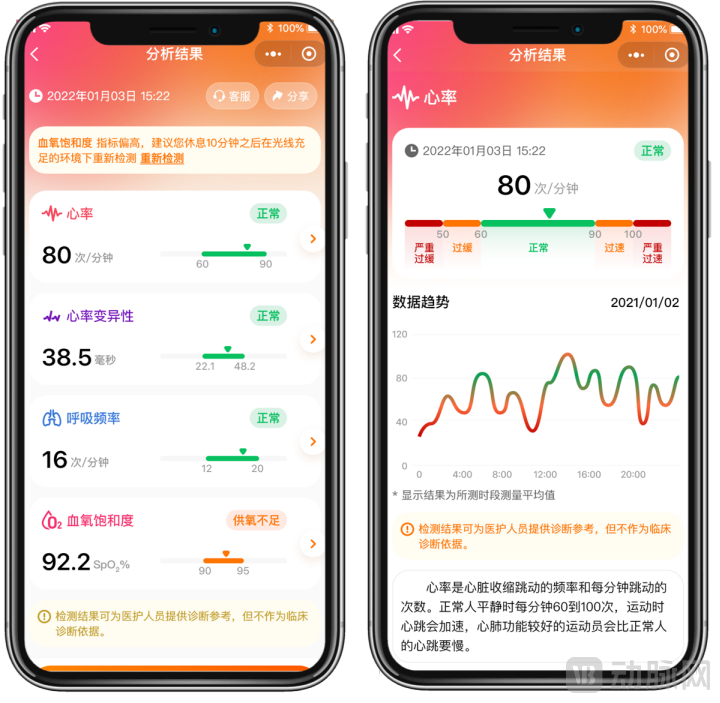
Health Scan Test Results Illustration
Cao Xiaolei has long been engaged in investment and consulting. His more than ten years of experience in investment, consulting, and management have afforded him close exposure to numerous medical, health, and technology innovation startups both in China and abroad, endowing him with a profound understanding and insight into industry development and the needs of user groups.
In the early stages of the pandemic, when official bodies such as China’s National Health Commission and the World Health Organization recommended blood oxygen monitoring, pulse oximeters faced a global shortage, leading to widespread supply disruptions. With delayed shipments of pulse oximeters purchased for his family, Cao Xiaolei sought a more convenient alternative from a technical perspective. His team comprises top-tier experts in fields such as medicine (critical care respiratory medicine), optics, and computer AI algorithms, and has focused its technological breakthroughs on the blue-ocean sector of “contactless health monitoring.”
According to Cao Xiaolei, the core technology of HealthPai isrPPG Remote Photoplethysmography.In simple terms, while the human eye cannot detect blood flow signals in the face, HealthPai leverages computer vision technology to capture facial blood flow via a smartphone’s front-facing camera. By enhancing input data quality through signal processing and noise reduction, and integrating physical algorithms for vital signs monitoring with deep learning algorithms, it delivers precise results.
Healthpai drives product development and innovation through clinical needs and clinical trials, conducting clinical research in collaboration with leading domestic and international hospitals and medical institutions, including Xinhua Hospital Affiliated to Shanghai Jiao Tong University School of Medicine, Xiangya Hospital of Central South University, United Family Healthcare, and Royal Brompton Hospital, the largest cardiovascular specialty hospital in the UK.
Existing clinical data indicate that HealthPai achieves medical-grade monitoring accuracy, with a blood oxygen saturation error of ±1% and a heart rate error of ±3 bpm, outperforming certain wearable monitoring devices. Compared to the wide variety of wearable health monitoring devices on the market, HealthPai demonstrates clear differentiated advantages.
In terms of product form, “Health Snap” is merely a WeChat mini-program, whether compared to wearable wristbands, smart glasses, or other hardware products.Software costs are lower, facilitating market entry and large-scale adoption.Particularly for B2B enterprises such as insurance companies, interactive insurance products previously relied on wearable devices, resulting in high costs that limited their integration to a narrow range of high-end insurance offerings. In contrast, Health Shot requires no additional hardware; users can perform monitoring anytime and anywhere using only a smartphone.
In terms of building software systems, software upgrades for wearable devices are typically constrained by the hardware’s inherent performance. To access newer and more comprehensive features, users usually need to purchase newer versions of wearable devices. AndHealthPai has completely broken free from the constraints of hardware performance, enabling more flexible iterative upgrades of various features.
Cao Xiaolei believes that future health monitoring systems will inevitably evolve toward lower cost, greater accessibility, and enhanced user-friendliness, much like how dedicated music players such as Walkmans and MP3 devices have been gradually replaced by mobile music applications.
According to Cao Xiaolei, the company will continue to deepen its application of computer vision in the field of health monitoring, especially in out-of-hospital home scenarios, and expand the application scenarios of existing technologies. Currently, Health Shot is conducting clinical trials for monitoring vital signs such as blood pressure.
In terms of commercialization, HealthSnap has developed distinct service solutions for B-end and C-end users, respectively.
AgainstB2B clients, including insurance companies, hospitals, and enterprise owners, HealthPai can directly provide services to B-end clients through mini-programs, SDKs, H5 pages, and other formats.SaaS services empower its product offerings for C-end users.and create an integratedMonitoring, Assessment, Interventionan integrated health prevention and rehabilitation platform.
Taking insurance companies as an example, with traditional insurance products, policyholders typically only proactively contact the insurer when filing a claim, making it a relatively low-frequency business scenario. However, by integrating HealthPai’s SaaS services, insurers can leverage continuous health monitoring to enhance policyholders’ sense of service value while creating more opportunities for customer engagement and business development for insurance agents. Furthermore, insurers can recommend or customize personalized insurance products and services based on policyholders’ health conditions, thereby improving conversion rates.
Meanwhile, Jiankangpai will also provide customized services tailored to the specific needs of different insurance companies, such as integrating health monitoring data into core business processes like underwriting and risk assessment.
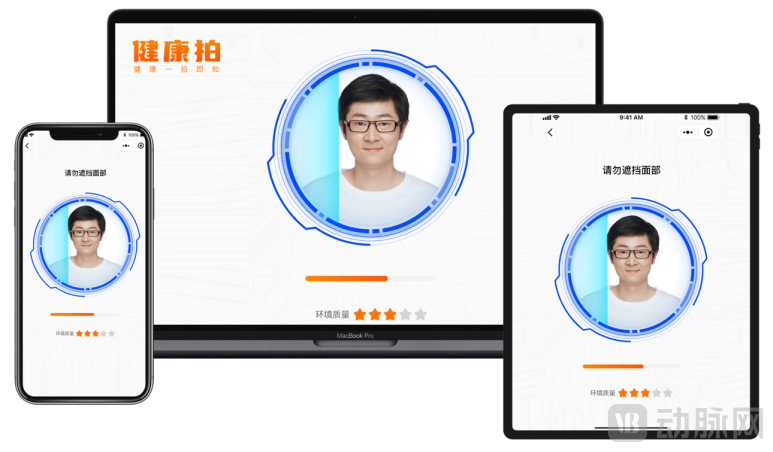
RegardingC-end Users, Health Pai primarily targets health monitoring in home settings, providingAnnual Subscriptionthe “Health Snap” mini-program service. Individual users can subscribe for 36 yuan per year to enjoy unlimited tests throughout the year; the family plan subscription is 99 yuan per year, allowing three family members to share health data in real time.
The company is currently focusing on the B2B market and has achieved phased success, having consecutively signed contracts with multiple insurance companies over the past six months and established partnerships with leading Chinese insurers such as Taikang and PICC.
On the consumer side, catalyzed by the pandemic “black swan” event and bolstered by the founding team’s years of accumulation in overseas markets, Health Snap has expanded its user base to more than 70 countries and regions without any paid promotion. In particular, amid the recent epidemic situation in China, Health Snap has seen rapid growth in its consumer users.
Currently, the company is seeking more ecosystem partnerships and a new round of financing.