

HKU Professor Wenwei Tu Advances World-First γδ-T Cell and Exosome-Based Cancer Immunotherapies Toward Commercialization
In tumor immunocellular therapy, although γδ-T cell therapy is "niche," it has enormous application prospects.
This is because γδ T cells, a rare subset of T cells that constitute only about 2%–10% of human peripheral blood T lymphocytes, are driving the emergence of γδ T cell therapy thanks to their potent and comprehensive functional advantages. Currently, numerous clinical trials are employing γδ T cells for cancer treatment, including hematologic malignancies, head and neck cancer, liver cancer, renal cell carcinoma, breast cancer, prostate cancer, neuroblastoma, and lung cancer.

Professor Tu Wenwei, The University of Hong Kong
Professor Tu Wenwei, The University of Hong KongWith over 20 years of experience in immunology research, he specializes in tumor immunotherapy and vaccine development based on γδ T cells and their exosomes. Currently, he is translating multiple “world-first” achievements into practical applications and aims to establish a company to commercialize these technologies and benefit patients.
In this process, we observed Professor Tu and his team’s solid foundation in basic research and their technologies with commercialization potential, while also recognizing the entrepreneurial challenges they face.
From Serendipity to Exploration: Therapies for γδ-T Cell Lymphoma and Solid Tumors
The story of Tu Wenwei and γδ-T cell therapy originated by chance.
In fact, prior to his research on γδ T cells, Tu Wenwei had been focusing on αβ T cells, which constitute the predominant T-cell population in human peripheral blood lymphocytes. Tu recalls that in 2000, while analyzing the effects of heart transplantation, he accidentally discovered another distinct subset of T cells in addition to αβ T cells, which sparked his keen interest.
Upon returning to Hong Kong, Tu Wenwei immediately identified and confirmed that this “cluster of cells” comprised γδ-T cells. “Since then, I have conducted extensive research to understand γδ-T cells, including how they combat viral infections and function within the body.”
Subsequently, Tu WenweiWith “γδ-T Cell Therapy” as a Clear Direction, further conduct systematic research and establish in the laboratoryHumanized Mouse Models, to validate the in vivo efficacy of human γδ-T cells.
“More than 20 years ago, γδ T cells were rarely mentioned in textbooks or by researchers. In recent years, however, they have garnered significant attention and become a focus of research,” said Tu Wenwei. He noted that despite years of relative obscurity, γδ T cells remain distinctive, with their potent anti-infective and antitumor properties offering broad application prospects.
Unlike conventional αβ-T cells, γδ-T cells canRecognition of target cells without MHC restriction, thereby resulting in virtually no graft-versus-host disease (GVHD). “Clinically, we can administer infusions of γδ-T cells from healthy third-party donors to patients,” Tu Wenwei explained to Orange Fruit Bureau. This represents a high-quality, off-the-shelf allogeneic cell product.
Furthermore, γδ T cells possess the characteristics of T cells, NK cells, and antigen-presenting cells, particularly exhibiting potent cytotoxicity, which enables them toKills tumor cells in approximately 2 hours。
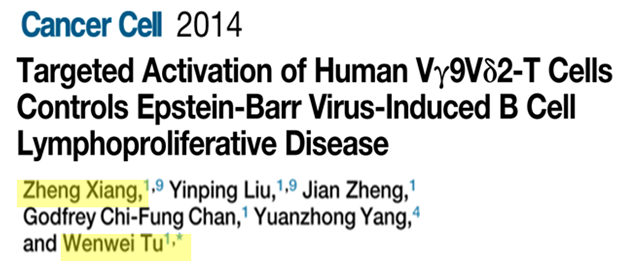
With advancing research and understanding of γδ T-cell therapy, in 2014, Tu Wenwei’s team first demonstrated that sodium pamidronate can control EBV-associated diseases, including B-cell lymphoma and post-transplant lymphoproliferative disorder, by selectively activating human Vγ9Vδ2 T cells.
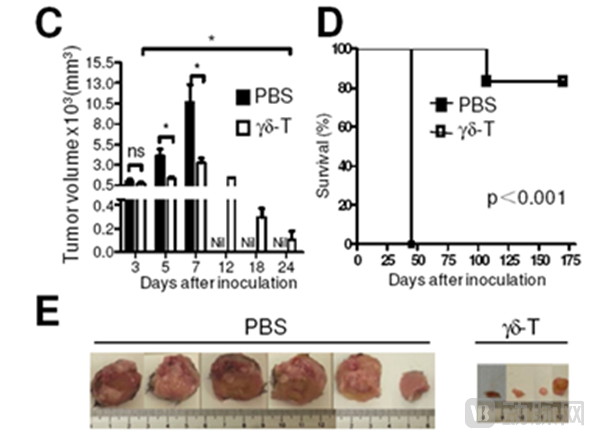
“We have achieved excellent therapeutic outcomes in the treatment of lymphoma using γδ-T cells. In our experiments, all mice in the control group died by approximately day 50, whereas”In the group of mice treated with infused γδ-T cells, approximately 80% survived for up to 175 days..” Tu Wenwei revealed to VCBeat that clinical studies are currently underway for this discovery.
Subsequently, in 2021, the team collaborated with Professor Yin Zhinan of Jinan University to complete, for the first time globally,Clinical Study of Allogeneic γδ-T Cell Therapy for Advanced Hepatocellular Carcinoma, Lung Cancer, and Other Solid Tumors. It is reported that the median survival time for untreated patients in the liver cancer cohort was 8.1 months; in contrast, the median survival time for patients receiving γδ-T cell therapy was 23.1 months. In the lung cancer cohort, the median survival time for untreated patients was 9.1 months, while that for patients receiving γδ-T cell therapy was 19.1 months.
Achieving First-in-Class Status in γδ-T Cell Exosome Research
Despite their inherent advantages, γδ T cells hold great potential in allogeneic therapy and solid tumor treatment, yet they still face numerous obstacles.
For instance, the tumor-killing activity of γδ T cells is suppressed by the tumor microenvironment, leading to unstable therapeutic efficacy; γδ T cells are difficult to expand ex vivo in certain cancer patients; and within the microenvironment of certain tumors, γδ T cells may be induced to adopt a pro-tumorigenic phenotype.
Therefore, Tu Wenwei and his team further exploredExosome-Based Cell-Free Therapy.
Exosomes are extracellular vesicles of endosomal origin, similar in composition to their parent cells, and mediate intercellular communication. Compared with cell-based therapies, cell-free exosomes haveHigher safety, lower cost, and better antitumor activity.
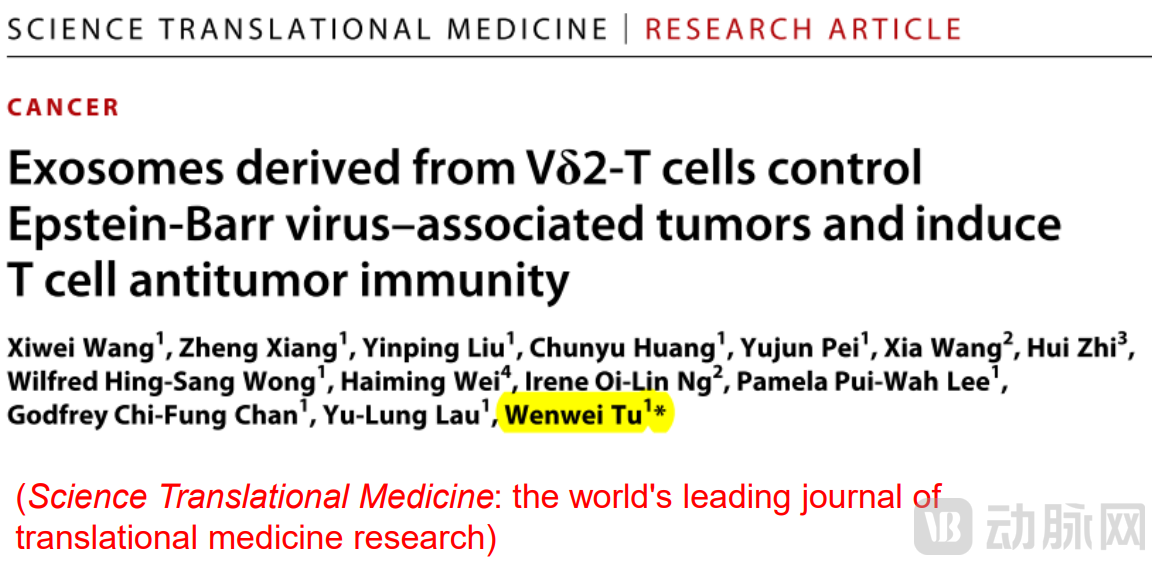
Through extensive research, Tu Wenwei’s team discovered that exosomes derived from γδ T cells carry death-inducing ligands (FasL and TRAIL) and immune-stimulatory molecules (CD80, CD86, and MHC class I and II). These exosomes not only effectively kill tumor cells via the FasL and TRAIL pathways but also promote the expansion of tumor antigen-specific CD4+ and CD8+ T cells.
Meanwhile, Tu Wenwei’s team also discovered that,Allogeneic γδ-T Cell Exosomes Exhibit More Potent Antitumor Activity Than Autologous γδ-T Cell Exosomes in Humanized Mice. This is because allogeneic γδ-T cell-derived exosomes enhance T-cell infiltration into tumor tissues and induce more robust CD4+ and CD8+ T cell-mediated antitumor immunity.
In other words, compared with NK cells or dendritic cell-derived exosomes that possess direct cytotoxic antitumor activity, γδ-T cell-derived exosomes exhibitDirect Killing of Tumor Cells and Indirect Induction of Dual Antitumor Activity Mediated by T Cells, thereby more effectively inhibiting tumor growth.
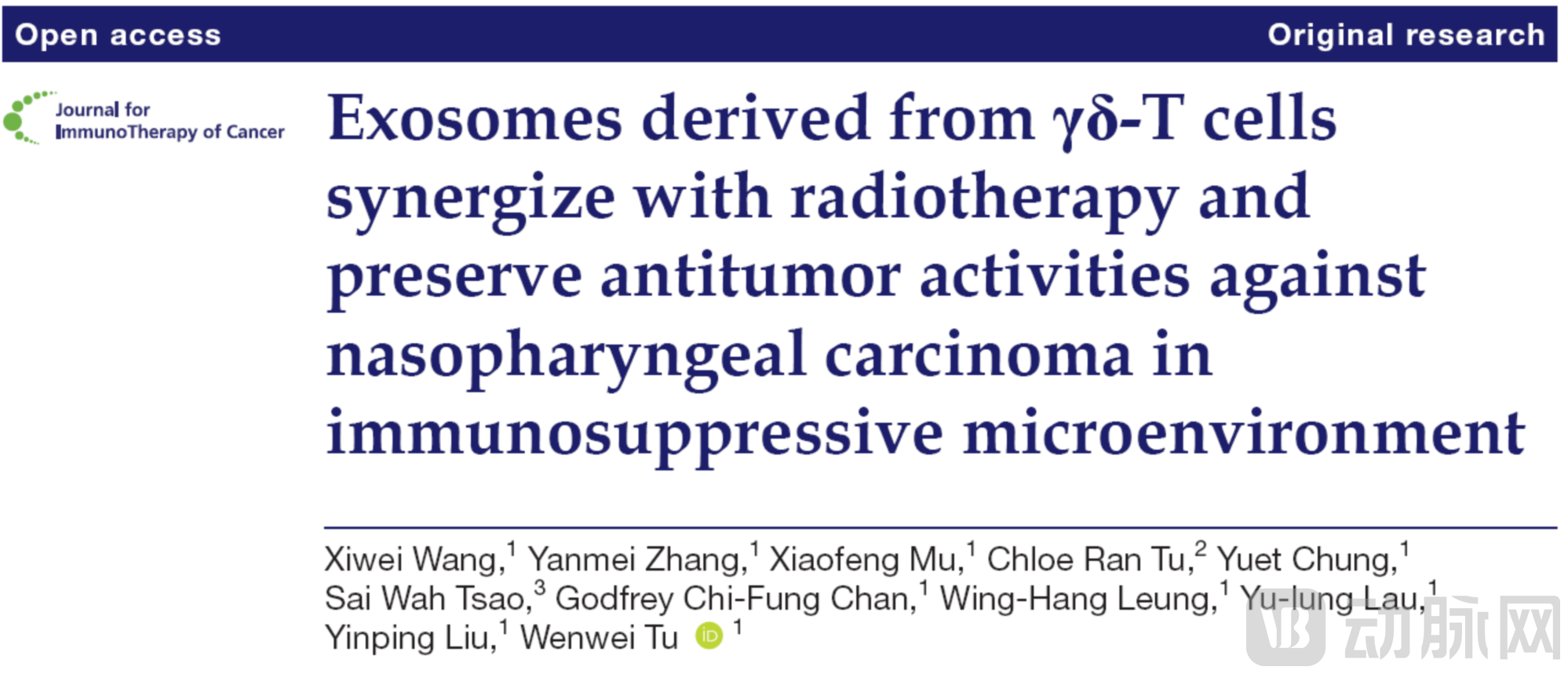
The team’s latest research further demonstrates that γδ-T cell-derived exosomes can be combined with radiotherapy to achieve enhanced therapeutic efficacy against nasopharyngeal carcinoma. Meanwhile,First demonstration that the antitumor effects of γδ T cell-derived exosomes are not affected by the immunosuppressive tumor microenvironment。
Tu Wenwei said to Orange Bureau, “Regarding the research on γδ-T cell exosomes, we areThe world’s first team to achieve results and publish related articles"In the next one to two months, we will also publish the world’s first article on tumor vaccines based on exosomes derived from human γδ T cells."
Concurrent Advancement of Clinical Research and Commercialization
When it comes to the commercialization of scientific research achievements, Tu Wenwei stated, “It would be best to establish a company,Conducting Clinical Research While Advancing Commercialization。”
Transitioning from a scientist to an entrepreneur is no easy feat. Tu Wenwei candidly admitted, “Although our team has accumulated extensive experience in clinical research, we were complete ‘novices’ when it came to running a company.”
This is precisely the common challenge currently facing scientific research outcomes. Scientists are bringing the most cutting-edge research findings into industry, shifting innovative capacity from follower innovation to original R&D.
Yet, it is undeniable that scientists often find themselves ill-equipped when stepping out of the laboratory to manage enterprises. While they operate with ease at the bench, they frequently feel bewildered when confronting the industrialization of technology. They have come to realize that scientific research innovation constitutes only a part of technological and product innovation. Beyond scientific research, they need to introduce new capabilities, bringing in industrial and commercial perspectives.
Therefore, in scientist-founded enterprises, the team structure of “scientist + entrepreneurial partner/CEO” has become a popular formula. Professor Tu Wenwei has also made corresponding plans in this regard. Currently, heActively cultivating and seeking commercialization talent, to help the team build a technology-platform company. In addition, when selecting investors, Professor Tu Wenwei is more inclined toA Powerful Investment Institution with Experience in Incubating Star Enterprises, thereby enabling the team to pursue a more rational commercialization pathway.
“Currently, the project has moved beyond the pure laboratory stage and met the standards for clinical trials,The plan is to complete Phase I clinical trials within 3 years and Phases II and III clinical trials within 5 years..” Tu Wenwei stated that the team will next focus onClinical Trials and Large-Scale Productiontwo-pronged efforts, while establishing strong collaborative relationships with various partners and investors.