

Revenue Soars but Stock Plummets: Can Handheld Ultrasound Unicorn Butterfly Network Stage a Comeback?

Butterfly Network
Developer of Artificial Intelligence Medical Imaging Equipment
At the end of 2020, handheld ultrasound unicorn Butterfly Network went public on the New York Stock Exchange through a merger with Longview Acquisition Corp., trading under the ticker symbol “BFLY.”
Over the past two years, Butterfly Network has undergone market expansion, revenue growth, human resources restructuring, and application scope broadening; nevertheless, it has not escaped the fate of a declining stock price. Data shows that on December 26, Butterfly Network’s stock closed at $2.36 per share, representing an approximately 90% drop from its peak.
Do Handheld Ultrasound Companies Have a Future? How Should They Respond to the Evolving Market? This Article Takes Handheld Ultrasound Unicorn Butterfly Network as an Example for In-Depth Discussion, Hoping to Provide Reference for Industry Players.
Butterfly Network, founded in 2011, is a global leader in handheld ultrasound technology, dedicated to driving the decentralization of medical imaging through the research, development, and application of “handheld ultrasound + AI.”
Previously, Butterfly Network secured hundreds of millions of dollars in investment from prominent institutions such as Fosun Pharma and the Bill & Melinda Gates Foundation, reaching a valuation of approximately $1.25 billion in 2018 and becoming one of the few handheld ultrasound unicorns globally. The Bill & Melinda Gates Foundation, co-founded by Bill Gates, who has repeatedly topped the list of the world’s richest individuals, and his former wife Melinda Gates, is the largest charitable foundation in the world.
In September 2017, Butterfly Network’s first ultrasound imaging product, the Butterfly iQ, received U.S. FDA clearance for market launch and was subsequently sold in more than 20 countries and regions, including the United States, Canada, Europe, and Australia, starting in 2018.
According to reports, the Butterfly iQ is the world’s first FDA-cleared personal ultrasound device and the first single-probe ultrasound imager for whole-body use. The FDA has cleared this product for seven clinical applications, including abdominal, cardiovascular, fetal, gynecological, urological, musculoskeletal, and other indications. It is suitable for various settings such as hospital clinical departments, primary care, and disaster emergency response.
In October 2020, Butterfly Network launched its next-generation product, the Butterfly iQ+, which delivers higher performance, faster speeds, and higher-resolution imaging. The Butterfly iQ+ is the world’s only ultrasound transducer capable of performing whole-body imaging within a single handheld probe. It is affordable, powerful, and compact enough to fit easily into a physician’s pocket for enhanced portability. The device also integrates cloud and internet technologies, enabling seamless use with mobile applications.
As the world’s leading handheld ultrasound devices, Butterfly iQ and Butterfly iQ+ are only smartphone-sized and can perform whole-body examinations when connected to a smartphone or iPad. Compared with traditional bulky, high-cost ultrasound equipment in hospitals, Butterfly iQ and Butterfly iQ+ are smaller, more portable, more cost-effective, and easier to use.
Butterfly Network stated, “Given their convenience, ease of use, and accessibility, handheld ultrasound devices such as the Butterfly iQ+ are poised to become essential medical instruments for physicians worldwide, much like the stethoscope.”
In addition to handheld ultrasound, Butterfly Network has also launched the Butterfly Blueprint system platform to support the large-scale deployment of handheld ultrasound in hospitals and health systems.
For ultrasound imaging, physicians require specialized training in image acquisition and analysis to master this skill, and their level of experience can influence diagnostic outcomes.
Therefore, after launching its handheld ultrasound device, Butterfly Network developed the complementary Butterfly Blueprint system platform. Equipped with an AI-assisted ultrasound diagnostic system, the platform works in synergy with the device to significantly lower the learning curve and usage barriers for handheld ultrasound, enabling physicians without specialized ultrasound expertise to rapidly and accurately analyze ultrasound images.
Meanwhile, Butterfly Network has also launched a variety of management tools to lower the learning curve for ultrasound and accelerate the integration of ultrasound data into patient assessment, diagnosis, and treatment. For example, Butterfly Network introduced ultrasound management and automated analysis tools to help emergency physicians and hospitalists rapidly obtain patient information; it also launched 3D visualization tools that enable physicians to automatically calculate the volume of specific anatomical regions, among other features.
Butterfly Network delivers a comprehensive ultrasound solution to hospitals through handheld ultrasound devices, AI-assisted diagnosis, and other services.
Additionally, Butterfly Network has targeted the pet care market by launching the Butterfly iQ+Vet, a handheld veterinary ultrasound device. As the world’s only handheld, single-probe, whole-body, multi-species imaging system, it is designed to provide field veterinarians with valuable clinical insights through AI-simplified innovative ultrasound technology.
Butterfly iQ+Vet is the second-generation veterinary ultrasound device launched by Butterfly Network, delivering clearer imaging, new guidance tools, and hardware improvements that make the solution more powerful, versatile, and easy to use.
Based on high-quality handheld ultrasound devices and supporting software,Butterfly Networkrevenue has seen three consecutive years of growth.From 2019 to 2021, Butterfly Network’s total revenue was $27.6 million, $46.3 million, and $62.6 million, respectively. In 2020 and 2021, its revenue increased by 68% and 35.3% year over year, respectively.
In 2022, Butterfly Network also maintained significant revenue growth. In the first quarter of 2022, its revenue was $15.6 million, a 25.2% increase from $12.4 million in Q1 2021; in the second quarter of 2022, its revenue was $19.2 million, a 16.4% increase from $16.5 million in Q2 2021; in the third quarter of 2022, its revenue was $19.6 million, a 34.2% increase from $14.6 million in Q3 2021.
It is worth noting that Butterfly Network’s revenue comprises two components: sales revenue from its handheld ultrasound devices and subscription revenue from its software.
According to the financial reports, in Q1 2022, Butterfly Network’s product revenue was $11 million, a year-over-year increase of 14.8%; its subscription revenue was $4.6 million, a year-over-year increase of 60.1%. In Q2 2022, its product revenue was $13.4 million, a year-over-year increase of 3.2%, and subscription revenue was $5.8 million, a year-over-year increase of 65.3%. In Q3 2022, product revenue was $13.2 million, a year-over-year increase of 21.3%, and subscription revenue was $6.5 million, a year-over-year increase of 71.1%.
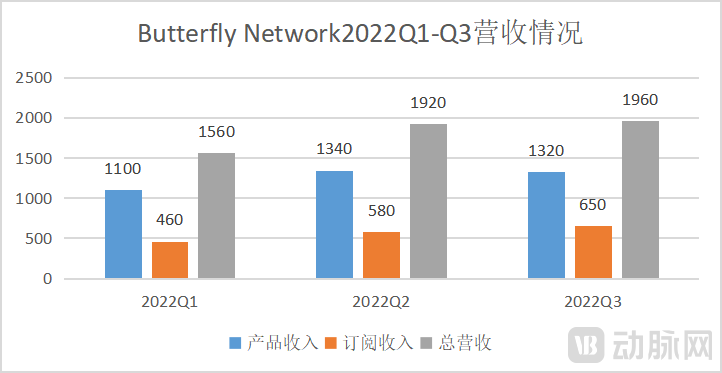
(Unit: USD 10,000)
As can be seen, both product revenue and subscription revenue of Butterfly Network are showing steady growth. Among them, Butterfly Network’s subscription revenue is growing rapidly alongside the increase in its installed base. It is expected that with enhanced product promotion, the penetration rate of handheld ultrasound devices will accelerate, and the proportion of subscription revenue will gradually surpass that of product revenue.
Meanwhile, as the proportion of subscription revenue increases, Butterfly Network’s gross margin has been steadily rising. It is expected that with the growth in subscription revenue, both its gross margin and profit margin will further improve.
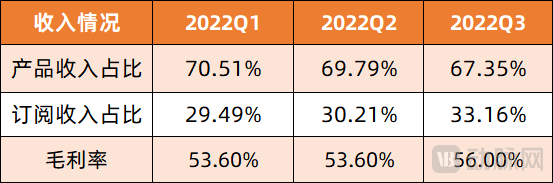
This is because its software development has been completed, resulting in extremely low marginal costs. When physicians use its handheld ultrasound devices, they simultaneously utilize software such as AI-assisted systems and pay for these services.
To date, 4.7 billion people worldwide lack access to or cannot afford ultrasound imaging examinations. Handheld ultrasound devices can help alleviate this issue through their low cost, ease of use, and intelligent features. Butterfly Network stated: “Our handheld ultrasound device integrates semiconductor, artificial intelligence, and cloud technologies, with a unit cost of less than $2,400. This will usher in a new era of healthcare for economically underserved regions.”
In 2022, Butterfly Network continued to expand its sales territories.
At the beginning of the year, the Bill & Melinda Gates Foundation, established by former global richest person Bill Gates, partnered with Butterfly Network. The foundation provided $5 million to purchase its Butterfly iQ+ handheld ultrasound devices and donated them to 1,000Sub-Saharan Africahealthcare professionals, to improve local maternal and fetal health.
Meanwhile, Butterfly Network has partnered with the local company Zebra Medical to distribute its handheld ultrasound products, such as the Butterfly iQ+, in sub-Saharan Africa.
According to data from the World Health Organization’s Regional Office for Africa, approximately 830 women worldwide die each day from complications related to pregnancy or childbirth, with more than half of these deaths occurring in sub-Saharan Africa.
Butterfly Network stated, “Many economically underdeveloped regions in Africa are ‘diagnostic deserts,’ where there are virtually no imaging modalities available to help physicians confirm diagnoses. However, with the convenience and accessibility of handheld ultrasound devices akin to stethoscopes, patients and healthcare providers in these areas are expected to gain access to ultrasound imaging.”
As of December 2022, Butterfly Network had successfully deployed 500 Butterfly iQ+ devices across 224 healthcare facilities in Kenya and trained more than 500 healthcare professionals. Looking ahead, Butterfly Network plans to provide an additional 500 Butterfly iQ+ devices to hospitals in sub-Saharan Africa in the first half of 2023.
In addition to expanding its market through donations, Butterfly Network has also established strategic distribution partnerships with well-known companies such as Abdul Latif Jameel Health. Through this collaboration, Abdul Latif Jameel Health will provideMiddle East, North Africa, Turkey, and IndiaSales of the Butterfly iQ+ handheld ultrasound device.
Additionally, Butterfly Network has frequently participated in academic conferences and product exhibitions to promote its products and brand. For example, in March 2022, Butterfly Network attended the Cowen 42nd Annual Health Care Virtual Conference; in May, it participated in the UBS Global Healthcare Conference; and in October, it showcased its product portfolio at the George R. Moscone Convention Center...
It is worth noting that, in addition to Bill Gates, Elon Musk, the current world’s richest man, has also been associated with Butterfly Network. In June 2021, SpaceX, founded by Elon Musk, successfully delivered cargo supplies to the International Space Station, which included Butterfly Network’s Butterfly iQ handheld ultrasound device.
“In deep space missions, tools such as Butterfly iQ will help astronauts self-monitor for conditions like kidney stones, pulmonary effusion, thrombosis, and optic nerve swelling, ensuring they can better accomplish their space missions.”
In addition,Butterfly NetworkStarting from medical schools in 2022, it not only strengthened market education but also accelerated the commercialization process.For example, Butterfly Network has partnered with multiple medical schools to sell its products to medical centers and provide handheld ultrasound education courses for medical students, thereby promoting market education for handheld ultrasound.
In May 2022, Butterfly Network partnered with the Medical University of South Carolina. As part of this collaboration, the Medical University of South Carolina procured Butterfly Network’s handheld ultrasound devices and deployed them across multiple medical centers for use by clinicians, aiming to transform and optimize patient care, health education, and medical research.
Meanwhile, the Medical University of South Carolina has partnered with Butterfly Network to incorporate point-of-care ultrasound training into the curricula for medical students, nurse practitioners, and physician assistants, helping them understand and utilize more advanced clinical tools to make more informed care decisions.
News released by Butterfly Network shows that it also collaborates withUniversity of Rochester Medical CenterThrough collaboration, the medical center procured and deployed Butterfly Blueprint for use by medical students, primary care providers, and home care nurses.
To date, Butterfly Network has also partnered with renowned institutions such as the Lewis Katz School of Medicine at Temple University, Texas Tech University, the University of Pennsylvania, Yale University, Stanford University, Purdue University, and Baylor University Medical Center in Dallas, providing handheld ultrasound devices and accompanying software services to these universities.
It is understood that when Butterfly Network’s handheld ultrasound device first received approval, it was primarily used in departments such as obstetrics and gynecology, orthopedics, urology, pediatrics, cardiology, and cardiac surgery.
However, over the past two years, Butterfly Network has been continuously expanding the applications of its handheld ultrasound devices. On one hand, Butterfly Network is promoting the use of its handheld ultrasound products in hospital emergency departments and ambulances, while also positioning them as essential home healthcare devices. On the other hand, through academic research and promotional initiatives, Butterfly Network has introduced new application scenarios for its handheld ultrasound products, such as in plastic surgery and veterinary care.
Butterfly Network stated, “We will drive the adoption of more use cases for handheld ultrasound, increasing its utilization and application in settings such as emergency care, nursing, and ambulance services.”
In May 2022, Butterfly Network andPet HealthIndustry-Leading EnterprisePetco Health and Wellness CompanyAnnounced that the two parties have reached a strategic partnership to deploy handheld veterinary ultrasound devices across nearly 200 veterinary hospitals operated by the company.Butterfly iQ+Vet。
According to reports,Petco Health and Wellness CompanyContinuously setting new standards in pet care by providing comprehensive pet health products, services, and solutions. It operates more than 1,500 pet care centers across the United States, Puerto Rico, and Mexico, offering retail goods, companion animals, grooming, training, and an expanding network of veterinary hospitals.
Through this collaboration, Butterfly Network has become the first and only company to partner withPetco Health and Wellness CompanyU.S. ultrasound imaging suppliers in partnership. With the application and promotion of handheld veterinary ultrasound, Butterfly Network’sButterfly iQ+Vetwill garner significant attention in the pet healthcare market.
Furthermore, Butterfly Network also collaborates withPlastic SurgeryLeading enterprise Sientra has established a strategic partnership to procure and utilize Butterfly Network’s Butterfly iQ+ and Ultrasound-on-Chip technology for the screening and assessment of patients with breast implants.
Breast implant augmentation is one of the most common cosmetic or plastic surgery procedures in the United States. In recent years, ultrasound diagnostics have become a powerful tool for monitoring the long-term health of patients with breast implants. Through this collaboration, Butterfly Network and Sientra jointly provide plastic surgeons with a more convenient way to deliver real-time diagnostic screening to their patients.
In April 2022, Butterfly Network announced the publication of an innovative study in NEJM Evidence, a subsidiary journal of the prestigious New England Journal of Medicine. The study enrolled 4,695 pregnant volunteers, in which midwives and other healthcare providers used handheld ultrasound devices to accurately determine gestational age. With more precise data, healthcare providers can deliver more accurate and efficient care to pregnant women, thereby ensuring the safety of both mother and fetus.Based on this study,Butterfly NetworkPromoting the Application of Its Handheld Ultrasound Products in Obstetric Care。
Previously, the high cost of ultrasound equipment and the difficulty in interpreting ultrasound images limited its use in resource-limited settings. However, handheld ultrasound devices, leveraging their portability, low cost, and intelligent features, will help more pregnant women in economically disadvantaged regions.
Thanks to the pioneering efforts of companies such as Butterfly Network, handheld ultrasound devices are now widely used across various clinical departments and are increasingly becoming a standard household item.
Butterfly Network, a leading player in handheld ultrasound, has been continuously expanding its market presence and applications while strengthening its marketing and academic promotion efforts in recent years. However, despite Butterfly Network’s annual revenue posting four consecutive years of growth, its stock price has continued to decline.
Overall, the large number of handheld ultrasound manufacturers and the resulting intense competition mean that competitive moats for individual companies are not particularly pronounced.
We believe that, first, the hardware and software of handheld ultrasound devices cannot establish an absolute technological barrier. The competitive focus for companies may lie in comprehensive capabilities, including the product strength of “hardware + AI,” commercialization capabilities, marketing and promotion capabilities, and product implementation capabilities.
Second, handheld ultrasound is suitable for primary care settings; however, physicians in these settings generally lack the necessary ultrasound expertise to interpret and analyze ultrasound images. Therefore, handheld ultrasound devices deployed in primary care must be equipped with AI systems to truly enable their effective application at this level.
Third, the state is strengthening capacity building in primary care hospitals and allocating funds for equipment procurement. Once funding and procurement are no longer obstacles, key challenges for enterprises include how to persuade hospitals to choose their products, how to penetrate the market, and how to accelerate the adoption and implementation of handheld ultrasound devices.
Fourth, the handheld ultrasound market offers substantial growth potential and is currently testing the commercialization capabilities of various enterprises. According to data from the Statistical Information Center of the National Health Commission, there were 978,000 primary healthcare institutions across China as of the end of November 2020. While these primary care facilities are numerous and exhibit strong demand, they are highly dispersed. Companies must therefore carefully consider strategies for market expansion and consolidation.
Currently, the global penetration rate of handheld ultrasound devices remains extremely low, indicating that the industry is still in its early stages of development. Domestic manufacturers such as Sontek, U-Tech, Shenzhi Technology, Vinno, and Meitong Technology still have opportunities to establish their own competitive moats. With the anticipated increase in device penetration and growth in subscription-based revenue, the handheld ultrasound sector is poised for a significant upturn in the secondary market.