

23andMe One Year Post-IPO: Genetic Testing as the Foundation, Pharma Services as the Future
23andMe
Genomic Sequencing Service Provider
Last year, consumer-grade genetic testing companies23andMeSuccessfully listed on the NYSE at a $3.5 billion valuation. One year later, how is 23andMe performing?
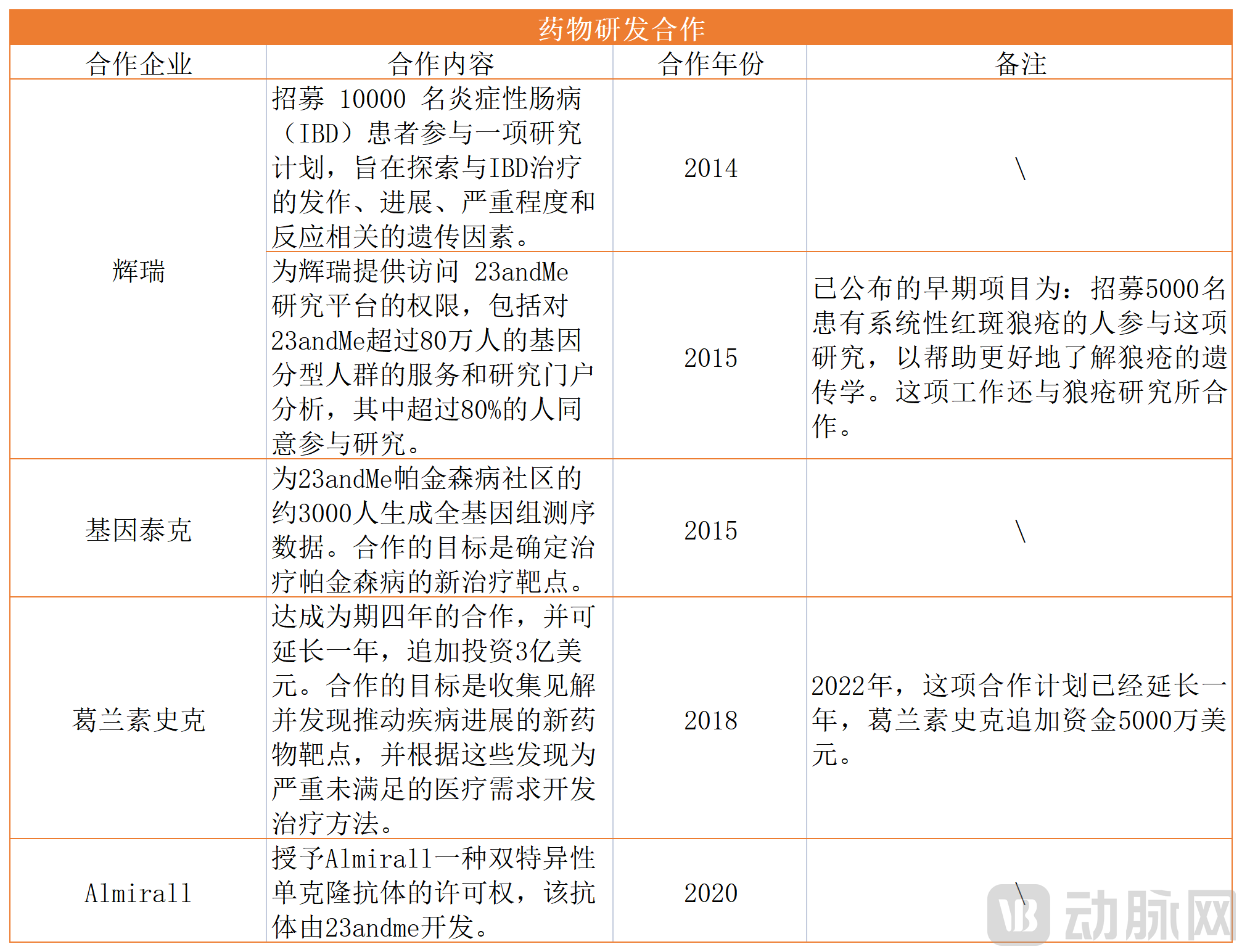
The latest financial report shows that its revenue for the second quarter of fiscal year 2023 was $76 million, a year-on-year increase of up to 37%.Total revenue in the first two quarters of 2022 was $114 million, a year-on-year increase of 22%.At the end of the second quarter, 23andMe extended its research services contract with GlaxoSmithKline by one year. This extension marks the first since the signing of a four-year exclusive partnership in 2018, and the two companies will continue to collaborate on leveraging human genetic data to jointly develop new therapies.
Public information shows that currently23andMeThe membership base has expanded to 13.4 million, with over 80% of members consenting to the use of their data for drug development.In the second quarter, 23andMe released three new reports for its members on anxiety disorders, fibromyalgia, and seasonal allergies; published two genetic research findings, including genes associated with pneumonia and insomnia; and launched four rare disease studies.
Not only that,23andMeAlso received FDA approval to provide interpretive drug information for simvastatin.This marks a significant step forward for 23andMe in the application of drug development, facilitating its transition from a consumer-grade genetic testing service provider to a big data enterprise offering scientific research services for drug development.
In addition to its three core businesses—DTC genetic testing, research services, and drug development services—23andMe is actively expanding into telemedicine and digital pharmacy. In the second quarter of fiscal year 2023, consumer services revenue, including PGS (Personal Genome Service), telemedicine, and subscription services, accounted for approximately 75% of total revenue, demonstrating strong growth momentum in new business areas.
From announcing the abandonment of NGS technology development in 2016, to receiving FDA approval for its personal genetic health risk test in 2017, and successfully listing on the NYSE in 2021, 23andMe has centered its strategy on consumer-grade genetic testing, expanding into B2B and B2C genetic testing services, scientific research services, and drug R&D services, while actively broadening its footprint in the health industry. How has this alternative path fared? VCBeat provides an analysis to offer insights for the industry.
Bloomberg Businessweek summarizes Google’s corporate mindset as follows:Collect all data using low-cost services, analyze the data, and identify a related business that could generate higher profits.To date, 23andMe, which has secured multiple rounds of funding from Google, continues to uphold Google’s corporate philosophy.
In the field of genetic testing, 23andMe has long enjoyed a prestigious reputation. From its founder, Anne Wojcicki, to its investors, including Google, Johnson & Johnson, and the NIH, the company has been surrounded by a star-studded aura. In 2008, it was honored with the “Best Invention of the Year” award by Time magazine, basking in immense glory at the time.
The company’s initial core business was providing genetic testing services to individual consumers. After payment, users would receive a genetic testing kit; upon collecting and mailing back their saliva samples, they could access their test reports online within three to four weeks. These reports displayed information such as ancestral origins and disease risk, and offered personalized recommendations on nutrition, fitness, sleep, and other aspects.
At the time, due to the limited adoption of the technology and the company’s small scale, 23andMe priced its single genetic test at $999. The majority of those who underwent testing were celebrities such as supermodel Naomi Campbell, media mogul Rupert Murdoch, and his then-wife Wendi Deng. Nevertheless, the test was significantly more affordable than full genome sequencing services, which often commanded prices as high as $300,000. Within the first decade of its establishment, 23andMe amassed a customer base of 100,000.
The good times did not last. In 2009, because the genetic testing reports involved medical information consultation and the FDA lacked relevant regulations, the FDA required 23andMe to provide evidence proving the accuracy of the test results and to fully ensure informed consent for users. In 2013, the FDA halted the health guidance services included in the genetic testing.
To make matters worse, the cost of genetic testing dropped significantly that same year due to technological advancements, with the price per test falling to $99. Facing pressure from both the market and the FDA, 23andMe made adjustments. After October 22, 2015, the FDA granted 23andMe authorization, approving its genetic tests for 36 hereditary conditions—including cystic fibrosis and sickle cell anemia—as well as ancestry analysis and non-medical traits.
In 2016,23andMe Announces Abandonment of Next-Generation Sequencing (NGS) Technology R&D, shifting towards a more comprehensive direct-to-consumer (DTC) genetic testing business. 23andMe employs single nucleotide polymorphism (SNP) genotyping technology, which detects DNA sequence polymorphisms caused by variations in single nucleotides. SNP genotyping offers high accuracy, strong flexibility, high throughput, short turnaround times, and low costs; furthermore, its data analysis provides advantages in speed, accuracy, and standardization.
In 2017, the FDA approved its genetic testing service for 10 diseases, including Parkinson's disease and late-onset Alzheimer's disease.As 23andMe expanded its business, its membership base grew to 13.4 million by the second quarter of fiscal year 2023. It can be said that,23andMe has established the world’s largest database of genotype–phenotype associations.
However, from a market perspective, offering genetic testing solely to consumers is insufficient to sustain the operations of a large enterprise. Where does 23andMe’s market potential lie?
In 2015, 23andMe established a medical team led by Richard Scheller, former vice president of Genentech. Scheller serves as the Chief Scientist of 23andMe’s medical team and is responsible for leveraging genetic data from its existing base of 850,000 customers to advance the development of new therapies for rare diseases.This marks 23andMe’s formal entry into the pharmaceutical industry.
Source: 23andMe; compiled and organized by VCBeat
As the world’s largest database of genes and phenotypes, large-scale, voluntary population genetics sampling and genotyping resources are highly coveted by pharmaceutical companies.In terms of core business, for23andMeFrom this perspective, acquiring rich data from a single consumer is more valuable than obtaining random genetic data from one hundred individuals. As databases continue to expand, they have resolved accuracy discrepancies arising from different detection methods, thereby enhancing the broader applicability of related research.
Data is the key metric for validating whether its core model is viable, and for 23andMe, which is currently expanding its business scope, this presents significant growth potential.
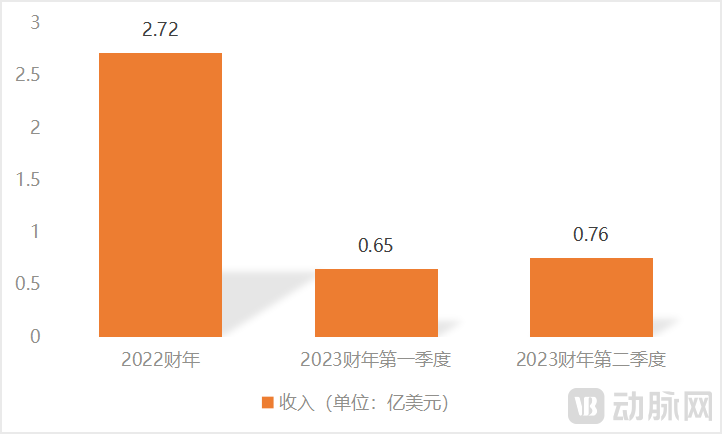
According to the financial report, 23andMe’s total revenue for fiscal year 2022 was $272 million, a year-on-year increase of 11%. Entering fiscal year 2023, 23andMe maintained a steady growth trajectory, with first-quarter revenue reaching $65 million ($0.65 billion), up 9% year on year, and second-quarter revenue reaching $76 million ($0.76 billion), up 37% year on year. The primary reason for the relatively rapid revenue growth in the second quarter wasIncrease in research service revenue from GSK and other partners。
Breaking down the financial data further, 23andMe’s revenue primarily stems from two major segments:Consumer Services, Including PGS, Telemedicine, and Subscription ServicesandDrug Research ServicesRevenue. PGS refers to the personal genome services provided by 23andMe, while subscription services refer to members’ subscriptions to related information services. It is particularly noteworthy that 23andMe has added telehealth services since the fourth quarter of fiscal year 2022.
In November 2021, 23andMe announced the acquisition of Lemonaid Health, a web-based platform offering telehealth services and digital pharmacy solutions. Financial reports indicate that revenue growth in fiscal year 2022 was primarily driven by five months of telehealth services provided by Lemonaid Health, which also served as one of the key drivers of revenue growth in fiscal year 2023.
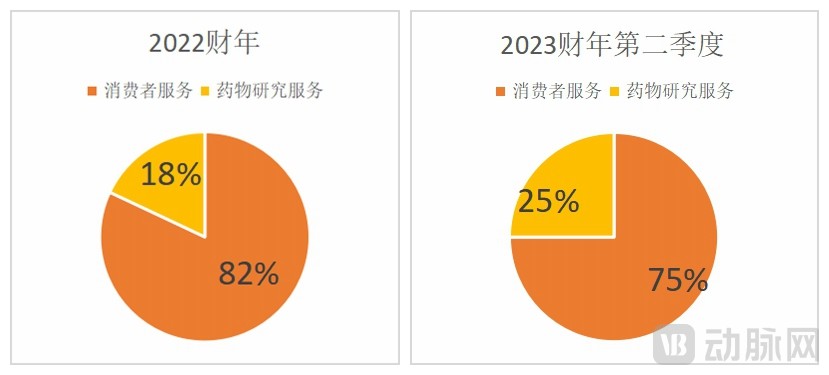
Looking again at 23andMe’s revenue structure, the financial report shows that consumer revenue accounted for 82% of total revenue in fiscal year 2022. Entering fiscal year 2023, although research services revenue increased,However, consumer revenue accounted for 75% in the second quarter, remaining the company’s primary source of income.
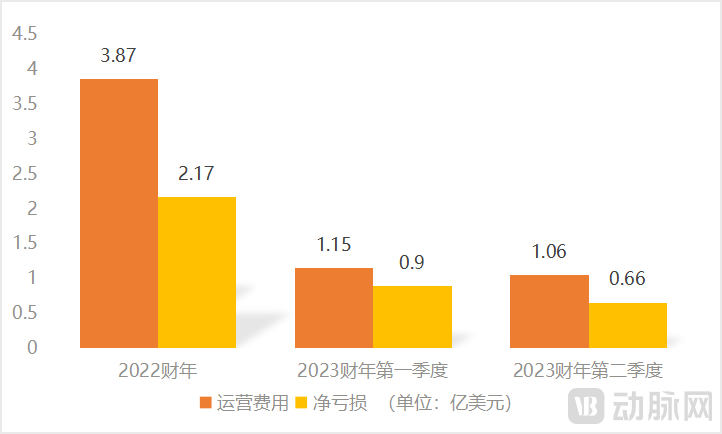
As for losses, 23andMe’s net loss increased due to rising operating costs for its telehealth services.According to the financial report, 23andMe’s net loss in 2022 was $217 million, an increase of $33 million compared to the same period. In the second quarter of fiscal year 2023, the net loss reached $66 million, an increase of $49 million compared to the same period.
Overall, 23andMe has experienced significant fluctuations in several key metrics, with trends persisting from fiscal year 2022 into fiscal year 2023. As its newly introduced telehealth services are still in their early stages, increased operating expenses have led to a wider net loss, meaning 23andMe has not yet achieved more positive results. However, precisely because of the telehealth and digital pharmacy services launched in fiscal year 2022, which integrate existing and new businesses under the concept of personalized healthcare, 23andMe is poised for strong market growth in the near future.
Consumers' understanding of genetic testing and their attitudes toward test results are upstream limiting factors.
Since the FDA approved personal health risk testing in 2017, 23andMe has attracted more than 13.4 million members in just over a decade.
It has become nearly a consensus that achieving profitability solely through consumer genetic testing is extremely difficult. As evidenced by 23andMe’s financial reports, despite the continuous expansion of its member base, it is unrealistic to expect profitability from its direct-to-consumer genetic testing business alone.The bigger gold mine is the database of gene and phenotype associations.
23andMe recognized this as early as 2016, when it shifted away from next-generation sequencing (NGS) toward more comprehensive direct-to-consumer (DTC) genetic testing. Leveraging the channel and internet-based nature of its DTC business, 23andMe rapidly built user communities centered on genetics and phenotypes. By collaborating with non-governmental organizations (NGOs) and government agencies, recruiting patients, and employing methods such as informed consent, data collection, integration, and follow-up, the company has accumulated a comprehensive, multi-dimensional health database in a snowballing manner. This approach has enabled the identification of potential genetic associations with population phenotypic traits, yielding mutual benefits for disease research, public health decision-making, and drug development.
In order to develop data more comprehensively, shifting from consumer-grade genetic testing service companies towardsA big data enterprise providing scientific research services for drug development,23andMe has made efforts in three areas.
First, we will actively expand the scope of consumer services to support the improvement of gene-phenotype association databases with more comprehensive consumer services, thereby maintaining the company’s basic financial stability.The acquisition of Lemonaid Health at the end of 2022 was the most significant event for 23andMe that year. The newly added telehealth and digital pharmacy services have driven sustained revenue growth for the company. Although operating expenses have risen, telehealth services are expected to bolster 23andMe’s long-term transformation into a big-data enterprise providing research services for drug development.
The telehealth services and digital pharmacy model offered by Lemonaid Health align with the philosophy upheld by 23andMe—both are committed to personalized healthcare. Genomics is an emerging and rapidly evolving branch of medicine dedicated to mapping individual genetic sequences and tailoring medications accordingly; itIt is also the foundation of personalized healthcare., genomics can provide new diagnostic and therapeutic approaches for certain diseases.
As early as 2019, 23andMe had already begun preparing to support the development of personalized medicine by partnering with Lark Health, a leader in AI-driven prevention and management of chronic diseases. This collaboration integrated 23andMe’s genetic information into Lark’s health programs and the CDC-recognized Diabetes Prevention Program (DPP), helping customers receive personalized AI guidance to prevent type 2 diabetes and improve their overall health.
Second, it places great emphasis on scientific research related to genetic genes and has ventured into a wide range of fields.The ultimate purpose of genetic testing is linked to health and disease; therefore, advances in basic medical research significantly influence the outcomes of genetic testing. Many genes that appear unrelated to diseases may be found to have correlations through specific studies, thereby impacting human health.
Since its inception, 23andMe has conducted extensive genetic research, continuously expanding its studies on genetic traits and launching multiple disease-related studies each quarter, thereby releasing numerous relevant reports to its members. The scientific fields covered by 23andMe include Parkinson’s disease, rare diseases, cancer, maternal and child health, exercise, pharmacogenomics, thyroid disorders, hair loss, and allergies. According to statistics from VCBeat, 23andMe has released an average of three such reports per quarter since its IPO.
Third,Actively collaborate with pharmaceutical companies to lay the foundation for long-term R&D services.Since 2014, 23andMe has been striving to tap into the “gold mine” behind gene-expression association data by actively establishing collaborations with multiple pharmaceutical companies to jointly conduct drug development.
For pharmaceutical companies, a stable database linking genes to expression profiles is a long-sought-after goal. However, many challenges remain to be overcome before this can be fully realized.The primary issues are user privacy protection and participant engagement.The industry has previously raised questions about 23andMe’s data, asking, “How can the authenticity of members’ responses be verified?” Therefore, directly using its database for research may carry the risk of non-recognition.
The latest financial report shows that 23andMe has received FDA approval to provide interpretive pharmacogenetic information for simvastatin, marking a significant step forward in 23andMe’s drug development strategy. Clearly, 23andMe has found the key to resolving its data challenges.
The genetic industry is hailed as the emerging dominant sector following IT. As achievements in life sciences continue to accumulate, gene testing technologies will keep advancing. In the future, direct-to-consumer (DTC) genetic testing will play a significant role in disease diagnosis and treatment as well as health management.
Compared with mature overseas markets such as the United States, China’s consumer-grade genetic testing industry is still in its infancy. According to Frost & Sullivan data, the cumulative number of consumer-grade genetic testing users in China reached only 12.1 million in 2020, with a penetration rate of just 0.8%, far lower than the 8.8% penetration rate in the United States. By 2025, the number of consumer users in China is projected to reach 43.7 million, with a penetration rate of 12.7%. As market education deepens and penetration rates rise, the market size is expected to grow substantially, driven by China’s vast population base.
According to Frost & Sullivan, the market size of China’s consumer-grade genetic testing services, which emerged in 2013, reached $68.5 million in 2020, with a compound annual growth rate (CAGR) of 31% from 2016 to 2020. The market is projected to reach $445 million by 2025. It is foreseeable that consumer-grade genetic testing will have greater room for growth as the cost of genetic testing continues to decline.
Over the past decade, as demand for genetic testing has slowed, competition in the industry has shifted from “providing innovative solutions” to “delivering more efficient solutions.” If companies focus solely on testing, their growth potential is severely limited. Clearly, 23andMe, with its years of accumulated expertise, is at the forefront of consumer-grade genetic testing companies. Not content with merely providing testing services, it has turned its attention to drug R&D services leveraging the wealth of data behind genetic tests.
Currently, numerous Chinese pharmaceutical companies, including WuXi AppTec, 3D Medicines, Simcere Pharmaceutical, Hisun Pharmaceutical, Hengrui Medicine, and SL Pharma, have already engaged in drug development collaborations with genetic testing firms. As the penetration rate of consumer-grade genetic testing continues to rise, drug R&D services focused on genomics are poised to unleash significant potential in the future.