

Acotec Scientific Receives NMPA Approval for NEO-Skater® Intracranial Balloon Dilatation Catheter
On December 14, 2022, Acandis’ NEO-Skater Intracranial Balloon Dilatation Catheter was officially approved for market launch.
The NEOSkater Intracranial Balloon Dilatation Catheter by Acandis is an interventional therapeutic device that restores revascularization through balloon dilation of intracranial atherosclerotic vessels. It features an advanced catheter design platform to ensure its usability in tortuous and stenotic intracranial vascular environments.
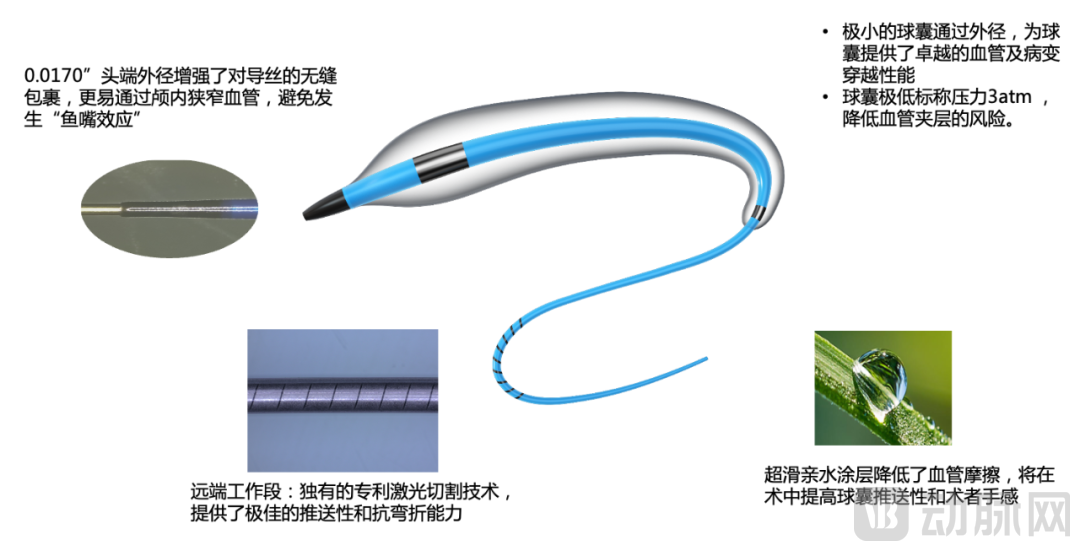
In terms of product performance, the NEO-Skater Intracranial Balloon Dilatation Catheter offers convenient operational advantages for clinicians. Its smaller tip outer diameter (0.0170”) and seamless wrapping around the guidewire facilitate easier navigation through intracranial stenotic vessels, avoiding the “fish-mouth effect.” The minimal balloon profile provides excellent lesion-crossing capability. The balloon’s ultra-low nominal pressure of 3 atm further reduces the risk of vascular dissection. An ultra-slippery hydrophilic coating minimizes vascular friction while enhancing catheter pushability and operator tactile feedback. Notably, the distal multi-segment material design combined with a tapered structure and proprietary laser-cutting technology further improves the catheter’s pushability and kink resistance.
Based on the superior product performance of the NEO-Skater Intracranial Balloon Dilatation Catheter, its market launch is expected to provide an effective therapeutic option for the clinical treatment of conditions such as intracranial atherosclerotic stenosis. It is reported that intracranial atherosclerotic stenosis (ICAS) is one of the leading causes of ischemic stroke, with patients of Asian descent accounting for 30%–50% of those suffering from intracranial atherosclerotic stroke. In 2014, results from the Chinese Study on Symptomatic Intracranial Large Artery Stenosis and Occlusion showed that the prevalence of intracranial atherosclerosis among Chinese patients with ischemic stroke or transient ischemic attack (TIA) was 46.6%. Patients with ICAS presented with more severe symptoms, longer hospital stays, and higher stroke recurrence rates, which increased with the severity of stenosis. The original intention behind R&D of Acotec’s NEO-Skater Intracranial Balloon Dilatation Catheter stemmed precisely from the clinical demand for such products among healthcare providers and patients.
Following the launch of its single-use support catheter, Acandis’s polymer material technology platform continues to bear fruit, enriching its product pipeline while providing clinicians and patients with a more diverse range of therapeutic options. We look forward to the future clinical performance of the NEO-Skater Intracranial Balloon Dilatation Catheter.