

PiduX: Building a Comprehensive Internet-Based Dermatology Healthcare Ecosystem
Since 2018, with the relaxation of relevant policies, internet healthcare has experienced robust growth, creating development opportunities for certain specialized medical departments. Among these, psychiatry and psychology, andrology, and dermatology are regarded by the industry as the most suitable specialties for online diagnosis and treatment due to their inherent characteristics. At that time, these specialties were also seen as having the potential to break through the limitation that “internet healthcare can only provide follow-up consultations,” thereby pioneering the implementation of “initial consultations” via the internet.
Amid a favorable outlook for industry development, a large number of companies in related fields have emerged rapidly. Examples include Haixinqing, which has established a presence in the mental health and psychology sector, and Shiqiang Internet Hospital, a pharmaceutical company focusing on andrology. In the field of dermatology, several companies have also gained momentum and secured financing, with PiXiaodu being one of them.
Compared to the well-known fields of mental health and andrology, what is the state of development for internet healthcare enterprises in dermatology? We spoke with Dr. Cha Xushan, Chief Expert at Pi Xiaodu, to gain some insights.
A Market Exceeding RMB 10 Billion: Dermatological Diagnosis and Treatment Demand Sees Explosive Growth
The standardized development of internet-based medical consultations, coupled with the continuous growth in patient demand, has further expanded the market size of dermatology services.
On the one hand, from an industry perspective, internet-based medical consultation has become increasingly mature, with patient acceptance continuing to rise.
With the implementation of policies related to internet-based medical consultations, enterprises in the primary market have become increasingly standardized. As a large number of companies transition from the primary to the secondary market—exemplified by the listings of JD Health and Dingdang Health, as well as Ark Health’s submission of its prospectus—the movement toward the secondary market is further fostering the maturation of companies in the primary market. Moreover, the standardized development of internet-based healthcare providers has accelerated patient adoption of online services. According to statistical survey data on China’s internet development, the number of online medical users continued to grow from June 2020 to June 2022, with the current base of internet users accessing online medical services surpassing 300 million.
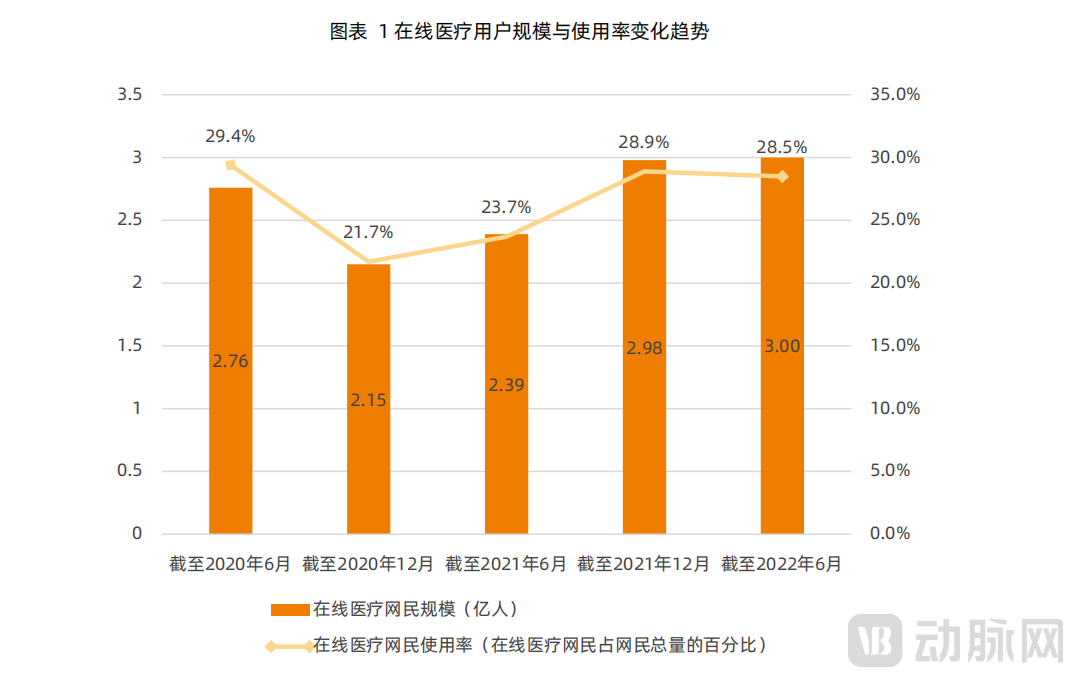 Image source: VCBeat, “2022 Internet Hospital Industry Research Report”
On the other hand, the continuously growing demand for dermatological diagnosis and treatment services among users is further driving the development of the diagnosis and treatment market.
Notably, the fact that many dermatological conditions can be diagnosed visually, coupled with rising awareness of cosmetic dermatology, has further spurred the growth of dermatological services. This trend is driven by both the rejuvenation of anti-aging demands among younger demographics and the increasing participation of highly educated, mature-age individuals. Meanwhile, changes in environmental factors, dietary habits, and psychological states have induced skin sensitivity. Additionally, sensitive skin issues have been exacerbated by inappropriate treatments, frequent and excessive use of anti-aging packages at beauty salons, topical corticosteroid application, and prolonged mask-wearing since the onset of the pandemic. Consequently, the population seeking treatment for skin problems has continued to expand.
In fact, as one of the common diseases that jeopardize the health and quality of life of middle-aged and elderly people, the prevalence of skin diseases among Chinese people is as high as 40%-70%. According to relevant statistical data, approximately 150 million people in China suffer from skin diseases each year, and the number of patients continues to rise. The large patient population and the demand for diagnosis and treatment have further driven the expansion of the market size for skin disease diagnosis and treatment, which is a market with a scale exceeding tens of billions of yuan.
However, in this online disease diagnosis and treatment market with development potential, the pain points are also very obvious.
Nearly 70% of Skin Diseases Can Be Diagnosed and Treated Online; Pi Xiaodu Has Established an Integrated Online-Offline Healthcare System
For Dr. Cha Xushan, Chief Expert at Pi Xiaodu, the convenience of internet-based medical consultations is self-evident.
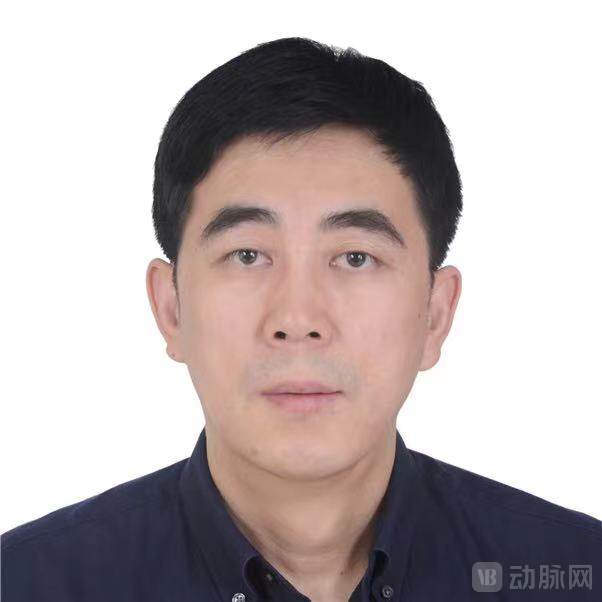
Chief Expert at Pi Xiaodu, Director and Chief Physician of the Department of Dermatology at the First Affiliated Hospital of Guangzhou University of Chinese Medicine, Cha Xushan. He has presided over and completed three research projects funded by the National Natural Science Foundation of China, one project each under the National 11th and 12th Five-Year Key Technologies R&D Programs, and two provincial-level research projects.
On one hand, “patients have gained convenient access to medical care, eliminating the hassle of queuing at hospitals and the financial burden of travel and accommodation for treatment in other locations, while also helping to prevent the spread of epidemics. Through online consultations, e-prescribing, and home delivery of medications, patients can enjoy expert diagnostic and treatment services from the comfort of their homes.”
On the other hand, high-level experts, including National Masters of Traditional Chinese Medicine and renowned senior TCM practitioners, can not only identify more patients with refractory dermatological conditions to accumulate clinical experience, but also document insights from this experience for further synthesis and sharing, thereby helping to enhance the diagnostic and therapeutic capabilities of junior physicians.
Dr. Cha Xushan, a disciple of National Medical Master Xuan Guowei, was among the first cohort in China to earn a doctoral degree in integrated traditional Chinese and Western medicine dermatology. He currently serves as a doctoral and master’s supervisor in dermatology. Drawing on his professional research and entrepreneurial experience in the consumer healthcare sector, Dr. Cha recognized that “nearly 70% of skin diseases can be diagnosed through images and videos.” In 2019, he co-founded PiXiaoDu with his partners. Leveraging his extensive clinical experience in integrated traditional Chinese and Western medicine dermatology, PiXiaoDu often tailors treatment plans for patients by offering options including traditional Chinese medicine, Western medicine, or an integrated approach, thereby ensuring optimal therapeutic outcomes.
Although the pandemic has spurred rapid development in online medical consultations, Pi Xiaodu has not been without its pain points during this growth process.
The first pain point stems from how to effectively build online medical consultation services.
On one hand, there is the issue of physician sourcing. In the development of online medical consultation platforms, a common challenge inevitably arises: how to build a large pool of physicians to serve an even larger patient population. During this process, some hospitals prohibit their doctors from practicing at multiple external sites, driven by concerns over patient outflow and potential liability for adverse outcomes resulting from physicians’ practice on third-party platforms. This undoubtedly hinders the rate at which physicians can join third-party platforms. Resolving the conflict between social responsibility and institutional interests requires not only national encouragement but also the implementation of concrete measures.
On the other hand, challenges also stem from pharmaceutical supply. How to collaborate with pharmaceutical companies to optimize the upstream and downstream supply chain, ensure a robust supply of dermatological medications, and cater to the prescribing preferences of diverse physicians is a significant issue facing specialized healthcare service providers such as PiXiaodu. By strengthening its specialty drug supply chain, PiXiaodu has better met the needs of both patients and physicians.
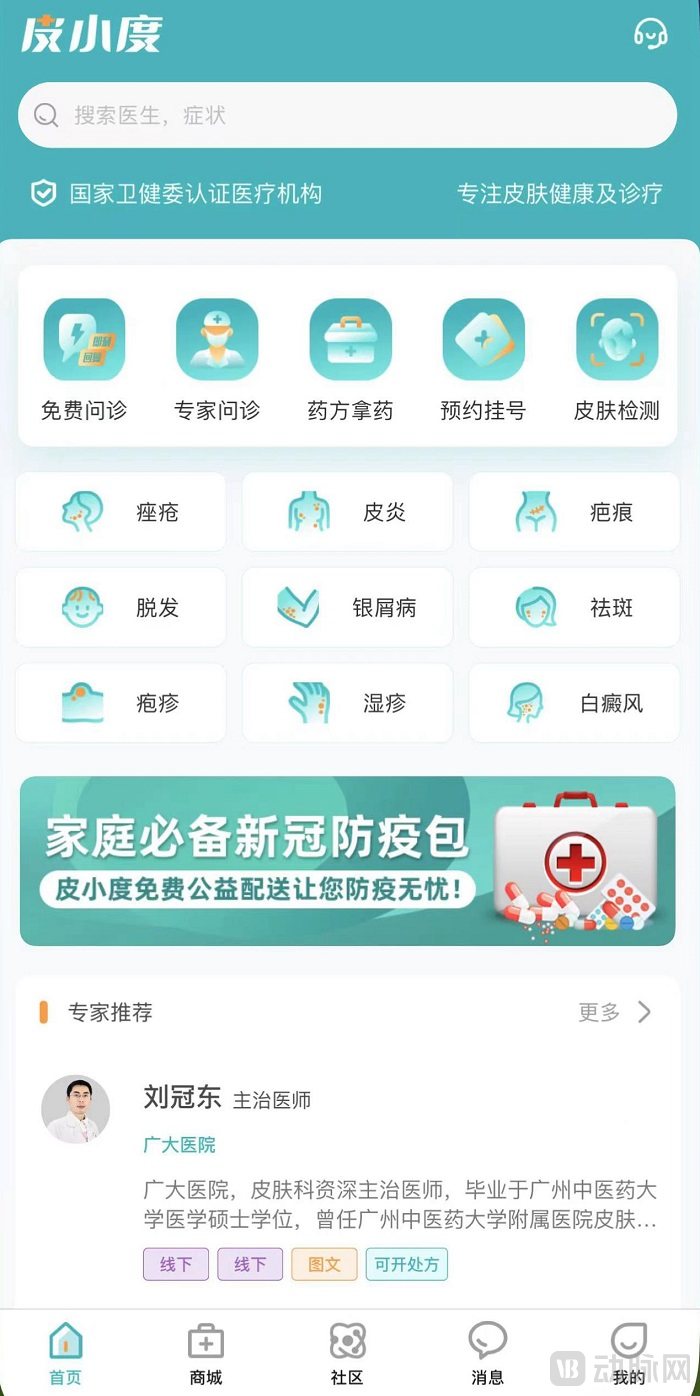
Dr. Cha Xushan noted, “The state itself encourages industry practitioners to promote the development of internet healthcare with an open attitude and an inclusive mindset.” To address the difficulties in implementing the policy on physicians’ multi-site practice, Pi Xiaodu facilitated physician onboarding through persistent communication with third-party medical institutions. Three years later, Pi Xiaodu had attracted more than 6,000 dermatologists to its platform. By partnering with pharmaceutical companies, Pi Xiaodu expanded its dermatology drug portfolio to over 500 varieties, covering nearly all medications used in dermatological specialty care, including some innovative drugs. This has strengthened its specialized medication system, enabling better service to both physicians and patients.
During the diagnosis and treatment process, Pi Xiaodu provides consultations with professional physicians, while licensed pharmacists review prescribed medications. Furthermore, Pi Xiaodu has established a review system in which medical experts from top-tier (Grade A tertiary) hospitals audit clinical workflows and prescriptions. This approach not only ensures medical quality but also further enhances the safety of the care delivery process. Additionally, Pi Xiaodu leverages artificial intelligence and other technologies to offer pre-consultation services, thereby helping patients access professional and efficient diagnostic and therapeutic care.
With the continuous refinement of its clinical workflow, Pi Xiaodu now enables dermatologists to provide online services such as virtual consultations, video-based diagnosis and treatment, and e-prescribing. Leveraging efficient logistics, medications from its proprietary drug inventory are rapidly delivered to patients, thereby establishing a closed-loop service model integrating diagnosis and pharmaceuticals. By incorporating AI-powered intelligent skin analysis, online diagnosis and prescription, medication delivery, and follow-up skin health management, Pi Xiaodu currently offers comprehensive end-to-end services covering pre-diagnosis, intra-diagnosis, and post-diagnosis stages. Additionally, Pi Xiaodu has developed an online specialized training system to facilitate the rapid professional development of young physicians.
The second pain point is how to meet patients’ needs for in-person medical consultations.
Dr. Cha Xushan noted that Pi Xiaodu’s initial strategy aimed to resolve all patient issues online as much as possible. However, as the patient volume grew, so did the demand for offline services. In response, Pi Xiaodu has been proactively referring patients requiring in-person consultations to appropriate medical institutions, thereby facilitating a seamless online-to-offline (O2O) transition.
Meanwhile, to better serve patients, Pi Xiaodu is also establishing a chain of offline light medical aesthetic service institutions in Guangzhou. Currently, its offline chain of light medical aesthetic clinics has opened five branches in Guangzhou, with the team responsible for these offline stores comprising over 100 members. Dr. Zha Xushan mentioned that Pi Xiaodu plans to further expand its offline chain of light medical aesthetic institutions and gradually achieve community-based localization. The ultimate goal is to ensure that when patients cannot resolve their issues online, they can visit nearby community chain stores to obtain corresponding medical services.
Patient Outcome-Oriented: Enhancing the Dermatology Diagnosis and Treatment Ecosystem
While providing diagnostic and treatment services to patients through both online and offline channels, Pi Xiaodu is also further enhancing its own ecosystem.
For example, Pi Xiaodu’s collaboration with pharmaceutical companies extends beyond drug supply to include real-world studies, new drug development, patient education on medications, and drug promotion. For patients, in addition to providing diagnosis and treatment services, Pi Xiaodu offers patient health management programs and has even developed certain value-added services to implement a membership model. Physicians on the platform can not only earn compliant income through multi-site practice but also establish their own online studios to accumulate patient resources and clinical experience, while exchanging and sharing case studies with other physicians on the platform, thereby promoting the advancement of the entire medical discipline.
It is reported that Pi Xiaodu has currently achieved break-even.
Dr. Cha Xushan pointed out, “The most distinctive feature of Pi Xiaodu is its patient-centric approach, with a strong focus on medical services to facilitate easy access to healthcare. Furthermore, our comprehensive range of dermatological specialty medications helps us achieve a closed-loop service model integrating diagnosis and treatment with pharmaceuticals.” Compared to other competitors, “our core competitive advantages include an expert clinical team featuring National Masters of Traditional Chinese Medicine, a stable R&D team, and an experienced offline operations management team.”
Currently, Pi Xiaodu is planning a new round of financing to further expand the reach of its medical services to a broader audience. Online, Pi Xiaodu intends to continue expanding its dermatology diagnosis and treatment resources and increase the number of dermatologists. Offline, the company aims to refine its business model through the initial operation of chain light medical aesthetic institutions, and subsequently expand the number of stores and community-based services on this foundation. While achieving steady revenue growth, Pi Xiaodu plans to rapidly pursue a listing on the secondary market.
“The patient population covered by dermatology is vast, and the potential for growth in this field is equally significant. Currently, outpatient volumes at brick-and-mortar dermatology hospitals are substantial, but each facility has limited capacity. Online platforms, however, offer much broader room for development. If progress goes smoothly, it could even emerge as a unicorn company, leading the industry’s advancement.” Dr. Zha Xushan emphasized, “With further state support and encouragement for internet hospitals, they may one day gain widespread public acceptance and recognition, much like e-commerce platforms did in their early days, ushering in a bright future. At that point, Pi Xiaodu will shine as a brilliant new star in the field of dermatology.”