

Chudong Tech: Pioneering AI-Driven Nutritional Management in Comprehensive Oncology Rehabilitation
On an afternoon in a weekend in November, VCBeat called Feng Zhigang, founder of Shanghai Chudong Intelligent Technology Co., Ltd. (hereinafter referred to as Chudong Technology).

Feng Zhigang, Founder of Chudong Technology
At that time, Feng Zhigang was negotiating a collaboration with a hospital in Sichuan. Amidst the distinctive appointment-number calling alerts characteristic of hospitals, he shared the story behind the founding of Chudong Technology, his insights and understanding of comprehensive cancer rehabilitation, and his strategic plans for the company’s development.
The concept of comprehensive cancer rehabilitation originated in the 1980s, aiming to coordinate diverse medical resources to provide high-quality healthcare management services for cancer patients. This approach reduces fragmentation and redundancy in treatment, enhances treatment completeness, lowers healthcare costs, and maximizes therapeutic benefits for patients.
Relevant data also demonstrate the efficacy of applying the concept of comprehensive cancer rehabilitation. According to reports from the 2019 American Society of Clinical Oncology (ASCO) Annual Meeting, providing whole-disease-course management services can reduce treatment costs by 21.4% and lower the risk of death by 38% in patients with advanced-stage cancer.
Shifting the focus to China, in terms of patient numbers, there were 4.57 million new cancer cases and 3 million cancer-related deaths in China in 2020. Cancer has become the second leading cause of death in China, after cardiovascular and cerebrovascular diseases. Moreover, China ranks first globally in both the number of new cancer cases and cancer-related deaths.
Therefore, it is imperative to introduce a comprehensive cancer care management system capable of effectively reducing mortality risk and alleviating the disease burden. Frankly speaking, although public hospitals at all levels, private oncology hospitals, and related enterprises have actively engaged in implementing this system—for instance, some healthcare institutions are adopting the Multidisciplinary Team (MDT) model (Note: The MDT model originated in the United States in the 1990s. Its treatment plans are developed through collaborative discussions among experts from multiple departments, including surgery, radiation oncology, medical oncology, and nutrition. This approach can effectively improve the five-year survival rate of cancer patients, accelerate hospital bed turnover, enhance operational efficiency, and boost profitability)—the concrete outcomes in these key areas still require further validation over time, while new market opportunities continue to emerge.
“For a long time, domestic healthcare has focused on the treatment of cancer patients, while other aspects, such as nutritional rehabilitation, have been largely neglected. In particular, attention to nutritional issues among cancer patients—both during treatment and in the post-treatment rehabilitation phase—has been minimal.” At the outset of the interview, Feng Zhigang offered this lament.
This single sentence captures the current state of rehabilitation therapy for cancer patients and articulates what Chudong Technology aims to achieve.
This company focuses on comprehensive rehabilitation management for cancer patients, with its entry point being nutritional management. Leveraging years of accumulated experience in database construction and operation, algorithm development, and resources from oncology industry associations, Chudong Technology has developed an AI-powered intelligent nutritional prescription system called “Nutrition Baijia.” Based on this system, it has established partnerships with 104 hospitals, including 13 of the top 25 oncology hospitals nationwide.
Before venturing into nutritional management for cancer patients, the predecessor of Chudong Technology primarily operated in the field of database establishment and operations. At that time, “Chudong Technology” mainly assisted brands in the automotive, real estate, education, IT, and financial sectors with brand building and operational databases. In 2018, by chance, the then “Chudong Technology” secured a collaboration with a clinical nutrition brand, for which it developed a customer relationship management (CRM) system. This system indirectly managed cancer patients by overseeing physicians’ social media traffic. It was through this partnership that Feng Zhigang recognized the market opportunities in nutritional management for cancer patients, and even in comprehensive, end-to-end care for this patient population.
Overall, China’s oncology sector is characterized by high incidence rates, a large patient population, and continuously rising mortality rates, which have given rise to a substantial market for oncology medical services. From 2015 to 2019, the market size of China’s oncology medical services grew from RMB 231.4 billion to RMB 371.0 billion, representing a compound annual growth rate (CAGR) of 12.53%. According to Frost & Sullivan projections, the market is expected to reach RMB 700.3 billion between 2020 and 2025, at a CAGR of 11.54%.
According to KPMG’s report “Rehabilitation Medical Trends Lead a New Blue Ocean,” with the rise in residents’ disposable income and greater awareness of rehabilitation medicine, the scale of rehabilitation services provided by rehabilitation health institutions in China is projected to reach RMB 220.7 billion in 2025, representing a compound annual growth rate (CAGR) of 20.9% from 2018 to 2025.
Furthermore, nutrition—a critical factor closely linked to cancer treatment and rehabilitation—has not been scientifically managed. According to relevant statistics, approximately half of cancer patients present with malnutrition at the time of diagnosis, and in certain types of cancer, about 85% of patients experience malnutrition and weight loss during treatment.
Malnutrition can significantly impact the treatment and recovery of cancer patients. For instance, in cases of malnutrition, tumor cells may usurp nutrients from normal cells and deplete the body’s own tissues; if not addressed, this places patients at risk of death from starvation. Therefore, nutrition is a critical component of the treatment and rehabilitation process for cancer patients. A scientific and reasonable diet can prevent malnutrition and cancer cachexia, strengthen patients’ physical condition, and improve their quality of life.
However, regrettably, although nutritional issues have garnered attention from the medical community and guidelines for nutritional therapy in cancer patients have been established, clinicians at the point of care often lack the time to address them due to heavy workloads involving diagnosis, treatment, and surgery. Furthermore, they may be constrained by a lack of relevant management tools, leaving them willing but unable to provide adequate nutritional support.
On the patient side, due to a lack of scientific nutritional knowledge and professional guidance, patients and their families often fall into misconceptions regarding nutritional supplementation. Furthermore, most hospitals, institutions, or enterprises involved in the full-course management of oncology currently focus on the in-hospital and pre-hospital markets, with few venturing into the nutrition market. The post-discharge rehabilitation market has yet to produce any industry giants, leaving ample room for dedicated pioneers to explore and develop this space.
Against this backdrop, Feng Zhigang developed a strong interest in the comprehensive management of cancer care and nutritional management, gradually shifting his previous business focus toward the holistic management of cancer patients.
Shanghai Chudong Intelligent Technology Co., Ltd. has entered the field of comprehensive rehabilitation management for cancer patients through nutritional management, resulting in its current flagship product—“Nutrition Baijia.”
How Should We Understand the Product “Yingyang Baijia”? In an interview, Feng Zhigang used a vivid metaphor—a nutritional prescription calculator.
Specifically, "Yingyang Baijia" is an intelligent nutritional prescription system based on big data. After doctors input relevant patient data, the system automatically generates personalized nutritional prescriptions for patients. These prescriptions include not only nutritional guidance but also recommended nutritional supplements and medications.
Therefore, the system can also be understood as an online marketplace specializing in nutritional supplements. Based on their nutritional prescriptions, patients can directly purchase the corresponding products.
Moreover, according to Feng Zhigang, the services offered by Nutri100 are no longer confined to nutritional prescriptions and supplements; they have gradually expanded to include pharmaceuticals, thereby enabling the management of symptoms such as vomiting, pain, decreased appetite, and weight loss.
At first glance, the functions and logic of Nutri100 appear relatively simple; however, delivering these “simple” features requires sophisticated capabilities—namely, accumulated industry expertise and advanced algorithmic proficiency.
Specifically, according to Feng Zhigang, while the concept of whole-course oncology rehabilitation and some basic methods have gained widespread adoption in China, the industry as a whole remains in the early stages of exploration regarding practical implementation. Key questions remain: What service systems and workflows should be established? What standardization frameworks are needed? How can personalized, intelligent nutrition prescriptions be developed? How can physicians obtain these personalized recommendations promptly through simple data entry? And how can the medical validity of nutrition prescriptions be ensured? Addressing these challenges requires enterprises not only to have a thorough understanding of the treatment and rehabilitation processes for cancer patients and the capability to acquire large volumes of compliant patient data for algorithm optimization, but also to keep pace with the latest clinical practice guidelines, treatment protocols, and empirical evidence to refine the prescribed recommendations.
In response, Chudong Technology has not only established a comprehensive service system and initially constructed a standard framework for scientific research data, but also integrated the years of diagnostic and treatment experience of renowned oncology experts with relevant international and national guidelines to develop the “Nutrition Baijia” algorithmic model. This constitutes what Feng Zhigang describes as Chudong Technology’s core competitive advantage.
Building on this foundation, Chudong Technology continues to accumulate data to optimize its algorithmic models. To date, the company has amassed a dataset of over 18,000 cases.
With the support of numerous experts, Chudong Technology has also participated in the development of CCCNET (China Cancer Patient Symptom Management Registry Platform). The platform aims to enrich scientific research related to cancer patients through the inclusion of more clinical projects and principal investigators (PIs), thereby better reflecting the survival status of cancer patients. It aspires to become one of the most comprehensive, complete, and authoritative dynamic follow-up cancer databases in China and globally in the future.
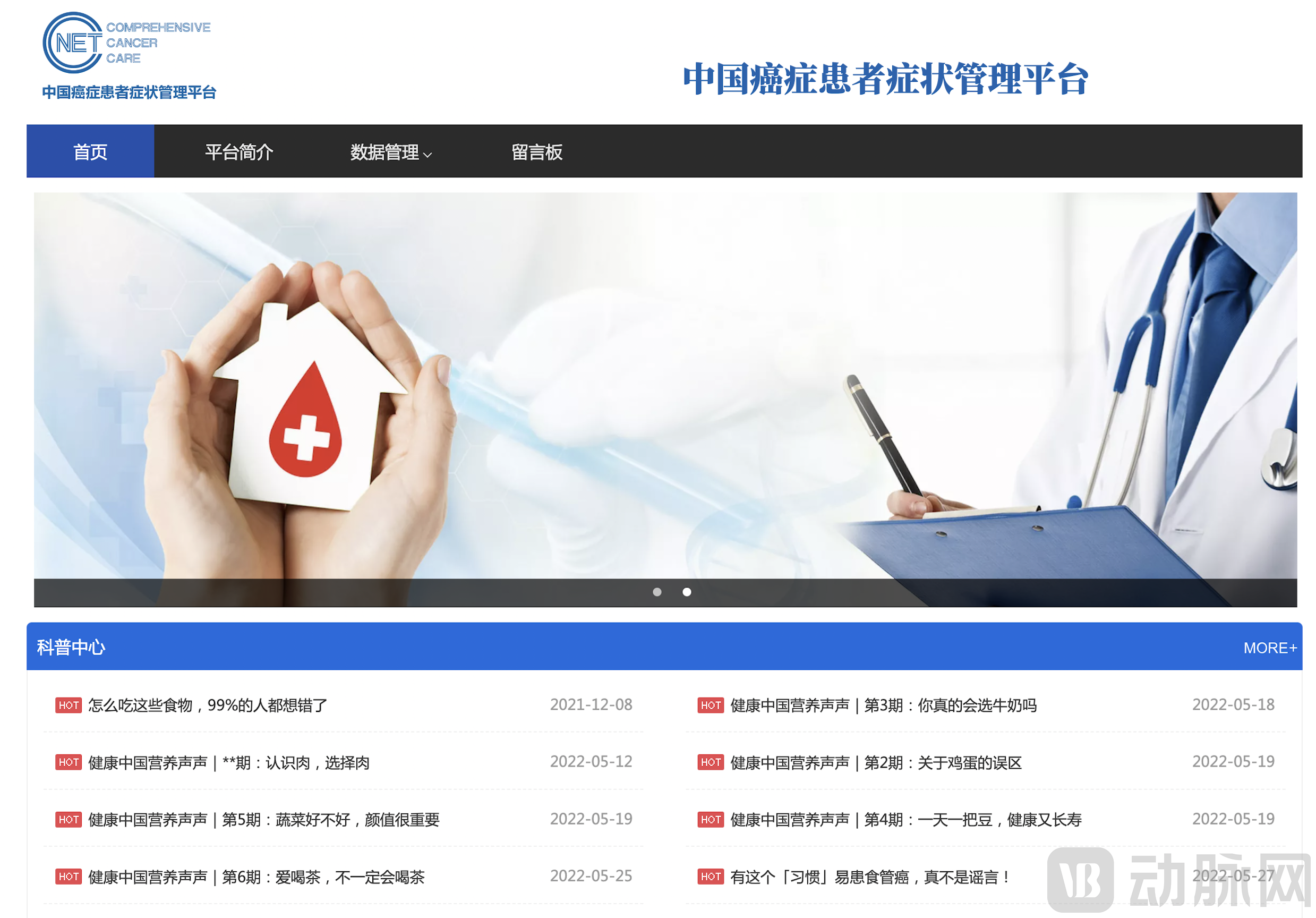
CCCNET (China Cancer Patient Symptom Management Registry Platform) Page
Shifting focus back to Chudong Technology’s “Nutrition Baijia” platform, this system enables patients to receive the most comprehensive and scientifically grounded support for nutrition and even symptom management. Meanwhile, it allows clinicians to promptly monitor patients’ nutritional status or rehabilitation progress, thereby facilitating the accumulation of clinical expertise, the publication of academic papers, or the filing of invention patents to enhance their academic standing.
At the conclusion of the interview, Feng Zhigang also disclosed Chudong Technology’s development roadmap to VCBeat: First, in the current phase, the company aims to cover at least 300 seed hospitals and fully demonstrate the scientific validity and effectiveness of “Yingyang Baijia” personalized nutrition prescriptions. Second, building on this established scientific and clinical evidence, “Yingyang Baijia” will be registered as a digital therapeutic, and the operational experience gained from the initial 300 seed hospitals will be scaled to 2,000 hospitals. In the third phase, Chudong Technology will expand its layout to include other rehabilitation management services, collaborating with numerous third-party institutions in the industry to perfect its end-to-end management framework for oncology rehabilitation.