

QuanMol Tech, Founded by Two UC Berkeley PhDs, Secures Millions in Seed Funding Within Six Months and Files IPO Prospectus
Recently, a startup focused on molecular designQuanMol TechAnnouncement of CompletionMillions of Dollars in Angel and Seed Funding RoundsThis funding round was led by Plug and Play, a Silicon Valley-based incubator that invests in technology innovation companies, with participation from multiple Silicon Valley venture capital firms including Silicon Valley Future, AI Basis, and Decent Capital.
QuanMol Tech was founded in June 2022, and isAI-Assisted Drug Design Tracka startup. By integrating chemistry, physics, and artificial intelligence, QuanMol Tech leverages big data and AI algorithms to assist medicinal chemists in rapidly and efficiently interpreting data during the drug discovery and development process, thereby reducing trial-and-error costs and enhancing overall efficiency.
Established just six months ago, QuanMol Tech has not only successfully completed its angel financing round but also built the Redefine computing platform for its products, achieving preliminary platform validation and obtaining key data.
Don't Rush into Entrepreneurship
The founding team of QuanMol Tech primarily hails from the University of California, Berkeley (hereinafter referred to as “UC Berkeley”). Co-foundersDr. Xingyu ShenGraduated from the Department of Chemistry at UC Berkeley, formerly employed at Arcus Bioscience, a biotech company in the San Francisco Bay Area; another co-founderDr. Xu Dong LvGraduated from the Department of Physics at UC Berkeley, with a background in both physics and economics.
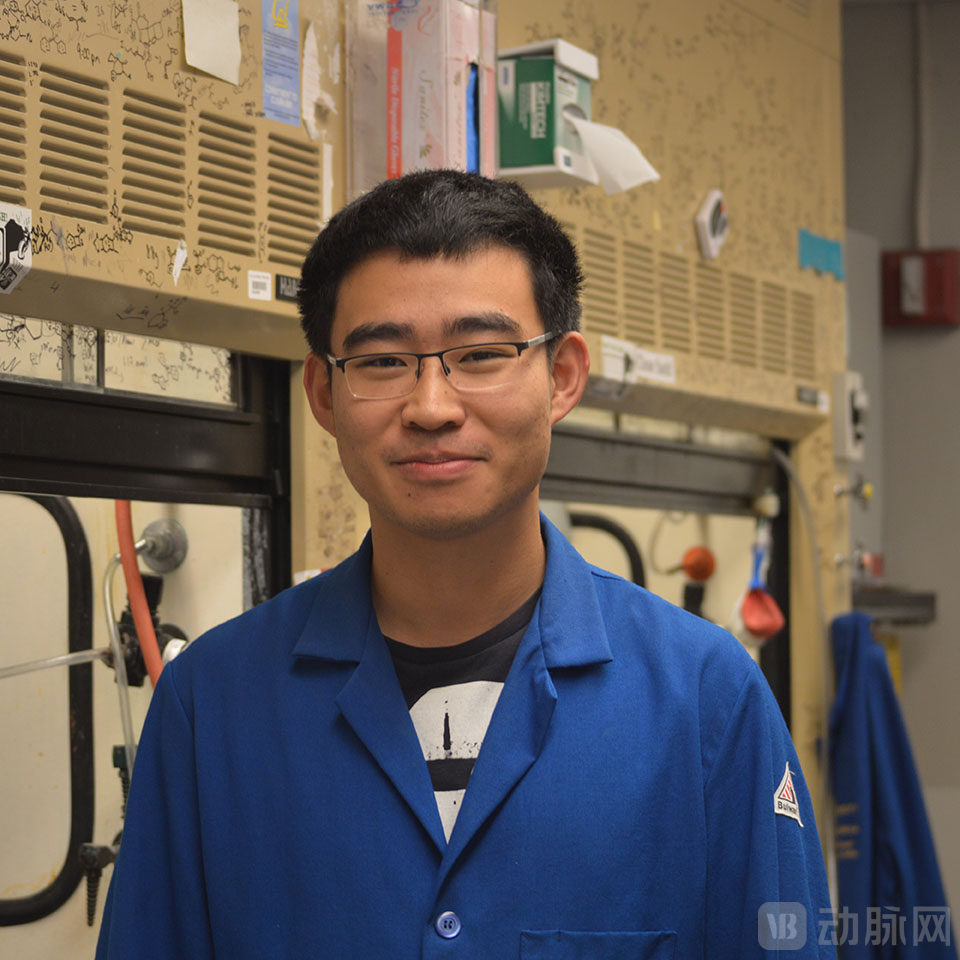
Dr. Xingyu Shen, Co-Founder of QuanMol Tech
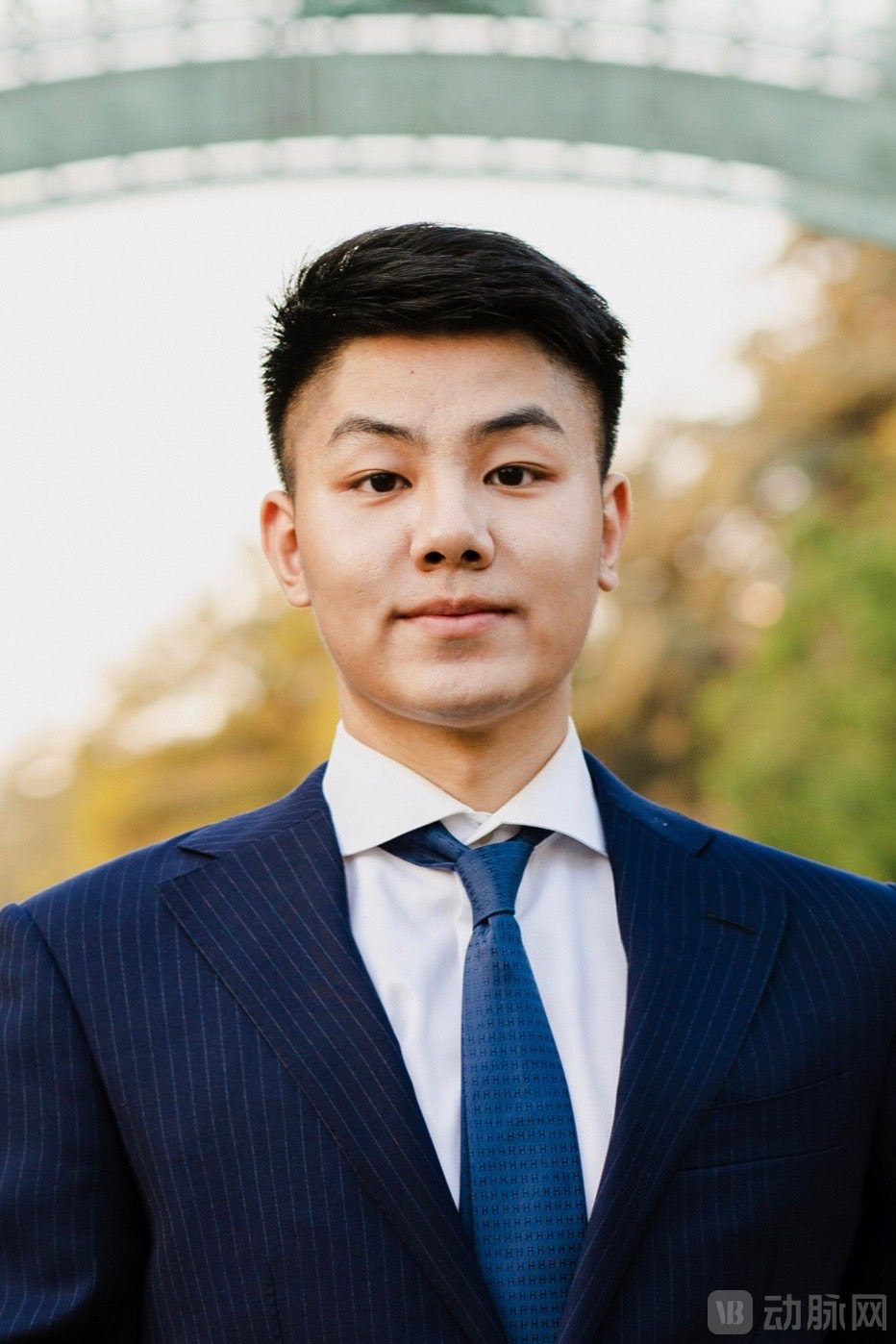 Dr. Lv Xudong, Co-Founder of QuanMol Tech
During his doctoral studies at UC Berkeley, Xingyu Shen already harbored entrepreneurial aspirations. However, after completing his Ph.D., he did not immediately leap into the startup arena; instead, he chose to join Arcus Bioscience as a medicinal chemist. When asked about the reasoning behind this decision, Dr. Shen stated that entrepreneurship is no small undertaking, and moreDon’t Start a Business Just for the Sake of Starting One, he hopes to first gain experience at an established company before considering entrepreneurship.
During his tenure at Arcus Biosciences, Xingyu Shen was consistently engaged in preclinical drug research. This professional experience also allowed him to identify the shortcomings of preclinical drug research, namelyExisting AI systems are not well integrated into human conventional thinking patterns, making it difficult to achieve high prediction accuracy and resulting in weak interpretability.
Based on this, Shen Xingyu immediately reached out to his Berkeley classmate, Dr. Lv Xudong, for discussion. Unlike Shen, Lv had some entrepreneurial experience. He expressed strong interest in Shen’s idea, but in his view,Without a clear direction, it is premature to discuss entrepreneurship.
“We were not impulsive in founding the company at that time, as our understanding of AI-driven drug discovery was still quite limited,” said Lü Xudong.
Over the following period, the two individuals conducted extensive industry research, aiming to gain a deep understanding of the sector, identify key pain points, and propose actionable solutions to address them. Ultimately, they decided to approach the problem from a chemical perspective by developing an interdisciplinary computational platform designed to help medicinal chemists enhance their understanding of molecules.
Once the goal was aligned, they began to assemble the team. Lü Xudong, with a background in quantum physics, stated from a more professional perspective, “Venturing into medicinal chemistry requires bridging physics and chemistry through computational methods and artificial intelligence.” And a team withInterdisciplinary Natureteam, ensuring that professionals oversee every stage.
In accordance with this standard, they identified two additional co-founders: Dr. Li Bo from the Division of Chemistry and Chemical Engineering at the California Institute of Technology, whose primary research focuses on leveraging computational chemistry to address challenges in molecular design and generation; and Yi Minzhen, a former senior machine learning engineer at Pinterest, whose expertise in Graph Neural Networks (GNN)—a key technology employed during his tenure—aligns closely with QuanMol’s core technical requirements.
In June 2022, QuanMol Tech was founded, and a group of “dreamers” officially embarked on their journey.
Becoming a SaaS Provider that Connects the Upstream and Downstream of Drug Development
Although AI-assisted drug development has become a consensus in pharmaceutical innovation, human thinking and AI thinking differ significantly throughout the entire drug development process.
Human thinking is a process of observation, hypothesis, and verification, whereas AI thinking merely predicts outcomes, lacking the two critical components of observation and hypothesis; alternatively, AI’s mode of observation differs significantly from that of humans.
“Small-molecule medicinal chemists are the ones who truly deliver output across the entire industry chain.” In Shen Xingyu’s view, drug development is a stepwise process that simulates effects in the human body, and medicinal chemists’ decisions on product selection are highly subjective and opaque, which means AI can only serve as an aid to humans in drug discovery.
Following this product logic, QuanMol Tech quickly found its niche—Provide data management, operations, and services to pharmaceutical companies, becoming a SaaS provider that integrates the upstream and downstream of drug R&D.。
After confirming the “identity,” QuanMol Tech has built, based on big data and AI algorithms,Redefine Computing Platform, this platform can assist medicinal chemists in rapidly completing data interpretation tasks during the drug development process, such as protein expression, tissue expression, and validation simulations of experimental results, thereby quantifying their insights and reducing trial-and-error costs in drug research and development.
It is reported that the Redefine computing platform comprises two modules, one of which isThe Unifier for Prediction,Its data analysis speed is <1 second per run, with chemical accuracy of <1 kcal/mol; the other isThinker, its core mission is to assist medicinal chemists in their thinking., providing them with real-time molecular modeling, intuitive chemical understanding, and rational molecular design.
It is worth mentioning that the operation of the Redefine platform is supported byGraph Neural Network Algorithms, the volume of data required by this algorithm is far smaller than that of other models, amounting to only about one-tenth of the original. The data are primarily sourced from public datasets, database vendors, and custom-generated data produced in-house by the company.
Lu Xudong revealed to Chengguo Bureau that the algorithm has basically reached a world-leading level in both academia and industry.
Specifically, the algorithm offers three major advantages: first,Enhancing Prediction Accuracy and Interpretability, because the integration of graph neural networks with physics and chemistry enables medicinal chemists to accurately align molecular models and communicate using chemical terminology; second,Reduce R&D Costs, the algorithm not only helps medicinal chemists reduce 4–5 optimization steps but also lowers the cost by a factor of one hundred; thirdly,The algorithm has high scalability., applicable to numerous fields including new materials, energy, daily chemicals, and food additives.
Shen Xingyu stated, “Currently, the Redefine computing platform, centered on graph neural network algorithms, has garnered interest in collaboration from numerous well-known pharmaceutical companies.”
Led by Top Global Venture Capital Firms, Achieved Oversubscribed Financing
Although the global market is facing a capital winter this year, fundraising does not seem to be a difficult task for QuanMol Tech.
“The amount is slightly higher than we originally planned..” remarked Lü Xudong. QuanMol Tech not only announced that it had secured millions of dollars in angel financing, but also gained support from Plug and Play, a leading global venture capital firm. As the world’s largest early-stage investor, Plug and Play has invested in more than 6,000 startups since its inception, including global giants such as Google, PayPal, and Logitech.
Plug and Play has turned its attention to the AI drug discovery company QuanMol Tech this time, primarily due to its recognition of the team’s strength and technological highlights.
This is primarily attributable to the strong ties that Lv Xudong, a “slash youth,” has established with the investment community. It is understood that he is not only a scientist and a serial entrepreneur, but also a partner at Taihill Venture, an early-stage investment firm, and Chairman of the Global Chinese Entrepreneurs Alliance (GCEA). Lv Xudong stated, “I have been continuously exploring entrepreneurship and actively building connections within the investor community. As a result, our team was able to quickly engage with investors after the establishment of QuanMol.”
In fact, within the venture capital community, it has become a near-consensus that “investing in early-stage projects is primarily about investing in the team.” Founders with prestigious academic backgrounds, industry experts, and serial entrepreneurs are often favored by the early-stage investment market. Judging by QuanMol Tech’s founding team, they have alreadyBuild a robust framework integrating academic research, industry expertise, and entrepreneurial experience, and plan the development path with a pragmatic attitude.
Next, let’s discuss the technical highlights. Currently, AI-driven drug discovery is transitioning from a blue-ocean market to an increasingly competitive red-ocean landscape. Coupled with the lengthy validation cycles inherent in pharmaceutical development, companies seeking to break through and stand out must...It is necessary to forge a new path and identify what sets it apart.
Unlike other AI-driven drug discovery companies that offer CRO services or position themselves directly as biotechs with proprietary R&D pipelines, QuanMol Tech has established a significant cognitive barrier by targeting medicinal chemists and organically integrating artificial intelligence with chemical physics to deeply engage in the observation, hypothesis generation, and validation processes of drug development.
However, fundraising is only the beginning. It is reported that the funds from this round will be used to expand the team by recruiting more scientists and engineers, as well as to accelerate product development and launch a broader beta testing phase. In the future, Shen Xingyu and Lü Xudong will continue to move forward; they, along with the young QuanMol Tech, aspire to make their mark in the industry.Make an Impact。