

MedBank Launches AI+5G Ultrasound Diagnostic System to Address Critical Shortage of Sonographers
“Urgently Hiring Ultrasound Physicians: Accommodation Provided, with Talent Incentives of Up to 300,000 Yuan.” Recently, a hospital in Longhua District, Shenzhen, posted such a recruitment advertisement on its official WeChat account. Similar posts urgently seeking ultrasound doctors are also common online, reflecting the current shortage of ultrasound professionals in China. According to publicly available data, China faces a shortfall of at least 150,000 ultrasound specialists.
Medical image analysis is labor-intensive and tedious, placing a significant burden on physicians’ energy. Furthermore, the interpretation of ultrasound data relies heavily on the accumulation of physicians’ subjective experience. Excessive workloads or insufficient experience can easily lead to issues such as missed diagnoses.
Many companies are attempting to use artificial intelligence to unlock this challenge.Beijing Medbank Artificial Intelligence Technology Co., Ltd.(hereinafter referred to as“Medbank”) also innovatively presented its own answer—having successfully developed in August 2022Thyroid Nodule Computer-Aided Diagnosis System, and has been clinically applied in numerous hospitals across China, receiving unanimous acclaim from clinical ultrasound experts.
Medbank, established in March 2022, is a healthcare technology innovation company specializing in AI-assisted diagnostic solutions for ultrasound imaging.
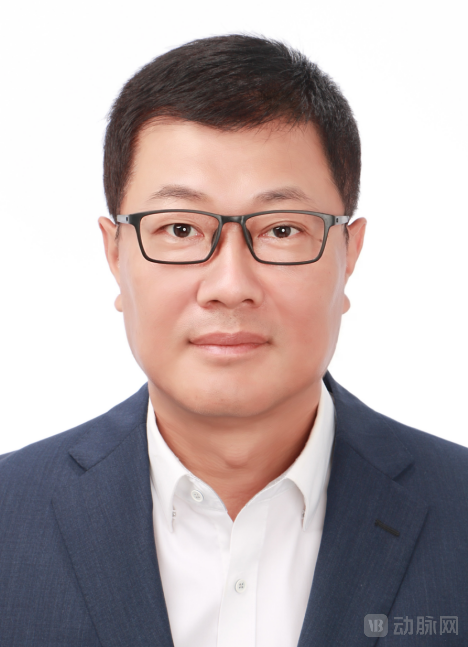
Founder of Medbank, Li Mingzhou
Li Mingzhou, the founder of Medbank, also boasts a rich and multifaceted professional background.
As a corporate executive, he boasts over a decade of senior leadership experience at Fortune Global 500 multinational corporations. He has frequently traveled to South Korea to participate in international medical device forums, where he was invited as a distinguished guest to share insights on Chinese medical device regulations and market analysis. He possesses profound industry expertise in the medical device sector and extensive experience in international business operations.
As an angel investor, he has invested in and participated in multiple healthcare projects aligned with the “bringing in and going global” strategy. Among these, two companies have already been listed on stock exchanges both domestically and internationally. He possesses extensive experience in project execution and is well-versed in all segments of the healthcare industry chain.
As an entrepreneur, he founded his company in 2009 and successfully secured exclusive agency rights in China for over 30 medical device products from more than ten imported brands. He has obtained more than 30 NMPA registration certificates for Class I–III imported medical devices and holds multiple patents.
As a responsible and compassionate entrepreneur, he made charitable donations of medical equipment totaling over RMB 4 million to healthcare institutions at various levels in Shanghai, Wuhan, Yanji, and other regions during the 2020 pandemic. In recognition of his contributions, he was honored with awards such as the “Fraternity Award” for dedicated service in pandemic relief by the Jilin Provincial Red Cross Society.
Li Mingzhou explained to VCBeat that the majority of ultrasound medical data still requires manual analysis. The most apparent issue is the tedious and repetitive nature of ultrasound analysis, which leads to physician burnout, high rates of missed diagnoses, and low efficiency. Furthermore, judgments based solely on clinical experience are prone to misdiagnosis. With the downward expansion of tiered diagnosis and treatment, healthcare policy reforms, and the accelerated advancement of informatization, the AI-powered ultrasound market is poised for rapid growth. The significance of AI-based ultrasound diagnostic technology lies in two key aspects: first, it enhances diagnostic efficiency by reducing reliance on manual image interpretation and physician experience, thereby effectively lowering the misdiagnosis rate associated with traditional ultrasound; second, it facilitates preventive care, holding disruptive potential for the screening and prevention of specific diseases.
Medbank was founded to leverage new technologies and products in its handheld ultrasound series, powered by AI and 5G, to transcend geographical barriers in precision medicine and address the shortage of professional sonographers for imaging diagnosis at primary healthcare institutions.
To this end, Medbank has assembled an industry-leading team comprising ultrasound medical experts, IT professionals from Fortune 500 companies, and sales talent with over a decade of experience in medical device marketing.
Regarding the specific strategic direction, Medbank has chosen "thyroid" as its first entry point for three main reasons.
First, with the widespread adoption of high-frequency ultrasound and growing public emphasis on health screenings, the detection rate of thyroid nodules has continued to rise. Thyroid nodules have become a major “hotspot” in ultrasound departments, affecting approximately one in three individuals, resulting in a substantial patient population.
Second, relying solely on manual physician palpation makes it difficult to diagnose nodules smaller than 1 cm, resulting in a high rate of missed diagnoses; there is an urgent clinical need for a method that can clearly delineate and diagnose such lesions.
Third, high-resolution thyroid ultrasound is the most sensitive method for evaluating thyroid nodules, but data interpretation relies on physicians’ experience. There is a lack of practical, standardized, and convenient computer-aided diagnostic methods in the market.
Based on market insights and an in-depth analysis of clinical needs, the Medbank team developed an AI-assisted diagnostic system for thyroid diseases in just five months.
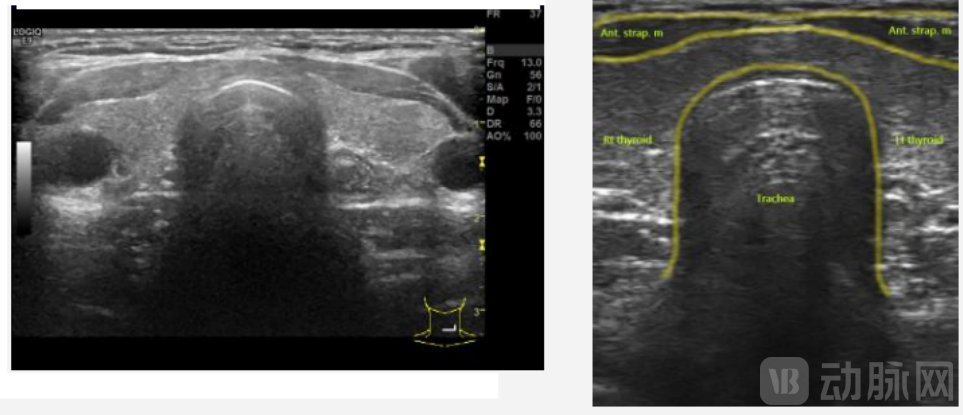
Medbank AI-Assisted Thyroid Diagnostic System provides intelligent, rapid, and precise location coordinates.
It can not only accurately and rapidly determine the bounding box coordinates and contour coordinates of nodules, but also diagnose nodule characteristics, including composition, echogenicity, margins, hyperechoic foci, and aspect ratio. Based on these characteristics, it assigns scores and ratings in accordance with the TI-RADS classification system to intelligently assess the benign or malignant nature of the nodules.
When the system predicts a nodule, it can also predict whether ablation therapy is recommended. In addition, the system can diagnose whether there are diffuse lesions in the thyroid.
Collecting ultrasound image datasets is a challenge faced by every company developing ultrasound-assisted diagnostic systems. Medbank is no exception. To address this industry-wide challenge, Medbank has actively engaged in discussions with multiple medical institutions to jointly establish an AI product development project team. Through collaborative R&D efforts, the resulting scientific and technological achievements are shared among all parties, thereby fully motivating the participating medical institutions.
For medical specialists, this auxiliary system enables faster, better, and more comprehensive diagnosis of thyroid nodules; for junior physicians and primary care providers, it not only provides “eagle-eye” acuity to detect subtle abnormalities but also integrates expert insights to prevent missed diagnoses due to limited experience, thereby facilitating the decentralization of high-quality medical resources; for patients, it significantly improves healthcare efficiency and the overall medical experience.
The corporate name “Medbank” embodies its potential and ambition.
Developing an AI-assisted diagnostic system for thyroid diseases is merely the first step in Medbank’s grand blueprint.
In Li Mingzhou’s strategic business blueprint, Medbank will launch multiple AI-assisted ultrasound diagnostic systems tailored to diverse clinical needs, evolving into a world-leading comprehensive diagnostic “medical bank” that integrates AI-assisted ultrasound diagnostic solutions.
At this stage, the company has commenced comprehensive R&D efforts in automated measurement of carotid intima-media thickness (IMT), AI engines for automatic ultrasound image recognition, ultrasound-guided interventions, developmental dysplasia of the hip (DDH), postoperative lower extremity venous thrombosis, and breast cancer monitoring. By building a suite of AI-assisted diagnostic product systems, the company aims to broaden its technological and patent moats.
The company is currently seeking financing to optimize its team and construct manufacturing facilities.