

Geneus Tech Launches Fourth-Generation Nanopore Sequencer G-seq500, Driving Industrial Leap in Genomic Sequencing

Geneus Technologies
Gene Sequencing Instrument R&D and Manufacturer
At 19:00 on December 27, 2022 (Beijing Time), the online launch event for Gseq500, the first medium-throughput nanopore gene sequencer from Geneus Technologies (“Geneus Tech”), concluded successfully.

At the meeting,Dr. Su Yunpeng, Founder and CEO of Geneus TechnologiesIt was mentioned that since the release of its first proof-of-concept prototype, Gseq01, in 2020, the company’s R&D team has forged ahead with relentless innovation, increasing the number of single-chip sequencing units to 512k, a significant improvement over the 128 units in Gseq01.More than 4,000 times, while achieving a significant leap in overall performance in terms of sequencing data accuracy and read length, thereby meeting the majority of commercial demands, including those in clinical application scenarios.
In 2023, Geneus Technologies will complete the construction of its production base and the expansion of its R&D laboratories. While achieving mass production and commercial sales of the Gseq500, the company will advance the R&D and commercialization of the high-throughput nanopore sequencer, Gseq10K. Additionally, it will establish an Application Research Center and joint laboratories to develop hardware and software platforms—including automated library preparation systems compatible with its sequencers, as well as bioinformatics analysis platforms and databases—to serve the continuously expanding market.Low Cost, High Efficiency, Automationfull-process sequencing solutions, continuously expanding the boundaries of sequencing applications.
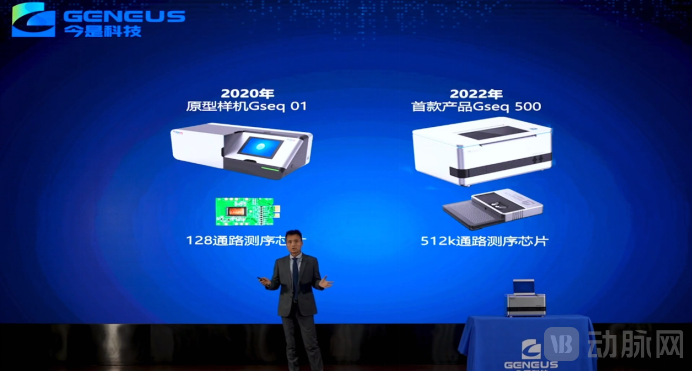
Dr. Yunpeng Su
Dr. Yaozhong Zou, Founder and Chief Scientific Officer of Geneus Technologies, a detailed introduction to the core technologies of the Gseq500 was presented at the conference. Dr. Yaozhong Zou shared the substantive breakthroughs achieved by Geneus Technologies in recent years in core technologies such as nanopore proteins and high-precision, high-sampling-rate microcurrent detection chips. Taking the chip as an example, Geneus Technologies’ self-developed chips demonstrate significant performance advantages in integration, sampling accuracy, anti-interference capability, and data transmission, thereby ensuring sequencing throughput while delivering higher data quality.
Furthermore, Geneus Technologies’ chips support multiplexing, with the number of reuse cycles reaching up to10 timesapproximately, without performance degradation or reduction. The system offers the flexibility of immediate sample processing upon arrival, significantly enhancing sequencing efficiency while maintaining low startup costs. Core components and key technologies are independently developed by Geneus Technologies, achieving true autonomy and controllability in medium-to-high throughput chips, enabling domestic substitution and even surpassing international counterparts.
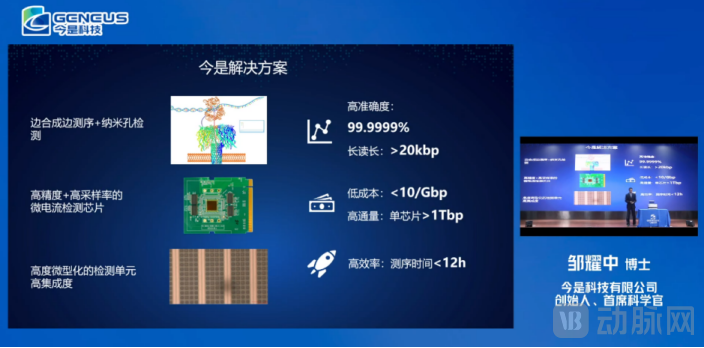
Dr. Yaozhong Zou
Meanwhile, to simplify complex practical operations, Geneus Technologies also provides pre-assembled, complete sequencing kits compatible with various library preparation protocols. These are complemented by a highly automated workflow, including an integrated automatic algorithm software system for downstream processing and automated generation of sequence files for data analysis. This approach minimizes the technical barrier to entry, ensuring ease of use and versatility for customers, thereby enabling the flexible application of nanopore sequencing technology across diverse scenarios.
Regarding the sequencing accuracy, which is of greatest concern to the industry, Gseq500 can provide a single-read accuracy of nearly 90% (high-accuracy mode) without using complementary sequence information. When the sequencing depth reaches 30X, the corrected accuracy can reach99.95%The above, delivering impressive performance. Even in the "high-efficiency mode" with slightly lower accuracy, a 30X read depth can achieve99.9%The abovecorrection accuracy. With continuous optimization of the system in the future, Geneus Technologies’ sequencing platform will achieve sequencing accuracy of Q40 or even above Q50.

At the conference, Geneus Technologies also invited two industry experts to share the detection performance of Gseq500 in real-world application scenarios.
Professor He Miao from the Chinese Blood Transfusion Institute Shared the Clinical Applications and Significance of HBV Whole-Genome Sequencing
Professor He stated that HBV infection remains one of the most serious public health issues today. China currently has approximately 100 million HBV carriers, and chronic HBV infection poses significant health risks. Clinical practice now emphasizes precision diagnosis and treatment; whole-genome sequencing of HBV is the foundation for personalized hepatitis B therapy and is crucial for the precise genotyping and genetic diversity research of HBV.
Compared with the gold standard of first-generation sequencing, nanopore sequencing technology can better preserve mutation linkage information—i.e., complete haplotypes—analyze infection proportions, and achieve high accuracy. By comparing the data quality of Geneus Technologies and Oxford Nanopore Technologies (ONT),Geneus Technologies' nanopore sequencer achieves a data correction accuracy of up to 99.95%, surpassing ONT's correction accuracy of 99.7%.
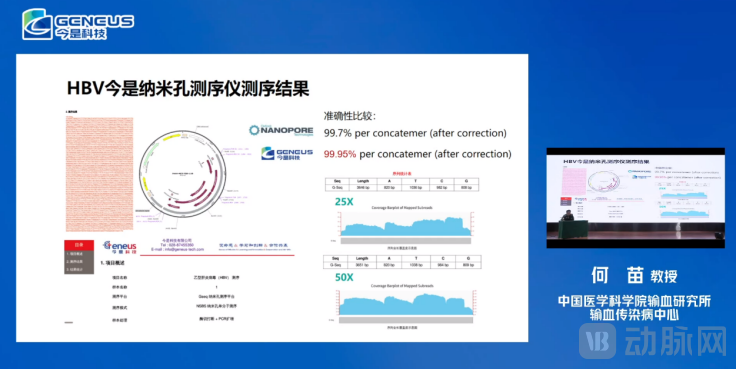
Prof. Miao He’s Insights
Regarding the prospects of nanopore sequencing applications for HBV, Professor He stated that with the widespread clinical adoption of low-cost nanopore sequencing for HBV whole-genome detection, more research will address the critical needs of viral hepatitis treatment. By leveraging precise genotyping as an entry point and integrating nanopore sequencing-based multi-omics analysis, these efforts will focus on personalized precision therapy strategies and novel mechanisms of HBV drug resistance, thereby improving therapeutic outcomes in real-world clinical practice.
Professor Zheng Huajun from the Shanghai Institute of Biomedical Technology shared insights on the application of nanopore sequencers in targeted sequencing.
The predecessor of the Shanghai Institute of Biomedical Technology was the National Human Genome Center (South) and the Shanghai Bioinformatics Center. As one of the earliest institutions in China to conduct genomic research, the Shanghai Institute of Biomedical Technology possesses extensive and advanced sequencing instruments and research technologies. At the conference, Professor Zheng shared the application achievements of Geneus Technologies’ Gseq500 sequencer in the detection of pathogenic microorganisms and the identification of true and false genetic mutations in human hereditary diseases.
Regarding the monitoring of intestinal pathogens in sepsis patients, Professor Zheng stated that nosocomial secondary infections are currently one of the major complications leading to mortality in sepsis patients, with approximately 14,000 people worldwide dying from this cause each day. To elucidate the mechanisms underlying nosocomial secondary infections in sepsis patients, based on the Gseq500 nanopore sequencing technologyLong-read, fast, and accurate, etc.Advantages: Professor Zheng’s team has designed a rapid detection strategy using a gene panel (with fragments over 1 kb) that covers multiple pathogenic bacteria. By comparing the experimental results obtained from the Gseq500 sequencing platform with those from next-generation sequencing, it was found that the major pathogens matched and showed consistent trends, indicating that the Gseq500 holds great promise for pathogen detection. With further advancements in 16S rRNA nanopore sequencing technology, sequencing accuracy is expected to improve in the future.
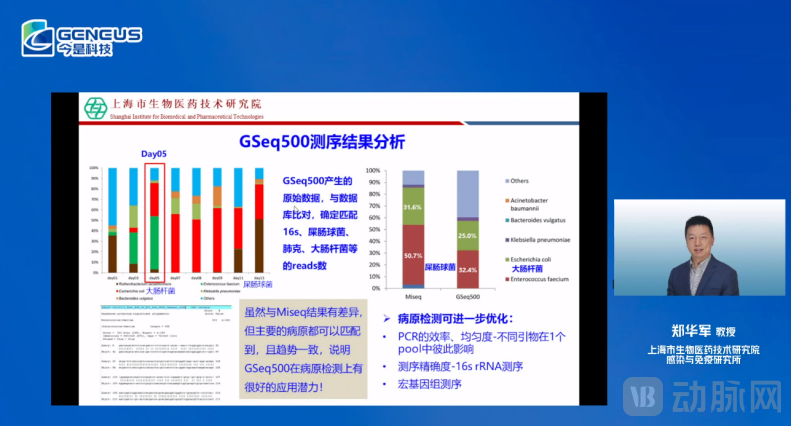
Professor Zheng Huajun’s Online Sharing
Furthermore, regarding the detection of genetic mutation sites in autosomal dominant polycystic kidney disease (ADPKD), the primary pathogenic gene, PKD1, has six highly homologous (97%) pseudogenes on chromosome 16. The use of conventional next-generation sequencing (NGS) technologies can compromise the accurate mapping and analysis of sequencing reads. Even methods combining long-range PCR with PacBio sequencing face challenges related to amplification efficiency and specificity, which significantly impair detection accuracy.
To address this challenge in clinical testing, Professor Zheng’s team designed 10 pairs of primers (covering regions ranging from 1.1 kb to 6.7 kb) and performed validation on the Gseq500 nanopore sequencer. The average single-read accuracy for different exon regions of the test samples was approximately 85%; after correction, itsAccuracy Rate Reaches 100%, which indicates that the Gseq500 nanopore sequencer holds broad application prospects even in the field of clinical targeted sequencing, where high accuracy is required. With technological advancements and improved precision,The Gseq500 Nanopore Sequencer, with its advantages of convenience and low cost, will propel China's clinical testing industry to a new level.
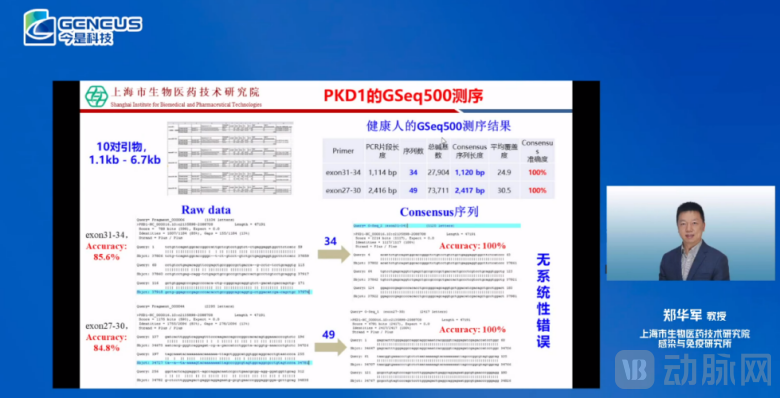
Online Sharing by Professor Zheng Huajun
At the conference, industry experts expressed high expectations and great hope for the further application of Geneus Technologies’ nanopore sequencer. The Gseq500 launched by Geneus Technologies is suitable for a variety of application scenarios, including academic research, inspection and quarantine, pathogenic microbiology, and forensic identification, while also seeking breakthroughs in specific clinical applications. With technological advancements and product iterations, the Gseq sequencing platform will continue to expand its application scenarios, helping people unlock more secrets of life.
By 2024, Geneus Technologies is expected to launch high-end sequencing instruments featuring single-chip 10M independent sequencing units, with data output exceeding 1 Tb and corrected accuracy surpassing Q50, thereby meeting extensive clinical application needs. In terms of breadth in the sequencing field, Geneus Technologies will continue its R&D efforts, planning to roll out direct RNA sequencing capabilities and epigenetic analysis functions (such as single-base resolution methylation sequencing) based on an optimized Gseq algorithm platform starting from the second half of 2023, providing more comprehensive and diverse genetic information to various sectors.
Long-press to scan the QR code below to watch Geneus Technologies
“New Fourth-Generation Nanopore Gene Sequencer Gseq500 Product Launch Event”
Playback Video

It is reported that Geneus Technologies’ Gseq500 nanopore gene sequencer is expected to be commercially delivered in the third quarter of 2023. At that time, Geneus Technologies will promptly release relevant information through its official channels and related media platforms. Interested parties are encouraged to stay tuned. If you are interested in our nanopore gene sequencer, please feel free to call us at 028-87455350.
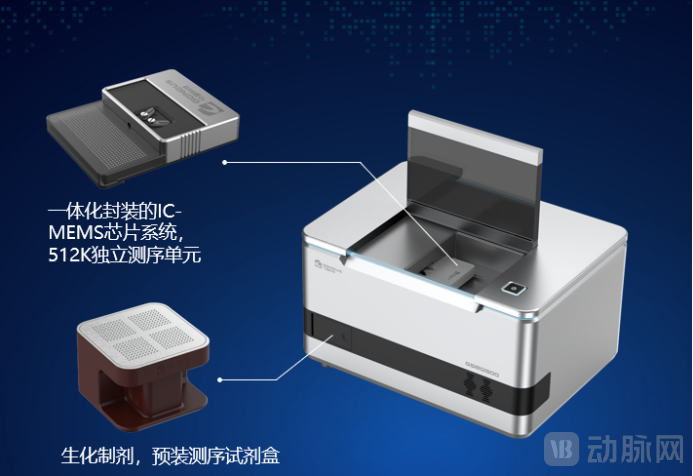
Geneus Technologies Gseq 500 Sequencing Platform
About Geneus
Geneus Technologies is dedicated to making gene sequencing a routine tool in precision medicine, thereby improving human health. The company has developed a high-throughput nanopore sequencer based on the technological approach of “nanopore + sequencing by synthesis,” which addresses key pain points in gene sequencing, including high costs, low efficiency, and suboptimal data quality. This innovation enables human whole-genome sequencing to be completed within hours at a cost of only a few hundred yuan, holding promise for driving the widespread adoption of nanopore gene sequencers in the clinical market.

Long-press to scan the QR code
Follow Us