

Inbraket Targets the Underserved Lingual Orthodontics Market with Customized Self-Ligating Brackets

Med-Fine Capital
Venture Capital Firm
Even during the strictest periods of epidemic prevention and control, invisible orthodontics remained a lucrative business.
According to Guohai Securities’ research report on the invisible orthodontics industry, the total market size of China’s orthodontics industry reached RMB 64.2 billion in 2021, with a compound annual growth rate (CAGR) of 20.5% during the pre-pandemic period (2015–2019) and 10.9% in the post-pandemic period (2019–2021). Focusing on the invisible aligners market, its market size amounted to RMB 13.1 billion in 2021, with a pre-pandemic CAGR of 62.7%, while year-on-year growth rates during the pandemic were 7.1% in 2020 and 30.5% in 2021, respectively.
From a data perspective, the growth rate of the market size for the clear aligner industry slowed down against the backdrop of pandemic prevention and control measures. (Note: The 30.5% growth rate in 2021 was relative to 2020, by which time pandemic prevention and control policies had become more targeted compared to the initial outbreak phase of COVID-19, thereby contributing to some extent to the recovery of the clear aligner industry.) However, this did not significantly impact the revenues of upstream companies in the clear aligner sector, nor did it hinder their IPO processes.
According to the aforementioned research report, Invisalign’s revenue in China increased by 37.9% year-on-year in 2021. In mid-2021, Angelalign successfully listed on the Hong Kong Stock Exchange, with its stock price surging 132% on the first day of trading. The company recorded revenue of RMB 1,271.7 million in the same year, representing a year-on-year increase of 55.7%.
In 2022, affected by the pandemic, the number of cases for both Invisalign and Angelalign declined. However, in recent days, as many regions across China have successively optimized their epidemic prevention and control policies, Angelalign’s stock price has begun to rebound consecutively, which is seen as a signal of the warming up of the clear aligner market following the optimization of epidemic prevention policies. Guohai Securities also stated bluntly in its research report, “We are optimistic about the potential for the clear orthodontics industry to resume high growth in the post-pandemic era.”
Indeed, although clear aligners experienced a period of rapid growth prior to the outbreak of the pandemic, many industry experts still view this market as one with “significant unmet demand.”
Relevant data also support this view. According to Frost & Sullivan, in 2019, among the 2.9 million malocclusion cases treated in China, only 10.5% utilized clear aligners; by contrast, in the United States, 33.1% of the 4.5 million treated malocclusion cases involved clear aligners. This comparison indicates substantial room for growth in China’s clear aligner orthodontics market.
However, low penetration is merely one “surface indicator” of “vastly unmet demand.” In conversations with Inbraket and its investor, Med-Fine Capital, VCBeat gained a new perspective on this once-hot sector in dental care, which still holds immense growth potential for the future.
It must be acknowledged that, beyond external factors such as consumption upgrading and the “beauty economy,” the primary drivers behind the rapid growth of clear aligner therapy in recent years have been the advent of bracketless appliances and vigorous promotion by key manufacturers.
According to Zhongtai Securities’ in-depth study titled “New Consumer Forces Amid the Awakening of Aesthetic Consciousness: An In-Depth Analysis of the Clear Aligner Industry,” the compound annual growth rate (CAGR) of China’s clear aligner market reached 58.8% from 2015 to 2020, whereas the overall orthodontic market in China grew at only 18%, indicating that the growth rate of clear aligners significantly outpaced that of the broader orthodontic market.
As invisible orthodontics has rapidly advanced, bracketless appliances have become deeply intertwined with it, to the point that mentioning invisible orthodontics immediately brings to mind bracketless clear aligners and the key players that have propelled them into the spotlight—such as Invisalign and Angelalign.
The reasons why clear aligners have firmly secured the center stage in invisible orthodontics can be broadly attributed to two factors: first, the product itself has brought transformation and value to the key stakeholders in invisible orthodontic treatment—clinicians and patients; second, major manufacturers of clear aligners have invested substantial effort and capital in marketing in recent years, achieving initial success in market education.
Specifically, clear aligners offer patients the benefits of invisibility, aesthetics, comfort, and relatively improved hygiene during orthodontic treatment. For orthodontists, they provide convenience in two key aspects. First, based on predictable treatment outcomes—enabled by digital orthodontic equipment and systems that allow clinicians to preview the entire treatment process and potential results through interactive 3D computer models—the growing public awareness of clear aligners in recent years helps physicians attract new patients. Second, due to the relative ease of clinical application and comprehensive medical and technical support provided by clear aligner solution providers, the learning curve and adoption barriers for physicians are relatively low. This efficiency reduces patient treatment time and visit frequency, thereby increasing chairside turnover and ultimately enhancing physicians’ profitability.
However, it is important to note that while the inherent industry value of the product itself is undoubtedly significant, the tireless efforts made by major manufacturers in market education have also played an indispensable role for this “new” technology, which possesses both consumer and medical attributes.
This can be glimpsed from the rise of a leading company in the clear aligner industry.
In 1997, the company was founded and launched its clear aligners in the same year. However, this now-renowned product did not achieve immediate success; instead, it faced a challenging seven-year period of exploration. During this phase, the company invested heavily in market education and consumer-facing promotional campaigns, yet these efforts yielded minimal impact on sales revenue, and profitability remained weak.
In 2002, the company began to shift its marketing strategy from a customer-centric approach to positioning itself as a “comrade-in-arms” for physicians. By providing training to enhance product visibility and leveraging physicians’ significant influence during treatment to guide or even determine patient decisions, the company successfully increased its market share. This model was later widely emulated by numerous clear aligner manufacturers, becoming an industry benchmark.
However, frankly speaking, the value brought by the shift in marketing strategy was not immediately apparent; it took several years for the company to get on track and achieve profitability. Yet this strategic pivot aligned the company with physicians, creating a community of shared interests. Given that physicians wield significant influence during the clear aligner treatment process and can substantially impact patients’ product decisions, turning doctors into partners enabled this leading enterprise to build its core competitive barrier in clear aligner therapy—case accumulation.
The significance of case accumulation for clear aligner companies is akin to the importance of local medical data and historical health insurance claims data for a health insurtech company seeking to launch inclusive supplementary medical insurance (Huimin Bao) in a specific region. On one hand, through a digital treatment planning platform integrated with intelligent systems, clinicians can develop the most precise treatment plans tailored to individual patient conditions and determine 3D models of tooth movement at each stage of orthodontic treatment. This step is crucial for achieving optimal treatment outcomes. Precise 3D modeling relies on extensive case data; specifically, the larger and more effective the case dataset, the more accurate the resulting 3D models and treatment plans become.
On the other hand, the collected case data can provide product feedback to clear aligner manufacturers, thereby facilitating product optimization, iterative upgrades, and enhanced competitiveness. Therefore, the accumulation of case data, particularly complex cases, constitutes a critical competitive moat that clear aligner manufacturers must build.
Frankly speaking, neither the accumulation of case data, nor market education, nor product development can be achieved overnight; rather, they require sustained, long-term investment of substantial capital and resources. Consequently, time is also a key factor in the development of clear aligner manufacturers. In other words, this is a sector where first-mover advantage is significant.
Therefore, despite the presence of numerous latecomers, the “duopoly” competitive landscape in China’s clear aligner market, dominated by Align Technology and Angelalign, has become difficult to disrupt. However, this does not mean that there are no longer opportunities for other companies in this industry.
Superior products, better treatment plans, more affordable prices, and deeper market penetration... opportunities in clear aligner therapy remain abundant. Yet beyond these opportunities, some companies have quietly shifted their focus to another branch of invisible orthodontics—lingual braces.
If defined narrowly, clear aligner therapy refers to bracketless appliances; however, from a broader perspective, lingual orthodontics also falls under the category of clear aligner therapy and shares an equally “long history.”
In the 1980s, pioneering lingual orthodontists, represented by Dr. Craven Kurz from the United States and Dr. Kinva Fujita from Japan, successively developed lingual brackets with horizontal and vertical slots, respectively, sparking a surge in lingual orthodontic treatment that lasted for over a decade. However, constrained by the orthodontic techniques and materials available at the time, this enthusiasm for lingual orthodontics quickly subsided, leading to a period of stagnation.
By the 1990s, with the emergence of indirect bonding techniques and the refinement of biomechanical theories for lingual orthodontics, the STB bracket—invented by second-generation lingual orthodontists represented by Dr. Giuseppe Scuzzo from Italy and Dr. Kyoto Takemoto from Japan—propelled the development of lingual orthodontic technology into a new phase. However, technological advancement remained relatively slow, and market awareness was still low.
Lingual orthodontics truly ushered in a period of rapid development after the turn of the 21st century. Leveraging computer-aided design (CAD), computer-aided manufacturing (CAM), 3D scanning, and robotic archwire forming technologies, third-generation lingual orthodontists, represented by Dr. Dirk Wiechmann of Germany, introduced the Incognito lingual bracket system. Since then, lingual orthodontic technology has entered a phase of accelerated advancement.
For example, some companies have already gained favor in the capital market. In September 2021, Swift Health Systems, a U.S.-based developer of lingual orthodontic devices, announced the completion of a $102 million Series D financing round, with the proceeds to be used to advance the commercialization of its products.
“In overseas markets, the market share of lingual braces is approximately 10%–15%.” InbraketWu Jie, Co-founder and CEO of Yinbei, remarked, ““However, in China, lingual braces remain relatively obscure compared to the high market share of clear aligners, with a market penetration of less than 1%. The market share of lingual braces in China should not be this low.”
We analyze the reasons from two perspectives: the existing limitations of clear aligners and intensifying competition, as well as the numerous advantages of lingual orthodontics.
From a product perspective, the main issues with clear aligners currently are their narrow indications and poor treatment outcomes for complex cases.According to Guoyuan Securities’ report “Invisible Orthodontics: Subtle Beauty Enhancements, A Champion Track with a Promising Future,” in 2019, clear aligners could address only 50% of malocclusion indications.
According to Angle's classification, malocclusion is categorized into Class I, Class II, and Class III. Among these, Class II and Class III malocclusions are more severe and present greater treatment challenges. However, the overall prevalence of malocclusion in China is high (with an incidence rate of 74% among East Asian populations), resulting in a large potential patient base and a higher proportion of complex cases.
According to the CIC report, Class II and Class III malocclusions account for nearly 50% of cases in China, whereas they represent only 23% of cases in Europe and the United States, indicating a significant disparity. However, regarding the treatment of complex cases, the efficacy of clear aligners remains to be improved, as many patients still fail to achieve satisfactory orthodontic outcomes after wearing clear aligners for three to four years.
Not only that,Clear aligners also have limitations in terms of biomechanics.The magnitude of orthodontic force delivered by clear aligners is determined by the amount of tooth movement permitted between two successive plastic trays. However, actual tooth movement often lags behind the digital treatment plan, and this discrepancy tends to worsen as treatment progresses. This misalignment can result in poor tray fit, making them difficult or impossible to seat; forced seating may generate excessive forces, causing patient pain and discomfort, and potentially leading to enamel demineralization and damage to the tooth enamel.
In addition,The removability of clear aligners is a double-edged sword.On the one hand, the removable nature of these appliances facilitates eating and enables patients to maintain better oral hygiene, thereby improving overall oral cleanliness. On the other hand, removability entails higher demands on patient compliance. If compliance is poor, resulting in lost or forgotten aligners, the treatment outcomes are unlikely to be optimal.
andFrom the perspective of market competition, after years of development, competition in the clear aligner sector has become increasingly intense. Not only is the “duopoly” landscape described above difficult to disrupt, but profit margins are also shrinking as centralized procurement policies target clear aligners. Against this backdrop, manufacturers of clear aligners have initiated price wars and expanded their product pipelines to penetrate lower-tier markets; however, the long-term effectiveness of these strategies remains to be seen.
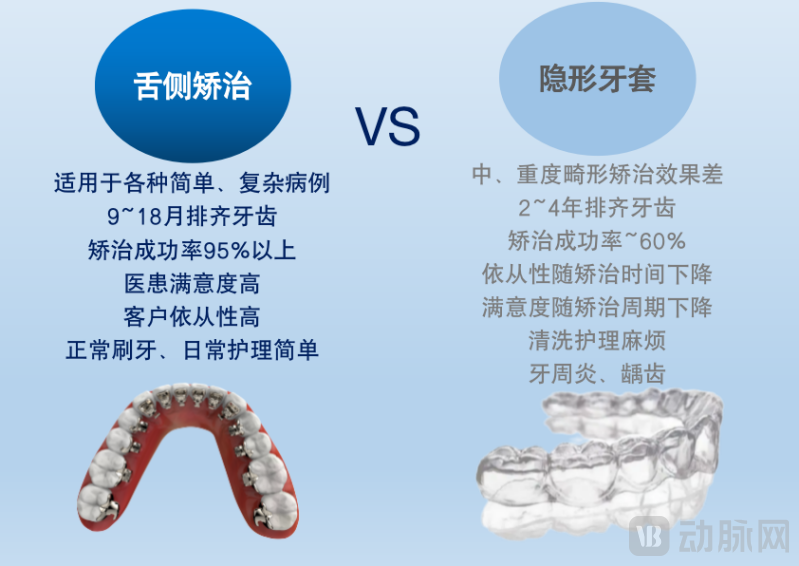
In contrast,Lingual Braces: With a relatively broad range of indications, they are suitable for various simple and complex malocclusion cases. The treatment duration is relatively short, requiring only 9–18 months to align the teeth, and they do not interfere with patients’ daily toothbrushing and oral hygiene practices.
Moreover, although lingual orthodontics in China is still in its early stages of development compared to clear aligner therapy, the concept of invisible orthodontics has gained widespread acceptance thanks to years of persistent market education by clear aligner manufacturers. As another branch of invisible orthodontics, lingual orthodontics can leverage this momentum to catch up rapidly. Furthermore, the industry’s early-stage status implies fewer market entrants and a relatively favorable competitive landscape.
But, sinceLingual Braces Have Many Advantages, So Why Is Their Market Share Extremely Low?
In response, Wu Jie stated,The reasons are mainly threefold: First, from the physician’s perspective, traditional lingual orthodontic techniques and products are not user-friendly for clinicians.Although 3M’s products have been on the market for many years,Doctors still face challenges such as relatively cumbersome clinical procedures and prolonged operation times.In contrast, the installation of clear aligner systems is remarkably straightforward, enabling many general dentists without specialized orthodontic training to rapidly master their use with minimal additional instruction.
Secondly, for patients, the traditional lingual ligation technique reduces patient comfort due to issues such as excessive exposure of ligature wire ends and archwire ends causing irritation.This has also become one of the main reasons why patients are reluctant to accept lingual orthodontic treatment.
Ultimately, the customized design and manufacturing of lingual orthodontic appliances have increased production costs for manufacturers while failing to meet the needs of most patients; this unmet demand, in turn, has hindered the substantial advancement of lingual orthodontic technology.
Therefore, a lingual orthodontic appliance that effectively addresses the pain points of clinicians, patients, and costs is poised for significant market potential. This has become the key reason why Inbraket’s personalized self-ligating lingual brackets have gained favor in the market.
“Many people think our product is benchmarked against 3M’s lingual braces, but that’s not the case,” said Wu Jie, InbraketYinbei’s personalized lingual self-ligating orthodontic appliance was developed and improved upon the foundation of 3M products, addressing key industry pain points with the aim of truly resolving the three major challenges previously mentioned: those faced by clinicians, patients, and cost considerations.
Overall, the Inbraket personalized lingual self-ligating appliance features two primary characteristics: first, it enables rapid insertion and removal of archwires through a self-ligating mechanism; second, it allows for personalized customization.
According to Wu Jie, conventional customized lingual braces are secured using ligature wires or elastic bands. For clinicians, this ligation method is not only cumbersome and demanding in terms of technical expertise, but also results in extremely low efficiency, with chairside operating times typically lasting 2–3 hours. For patients, the ligature wires cause significant irritation to the tongue and oral cavity, leading to a foreign-body sensation and reduced comfort.
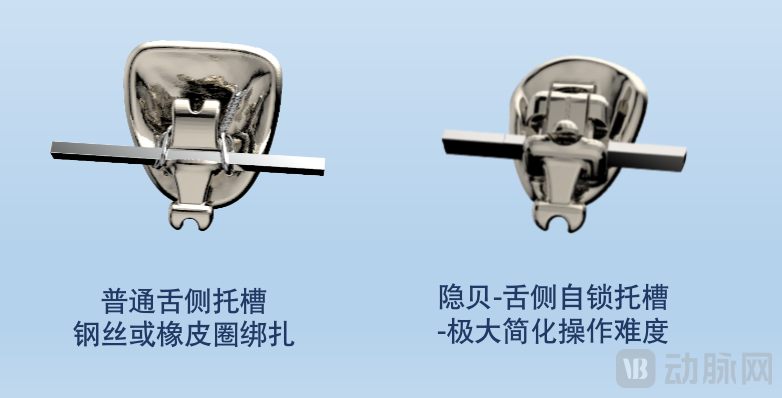
andInbraketYinbei’s self-ligating brackets, used in conjunction with its digital bonding positioning system, enable full-arch installation in a single session. This approach not only reduces chairside operation time from nearly two hours to just 20 minutes but also lowers the complexity of chairside procedures and shortens the learning curve for clinicians.
“This approach enables not only orthodontists to get up to speed quickly, but also general dentists with limited orthodontic experience to master it rapidly. During the initial appointment for bracket placement and subsequent follow-up visits for archwire changes, self-ligating brackets can enhance clinical efficiency and accelerate chair turnover in dental practices,” said Wu Jie.
For patients, lingual orthodontics not only achieves a high success rate and a shorter treatment duration, but its self-ligating design also enhances comfort and provides a better experience. Meanwhile, patients do not need to worry about common issues associated with bracketless appliances, such as appliance loss and enamel demineralization.
andIn addition to its self-ligating design, the Inbraket lingual brace is also customized.. To achieve personalized customization, two key elements are indispensable: digital tools and the optimization of bracket morphology and dimensions.
Digital tools need no further elaboration. Today’s dental industry is being swept up in the wave of digitalization. By leveraging digital tools, clinics and clear aligner providers can capture patients’ actual oral conditions and use this data to design and configure digital guides, thereby enabling one-stop installation.
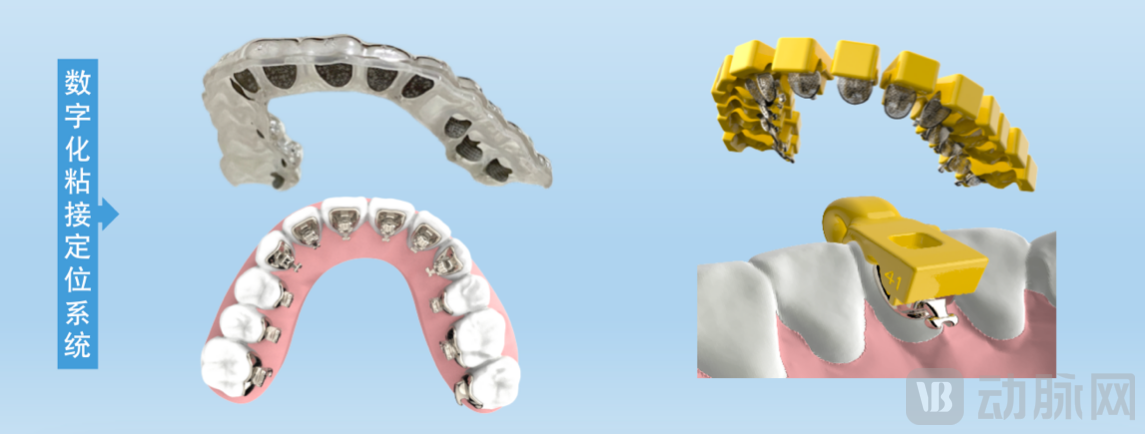
“Previously, the placement of labial brackets relied on the orthodontist’s experience for positioning and was performed tooth by tooth. However, lingual orthodontic treatment now leverages digital tools to achieve precise positioning, reducing the error rate during placement to nearly zero,” introduced Wu Jie.
However, it should be noted thatThe successful application of digital tools requires adaptation to bracket morphology and dimensions, necessitating continuous optimization of bracket shape and size.“One of the core design challenges for lingual orthodontic appliances is how to design and manufacture brackets that can be bonded within the more confined spaces (relative to the labial aspect, the lingual space is smaller) and on the lingual bonding surfaces, while still delivering robust biomechanical effects.”
In response, the customized base of the Inbraket personalized lingual self-ligating bracket features an undercut mesh design, which significantly enhances bonding strength, reduces the risk of bracket debonding, and ensures complete adaptation to the tooth surface, thereby minimizing intraoral space occupation. Regarding bracket width, Inbraket utilizes a shorter arch length and smaller inter-bracket distances (particularly in the anterior region), which reduces archwire elasticity. The self-ligating design appropriately narrows the bracket width and increases inter-bracket spacing, achieving a balance between archwire elasticity and rotational control. In terms of bracket depth, the Inbraket lingual self-ligating bracket employs a vertical slot system, facilitating torque control of the anterior teeth. Appropriately increasing the depth of the anterior brackets reduces the difficulty of archwire insertion and removal, while the self-ligating structure provides better control over angulation, preventing the loss of anterior tooth angulation caused by reverse ligature tying during the later stages of alignment.
In the interview,InbraketMed-Fine Capital, the Series A investor in Inbraket, also stated: “Many of the product design concepts actually stem from doctors who work closely with Inbraket. However, the primary challenge in product development lies in controlling production quality and striking a balance among quality, cost, and production efficiency.”. This requires companies to invest significant time in exploration and refinement after establishing a stable team.Inbraket“Yinbei’s R&D team also devoted considerable effort and time to basically establish the current, relatively reliable and stable system for R&D and production processes.”
In this regard, Wu Jie also stated, “In terms of production processes, there are actually few industry experiences available for reference and learning. As the process involves dozens of steps, we had to rely on extensive, iterative experimentation to identify the most stable configuration parameters, thereby achieving optimal compatibility.”
However, consistent with the development logic of clear aligners, market investment is just as crucial as product strength. Yet, at its current stage, Inbraket clearly cannot commit financial resources on par with leading clear aligner manufacturers for marketing and doctor-patient education. In response, what strategies has Inbraket adopted?
Inbraket’s business strategy is somewhat ingenious—in addition to conventional approaches such as consumer-facing advertising and academic exchange activities for physicians, Inbraket has also chosen to establish regional demonstration centers.
The Inbraket Lingual Orthodontic Demonstration Center features three core attributes: a product utilization platform, a clinical technology dissemination platform, and a professional development platform for orthodontists, which correspond respectively to the validation of clinical outcomes, the demonstration of clinical benefits, and comprehensive training throughout the entire diagnosis and treatment process.
Specifically, through its demonstration centers, Inbraket can validate and showcase the clinical outcomes of lingual orthodontics to doctors and patients, thereby implicitly educating both parties. Furthermore, Inbraket can leverage these centers to export operational expertise and provide training in lingual orthodontic techniques and workflows, thus attracting physicians to join based on tangible results.
According to Wu Jie,Currently, Inbraket primarily targets the markets in East China, South China, and West China. Among these, Shanghai, Zhejiang, Jiangsu, Shenzhen, Guangzhou, and Chengdu can be regarded as strategic strongholds. Therefore, Inbraket’s first-phase objective is to establish demonstration centers in Shanghai, Hangzhou, or Nanjing, leveraging these three cities to extend services, education, and training throughout the East China market. The second phase involves opening demonstration centers in Suzhou, Guangzhou, and Shenzhen to enhance coverage of the East China and South China markets.
Among them,InbraketInbraket’s demonstration center in Wuhan has entered its trial operation phase, featuring two key operational characteristics: first, it adheres to a “small but specialized” development path; second, all Inbraket demonstration centers collaborate with local leading physicians. Since these prominent doctors naturally attract patient flow, the centers can rapidly establish a healthy financial cycle without significant consumer-end marketing expenditures, thereby avoiding substantial operational pressure.
However, as previously mentioned, the original intention behind founding Inbraket was not only to address the pain points of doctors and patients but also to tackle cost-related challenges. Therefore,In the future, in addition to continuously upgrading and iterating its products to better meet clinical needs, Inbraket will also focus on addressing product pricing issues. It aims to reduce costs through process iteration or simplification while ensuring product quality and efficacy. This endeavor requires substantial capital investment.
Furthermore,InbraketThe extensive establishment of Inbraket Regional Demonstration Centers also requires capital investment. Therefore, Inbraket is eager to seek collaborations with investment institutions and like-minded enterprises to jointly promote the development of lingual orthodontic technology in the Chinese market and increase its market share.
Med-Fine Capital stated that, from the consumer perspective, there is substantial demand for clear aligner therapy. However, this remains a market with significant unmet needs. Both clear aligners and traditional lingual braces have their respective drawbacks. Inbraket’s self-ligating technology effectively addresses key clinical pain points, reducing chairside time from two hours to as little as 20 or even 10 minutes. This represents a major improvement with considerable industry value. Therefore, we have chosen to invest in Inbraket, and we are optimistic about its future development.