

Johnson & Johnson Acquires Atraverse Medical to Complete Electrophysiology Workflow with HOTWIRE Transseptal Access System

Johnson & Johnson
Medical Device R&D and Manufacturer

Atraverse Medical
Left Heart Passage Device Developer

On April 24, 2026, Johnson & Johnson announced that it had reached a definitive acquisition agreement with Atraverse Medical to incorporate the latter's HOTWIRE transseptal access system into its cardiac ablation product portfolio. The transaction is expected to be completed in the second quarter of 2026, with no specific financial terms disclosed.
HOTWIRE is an FDA-approved radiofrequency guidewire and generator system. Since receiving FDA 510(k) clearance in May 2024, it has been used in nearly 3,000 clinical procedures. In a multicenter first-in-human study, physicians achieved a 100% procedural success rate, with nearly 30% of the procedures performed with zero fluoroscopy (no X-ray). Unlike existing tools, this system reimagines the crucial "first step" in atrial fibrillation ablation—how to safely and efficiently access the left atrium.
1. "The First Step of Atrial Fibrillation Ablation": Transseptal Puncture to Reach the Left Atrium
Transseptal puncture is the first step in standardized procedures such as atrial fibrillation ablation and left atrial appendage closure. The operator needs to pass through the interatrial septum, which is approximately 2-3mm thick, from the right atrium and accurately enter the left atrium. The traditional method relies on mechanical puncture needles (Mullins needle/Brockenbrough needle) and is performed under X-ray guidance and interatrial pressure monitoring, but it has three systemic limitations:
Risk of Blind Puncture。Without real-time force feedback during puncture, the operator can only rely on tactile sensation and pressure waveforms for judgment. Once the puncture deviates, it may lead to serious complications such as cardiac tamponade or accidental aortic puncture.
High Radiation Exposure。When there are anatomical abnormalities of the atrial septum (such as thickening, fibrosis, atrial septal aneurysm, etc.), the X-ray exposure time significantly increases,加重ing the radiation burden on both medical staff and patients.
Step Fragmentation。"Needle → Guidewire → Sheath" step-by-step exchange, repeated withdrawal of the puncture needle and guidewire exchange, the process is cumbersome and prone to loss of access.
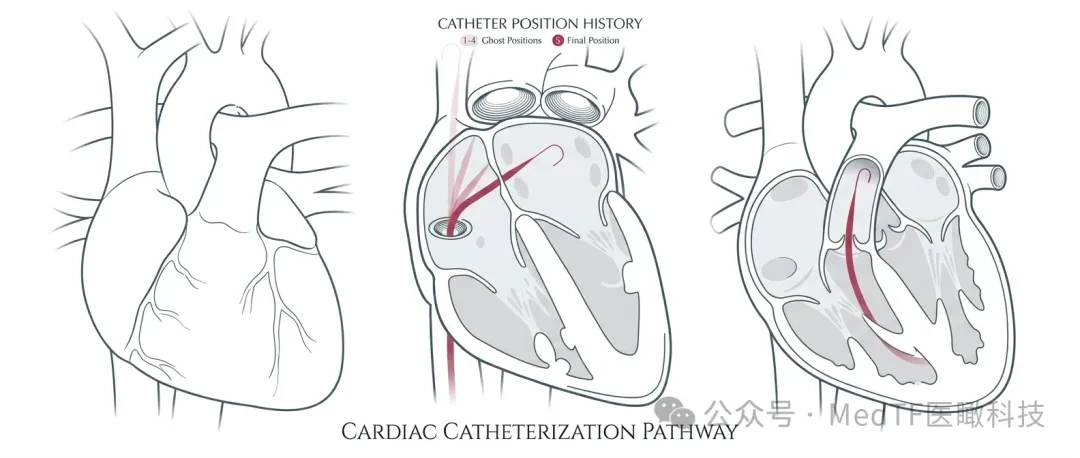
The Atraverse team has observed that in the ongoing arms race to enhance ablation energy, the interventional electrophysiology field has overlooked the精细化改造 of the "left atrial access window." HOTWIRE is a system-level engineering solution specifically designed to address this long-standing bottleneck.
II. Technical Deconstruction of HOTWIRE: Zero Switching, Intelligent Shutdown, Multi-Sheath Compatibility
2.1 From "Needle-Guidewire-Sheath" to "Integrated + Zero Exchange"
The core design concept of HOTWIRE is to integrate the puncture and guidance functions into a single smart guidewire, disrupting the traditional step-by-step exchange process of "needle → guidewire → sheath" used in atrial septal punctures. After confirming entry into the left atrium, the operator can directly advance the sheath along the HOTWIRE without the need to withdraw the puncture needle, reinsert the guidewire, and then follow with the sheath. This "zero-exchange" design eliminates the risk of losing intracardiac access associated with traditional techniques, reduces the number of instrument exchanges, and shortens procedure time.
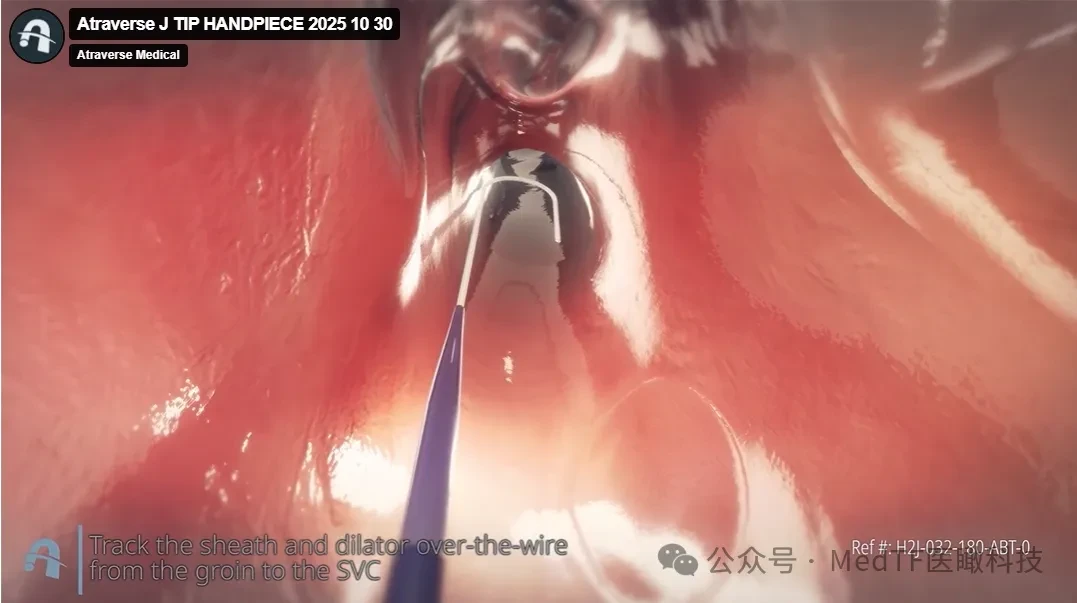
2.2 Impedance-Guided Automatic Shutdown: Enabling "Precision Energy Dissipation"
A major risk with traditional radiofrequency puncture systems lies in the continuous release of energy – even after the guidewire has completed the puncture, energy continues to be delivered to the left atrial tissue, causing unnecessary thermal damage to critical structures such as the posterior wall of the left atrium, and potentially leading to air embolism or pericardial complications.
The HOTWIRE generator is equipped withImpedance-Guided Automatic Shutdown TechnologyIts radiofrequency generator monitors the impedance changes in the circuit in real time. Once the guidewire tip crosses the atrial septum and reaches the left atrium blood pool where impedance significantly drops, the energy is cut off within milliseconds. The entire puncture process transitions smoothly without relying on a second operation for confirmation. Meanwhile, the refined control of energy also notably reduces the risk of unintended thermal exposure to the left atrial structure, which is expected to minimize complications.
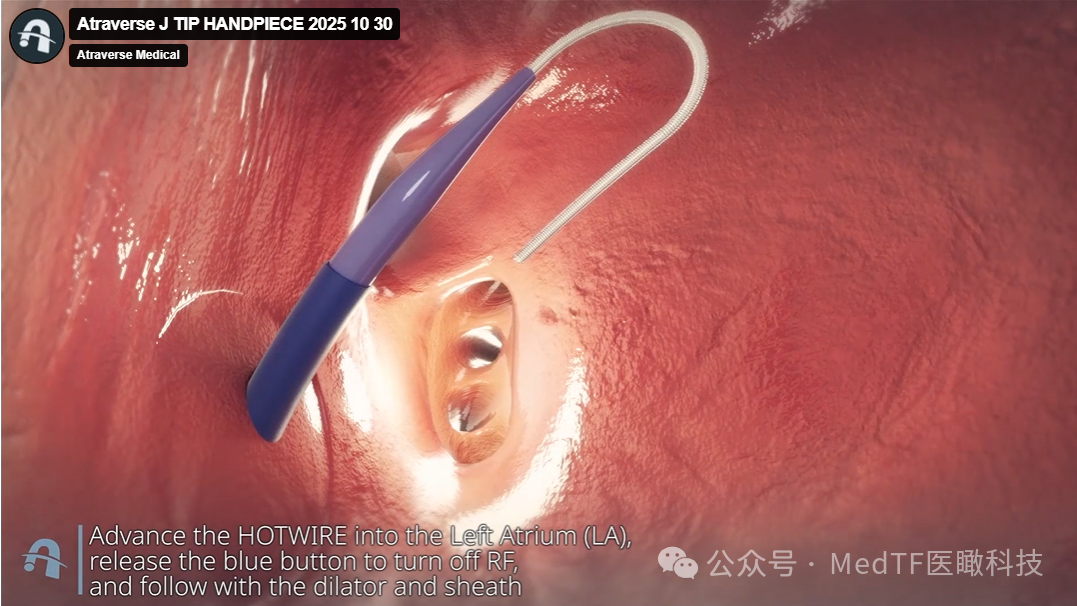
2.3 Sheath Tube Universality and Clear Visibility Under Ultrasound
HOTWIRE highlights another key feature in clinical implementation – "sheath-agnostic." It is compatible with all currently mainstream transseptal puncture sheaths, allowing doctors to continue using their preferred brand and model of sheath without needing to switch the entire toolset.
Under real-time monitoring with intracardiac echocardiography (ICE), the imaging performance of the HOTWIRE guidewire tip is 25% brighter than competitive baseline products, greatly facilitating zero-ray or low-ray guidance, helping to reduce fluoroscopy time and radiation exposure.
In the FDA 510(k) application, HOTWIRE uses Boston Scientific's ProTrack as the substantially equivalent comparison device, but achieves an intelligent upgrade over existing RF puncture tools through the aforementioned impedance-guided automatic shutoff, a 25% improvement in ICE visibility, and a smaller guidewire diameter design.
3. Clinical Evidence: The Safety Foundation Validated by Over a Thousand Cases
The clinical evidence for the Hotwire system was accumulated prior to this acquisition. The system initiated limited market commercial use in May 2024 after obtaining modular certification, and the entire system was approved in December 2025. Real-world data was continuously generated during this process, providing empirical support for Johnson & Johnson's acquisition decision.
Preclinical Mechanism Validation: Large Electrode + Impedance Guidance Significantly Reduces Left Atrial Injury
At the 2026 AF Symposium, Dr. Jeremiah Wasserlauf reported on an ex vivo pig model study that directly compared Hotwire with commercially available small-electrode radiofrequency guidewires in a head-to-head manner. The results showed that Hotwire, with its large electrode design and impedance-guided radiofrequency generator, achieved zero incidents of unintended left atrial tissue injury, while the small-electrode system in the control group had an injury rate exceeding 50%. Additionally, it significantly reduced the duration of radiofrequency delivery and lowered the total energy output. This data provides mechanistic evidence for Hotwire’s "more controllable energy and more localized injury."
First-in-Human Study: Nearly 500 Cases of Data, 100% Success Rate, Zero Fluoroscopy Rate Reaches 29%
Dr. Devi Nair presented a multicenter, first-in-human observational study at the concurrent conference, which included approximately 500 patients, showing a surgical success rate of100%, among which29%The cases were completed using a zero-fluoroscopy (zero X-ray) approach. This data indicates that when Hotwire is combined with ultrasound-guided technologies such as ICE, it can significantly reduce radiation exposure. The study also validated the system's consistent performance across various surgical types, different guiding sheaths, and operator workflows. The low radiofrequency duration and zero adverse event reports further reinforced the safety data.
Extended Queue Validation: Over a Thousand Real-World Applications Show Good Consistency
Another real-world dataset covering over 1,000 cases of transseptal puncture confirmed that the Hotwire system achieved consistent results across different centers, operators, and diverse clinical scenarios.100%The surgical success rate was high, with no adverse events occurring. The 29% zero-fluoroscopy rate reappeared, indicating that when this technology is combined with ultrasound guidance such as ICE, it can significantly reduce reliance on X-rays.
4. Johnson & Johnson Cardiovascular Acquisition Map: A Complete Closed Loop from Heart Pumps to Electrophysiological Procedures
November 2022: $16.6 billion acquisition of Abiomed to enter the high-risk PCI cardiac pump market
Johnson & Johnson Acquires Artificial Heart Manufacturer Abiomed for $16.6 Billion in All-Cash Deal, Setting a Company Acquisition Record. Abiomed’s Impella Heart Pump Provides Hemodynamic Support for High-Risk PCI and Cardiogenic Shock, Enabling Johnson & Johnson to Quickly Enter the Interventional Cardiology Market.
April-May 2024: $13.1 Billion Acquisition of Shockwave Medical to Secure Leadership in IVL Technology
Johnson & Johnson Acquires Shockwave, the Leader in Intravascular Lithotripsy (IVL) Technology, for $335 per Share in Cash, with a Total Transaction Value of $13.1 Billion; the Deal is Expected to Close in May of the Following Year. Shockwave's IVL Platform Treats Calcified Coronary and Peripheral Lesions, Complementing Abiomed’s Procedures. The Two Acquisitions, with a Combined Value of Nearly $30 Billion, Form the Dual Engines of Johnson & Johnson's Cardiovascular Business.
2024 to Present: Advancement of the VARIPULSE PFA Platform and Iteration of Electrophysiology Products
VARIPULSE Pulse Field Ablation (PFA) Platform Receives FDA Approval in November 2024, Integrated with CARTO 3 Mapping System. Upgraded VARIPULSE Pro Receives CE Mark in April 2026, with Ablation Speed Five Times Faster Than Previous Generation. Electrophysiology Business Drives Johnson & Johnson’s Cardiovascular Revenue to $8.9 Billion in 2025, a Year-on-Year Increase of 15.8%.
Q1 2026 Performance Verification: Strong Growth Driven by Dual Engines
Johnson & Johnson MedTech Q1 Sales Reach $8.64 Billion, Up 7.7% Year-over-Year. Electrophysiology (including VARIPULSE), Abiomed, and Shockwave Emerge as Three Key Growth Pillars, with Electrophysiology Comparable Growth at 12.6%, and PFA Contributing Approximately 50% of Growth.
April 24, 2026CollectHOTWIRE's Strategic Positioning: Fill the Process Entry Point, Complete the "Therapeutic Closed Loop"
Atraverse Medical's HOTWIRE Transseptal Access System is a natural extension of Johnson & Johnson's cardiovascular strategy logic. From Abiomed to Shockwave and now to Atraverse, Johnson & Johnson’s layout in the cardiovascular field has begun to take shape.High-risk PCI Blood Flow Support → Calcified Lesion Management → Atrial Fibrillation Ablation Energy (PFA) → Standardization of Left Atrial AccessThe value of a complete product matrix, which increases surgical efficiency and patient turnover rate, will directly translate into stronger purchasing appeal.

? Click to view more exciting content
AI+ICE=Carto 3 Johnson & Johnson Upgraded High-Precision AI Intracardiac Echocardiography Imaging
Copyright and Disclaimer: MedTF aims to build an academic communication and media platform. The copyright of the information in the article belongs to the holder, and we only provide the service of transmitting information. If there is any infringement, please contact us to delete.