

Boji Pharma's Zuo Lian: Transitioning to Innovative Drug CRO Requires Inherent Innovation DNA

BojiMed
One-stop outsourcing service provider for the entire process (CRO+CDMO)
Established in 2002, BojiMed has evolved over two decades into one of the few domestic CROs offering comprehensive, one-stop drug R&D services. Its end-to-end service portfolio encompasses preclinical pharmaceutical research, drug safety evaluation, clinical trials, regulatory submission, and CDMO services, marking a successful transition to an innovative drug-focused CRO. The construction of its large-scale operations and complete service system is driven not only by market demand but also by the company’s inherent innovation DNA.
Prior to 2015, BojiMed’s growth was primarily driven by the generic drug and traditional Chinese medicine (TCM) markets. However, with the rapid development of China’s biopharmaceutical industry, innovative drugs have become the new competitive frontier for most CROs.As a leading domestic CRO for generic drugs, BojiMed faces pressure to transition into an innovative drug CRO.In 2017, BojiMed pioneered its strategic transformation. In addition to acquiring Hanfulei Pharmaceutical, a leading provider of regulatory services for dual filings in China and the United States, BojiMed intensified its efforts to recruit talent in innovative drug development to ensure smoother progress. Among those recruited was Dr. Zuo Lian, who brought with him many years of experience in drug research and development.
Dr. Zuo Lian holds a Ph.D. in Pharmacy from Peking Union Medical College and completed her postdoctoral research at Emory University in the United States. During her time in the U.S., she served as a Senior Research Fellow and Senior Scientist at the U.S. VA Medical Center, where she participated in multiple collaborations with multinational pharmaceutical companies such as Pfizer and Merck, and led the research and development of numerous innovative drugs.
After returning to China from the United States in 2010, Zuo Lian truly entered the biopharmaceutical industry. Upon a friend’s recommendation, she joined a generic drug company, where she was fully responsible for project initiation, R&D, and regulatory registration. In accordance with corporate requirements, she specifically introduced the concept of “micro-innovation” into the CMC (Chemistry, Manufacturing, and Controls) R&D sector, integrating innovation into every detail of the development process. As a result, she not only completed the R&D of numerous generic drugs but also developed one improved new drug based on clinical needs, which received regulatory approval and was successfully launched on the market. Subsequently, she served as Deputy General Manager, Chief Scientist, and Dean of the Drug Research Institute at a large publicly listed pharmaceutical company. These industry experiences have enabled Zuo Lian to develop profound insights into generic drugs, improved new drugs, and innovative drugs, while also accumulating extensive experience in drug R&D, the establishment of R&D systems, and comprehensive management of R&D teams.
In 2021, Zuo Lian chose to leave the pharmaceutical industry and joined BojiMed, a CRO company, as Deputy General Manager, as well as General Manager of its wholly-owned subsidiary, Borui Medicine. She faced not only the challenges of her own career transition but also the challenge of BojiMed’s transformation from a generic drug CRO to an innovative drug CRO.
Recently, at the 2023 New Year Gathering of the New Drug Founders Club, ArteryMed invited Zuo Lian to discuss the story behind her joining BojiMed and the company’s transformation strategy.
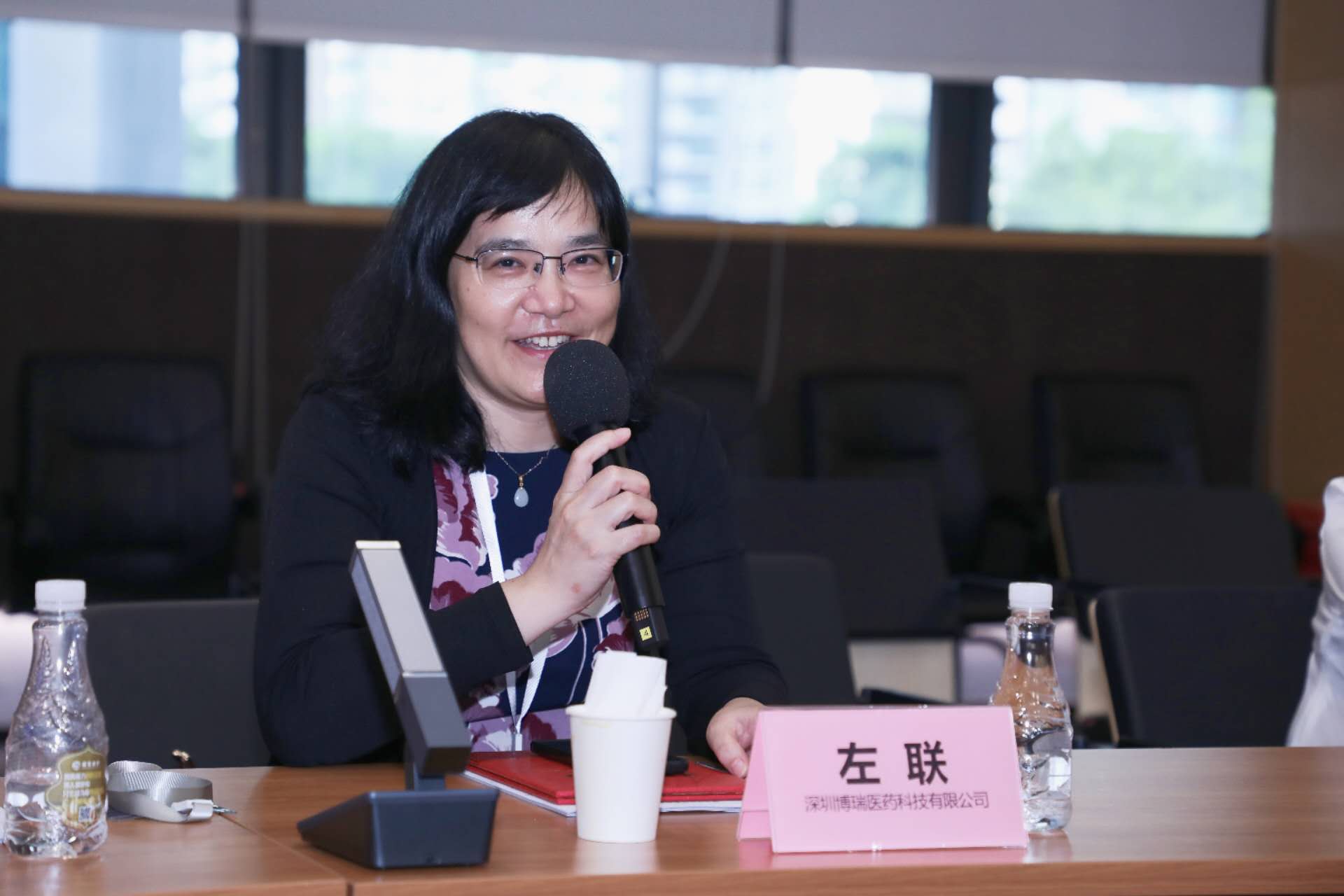
Career Transition Requires Determination
Zuo Lian’s journey with BojiMed began by chance. In the summer of 2019, at an industry conference in Guangzhou, she met Dr. Wang Tingchun, Chairman of BojiMed. During their conversation, Dr. Wang learned that Zuo Lian was preparing to return to the United States to seek opportunities in innovative drug development. Following that discussion, Zuo Lian received a gracious invitation from Dr. Wang, expressing his hope that she would join BojiMed should she decide to return to China in the future.
Since returning to China in 2010, Zuo Lian has witnessed the development of China’s biopharmaceutical industry and has genuinely felt that the country is a fertile ground for entrepreneurial endeavors. She was indeed somewhat tempted by Wang Tingchun’s invitation. In her view, returning to the United States would offer a comfortable life, but it would lack the passion she experienced while working in China. However, she was not entirely certain about accepting the offer to join BojiMed. “At that time, I interacted with many entrepreneurs in the domestic pharmaceutical industry. Some were pragmatic and low-key, while others were all talk. I was unsure which category Dr. Wang fell into, so I didn’t take it too seriously.”
Until March 2020, Wang Tingchun persistently inquired whether Zuo Lian was considering returning to China. At that time, as the country was grappling with the pandemic, Zuo Lian felt somewhat hesitant. In the months that followed, she regularly received greetings from Wang Tingchun along with updates on the epidemic situation in China. She was moved by his perseverance: “If an entrepreneur demonstrates such persistence in recruiting talent, it clearly indicates his strong determination to succeed.”
Being moved by Wang Tingchun’s sincerity was only one factor; before joining BojiMed, Zuo Lian gave it considerable thought, as the move from a pharmaceutical company to a CRO represented a career transition. She was well aware thatWorking at a pharmaceutical company differs from working at a CRO. Pharmaceutical companies have their own product pipelines and need to focus intensively on specific pipelines, whereas CROs operate in a broad sector spanning diverse disease areas, application fields, and business models, requiring them to continuously meet the needs of various customer segments.Moreover, as BojiMed is a full-process, one-stop service CRO undergoing corporate transformation and upgrading, doing this well presents a significant challenge.
After careful consideration, Zuo Lian gladly accepted the challenge and officially joined BojiMed, primarily responsible for the company’s pharmaceutical research division, as well as the establishment and development of its subsidiary, Borui Medicine. Notably, Borui Medicine, which is under Zuo Lian’s full responsibility, is a wholly-owned subsidiary established by BojiMed in the Hetao Shenzhen-Hong Kong Science and Technology Innovation Cooperation Zone in Futian, Shenzhen. This subsidiary was created to support BojiMed’s transformation into an innovative drug CRO, providing preclinical CRO services mainly to pharmaceutical companies focused on innovative drugs and cell and gene therapies.
When Zuo Lian first joined in 2021, she spent time familiarizing herself with the company’s operations, gaining an understanding of BojiMed’s various departments, technical teams, projects, and clients, while exploring how Borui Medicine could break through in the innovative drug sector. By 2022, her focus had shifted. In 2021, Borui Medicine was searching for a suitable development direction; in 2022, Zuo Lian concentrated on expanding and refining the company’s business operations.
Currently,In the pharmaceutical research sector, BojiMed has established a Complex Injectables Division and dedicated increased efforts, manpower, material resources, and financial investment to actively collaborate with domestic pharmaceutical companies in the research and development of high-end complex injectables, such as nanocrystals, liposomes, and microspheres.Currently, there are more than ten projects under development.In the field of innovative drugs, Borui Medicine has established a talent team to support pharmaceutical companies in compound design and synthesis, activity screening, and pre-PCC stage work, starting from drug discovery.
BojiMed’s Path to Transformation:
It requires differentiated business development and an inherent innovative DNA.
It is no easy feat for traditional generic drug CROs to transform into innovative drug CROs. In Zuo Lian’s view, this process requires the enterprise itself to possess an innovative DNA.“Innovative drugs differ significantly from generic drugs, which rely more heavily on experience and technical expertise. The development of innovative drugs demands multidisciplinary talent with a clear understanding of the field. Therefore, in transitioning from generics to innovative drugs, companies must ensure they have adequate reserves of relevant talent and technology.”
Over its 20-year development, BojiMed has accumulated a substantial pool of talent in innovative drug development and built profound expertise in this field. According to Zuo Lian, BojiMed’s core business is clinical research services. The company possesses deep insights into the pathophysiology of diseases and the mechanisms of action of drugs, particularly in gastrointestinal disorders, liver diseases, and oncology, while maintaining close collaborations with medical institutions and principal investigators (PIs). This enables BojiMed to delve ever deeper into drug R&D and innovation. Furthermore, BojiMed’s strategic layout in innovative drugs responds to the needs of many biopharmaceutical clients, who expect the company not only to conduct clinical trials but also to cover and shorten the entire R&D cycle.
These demands drove BojiMed to extend its new drug R&D services upstream from clinical development to preclinical stages, giving rise to Borui Pharma. With BojiMed’s core focus remaining on clinical research services, the emergence and growth of Borui Pharma enabled differentiated development between the two entities, allowing Borui Pharma to establish a solid foothold in Shenzhen.
Borui Medicine’s decision to establish its base in Shenzhen is closely tied to local policies and the locational advantages of BojiMed. Apart from BojiMed, there are no large CRO companies in South China. In recent years, the Shenzhen government has sought to introduce a CRO company to enhance the local biopharmaceutical ecosystem, making BojiMed the natural choice.
Meanwhile, Shenzhen’s formulation of biomedical policies also provided clear direction for the development of Borui Medicine, which was still in its infancy at the time. In March 2022, Shenzhen introduced a series of favorable policies supporting cell therapy and took the lead in pilot implementations. At that time,Zuo Lian and his team’s initial instinct was that they must enter the CGT field; only in this way could they achieve deep integration with the local ecosystem, otherwise they would remain mere bystanders.
To keep pace with industry developments, Borui Medicine immediately partnered with the Shenzhen Development and Reform Commission, the Shenzhen Institute for Drug Control, and the Shenzhen Biopharmaceutical Promotion Association to launch collaborative projects. In May 2022, Borui Medicine initiated the Second Futian Biopharmaceutical Innovation Forum, which focused on cell and gene therapy. Zuo Lian recalled that although the COVID-19 epidemic in Shenzhen was severe at the time, more than 200 attendees still came to the venue, filling it beyond capacity. The forum was attended by leaders from the Guangdong Provincial Medical Products Administration and the Greater Bay Area Drug Review and Evaluation Center, as well as numerous experts from Shenzhen’s research institutions, hospitals, and biopharmaceutical companies. Through this event, Borui Medicine garnered increased attention within the industry. Following the conference, Borui Medicine and BojiMed jointly established Shenzhen Ruikang Testing Co., Ltd., focusing on quality research and testing of stem cells, immune cells, and other cellular products. The company is poised to obtain third-party accreditation from both CMA (China Metrology Accreditation) and CNAS (China National Accreditation Service for Conformity Assessment).
Through a year of strategic planning and layout, Zuo Lian helped Borui Pharmaceutical secure certifications as a “High-Tech Enterprise,” an “Innovative Small and Medium-sized Enterprise,” and a “Technology-Based Small and Medium-sized Enterprise,” thereby gradually enhancing Borui Pharmaceutical’s market presence.“Previously, many people were unaware of the existence of Borui Medicine and did not know that BojiMed had a layout in preclinical innovative drug business.”In 2022, Borui Medicine began to show strong momentum for rapid growth.“Borui’s business was virtually nonexistent in 2021, but by 2022, its contract orders had reached tens of millions of yuan, all for innovative drugs.”
Borui Medicine has begun to unleash its vitality in the field of innovative drugs, providing momentum for BojiMed’s transformation; however, in Zuo Lian’s view, Borui Medicine still requires greater room for growth.
In 2023, Zuo Lian set the keyword for Bora Pharmaceuticals’ development as “To forge iron, one must be strong oneself.” In terms of talent, Bora Pharmaceuticals will further strengthen its technical team, introduce innovative talents, and streamline and refine every link in the innovative drug service chain. Regarding internationalization, BojiMed has submitted an application for AAALAC accreditation; upon success, this will become a key component of Bora Pharmaceuticals’ preclinical services. In the area of clinical research services, the company is laying out its overseas market strategy, having completed the registration of its U.S. subsidiary and is poised to commence clinical trials. Furthermore, the company will pay close attention to the CGT (Cell and Gene Therapy) field and plan preclinical services for small nucleic acid drugs.
Building on its continuous efforts to expand business operations and strategic layout, Zuo Lian aims to engage in more exchanges with industry professionals in 2023, thereby enhancing the influence of Borui Pharma, increasing customer awareness of its presence, and showcasing its professional service capabilities.