

Stanford-Originated LevitasBio Partners with Thalys Medical to Bring Label-Free Magnetic Levitation Cell Separation Technology to China

Pavilion Capital
A Growth-Oriented Private Equity Investor

LevitasBio
Developer of Magnetic Levitation Technology Cell Analysis Platform

Decheng Capital
Life Sciences Investment Firms

Novalis LifeSciences
Global Venture Capital Firm
Over the past decade, analytical tools for genomics and proteomics have made tremendous strides. However, the market for sample preparation and cell analysis has lacked innovation in recent decades, until the emergence of LevitasBio.
LevitasBio, founded in 2017 and headquartered in Menlo Park, is a company that provides sample processing and cell analysis services to the life sciences market. In October 2022, LevitasBio raised $35 million in its Series C financing round. The round was led by Novalis Lifesciences, with participation from Pavilion Capital and Decheng Capital.
Previously, it entered into a partnership with Taili Medical, and the two parties established a joint venture, Limicro, in China in May 2021. The joint venture obtained exclusive authorization for the Greater China region for three core patents and manufacturing processes.
From Raising Millions to Entering the Chinese Market: How Did LevitasBio Win Over Investors?
Translation of Research Achievements from Stanford
LevitasBio, a startup, boasts a highly professional founding team. Its three founders—Gozde Durmus, Utkan Demirci, and Lars Steinmetz—are all current faculty members at Stanford University.
Dr. Utkan Demirci specializes in microfluidics, optics, and nanofabrication. Dr. Lars Steinmetz is the Co-Director of the Stanford Center for Genomics Technology. Dr. Gozde Durmus was named one of the top innovators under 35 by MIT Technology Review.
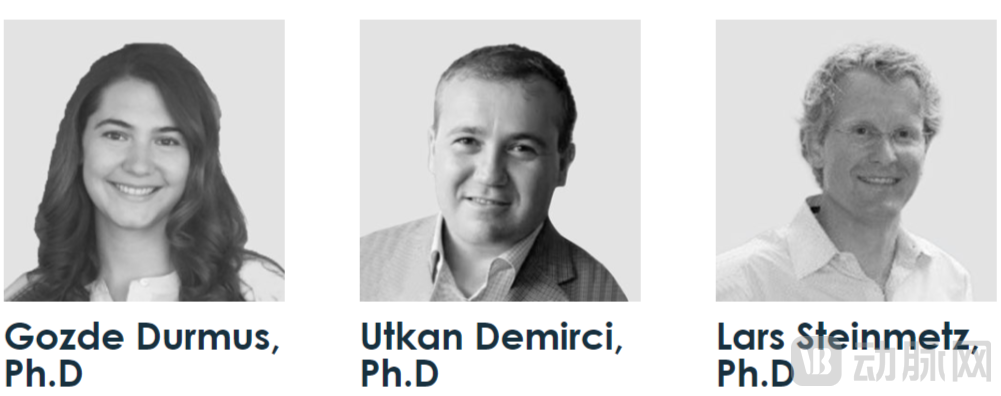
From left to right: Dr. Gozde Durmus, Dr. Utkan Demirci, and Dr. Lars Steinmetz
In 2015, the three founders collaborated with researchers from Stanford University and Harvard Medical School to publish “Single-Cell Magnetophoresis” in the Proceedings of the National Academy of Sciences of the United States of America, marking the genesis of LevitasBio’s magnetophoresis technology.
In this paper, scientists report the discovery that cell lines derived from esophageal adenocarcinoma, colorectal adenocarcinoma, breast adenocarcinoma, and non-small cell lung adenocarcinoma exhibit distinct levitation characteristics. The research team conducted the experiments using a cell density measurement platform. This platform consists of magnets installed on both sides of a capillary channel with tilted side mirrors, facilitating microscopic measurement of cell levitation height; the application of a magnetic field in the experimental setup enables cell levitation.
“Each cell has its own unique suspension and density distribution, which can be detected without the use of biomarkers, antibodies, or labels,” the authors noted. “Our method enables rapid, density-based imaging and analysis of individual cells.”
Today, LevitasBio’s leadership team is also composed of seasoned executives with comprehensive industry experience in the life sciences and diagnostics markets. Among them, CEO Martin Pieprzyk has been active in the life sciences sector for nearly 20 years and has consecutively founded two biotechnology companies. Remy-Renou, who recently joined LevitasBio as Vice President of Global Commercial Operations, brings over 30 years of experience in leading, building, developing, and managing life sciences companies.
In just five years, LevitasBio has successfully transformed a research paper into a mature production line through the collaboration of its scientific team and management talent. The company’s label-free suspension technology enables researchers to detect, analyze, and understand cellular biological characteristics without altering or damaging the cells, thereby preserving the integrity of the original samples.
Breaking the Mold of Magnetic Levitation Technology
LevitasBio Offers a Novel Cell Analysis Method for the Life Sciences Market
Cells are composed of micro- and nanoscale components and materials, which possess unique functions as well as intrinsic magnetic and density characteristics.
Previously, the measurement of basic cellular properties has primarily focused on cell population density. Commonly used methods include Ficoll gradient centrifugation, nanomechanical resonator measurements, and dielectrophoretic field-flow fractionation. Although these techniques have been widely employed for decades, they each have their own limitations.
Ficoll gradient centrifugation can only estimate the “average” density of cell populations and may affect cell density and viability; nanomechanical resonant measurements require execution within vacuum-encapsulated microcantilevers, imposing stringent requirements on the measurement environment; dielectrophoretic field-flow fractionation cannot measure cell density at the single-cell level.
Meanwhile, sample processing and dissociation, such as excision and biopsy, often subject specimens to unnatural perturbations or stress. In cell biology, downstream assay results are highly dependent on the quality of the initial samples used. Poor-quality initial samples—for example, those containing a high proportion of dead cells and debris—will yield poor results.
Therefore, to avoid cell death or alterations in sample phenotypes, researchers must employ gentle methods to isolate primary cells from tissues. This necessitates the optimization of previous dissociation protocols.
“The First Truly Novel Cell Analysis Method in 30 Years”
Previously, magnetic levitation in large-scale instruments has been used to measure the density of mesoscale particles and assemble macroscopic objects. However, its application in life sciences has been hindered by the inability to monitor microscopic objects.
LevitasBioresearch has pushed magnetic levitation technology toward micro-objects. ItDemonstrated that both eukaryotic and prokaryotic cells can be cultured in suspension,andEach cell possesses unique suspension characteristics.
During many physiological events, such as differentiation, cell death, senescence, immune responses, or drug resistance, further biological changes are accompanied by transient alterations in cellular magnetic signals due to the intracellular formation of paramagnetic reactive oxygen species. Cells of different types or states possess distinct physical characteristics and float in a predictable manner when exposed to a magnetic density field.
This technology leverages the clustering characteristics induced by cytokine magnetic levitation forces to rapidly separate, enrich, and capture various types of cells in blood, body fluids, and other liquid samples.
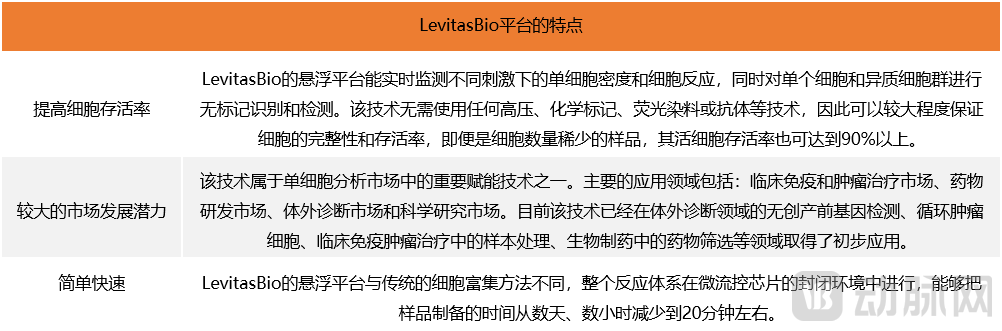
During cell analysis, researchers must perform a series of time-consuming, repetitive, and complex procedural steps. In addition to introducing a novel suite of cell analysis methods, LevitasBio has addressed these intricate workflows by continuously innovating and optimizing its technology platform.
LeviCell 1.0 System
LevitasBio’s first commercial platform, LeviCell 1.0, was launched in 2020 to provide researchers with simple, label-free cell separation and enrichment services. The system is compatible with various sample sources, cell types, and cell culture media, requiring no dyes or labels during sample preparation. Moreover, the system operates with just three manual steps, taking less than 20 minutes from start to finish.
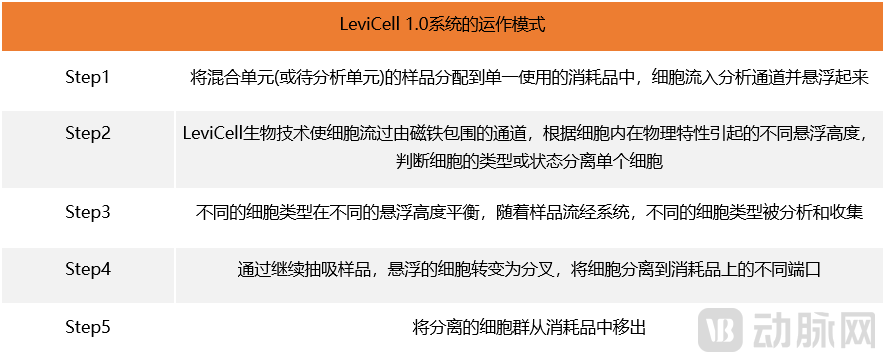
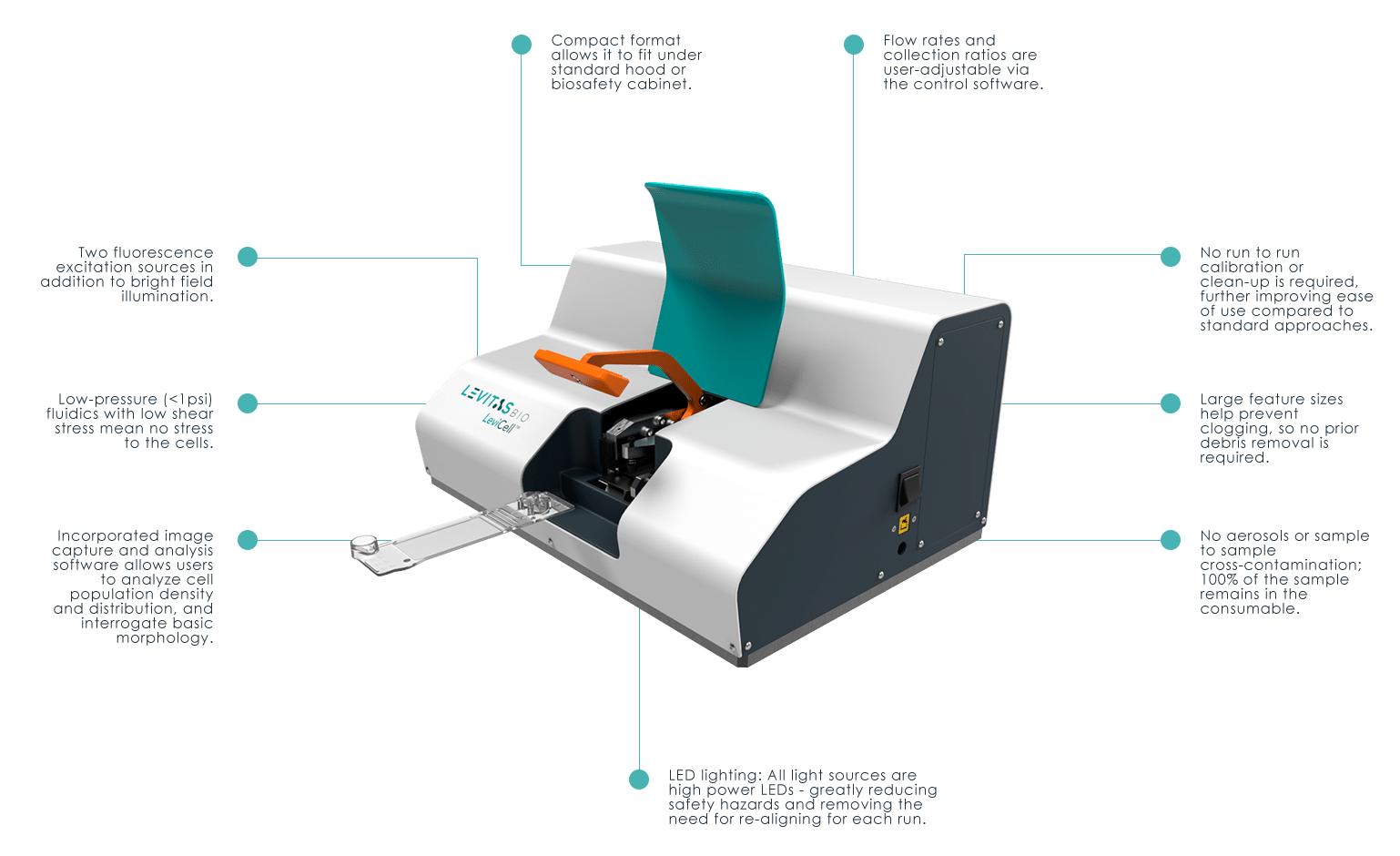
LeviCell 1.0 System
LeviCell EOS System
In April 2022, LevitasBio launched the LeviCell EOS system, its next-generation solution for cell isolation and enrichment, featuring higher throughput and the ability to simultaneously target and select viable cells. The LeviCell EOS system introduces several new features:
1. Embedded Thermal Control System. This system allows users to select from a predefined temperature range, ensuring that samples are processed at the optimal temperature to maintain cell viability.
2. Advanced full-mesh imaging system. Robust real-time sample feature analysis is achieved during processing. Critical insights, such as fractionation, cell counting, viability assessment, and quality measurements, can be reviewed in real time, enabling researchers to make informed decisions on how to best utilize enriched samples in downstream studies.
3. Modular and Interchangeable EOS Cores. The LeviCell EOS system delivers unprecedented flexibility through its modular and interchangeable EOS cores. An expanding series of optional core modules will enable a wide range of specifically optimized applications on a single platform.
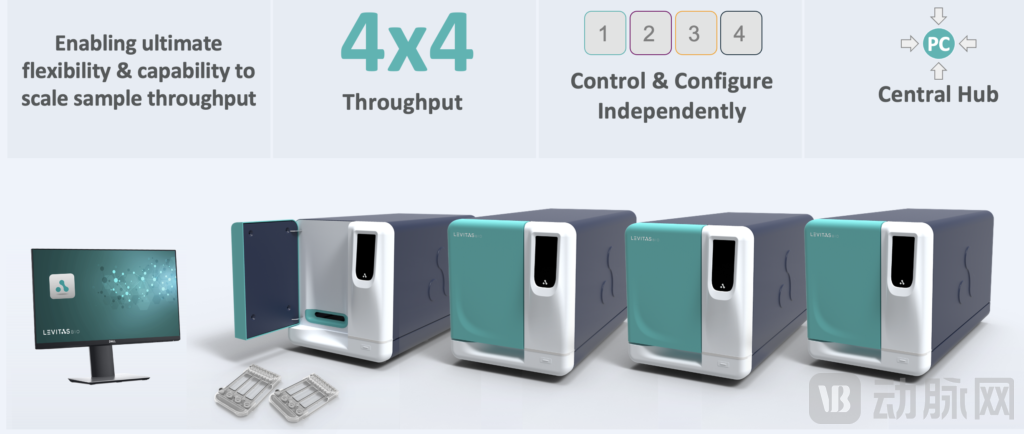
LeviCell EOS System
Under the LeviCell EOS system, researchers can effectively scale up experiments by up to 16-fold and process runs involving up to 40 million cells.
LeviPrep and LeviSelect Product Lines
ThisThe solution is to coordinate withLeviCellSystemandDevelopment, which can simplify tissue handling in advanced biological researchandCell SamplesofManagement.
The new LeviPrep product is fine-tuned for primary tissue sample processing. Pre-optimized protocols and配套 reagents enable researchers to accelerate their experiments. When paired with the LeviCell system, researchers can obtain high-quality samples that maintain native cellular states, minimizing cell death and ensuring unbiased or unaltered sample phenotypes, thereby facilitating downstream research.
LeviSelect products combine suspension technology with the targeted selection of specific cell types. The LeviSelect kit leverages the natural physical properties of cells and target-specific antibodies conjugated to density-coded nanospheres to enable buoyancy modulation. This allows for the separation of target-specific cells of interest from unwanted cells or contaminants during a single LeviCell run.
Unlike the LeviCell workflow, this target selection method is performed simultaneously with label-free live cell enrichment, offering researchers a revolutionary approach that integrates multiple steps in the laboratory workflow, reduces cell loss and time spent on excessive processing, and preserves the natural biological state of the samples.
Leveraging years of experience in the IVD sector, Thalys Medical entered the market early.
LevitasBio’s magnetic levitation cell analysis technology is a critical high-end technology at the front end of in vitro diagnostic (IVD) product manufacturing and is highly sought after in the global single-cell analysis market. As a result, LevitasBio has been named one of the “30 Most Promising Innovators” by Silicon Valley Review.
In 2021, Thalys Medical led LevitasBio’s Series B financing round, driving the commercialization of LevitasBio’s magnetic levitation-based cell purification and separation technology. Decheng Capital, a lead investor in the first round of financing, also participated in this round.
Due toof Magnetic Levitation Cell Analysis TechnologyHigh Starting Point、High development difficulty; such technology remains lacking in China. LevitasBioAttracted by China’s vast single-cell analysis market, Thalys Medical aims to leverage its partnership withCollaboration with LevitasBio to expand into upstream product R&D and manufacturingConductLayout。
Martin Pieprzyk, CEO of LevitasBio, stated in an interview: “Thalys Medical possesses a global market presence in medical research, supply chain expertise, and customer distribution channels, thereby significantly accelerating our growth.”
Wang Zheng, Executive Vice President of Thalis Medical, responded, “We are delighted to partner with LevitasBio to establish a single-cell analysis powerhouse in China through our joint venture.”
Currently, Limicro, the joint venture between Thalys Medical and LevitasBio, is unfolding its blueprint, and we look forward to its future developments.