

Emalex Biosciences Files for IPO Amid $250M D1 Receptor-Targeting Drug Breakthrough in Competitive Tourette Syndrome Landscape

Emalex Biosciences
Developer of New Compounds

Valor Equity Partners
Financial Investment Institutions

Fidelity Investments
Financial Services Institutions

Bain Capital
Private Equity and Venture Capital Firms
The film *Front of the Class* and American singer Billie Eilish have brought Tourette syndrome into the public spotlight.
Tourette Syndrome is a neurodevelopmental disorder, also translated as Tourette's Disorder. It falls within the spectrum of tic disorders and is characterized by repetitive motor tics or vocal tics.
It is not a rare disease; statistics show that 1 in every 160 children (aged 5–17) in the United States has Tourette syndrome, and many patients’ symptoms persist into adulthood.
However, there is currently no cure for Tourette syndrome. Patients can only rely on behavioral therapy and pharmacological treatment to manage the tics caused by the condition. Furthermore, the U.S. Food and Drug Administration (FDA) has not yet approved most medications used to treat tics.
Faced with a large population of patients with Tourette syndrome and the urgent need to address the condition, an increasing number of pharmaceutical companies are entering the race to develop drugs for Tourette syndrome.
Emalex Biosciences is one such company, developing a new class of drugs for Tourette syndrome called ecopipam.
In November 2022, Emalex Biosciences completed a $250 million (over RMB 1.7 billion) Series D financing round. The round was led by Bain Capital Life Sciences, with participation from Valor Equity Partners, Fidelity Management & Research, and other investors.
Emalex Biosciences, founded in 2018, is dedicated to developing novel therapies for central nervous system disorders. It is a portfolio company established by Paragon Biosciences.
As the CEO of Paragon Biosciences and the founder of Emalex Biosciences, Jeff Aronin has founded and sold several successful portfolio companies. These portfolio companies are all aimed at developing innovative therapies for the treatment of serious diseases.
Previously, Jeff Aronin founded Ovation Pharmaceuticals, serving as its President and Chief Executive Officer from 2000 to 2009, where he led a drug development organization that ultimately secured four new drug approvals from the U.S. Food and Drug Administration (FDA). Ovation was acquired by Lundbeck A/S in 2009.
In 2011, Jeff Aronin founded Marathon Pharmaceuticals, serving as its Chairman and Chief Executive Officer from 2011 to 2017. Under his leadership, Marathon Pharmaceuticals developed drugs for rare diseases, successfully commercialized five products, and secured one new drug approval from the U.S. Food and Drug Administration (FDA).
Jeff Aronin has continuously developed breakthrough therapies for patients with serious diseases by establishing a portfolio of companies, achieving a record number of new drug approvals.
Leveraging his substantial success in new drug development and expertise in risk innovation, Jeff Aronin was named one of the most influential leaders in healthcare by Insights Care magazine.
He has also devoted significant energy to civic and philanthropic endeavors. Jeff Aronin is the founder and co-chair of MATTER, a healthcare technology startup incubator. Since 2015, more than 220 healthcare companies have been funded, established, and grown.

Founder Jeff Aronin and CEO Eric Messner
Previously, Jeff Aronin targeted the development of novel drugs for multiple rare diseases, and through foundingEmalex Biosciences will further expand its drug development blueprint, aiming to tackle the highly challenging task of developing new therapeutics for Tourette syndrome.
In August 2018, Emalex Biosciences acquired Psyadon Pharmaceuticals and the exclusive rights to develop, register, and market ecopipam.
Jeff Aronin said: “Emalex was founded specifically to address severe neurological disorders, such as Tourette syndrome. Recognizing that drug development for neurological conditions is exceptionally challenging, few companies are willing to invest in bringing new therapeutic options to these patients.“Our team has a strong track record of success in developing neurological drugs, and we are delighted to collaborate with our investors to promote the new drug Ecopipam for patients.”
Eric Messner, CEO of Emalex Biosciences, is a seasoned pharmaceutical executive and entrepreneur with extensive experience in the development and commercialization of therapies for rare and orphan diseases. He has taken up the mantle from Jeff Aronin to lead Emalex Biosciences in tackling the challenges of Tourette syndrome.
Tourette syndrome is incurable. The goal of treatment is to control tics that interfere with daily activities and functioning.
Individuals with Tourette syndrome are often affected by co-occurring conditions, including attention-deficit disorder, obsessive-compulsive disorder, social relationship difficulties, learning disabilities, and sleep problems. Some of these issues can cause greater impairment to patients than the tics themselves.
Currently, common treatment regimens for the tics associated with Tourette syndrome include behavioral therapy, psychotherapy, deep brain stimulation, and pharmacotherapy.
Behavioral therapy involves cognitive-behavioral interventions for patients with tic disorders, including habit reversal training, which helps patients monitor tics, recognize premonitory urges, and learn to spontaneously respond in a manner incompatible with the tics.
Psychotherapy helps patients cope with Tourette syndrome on a psychological level, while also addressing comorbid conditions such as attention-deficit/hyperactivity disorder (ADHD), obsessive-compulsive disorder (OCD), depression, or anxiety.
For severe seizures that are refractory to other treatments, deep brain stimulation (DBS) may be beneficial. This therapy involves implanting a battery-powered medical device into the patient’s brain to deliver electrical stimulation to target areas involved in motor control. However, DBS remains in the early stages of research, and further studies are needed to determine whether it is a safe and effective treatment option.
Pharmacotherapy can be used to reduce severe or debilitating tics and to alleviate symptoms of comorbid conditions, such as attention-deficit/hyperactivity disorder (ADHD) or obsessive-compulsive disorder (OCD). However, medication cannot completely eliminate tics. Furthermore, the effects of medication vary from person to person. As with all medications, those used to treat tics carry side effects, including weight gain, muscle rigidity, fatigue, restlessness, and social withdrawal. The potential side effects must be carefully considered when deciding whether to use pharmacological treatment for tics, as in some cases, these side effects may be more severe than the tics themselves.
Phase II Study of Ecopipam Completed
Ecopipam is a novel chemical drug designed for the treatment of Tourette syndrome in pediatric patients and childhood-onset fluency disorder (stuttering) in adults.
Dopamine is a neurotransmitter in the central nervous system. Its receptors are classified into two “families” based on their genetic structure: “D1” (including D1 and D5 subtypes) and “D2” (including D2, D3, and D4 subtypes). D1 receptor hypersensitivity is considered a potential mechanism underlying the repetitive and compulsive behaviors associated with Tourette syndrome.Ecopipam reduces tics in patients with Tourette syndrome by selectively blocking the action of the neurotransmitter dopamine at D1 receptors.
Emalex Biosciences, Inc. conducted the D1AMOND study, a multicenter, randomized, double-blind, placebo-controlled, parallel-group trial. The study evaluated 153 pediatric and adolescent patients (aged 6 to <18 years) with Rett syndrome across 63 sites in the United States, Canada, and Europe. Patients were randomized into two groups: one receiving ecopipam at a dose of 2 mg/kg/day and the other receiving placebo tablets.
Results from the Phase II clinical trial of ecopipam (the D1AMOND study) indicate that the investigational new drug ecopipam reduces motor and vocal tics (stuttering) in patients with Rett syndrome compared with placebo.In clinical trials conducted to date, ecopipam has demonstrated generally good tolerability and has received Fast Track designation from the FDA for the treatment of patients with Rett syndrome. The most common adverse events associated with ecopipam in these studies were headache, fatigue, irritability, insomnia, and agitation.
Emalex’s Series D financing will be guided by the results of its Phase II clinical trials and will fund Phase III clinical trials, with potential application toward the commercialization of a new drug for Tourette syndrome. Emalex’s Phase III clinical trial is expected to enroll more than 220 patients across approximately 90 sites, making it the largest trial for Tourette syndrome conducted in North America.
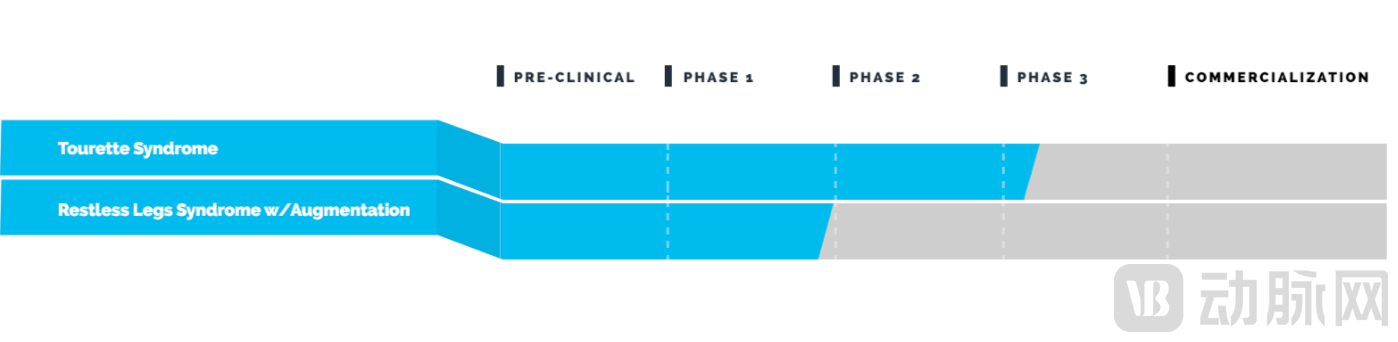
Research Progress of Ecopipam
Drug resistance to pharmacotherapy is a major obstacle in the treatment of many brain disorders, including brain cancer, epilepsy, schizophrenia, depression, and HIV-associated neurocognitive disorders.
Drug ResistanceDrug resistance, also known as antimicrobial resistance, refers to the ability of organisms to withstand the effects of medications. When drugs are used repeatedly or at insufficient dosages, pathogens such as bacteria and parasites within the human body gradually develop resistance, leading to reduced or lost drug efficacy. As a result of these changes in disease progression, conditions become more difficult to treat.
Like most neurological disorders, Tourette syndrome has proven resistant to pharmacological intervention. Previously, it was not uncommon for companies to invest hundreds of millions in the Tourette syndrome R&D pipeline, yet most saw little progress or ultimately failed.
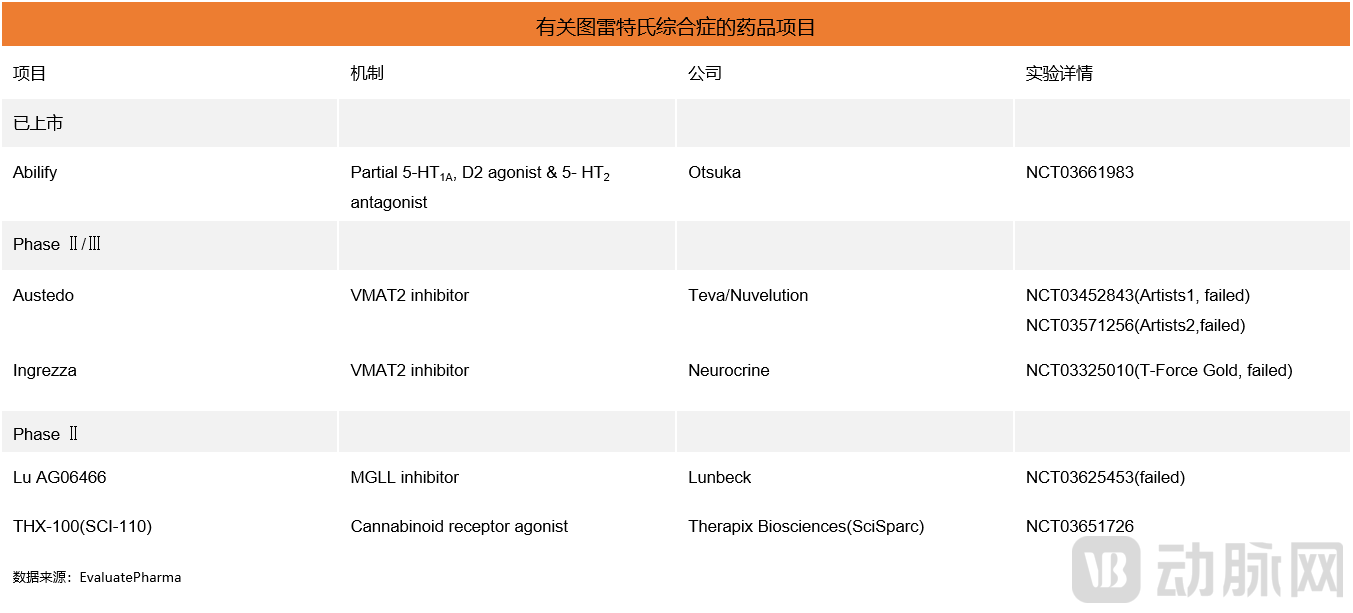
Those Attempting to Exit the Stage
Teva Pharma’s Austedo (Chinese brand name: Antitan) is a VMAT2 (vesicular monoamine transporter 2) inhibitor approved by the FDA for the treatment of chorea associated with Huntington’s disease and tardive dyskinesia in adults.
Teva Pharma conducted the ARTISTS 1, II/III and ARTISTS 2 studies of Austedo for Tourette syndrome. These studies did not demonstrate that Austedo is effective in treating tics in children and adolescents with Tourette syndrome.
Previously, the seller projected that Austedo would generate $175 million in revenue from Tourette syndrome in 2024, accounting for approximately 17% of the total sales of VMAT2 inhibitors that year. The decline in potential sales for Tourette syndrome suggests that Austedo may fail to meet the seller’s 2024 sales forecast.
Drugs developed by pharmaceutical companies such as Neurocrine and Lundbeck have also ended in failure. These trial failures have left the treatment landscape for Tourette syndrome in a disheartening state.
The Resilient Guardians Facing an Uncertain Future
Otsuka Pharmaceutical's atypical antipsychotic Abilify (Chinese name: aripiprazole) is primarily used to treat schizophrenia and bipolar disorder. Other indications include its use as an adjunctive therapy for major depressive disorder, Tourette syndrome, and autism-related conditions.
Among the five randomized controlled trials (RCTs) and eleven open-label studies conducted by Otsuka Pharmaceutical, there is moderate-quality evidence supporting the use of aripiprazole to reduce tic severity in children and adolescents with Tourette syndrome; however, robust evidence evaluating its use in adults is lacking. Overall, aripiprazole is a safe and effective medication for the treatment of tics.
SciSparc, an Israeli biopharmaceutical company focused on the development of cannabinoid-based therapies, announced topline data from its Phase II study conducted by Yale University on April 9, 2018. The results demonstrated that its cannabinoid drug THX-110 (now renamed SCI-110) met the primary endpoint for Tourette syndrome, indicating a significant improvement in symptoms among adult patients.
SCI-110 is a combination drug comprising dronabinol (THC) and palmitoylethanolamide (PEA). However, due to the FDA’s stringent therapeutic regulations on cannabinoids, SciSparc Ltd. is still seeking FDA approval to accelerate the market launch of SCI-110.
In the fiercely competitive race for Tourette syndrome therapeutics, will Emalex Biosciences emerge as a standout star of tomorrow?