

Monteris Medical Files for IPO: Pioneer in MRI-Guided Minimally Invasive Brain Surgery with 23 Years of Innovation

Monteris Medical
Minimally Invasive Brain Injury Treatment Device Developer

Birchview Capital
Investment Management Company

InnovaHealth Partners
Private Equity Investment Firms
Brain injury can occur at any age. Damage to the brain may lead to various forms of cognitive impairment and symptoms, such as deficits in attention, memory, or motor function.
According to statistics, approximately 80,000 to 90,000 people become disabled due to brain injuries each year. Currently, there are 3.1 million individuals with disabilities resulting from brain injury in the United States.
Monteris Medical, founded in 1999 in Winnipeg, Canada, is a neurosurgical company dedicated to ablation therapy for brain injuries. Over two decades since its inception, Monteris Medical’s mission has remained unchanged: to invent a device for minimally invasive brain surgery, with a focus on helping patients with neurological disorders.
In October 2022, it secured $35 million in Series D equity financing and $38 million in debt financing. This marked the 18th round of fundraising for Monteris Medical. The equity portion was led by new investor InnovaHealth Partners, with support from existing major investor Birchview Capital.
Founding Team of the First Governor General’s Innovation Award
In 1990, Dr. Mark Torchia from St. Boniface General Hospital in Winnipeg developed the AutoLITT technology. This technology gave rise to Monteris Medical’s NeuroBlate system.
In 1999, Richard Tyc joined Mark Torchia to help him apply NeuroBlate technology to real-world and clinical settings. Together, they founded Monteris Medical.
Richard Tyc is a professional engineer who graduated with an engineering degree from the University of Manitoba. His career began in the life sciences sector, and he later made significant advances in prosthetics, plastic surgery, and automated drug delivery. Richard Tyc currently serves as Vice President of Technology and Advanced Development at Monteris Medical.
Their revolutionary technology—the NeuroBlate System—is an MRI-guided, robotically controlled laser ablation surgical device that enables minimally invasive robotic treatment for various neurosurgical indications.
In 2016, Mark Torchia and Richard Tyc received the inaugural Governor General’s Innovation Award in recognition of their joint development of the NeuroBlate System. The NeuroBlate System is an MRI-guided, robotically controlled laser ablation surgical device that enables minimally invasive robotic treatment for a variety of neurosurgical indications.
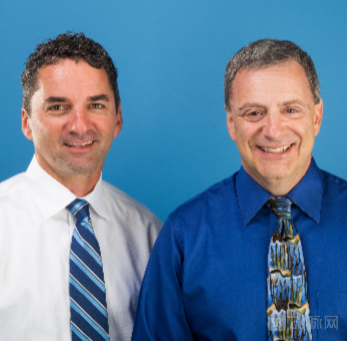
Mark Torchia and Richard Tyc
That year, Marty Emerson, who has nearly 30 years of experience in the medical device industry, joined Monteris Medical as President and Chief Executive Officer.
Prior to joining Monteris, Marty served as President and Chief Executive Officer of Gail Medical, a company leading the cryoablation systems market, for eight years. He also previously served as President and Chief Executive Officer of AMS, a publicly traded company.
Just one month after joining Monteris Medical, Marty Emerson faced his first challenge: the probe tip of the NeuroBlate device unexpectedly heated up during an MRI-guided procedure.This makes the device'sProbe Tip FinalDesignated as a Class I recall by the U.S. Food and Drug Administration (FDA).
Over the next two years,Marty Emersonand dozens of employees have devoted substantial time and energy to addressingIn the Issue of Accidental Heating of the Probe Tip。
Ultimately, inUnder the leadership of Marty Emerson, the companyemerged from its difficulties. In October 2018, Monteris received FDA clearance for the laser probe of the NeuroBlate system.
By the end of 2018, the company secured insurance coverage from Aetna and Anthem. Meanwhile, Monteris announced that more than 2,000 patients had received NeuroBlate therapy.
Marty Emerson mentioned in the interview: “Almost every emerging technology must undergo such a trial at some point in its maturation process; if you will, that is the moment when you truly enter the core of science and technology.”

Chief Executive OfficerMarty Emerson
Brain injury refers to abnormal tissue in the brain damaged due to injury or disease, and is categorized into acquired brain injury and traumatic brain injury. The former is caused by medical conditions such as stroke, tumors, metabolic disorders, or other medical diagnoses, while the latter results from accidents or intentional harm.
The central nervous system consists of the brain and spinal cord, with the brain encased within the cranial cavity of the skull. The skull provides space for the brain, blood flow, and cushioning cerebrospinal fluid.
When the brain is injured, the volume of blood, bodily fluids, and even air can increase, exceeding the cranial cavity’s capacity. Once this additional burden arises, these fluids compress sensitive brain tissue, causing it to collapse and resulting in brain injury.
MRI-Guided Ablation Technology
Brain injury appears as dark or light spots on brain imaging tests, such as magnetic resonance imaging (MRI) or computed tomography (CT).
MRI-Guided Ablation Technology, also commonly referred to as Laser Ablation, Laser Interstitial Thermal Therapy (LITT), or Stereotactic Laser Ablation (SLA), utilizes MRI-guided laser energy to destroy lesions or abnormal tissue in the brain.
Monteris Medical's NeuroBlateSystemIt involves the use of MRI to perform robot-controlled minimally invasive brain surgery. This system is designed to ablate intracranial soft tissues, including brain tumors, radiation necrosis, and epileptic foci.
While the patient is inside the magnetic resonance imaging (MRI) scanner, the physician guides a small laser device—a probe—percutaneously into the lesion. The probe delivers laser energy to heat and ablate the affected tissue. With MRI guidance for regulating the laser device, neurosurgeons can visualize specific regions of the brain in real time.
Robot-Assisted Minimally Invasive Surgery
Monteris' NeuroBlate System enables the precise and safe delivery of laser energy.
SurgeryUse a robotically controlled probe driver to improve precision.Unlike traditional brain surgery, this procedure does not require a large opening in the skull. Instead, surgeons only need to create a small hole approximately the diameter of a pencil. This approach helps reduce the risk of damage to surrounding healthy tissue.
Furthermore, minimally invasive procedures are generally well tolerated, requiring only 1–2 sutures for wound closure, which results in shorter recovery times. Due to the minimal incision size of NeuroBlate, it may also reduce the utilization of hospital resources. Recent studies have shown that intensive care unit (ICU) and hospital stays associated with open craniotomy are comparable to or longer than ICU utilization following this procedure.
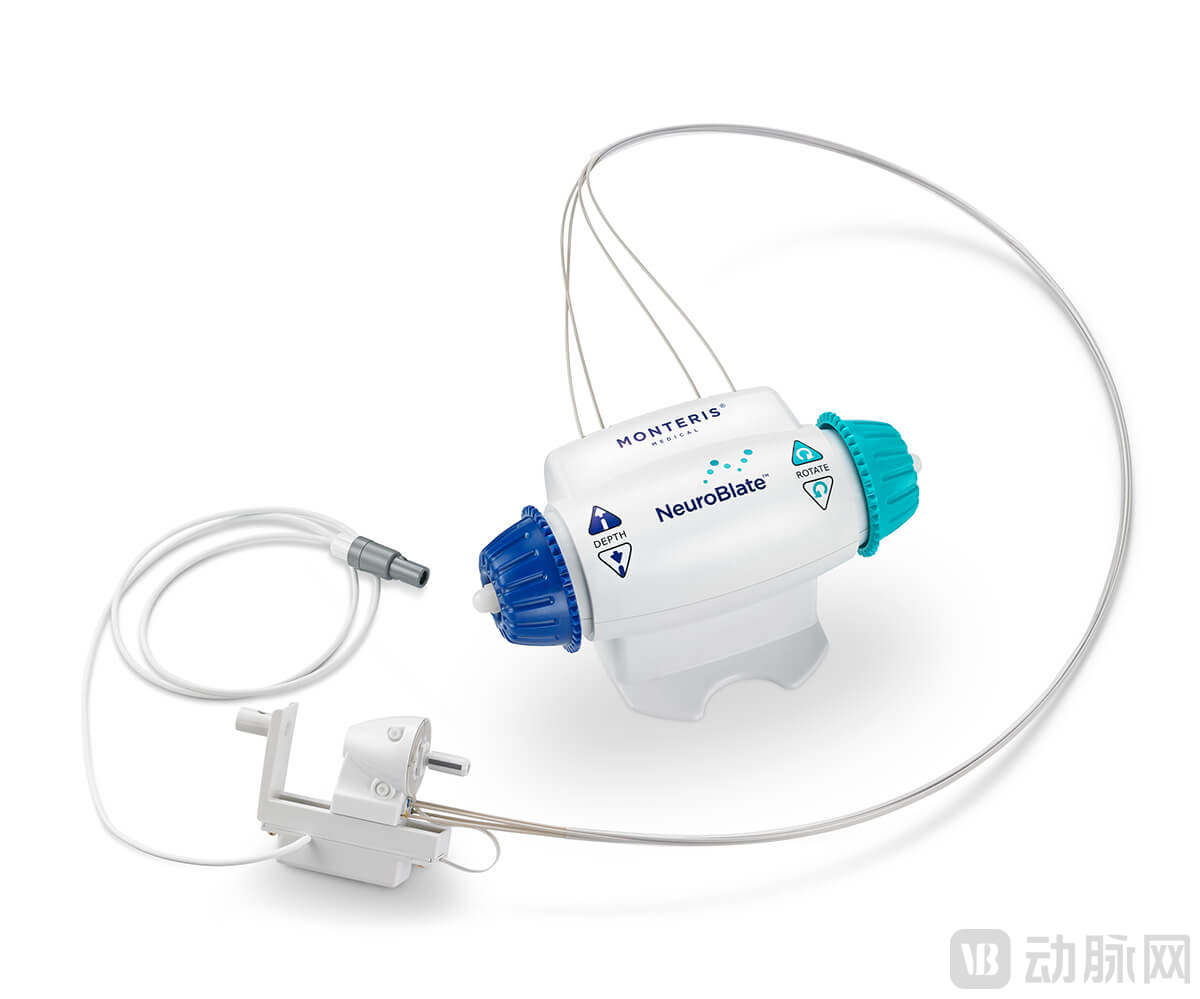
Robotic Probe Driver
The NeuroBlate system also provides a comprehensive and complete laser ablation solution, including disposable supplies, hardware, Fusion-S software, and TruTemp™ technology.
Disposable Supplies and Hardware
Disposable items include optical laser probes, probe drivers, and mini screws.
The NeuroBlate optical laser probe features a sapphire capsule mounted on the laser fiber to enable prolonged laser emission. As it incorporates a non-metallic fiber-optic temperature sensor, the NeuroBlate optical laser probe allows for greater flexibility in customizing trajectories during surgical planning and positioning. It is also the first and only commercially available laser probe with fiber-optic controlled cooling.
The robotic probe driver is used in conjunction with skull anchors such as the Monteris Mini-Bolt. Precise robotic linear positioning prevents misalignment of the laser probe, enabling it to access any location within the brain along an ideal trajectory. During the procedure, surgeons can operate the laser equipment hands-free, which helps reduce the frequency of entries into the MRI scanning room and minimizes surgical delays.
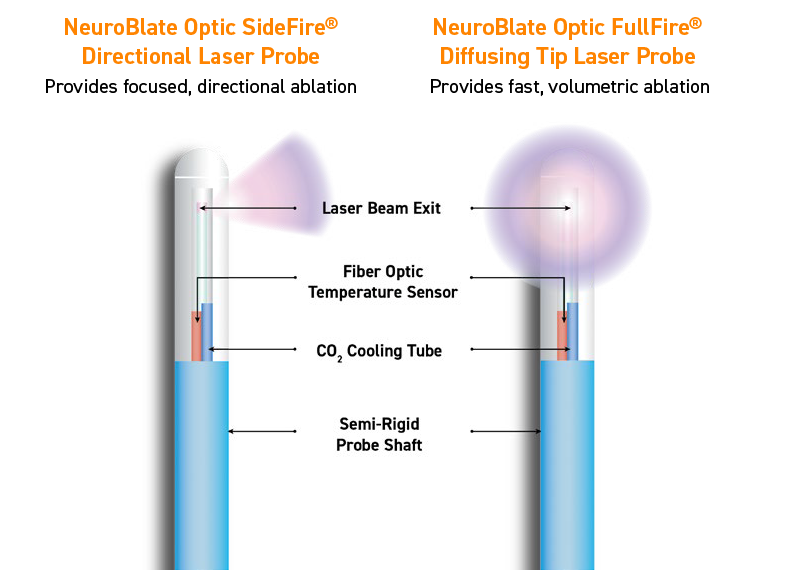
Optical Laser Probe of the NeuroBlate System
Mini used on the deviceBolt, acceptableMinimally invasive procedure performed through a 4.5-mm-diameter small incision. Its inner diameters are 2.2 mm and 3.3 mm, respectively. MiniBoltEnables the laser detector to be precisely positioned on the track. Meanwhile, miniBoltCompatible with most stereotactic frames and navigation systems, ensuring an efficient workflow.
The hardware of the NeuroBlate system includes a desktop monitor, an electronics rack, a robot interface, and potentially the AtamA system. AtamAComposed of a patient transfer board and a complete patient stabilization system,Integrating a multifunctional head fixation device into the patient transfer board enables effective transfer of patients from the operating room to MRI.
Fusion-S Software
The Fusion-S software display provides visualization of critical anatomical details, enabling neurosurgeons to easily view brain structures throughout the procedure. The software also features an advanced 3D view interface that allows for the placement of numerous temperature selection points at any location within the three-dimensional ablation zone, facilitating monitoring of ablation progress and avoidance of complex brain structures.
TruTemp™ Technology
TruTemp™ technology mitigates adverse factors affecting MRI thermometry. During laser interstitial thermal therapy (LITT), it enables deeper laser energy penetration and measurement, along with a stable heating rate, thereby facilitating better control of ablation.
The NeuroBlate System provides clinicians with a comprehensive suite of solutions and tools through the aforementioned equipment, enabling near-real-time control and MRI visualization during laser ablation therapy.
On the Monteris Medical website, a narrow, elongated historical timeline showcases the company’s determination and dedication throughout its journey.
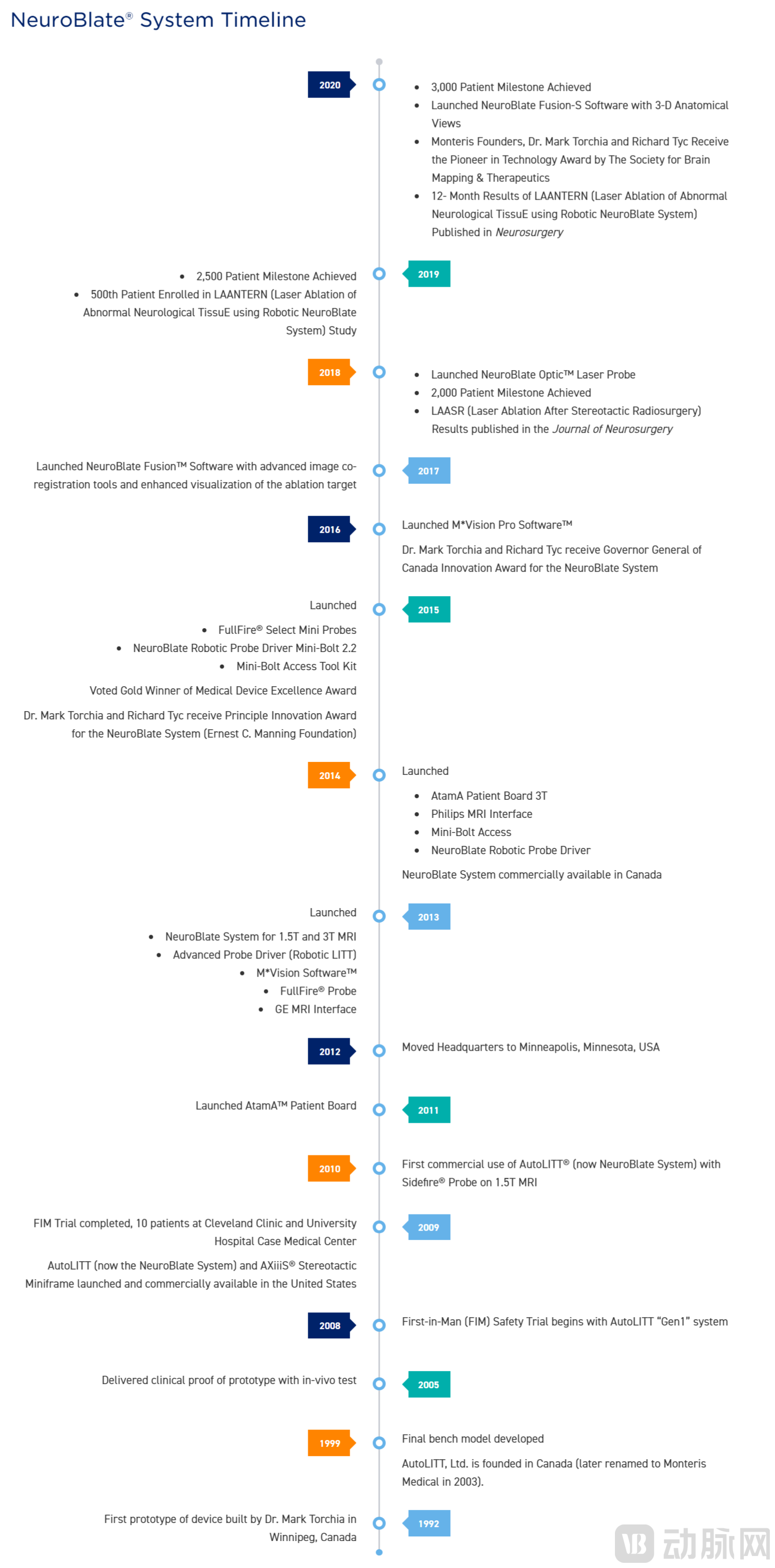
Monteris Medical Historical Timeline
Over the 23 years since its founding, Monteris Medical has steadily and meticulously refined its products, achieving multiple milestone accomplishments.
In 2013, the company went public. In 2018, 60 hospitals and 125 surgeons from the United States and Canada used the company’s NeuroBlate system to treat more than 2,000 patients. In 2020, over 3,000 patients were treated with the NeuroBlate system. To date, Monteris Medical has completed 18 rounds of financing, raising a total of $216 million (approximately RMB 1.48 billion).
Patients treated with the NeuroBlate system almost all suffered from epilepsy, glioblastoma, or recurrent brain metastases.
“Patients appreciate the minimally invasive nature of NeuroBlate, and their hospital stays are typically minimal. NeuroBlate has become an important tool in helping our epilepsy patients, truly transforming lives,” said Stephan Schuele, Director of Epilepsy and Clinical Neurophysiology at Northwestern University’s Feinberg School of Medicine in Chicago.
“We use image-guided laser interstitial thermal therapy to treat tumors in sensitive areas of the brain that would otherwise be very difficult to reach,” commented Dr. Albert Kim, a neurosurgeon at Washington University School of Medicine. “The minimally invasive nature of this approach is crucial, as it helps stabilize or improve the quality of life for many patients.”
Hangzhou Jialiang Medical Technology Co., Ltd., established in 2020, is a high-tech enterprise specializing in neurosurgery and brain science research. The company is dedicated to developing internationally leading innovative treatment solutions for refractory epilepsy and other neurological disorders, aiming to become a trusted global leader in providing solutions within the field of neurological medicine.
Jialiang Medical's MRI-Guided Laser Ablation Surgical Platform—AP101, is indicated for epilepsy, brain tumors, and radiation necrosis.
Similar to Monteris Medical’s NeuroBlate system, Jialiang Medical’s AP101 also features the following characteristics:
MRI-guided real-time temperature imaging monitoring, compatible with 1.5T and 3.0T MRI systems; the system solution includes surgical assistance tools; AP101 enables real-time temperature monitoring and ablation assessment during surgery; AP101 achieves precise, fully visualized ablation of brain lesions.
However, the surgical incision for AP101 minimally invasive ablation is less than 4 mm, requiring only a single suture postoperatively. This outperforms the NeuroBlate procedure, which involves a 4.5-mm incision and requires 1–2 sutures after surgery.
In addition to the AP101 minimally invasive neurosurgical system, Jialiang Medical has independently developed the Epilcure system, China’s first self-developed implantable closed-loop responsive neurostimulation system for the treatment of drug-resistant epilepsy. The system integrates a closed-loop therapeutic approach with epilepsy detection algorithms, sophisticated manufacturing processes for implantable electrodes, and wireless communication and charging technologies.
In March 2021, Epilcure completed the first clinical implantation in Asia at the Second Affiliated Hospital of Zhejiang University School of Medicine. Its clinical efficacy has been consistently recognized by both experts and patients.
In October 2021, Jialiang Medical completed its Series B financing, securing RMB 200 million. Qiming Venture Partners was the lead investor in this round.
The rise and development of Jialiang Medical have also given us a glimpse of the promise held by China’s neurosurgical medical device industry.