

Ceetree Health: Capturing the H&B Mental Health Market with Intelligent, Integrated Solutions After Serving Nearly 2 Million Users in 3 Years
What sparks might fly when a Central China Normal University graduate with dual bachelor’s degrees in computer science and mathematics, who previously worked at Huawei for seven years, enters the mental health services industry?
In 2014, Zhang Yu concluded his tenure at Huawei’s Overseas Business Department and returned to China. At that time, various industries were riding the wave of “Internet Plus.” Amidst this trend, Zhang Yu was deeply struck by the deficiencies in accessibility and convenience associated with high-quality medical care. Consequently, the first question he pondered upon his return was how technology could be leveraged to contribute to China’s healthcare sector.
Subsequently, Zhang Yu founded a SaaS platform for informatization in primary healthcare. During the entrepreneurial journey, he gradually engaged with mental health service products. At that time, however, mental health services were merely a peripheral aspect of the company’s business. What truly drove its complete transformation into its current positioning—“an expert in providing comprehensive hardware and software solutions and services for intelligent, digital, and immersive mental health”—was the release of the Pilot Work Plan for the Construction of a National Social Psychological Service System in 2018, along with the market opportunities it unveiled.
In November 2018, ten departments, including the National Health Commission, the Central Political and Legal Affairs Commission, and the Publicity Department of the CPC Central Committee, jointly issued the “Work Plan for Pilot Programs on the Construction of a National Social Psychological Service System,” which was regarded as a signal that the spring of the mental health industry was imminent.
Specifically, the document explicitly states that by the end of 2021, mental health services will be incorporated into the evaluation index system for Healthy Cities, serving as a key component of “Healthy Cells” (including Healthy Communities, Healthy Schools, Healthy Enterprises, and Healthy Families) and grassroots peacebuilding initiatives. Furthermore, it mandates the establishment of psychological counseling rooms or social work studios at the village (community) level, mental health education and counseling centers (or offices) in higher education institutions, and psychological guidance rooms in primary and secondary schools.
Subsequently, the national government and various provincial and municipal authorities have successively introduced corresponding policies to promote the development of the mental health services industry. For example, in 2016, Haidian District in Beijing designated the first batch of 34 community health service centers to establish psychological counseling rooms and included related services in medical insurance coverage. In August 2021, Guangdong Province’s medical insurance officially began reimbursing psychotherapy items, becoming the first province in China to include psychotherapy in its medical insurance coverage.
As the Chinese government has successively introduced policies to lay a solid foundation for the development of the domestic mental health services industry, the population with psychological issues in China continues to rise.
According to the 2018 White Paper on Mental Health of Urban Residents in China, nearly 230 million residents in China suffer from varying degrees of psychological problems. Among the more than 200 million individuals with psychological issues, anxiety disorders and depression have the highest prevalence rates, at 4.98% and 3.59% respectively, making them the most common conditions in psychiatric outpatient clinics and showing a significant upward trend. Taking depression as an example, the Report on National Mental Health Development in China (2019–2020), released by the Chinese Academy of Sciences in 2021, indicates that the average prevalence of depression nationwide was approximately 17%, representing a more than five-fold increase compared to the 3.59% reported in 2018.
Therefore, driven by strong policy support and rapid growth in market demand, China’s mental health services industry has begun to flourish. However, the supply side of psychological services still faces numerous development challenges, one of which is the shortage of mental health service resources.
According to VBInsight’s “Research Report on the Digital Mental Health Industry,” although relevant data indicate that the number of mental health institutions and psychiatrists in China has increased by 204% and 144%, respectively, compared with 2010, there are currently fewer than four psychiatrists per 100,000 people. Furthermore, while there are over one million psychological counselors, fewer than 100,000 are actually engaged in psychological counseling work. Based on the World Health Organization’s recommendation that “one psychological counselor per 1,000 people represents a balanced benchmark for a healthy society,” China requires at least 1.4 million psychological counselors, highlighting a substantial gap.
Moreover, constrained by traditional mindsets and limited technical resources, the accessibility and effectiveness of conventional mental health services require substantial improvement. Meanwhile, the implementation of mental health services across schools, government agencies and public institutions, mental health centers at all levels, specialized psychiatric hospitals, general hospitals, and community management centers faces numerous challenges.
Taking school-based mental health services as an example, experts have indicated that current school mental health education suffers from several critical pain points: insufficient prioritization, with efforts remaining at the level of “empty slogans”; inadequate professional standards; a lack of training systems for school psychologists; absence of formal, systematic professional training in mental health education knowledge and skills; delayed crisis identification; unsystematic curriculum design; and lax follow-up tracking.
However, the existence of pain points also indicates where opportunities lie. Cishu Health has targeted this opportunity.
As previously mentioned, Cishu Health’s corporate positioning can be summarized in a single phrase: “Expert in integrated hardware, software, and service solutions for intelligent, digital, and immersive mental health.” However, its products and services appear somewhat complex and diverse.
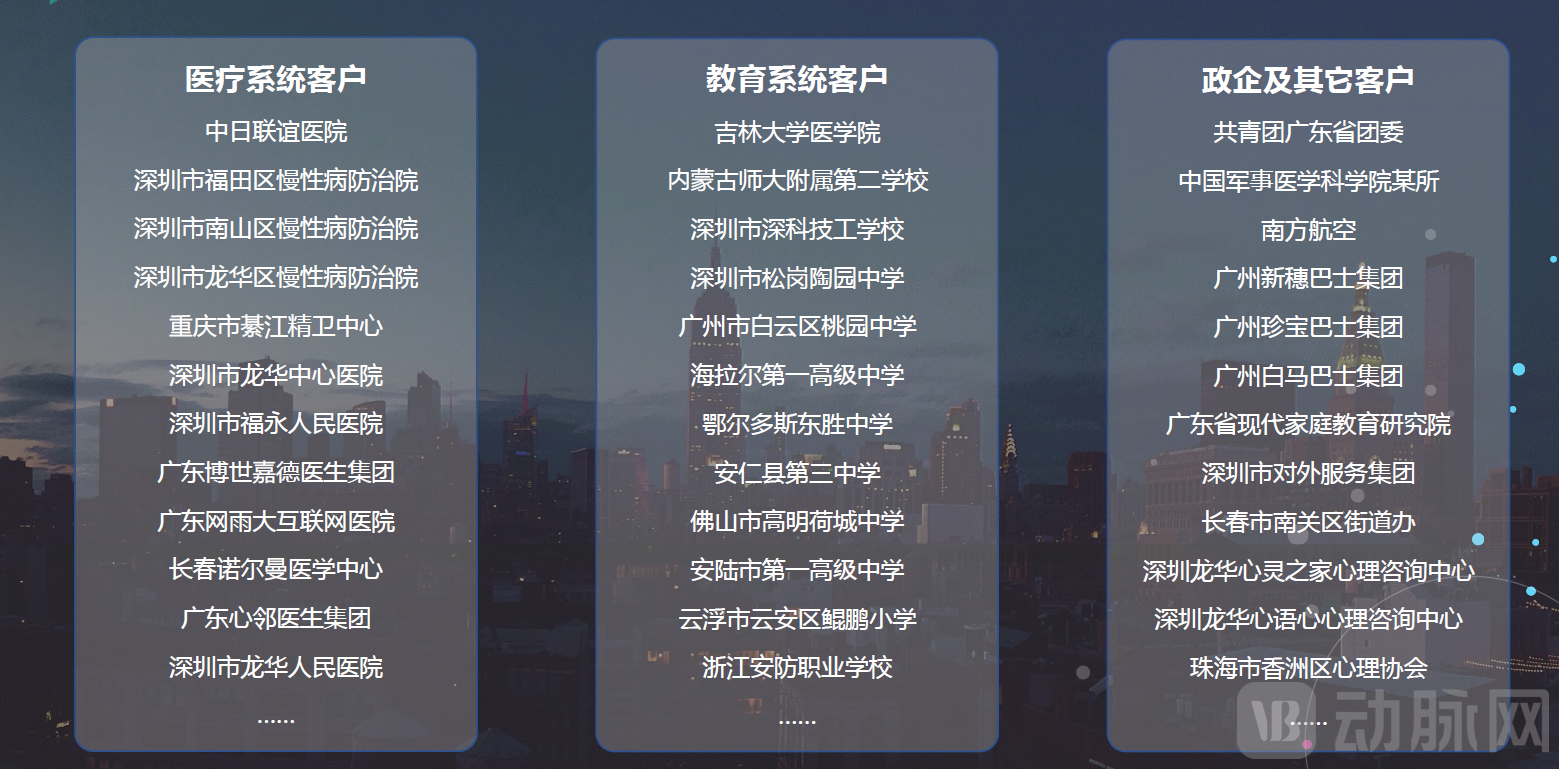
Cishu Health: Selected Partnership Cases
Specifically,Targeting municipal- and district-level mental health centers and specialized psychiatric hospitals, Cishu Health provides a cloud-based platform for psychosocial services. This platform enables end-to-end psychosocial service delivery while facilitating the interconnectivity of mental health data and the aggregation of service resources within the regional platform, thereby enhancing the accessibility of psychosocial services.
According to Zhang Yu, the core work of mental health centers mainly consists of four aspects: first, mental health education and popular science; second, mental health screenings focusing on anxiety disorders, depression, and insomnia; third, mental health care for specific populations such as the elderly and pregnant or postpartum women; and fourth, the establishment of a full-process service system encompassing screening, counseling, management, and follow-up. Cishu Health’s psychological service cloud platform can assist mental health centers at all levels and specialized psychiatric hospitals in fulfilling these functions.
Furthermore,Cishu Health will also provide an auxiliary management system for patients with severe mental disorders to mental health centers at all levels, enhancing medication adherence and digitizing the approval process for emergency hospitalization.
“In the past, the management of patients with severe mental illness in most regions was relatively rudimentary, relying primarily on manual oversight. Moreover, these patients generally obtained their medications through paper-based processes. However, Cishu Health’s auxiliary management system for severe mental illness enhances medication adherence by sending regular reminders to take medication via the smartphones of both patients and their family members. Furthermore, its digital receipt management system allows for direct subsidy applications on behalf of patients, which is more time-efficient and convenient compared to the previous multi-tiered manual review process,” introduced Zhang Yu.
andFor hospitals, Cishu Health has launched the Intelligent Psychological Assessment CT System and the Psychological Assessment SaaS System to help hospitals and departments generate revenue. For city-district-hospital networks and community management centers, Cishu Health offers the Smart Community Mental Health Service System, which enables standardized and unified management of grassroots mental health services across regions, helping primary public health institutions improve service efficiency, enhance service capabilities, and expand their service reach.
Furthermore, schools are also a key focus of Cishu Health’s services. Targeting education bureaus, primary and secondary schools, vocational and technical colleges, and universities, Cishu Health has launched a Smart Campus Mental Health Service System to support the development of an integrated “family-school-medical-community” collaborative service framework.
Specifically,Cishu Health’s Smart Campus Mental Health Service System facilitates student psychological screening and establishes corresponding mechanisms based on screening results to implement tiered management of students.For example, for high-risk students, the mechanism will conduct individual interviews, group counseling, parent interviews, or refer them to professional psychological counseling institutions based on their actual circumstances.
It should be noted that,To address key challenges in school-based mental health education, such as the lack of formal, systematic professional training in knowledge and skills, and fragmented curriculum systems, Cishu Health has launched an Auxiliary Teaching System for Campus Mental Health Education targeting primary and secondary schools. This system provides standardized online mental health education courses, lesson plans, psychodrama scripts, and other resources.
In addition, Cishu Health’s clientele also includes provincial and municipal federations of trade unions, as well as psychological counseling institutions or outpatient clinics. For the former, it has launched a big data platform for employee mental health services, facilitating the establishment of unified standards for employee mental health data, the aggregation of service resources, the digitalization of supervision and management, and improved accessibility of mental health services for employees. For the latter, Cishu Health has developed a mini-program for mental health services to help enhance their customer acquisition and traffic generation capabilities, mental health service delivery, and service coverage.
In addition to the various software systems mentioned above,To address the shortage of psychological counselors and the uneven quality of services, Cishu Health has established partnerships with Professor Ren Zhihong’s doctoral supervisor team at the School of Psychology, Central China Normal University, as well as dozens of renowned frontline school psychologists from primary and secondary schools across China, to jointly develop mental health education training courses for primary and secondary schools.
Yet behind the intricate web of products and services lie a few seemingly “simple” core capabilities.
At its core, Cishu Health is a B2B enterprise, which necessitates a thorough understanding and insight into the business processes, needs, and pain points of its B-side clients.
In this regard, Zhang Yu and the core team of Cishu Health, who have been deeply engaged in the B2B sector for many years, are highly confident. According to Zhang Yu,The core team of Cishu Health possesses over a decade of experience in B2B client acquisition, B2B software and hardware product design and development, as well as more than three years of expertise in the mental health industry.
Zhang Yu’s extensive experience in serving B-side clients also became one of the key factors influencing his decision on Cishu Health’s market positioning. “China’s mental health industry is still in its early stages of development and faces numerous challenges, such as the need for prolonged and costly efforts to educate the market, as well as the requirement for national policy support and government investment to shift public perceptions and consumption behaviors regarding mental health. At the same time, the difficulties inherent in developing the B-side market cannot be overlooked. Since our team’s industry expertise is primarily concentrated in serving B-side clients, we aim to leverage our accumulated experience to help the B-side sector develop more effectively and rapidly.”
However, even the most extensive accumulation of experience requires a deep understanding of the practical needs of B-end clients. This is particularly crucial for B-end or G-end clients—such as municipal and district-level mental health centers, hospitals at all levels, community management centers, education bureaus at various levels, and schools—that need to establish comprehensive mental health service mechanisms.
In this regard,Cishu Health will assist clients in clarifying the task indicators to be completed, outline a comprehensive service workflow, establish mechanisms such as referrals, and connect with third-party psychological service providers, including psychological counseling institutions.
Taking the education system as an example, Zhang Yu revealed that Cishu Health first assists schools in achieving key performance indicators (KPIs) such as universal mental health screenings and the establishment of mental health records. On this basis, it establishes and refines subsequent service processes, including tiered management following mental health screening and coordination with other relevant departments. “We have standardized the entire process, enabling schools to respond systematically and rapidly,” said Zhang Yu.
Furthermore,Cishu Health’s professional capabilities in AI algorithms and mental health are equally impressive. Its Chief Technical Advisor, Wang Yang, holds a bachelor’s degree in Applied Mathematics from the University of Electronic Science and Technology of China and brings 20 years of experience at Huawei, where he served in various roles including R&D Department Head and Product Director. In the field of mental health services, Cishu Health has established stable collaborative relationships with more than 500 psychological experts across China.
But more importantly,“Zhang Yu repeatedly emphasized in the interview that Cishu Health is not merely a product vendor providing systems, but rather a provider of comprehensive solutions for psychological services.”That is, we provide not only products but also follow-up operational solutions. In this way, we ensure that customers can not only adopt the products but also use them effectively.
To this day,Cishu Health has partnered with healthcare, education, and government-enterprise systems across multiple regions to deploy mental health software solutions. Its hardware and software products in the field of psychology have served nearly 2 million end users, covering diverse populations including civil servants, students, corporate employees, the elderly, and individuals under quarantine for COVID-19.
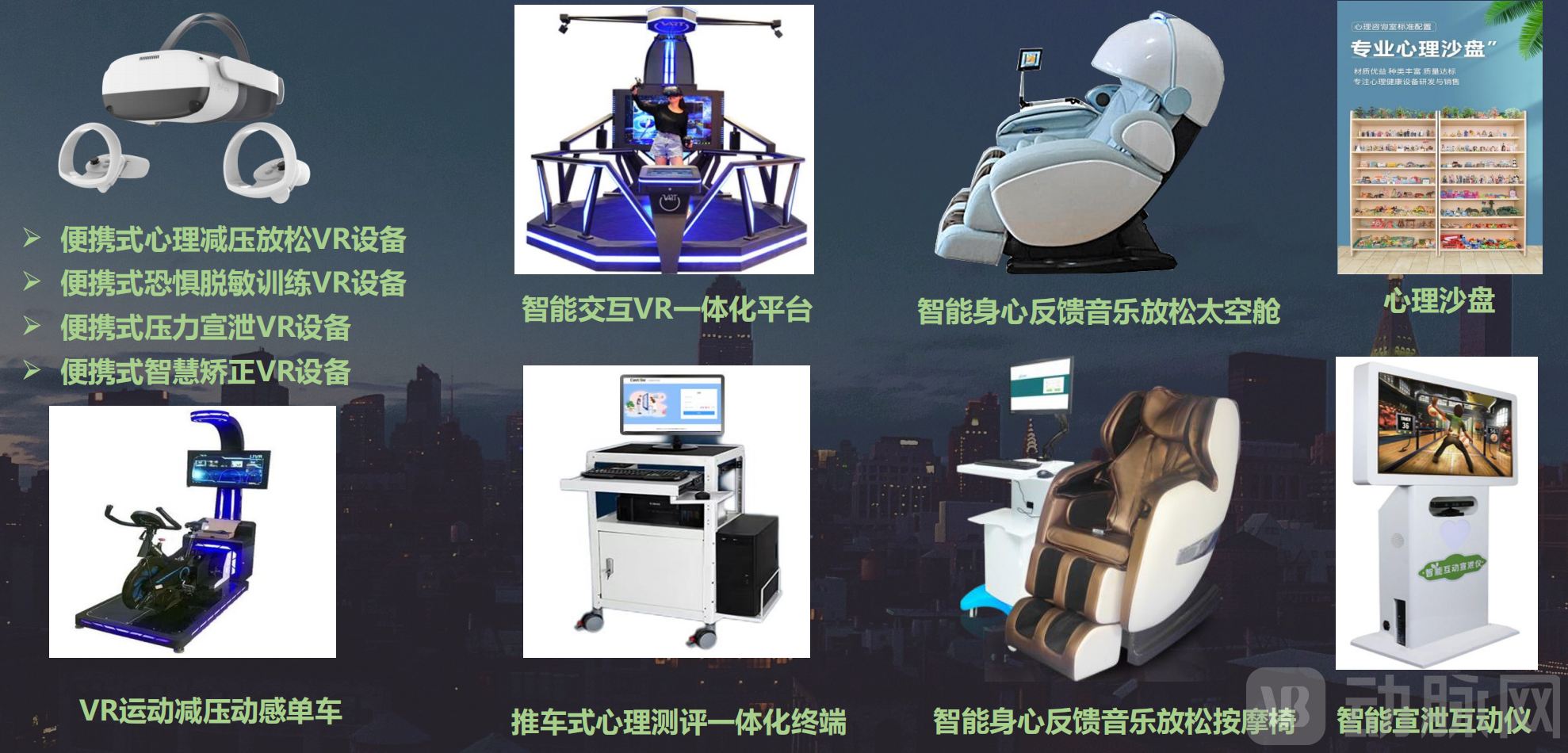
Cishu Health: Selected Hardware Devices
It is worth noting that,Building on this foundation, Cishu Health’s business scope has gradually expanded into the fields of hardware devices and digital therapeutics for mental health.
For example, VR rehabilitation devices designed for scenarios such as acrophobia, claustrophobia, social phobia, anxiety, depression, stress relief and relaxation, and emotional catharsis; VR wearable devices suitable for internet-enabled rehabilitation scenarios involving mild to moderate multi-morbidity, online courses, stress relief, and emotional catharsis; and conversational AI robots tailored for attention deficit hyperactivity disorder (ADHD), early childhood autism, adult autism, and Alzheimer’s disease. Currently, all three categories of products are in the pre-research phase.
Meanwhile, digital psychotherapy products such as internet-based ACT, digital music therapy, digital mindfulness, and meditation therapy are still in the stages of modeling or data training.
“Currently, the domestic mental health services market is still in a very early stage, which means this sector is full of development opportunities. For instance, digital therapeutics can not only liberate the productivity of psychiatrists and psychological counselors but also extend their service radius and availability. Furthermore, while there are currently no chain-operated psychological counseling institutions in China, drawing parallels from the dental care sector, there is significant potential for the chain expansion of mental health service providers,” summarized Zhang Yu. “The goal of Cishu Health is to establish itself in mental health services and education, ensuring high-quality sustainability, and to become a provider of digital rehabilitation products and solutions for various mental health conditions.”