

Valera Health Files IPO Prospectus Highlighting Specialized Mental Health Services for SMI and Underserved Communities

Windham Ventures Partners
Venture Capital Firm

AXA Venture Partners
Venture Capital Fund

Cigna Ventures
Venture Capital Firms

Heritage Group
Venture Capital Firms

Valera Health
Remote Mental Health Service Provider

Aquiline
Private Equity Investment Firms
In recent years, mental disorders have garnered widespread global attention, and the mental health market that has emerged in response is growing steadily.
Countless startups have flooded the mental health services market, introducing a myriad of innovative models: internet-based diagnosis and treatment plans, psychological counseling platforms, community support groups, and broader psychosocial services. In contrast, Valera Health has focused its attention on individuals with severe mental illness (SMI) and other special populations.
Valera Health, founded in 2015 and headquartered in Brooklyn, New York, is a mental health services company that leverages data analytics and mobile applications to deliver mental health care.
In October 2022, Valera Health announced the completion of a $45 million venture financing round. The round was led by Heritage Group, with participation from Cigna Ventures, Horizon Healthcare Services, Windham Ventures, AXA Venture Partners, and Aquiline Technology Partners, among others.
The company intends to use these funds to provide high-quality mental health care and expand its partnerships with health systems and health plans across the United States.
Valera Health’s team comprises clinicians, technologists, and operations experts—a fairly common composition. What sets it apart is Valera Health’s focused attention on individuals with serious mental illness (SMI) and other specialized populations. This strategic emphasis is closely tied to co-founder Thomas Tsang’s upbringing and career trajectory.
Thomas Tsang is an Asian American who previously served as Chief Marketing Officer at a subsidiary of Merck & Co. Prior to that, he operated a community-based primary care clinic. This comprehensive community clinic catered to Asian Americans in New York’s Chinatown, providing services to uninsured individuals.
Later, he became involved in the Obama healthcare reform (ACA:Patient Protection and Affordable Care Act) where he met another co-founder, Sachin Jain. He subsequently worked at a Federally Qualified Health Center (FQHC) serving Asian immigrants in New York City.

Co-founder Thomas Tsang
In his previous work, he accumulated experience in digital solutions and public health. After he and his family members successively experienced some mental health issues, he gradually realized the lack of services in the mental health market.
Thomas Tsang serves as the Chief Executive Officer of Valera Health. Under his leadership, Valera Health is dedicated to meeting the demand for behavioral telehealth services, providing insurance coverage and treatment for individuals with mild, moderate, and severe mental health conditions.
Furthermore, it serves BIPOC (Black, Indigenous, and People of Color) and LGBTQ (an umbrella term for all non-heterosexual individuals) communities, aiming to provide users with a diverse, multilingual network. Over 50% of the clinicians on the platform are Black, Hispanic, or Asian.
Telemedicine is no longer a novelty. Valera Health is dedicated to building a thoughtful, comprehensive model of therapeutic and medical services. This model not only provides patients with high-quality telemedicine care but also makes the entire process more convenient.
Comprehensive Service Model for AMI and SMI
Mental illnesses are primarily categorized into Any Mental Illness (AMI) and Serious Mental Illness (SMI). AMI refers to various behavioral, mental, and emotional disorders that can affect individuals to varying degrees, ranging from mild or limited impairment to severe disability.
SMI is an emotional, mental, or behavioral disorder that causes permanent functional impairment.such as schizophrenia, bipolar disorder, and substance use disorders. It also interferes with patients' normal daily functioning and restricts their activities.
Approximately 5% of the U.S. population is affected by serious mental illness (SMI), such as schizophrenia, severe bipolar disorder, and major depressive disorder. Furthermore, according to data from SMI Advisor, the annual economic cost of SMI exceeds $300 billion.
This objective reality presents mental health service companies with opportunities for innovation. However, treating severe mental illness (SMI) poses numerous challenges, such as the chronic nature of the conditions and low patient medication adherence. Meanwhile, because SMI symptoms are essentially lifelong, patients require long-term management, pharmacological treatment, and nursing care services.
Currently, most nursing care companies and community-based insurance providers are unwilling to accept patients with SMI.Many patients are unable to access care。
Valera HealthThis has filled a significant gap in the market. They advocate for a comprehensive service model that serves patients with mild, moderate, and severe cases.
on the Valera Health platformPsychiatrists, counselors, and nurse practitioners can provide regular, interval-based treatment and care for patients with SMI. Individuals with SMI can receive the necessary private care at home. Patients can continue to see the same doctor while undergoing medication treatment.
Accepts Medical Insurance
In the market, over 60% of mental health service platforms do not accept medical insurance, meaning they do not serve patients using Medicaid or private insurance.
Valera HealthAccepts a wide range of insurance plans, including government-sponsored programs such as Medicaid and Medicare. This meets the needs of a large patient population and reduces patients’ out-of-pocket costs for services.
It has partnered with many popular insurance plans to facilitate patient access, including Aetna, Anthem, BCBS MA, BCBS TX, Beacon, CDPHP, Cigna, Clover Health, Empire BCBS, HealthFirst, Horizon BCBS, and Humana.
Some of Valera Health’s Insurance Partners
Services for Special Populations
Valera HealthCollaborate with the broader population. Those who lack understanding of LGBTQ andBIPOC Servicescommunity, and is also a partner of Valera Health. Meanwhile,Valera Health alsois one of the largest Chinese and Spanish internet service providers.
On the Valera Health platform, many therapists, nurse practitioners, and psychiatrists come fromLGBTQ andBIPOC. The platform relies onThese specialized teams provide approachable services to specific populations. This inclusive approach has also attracted a large wave of users to the platform.
Safeguarding the Rights and Interests of Mental Health Professionals
In the psychological counseling industry, nearly 40% of counselors are independent contractors—freelance professionals who specialize in undertaking projects commissioned by enterprises.. Compared with formal employees, independent contractors have unstable working hours and are not protected by most labor laws in their work.
Unlike most mental health service platforms, Valera Health’s counselorsAs full-time employees, they are entitled to full benefits. This helps safeguard the safety and rights of platform staff while attracting more high-quality talent.
Personal Psychological Counseling
Valera Health believesMental health care should be simple, convenient, and low-cost. For individual psychological counseling,Valera Health has designed a streamlined care program:
1. Use the health service platform software to schedule a free consultation for the user; the platform will call the user directly at the scheduled appointment time. The user only needs to ensure they are in a quiet space where they can speak.
2. During the consultation, the platform will assess the user’s needs and address any questions they may have, then match the user with a qualified helper and arrange their first session.
3. The user's care team will collaborate with the user to develop a treatment plan to achieve the user's goals.
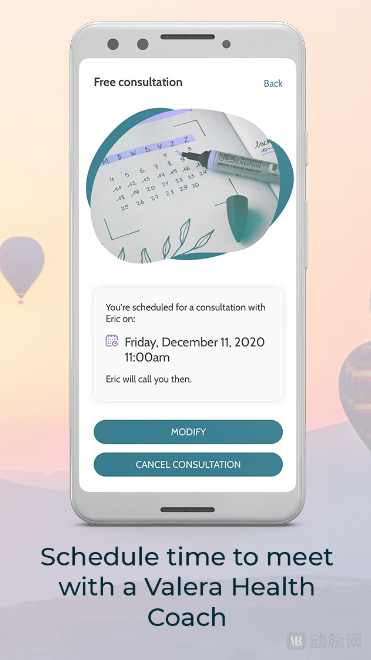
Valera Health’s Digital Platform
This approach engages patients in their own healthcare, helping to enhance their self-efficacy during the care process and thereby promoting effective recovery of their mental well-being. Higher patient engagement can also reduce healthcare costs.
Mature Collaborative Diagnosis and Treatment Model and Referral Mechanism
Individuals with mental disorders typically require long-term management, pharmacological treatment, and nursing care. However, most psychiatrists follow up on patients’ clinical courses through outpatient visits, a method that is not only inefficient but also prone to issues such as inadequate follow-up and low medication adherence among patients.
Furthermore, during the care process, patients require not only a psychiatric diagnosis to confirm their condition but also appropriate psychological counseling and psychotherapy as interventions.
Valera Health has brought together psychiatrists, psychotherapists, counselors, nurse practitioners, and other professionals.Provide assisted care. Remote collaborative care teams utilize shared care plans to monitor and engage in patients’ diagnosis and treatment processes, thereby enhancing the efficiency of patient management.
Valera Health also providesPsychiatrists have established a comprehensive referral mechanism that enables the provision of services to clinicians and psychiatric patients within seven days following referral.
When a physician refers a patient toBefore Valera Health, a referral form needs to be filled out.Valera Health againTailor care plans to each unique situation, ensuring that the individual needs of both physicians and patients are met.Valera Health’s team will communicate and collaborate with physicians in real time,Ensure that patient care is coordinated.
Over the past decade, telemedicine and remote patient monitoring have developed rapidly. It is estimated that 7 million people use connected medical devices as part of their care plans. Surveys show that 72% of patients believe mobile health devices have a positive impact on their health-related decision-making.
Over the past seven years since its founding, Valera Health has continuously optimized its service solutions, longitudinally tracked patient treatment outcomes, and consistently improved the efficiency of care management staff.
Leveraging its high-quality services, Valera Health has established partnerships with multiple health systems and health plans, including the integrated benefits organization Carisk, the Emergency Health Network of Brooklyn, New York, and the Community Healthcare Network of Brooklyn, New York.
Currently, Valera Health collaborates with insurance companies in New York and Arizona, with its platform covering 12 million Medicare beneficiaries.
After 2020, due to the impact of the COVID-19 pandemic, many community healthcare facilities were forced to limit operating hours and close physical clinics. People turned to telehealth platforms for assistance. Valera Health rode this wave to success.
The challenges they are striving to address include ensuring patient access to care, managing healthcare costs associated with SMI, reintegrating patients into the community, and mitigating caregiver burnout, among others.
In a recent interview, CEO Thomas Tsang revealed that Valera Health’s next step is to move away from the fee-for-service (FFS) model, which itemizes provided services and charges separately for each.
We look forward to Valera Health’s future innovations.