

Where Is the Growth for Pharma SaaS After 100% EDC Penetration?
In May 2019, the pharmaceutical SaaS sector, typically characterized by its stability, experienced a sudden and dramatic shift. Dassault Systèmes of France acquired Medidata, the undisputed leader in the field, for $5.8 billion.
The repercussions of overseas acquisitions did not directly spill over into the domestic market. However, in response to the burgeoning Chinese pharmaceutical manufacturing sector, leading institutions specializing in pharmaceuticals and medical devices quickly reacted. Over the past year, nearly ten pharmaceutical SaaS-related companies secured financing, ranging from tens of millions to over one billion yuan.
Capital enthusiasm stems from demand. Over the 13 years from 2007 to 2020, China emerged as the third major global hub for clinical trials, driven by a nearly six-fold increase in the number of trials. Consequently, demand for downstream clinical trial services surged, with the related market size reaching RMB 45 billion in 2021.
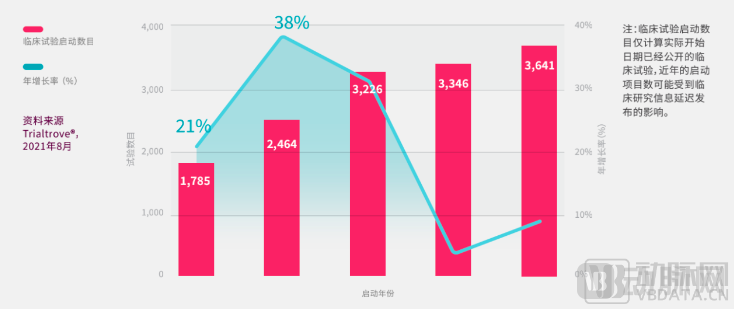 Phase I–IV Clinical Trials Initiated in China from 2016 to 2020 (Data Source: “Landscape of Clinical Trials in China”)
However, perpetual growth is an ideal rather than a reality. As the external environment for domestic biotech companies begins to deteriorate, the development prospects for clinical trial services have also become uncertain.
At the peak of the trend, participants reap substantial dividends. However, as cost-cutting becomes the norm for pharmaceutical companies of all types, how can pharmaceutical SaaS providers, as service vendors, maintain their competitiveness in long-term operations?
For a long period, the growth in scale of China’s pharmaceutical SaaS sector relied on “compliance” solutions driven by increasingly stringent regulatory policies.
When the “722 Incident” occurred, the adoption of electronic data capture (EDC) systems in China was just getting underway. In its aftermath, domestic pharmaceutical companies exhibited an unprecedented demand for clinical trial compliance, prompting the emergence of a wave of pharmaceutical SaaS companies that built their products around these compliance needs and secured their first major profits in this field.
However, the market for essential needs rises and falls rapidly. After seven years of development, the adoption rates of products such as EDC, RTSM, and PV at clinical trial sites have reached 90–100%, achieving near-complete market coverage.
It is not easy to seek incremental value under compliance requirements. Enterprises prioritize standardization over other aspects, so their compliance-related products are often designed around regulatory needs, resulting in serious homogenization. Only secondary factors such as user habits and interface design can carry innovation, but these elements are subjective and make it difficult to build product barriers.
To overcome the inertia brought about by standardization, pharmaceutical SaaS must leverage the intrinsic value of clinical data. This means that relevant companies can no longer develop products solely based on IT thinking; they must integrate medical knowledge into their offerings and shift their R&D focus toward "digital intelligence."
“Digital-Intelligent Transformation” refers to empowering participants in clinical trials through the application of technologies such as big data, artificial intelligence (AI), and cloud computing. By optimizing delivery methods and processes across all stages of clinical trials, this “digitalization + intelligence” approach enhances the precision, safety, and efficiency of clinical trials, reduces costs, and improves overall effectiveness. Ultimately, it fosters a win-win outcome for all stakeholders involved, including trial participants (subjects, physicians, and practitioners) and participating organizations (clinical trial centers, sponsor pharmaceutical companies, and contract research organizations [CROs]).
Compared with traditional products that focus on data scraping and data processing, digital-intelligence products build upon the former by incorporating “data application” and “intelligent processing.”

Degree of Demand for Technical and Medical Knowledge Across Various Stages of Data Collection
In 2020, the FDA approved the use of Medidata’s AI Synthetic Control Arm (SCA) solution in a Phase III registrational trial of MDNA55 for recurrent glioblastoma (rGBM) conducted by Medicenna Therapeutics, a U.S.-based clinical-stage immunotherapy company. This marked the first approval of a hybrid external control arm in a Phase III trial and represents a typical case of “data application” within pharmaceutical SaaS.
Interleukin-4 receptor protein therapeutics are the main component of MDNA55, which can induce cancer cells to absorb and take up the drug and release toxins, leading to immunogenic cell death. However, due to difficulties in recruiting and retaining trial participants, the trial once fell into a dilemma of having no available subjects.
On one hand, MDNA55 is a targeted therapeutic macromolecule that cannot cross the blood-brain barrier and must be delivered directly to the tumor during administration, making it impossible to conduct controlled trials with a placebo-recruited control group. On the other hand, patients with recurrent glioblastoma have limited survival times, and many urgently needing treatment decline to participate in trials due to concerns about being assigned to the control group.
To address Medicenna’s needs, Medidata first designed a hybrid control arm protocol for the Phase III trial based on the results of the MDNA55 Phase II trial. It then leveraged its own database, which contains de-identified data from more than 7 million patients, to construct a synthetic control arm that matched the patient characteristics. Finally, Medidata employed propensity score matching, a statistical method, to ensure that the synthetic control arm was well-balanced and provided an appropriate comparison with the treatment arm.
Over the past 20 years, no therapeutic intervention for this disease has improved patient survival rates by 25%. By leveraging synthetic head-to-head controlled trial data, Medidata successfully demonstrated the monotherapy value of MDNA55, which more than doubles the survival rate of patients with recurrent glioblastoma.
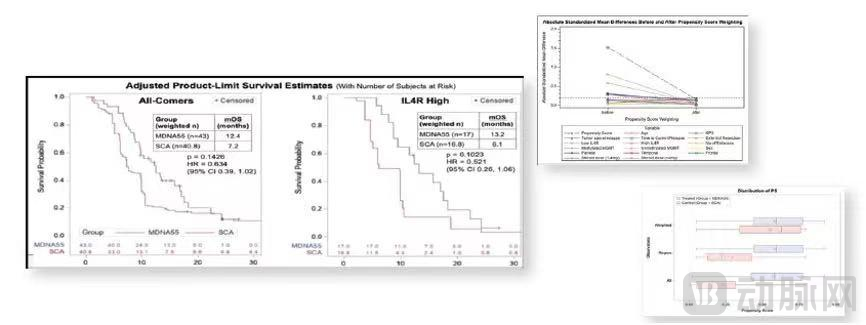
The successful application of synthetic control groups represents a milestone breakthrough in contemporary clinical trials and pharmaceutical R&D innovation. It signifies that, by leveraging comprehensive data support from effective intelligent tools and adhering to proper workflows and recommended procedures, many inherent challenges of traditional clinical trials can be circumvented.
In the realm of rare diseases and other complex, refractory conditions, R&D progress has consistently yielded limited results due to the unique characteristics and small population size of these patient groups. If reliance remains on traditional clinical trials, many promising therapies that could offer hope to these patients risk having their development halted during Phase II or even earlier stages.
Today, the emergence of SCA solutions has opened up new possibilities for the research and development of such drugs. Medications that were once hindered by failed clinical trial approvals may now leverage the power of big data and AI to reshape patients’ lives.
Data-driven drug R&D resources and experimental methods can generate increasingly large-scale biological experimental datasets, providing biotechnology companies with a distinct advantage. However, to complete the construction of a closed-loop data application system, enterprises must also develop AI with robust data mining capabilities to enable better early-stage decisions, thereby shortening project delivery timelines and reducing participant dropout rates.
Taking CAR-T therapy research as an example, numerous research institutions both in China and abroad are actively pursuing data-driven drug development. Chimeric Antigen Receptor T-cell (CAR-T) therapy is regarded as one of the most promising approaches for cancer treatment; however, it may be associated with severe adverse effects, such as cytokine release syndrome (CRS). Using Medidata as another example, the company has partnered with Dr. Michael Kattan’s team at the Cleveland Clinic to leverage big data modeling techniques in an effort to identify biomarkers that can predict the likelihood of patients developing severe CRS.
This year, Medidata presented these research findings at ASCO, the world’s largest clinical oncology conference. The study analyzed longitudinal data from 542 patients enrolled in various trials of autologous anti-CD19 CAR-T cell therapies, with biomarker data collected at multiple time points throughout the trials. By tracking biomarker data over time, the study not only ensures that the results are actionable but also helps physicians administering CAR-T therapy identify early signs of cytokine release syndrome (CRS) and intervene before it becomes life-threatening.
Research analysis indicates that delayed recovery of hematopoietic function is a typical clinical feature of severe CRS phenotypes. Arnaub Chatterjee, Senior Vice President of Medidata AI Products and Ecosystem, stated, “Our study paves the way for further in-depth investigation into predictive factors for CRS. This includes identifying high-risk patients based on baseline characteristics such as tumor burden, ECOG performance status, demographic parameters, and medical history, as well as establishing correlations between CAR-T and T-cell therapy dosing and the incidence and severity of CRS.”
These groundbreaking results indicate that establishing correlations among common biomarkers can enable physicians to better monitor patients. By regularly monitoring novel Risk Evaluation and Mitigation Strategies (REMS) based on common laboratory markers, physicians can diagnose the risk of Cytokine Release Syndrome (CRS) at an early stage and initiate timely diagnosis and treatment.
Of course, Medidata’s AI capabilities are not limited to the clinical trial phase. Currently, Medidata has established independent AI deployments across every stage of new drug development. Within a constrained timeframe, it has the capacity to replicate the AI capabilities demonstrated in CAR-T therapy in scenarios such as biomarker screening and efficacy and toxicity testing.
If one adheres strictly to the logic that “technological change transforms industries,” Medidata’s success, accumulated over nearly two decades, can easily be simplified as a result of its leading corporate strategy and technological innovation.
However, a detailed analysis of each case from this company reveals that the ultimate foundation for optimizing clinical trial practices is “patient-centricity,” a concept that remains elusive to many B2B pharmaceutical and medical device companies.
Therefore, the R&D logic for pharmaceutical SaaS should not merely involve integrating IT with research and development processes; rather, it must leverage medical expertise to target various patient-centric pain points, ensuring that the advancement of clinical trials remains aligned with patient interests.
After all, patients are the most important core of clinical trials.
To learn more about Medidata AI, click:https://www.medidata.com/cn/clinical-trial-products/medidata-ai/?utm_source=wechat&utm_medium=smp&utm_content=medidataAI&utm_campaign=ap-cn-q123-VBDATA