

From Product Export to Global Branding: Strategies of China's Leading Medical Device Companies

Endovastec
Developer and Manufacturer of Aortic and Peripheral Vascular Interventional Medical Devices

Surgnova
Provider of Comprehensive Solutions for Minimally Invasive Surgery

Bluesail Medical
Producers of Medium-Low Value Consumables and High-Value Medical Devices

Mindray
Medical Device R&D Manufacturer

Hotgen
In Vitro Diagnostic Technology and Innovative Product R&D, Manufacturer
As the impact of the pandemic gradually recedes, multiple regions have launched waves of initiatives to help enterprises expand overseas and secure orders, targeting international markets with a resolve to reclaim the “lost three years.”
For example, a delegation of nearly 100 Shenzhen-based companies from the medical device and technology sectors, organized by the Shenzhen Municipal Bureau of Commerce, traveled to multiple countries to participate in high-profile international exhibitions and engage in business exchanges. At the MEDICA trade fair in Düsseldorf, Germany, alone, the delegation secured orders exceeding USD 45 million.
The pandemic has served as a catalyst for reshaping the global landscape of the medical device industry. Coupled with centralized procurement and the intense domestic competition (“involution”) among Chinese medical device companies, going global has become a critical breakthrough point for many domestic firms to unlock their second growth curve. However, expanding overseas is not something that can be achieved overnight. While international expansion helps many companies break through revenue “ceilings” and access broader global market opportunities, it also exposes them to greater challenges.
"In the investment field, there is a saying,"Without the Chinese market, you cannot achieve scale; without the global market, you cannot build strength.。
According to data released by the China Chamber of Commerce for Import and Export of Medicines and Health Products, China's medical device exports totaled USD 44.045 billion in the first half of 2022, with shipments reaching 220 countries and regions. From a single-market perspective, the United States, Germany, and Japan were the primary export markets, accounting for USD 15.499 billion, or 35.19% of China's total export value.
In recent years, driven by the impact of the pandemic and the intense competition stemming from centralized procurement, the global expansion of medical device companies has become an inevitable trend. With the overseas population being four times that of China, the international market offers at least four times the capacity of the domestic one. Therefore, going global is not only a blue-ocean opportunity but also a strategic imperative for Chinese enterprises.
From the perspective of medical device market segments, exports of protective medical dressings such as masks and protective suits continued to decline significantly. From January to June, exports of medical dressings amounted to USD 4.173 billion, a year-on-year decrease of 56.87%. Meanwhile, exports of disposable consumables also showed a downward trend, with export value reaching USD 15.722 billion from January to June, a year-on-year decrease of 14.18%.
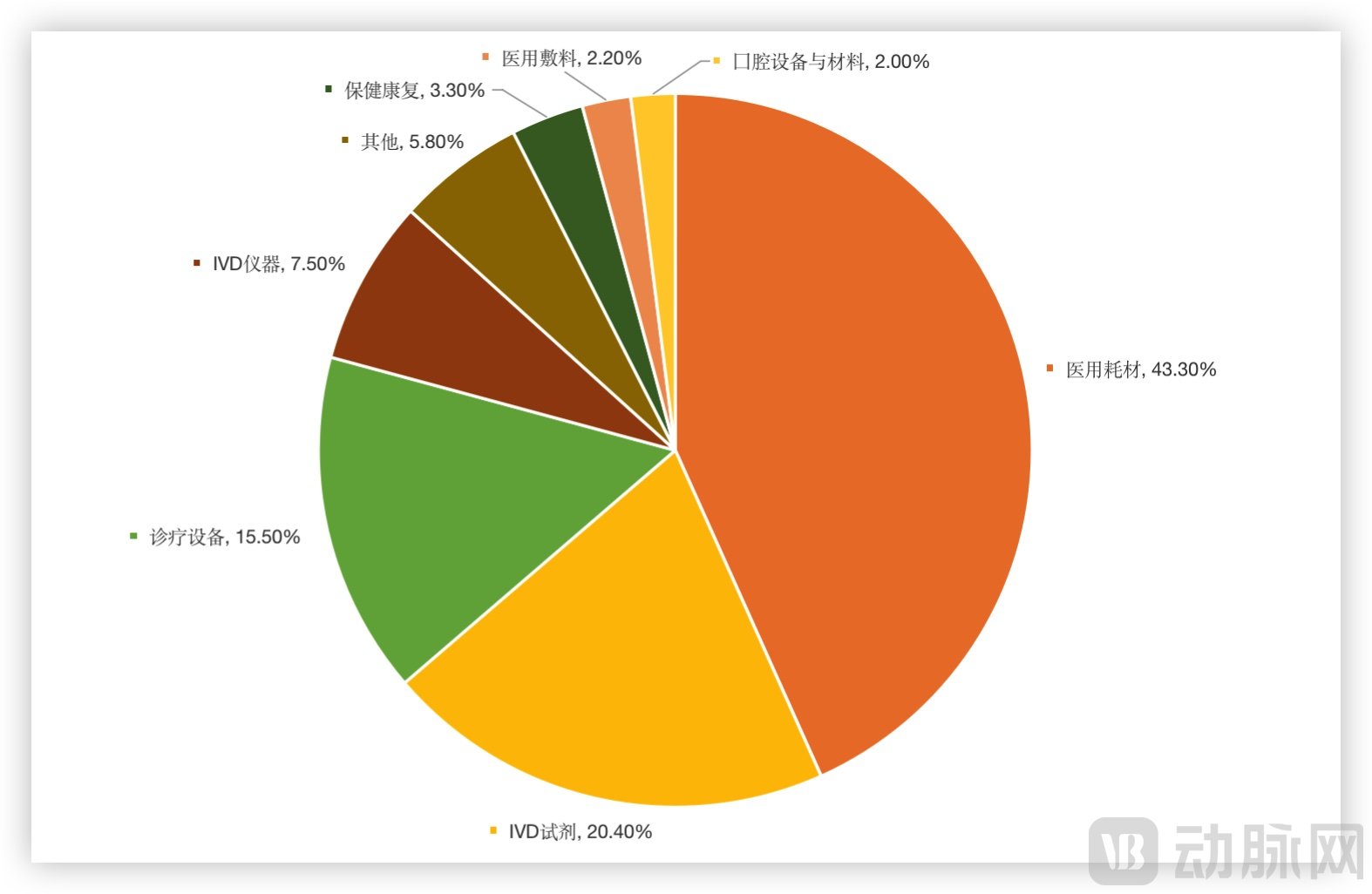
Share of Major Medical Device Export Commodities in 2021, Data Sourced from the General Administration of Customs
From the perspective of product categories, medical devices are mainly divided into four major segments: medical equipment, in vitro diagnostics (IVD), high-value consumables, and low-value consumables. The aforementioned decline in exports pertains to low-value consumables. These products generally have low technological content and low prices, with revenue primarily relying on contract manufacturing. As the impact of the pandemic wanes, the high sales volume of such products is not sustainable.
Furthermore, as centralized procurement becomes normalized, global expansion has become a critical issue for medical device companies, particularly regarding how to transition from the low-value consumables sector to high-value-added medical devices. Previously, Chinese medical device enterprises had relatively weak brand recognition and channel presence overseas; however, the pandemic accelerated the international acceptance of Chinese medical device brands and facilitated channel expansion. For Chinese medical device companies, going global offers vast opportunities, but they must also avoid potential pitfalls.
In terms of market size, North America and Europe constitute the first tier. According to estimates by the market research firm IBISWorld, the U.S. medical device market reached $235.2 billion in 2020, while the European medical device market exceeded €100 billion. However, whether companies should prioritize the U.S. and European markets for international expansion requires a case-by-case analysis based on their specific circumstances.
Statistics on past medical device exports show that Class I and II devices predominate, while Class III devices are relatively scarce. Due to regulatory requirements, market entry for Class III devices is extremely difficult and costly. For example, successfully registering a coronary stent in the United States requires an investment of at least tens of millions of dollars, along with a prolonged period of clinical observation. Even after successful registration, manufacturers must still contend with competition from industry giants such as Medtronic and Boston Scientific.
Faced with the massive sales teams of these industry giants, it is difficult to compete if only one or two products have obtained regulatory approval. From a cost perspective, maintaining a sales team for just a few products is not economically viable. Therefore, for companies specializing in Class III medical devices, it may be advisable to adopt a “rural areas encircling the cities” strategy. Since direct competition in the US and European markets is not currently feasible, these companies can pursue differentiated competition in secondary markets such as Asia and Latin America.
For instance, Southeast Asia has a combined population of over 620 million, approximately half that of China, underscoring the significant scale of this market. As Southeast Asian countries increasingly embrace Western dietary culture, unhealthy lifestyle habits such as overeating and frequent consumption of fast food are prone to increasing the risks of diabetes and cardiovascular and cerebrovascular diseases.
Consequently, Southeast Asian countries have raised their medical insurance coverage limits in recent years. For instance, Thailand’s per capita coverage increased from $73 to $220, and India’s rose from $36 to $150 per capita. Additionally, Indonesia’s healthcare industry grew from $25 billion to $50 billion in 2020. The increasing emphasis on medical insurance in Southeast Asia indirectly underscores the importance of medical devices for the region’s population.
By first establishing a strong presence in these markets to accumulate sufficient cash flow and foreign trade experience, companies can approach higher-tier markets with greater ease.
Meanwhile, for startups, blindly competing with industry giants in the US and European markets during their growth phase—when their product portfolios are not yet fully developed—offers limited risk resilience. It is more advisable to accumulate experience and grow in secondary markets, evolving from a single-product company into a comprehensive solution provider. This approach fosters greater risk resilience and enhanced competitiveness.
For instance, when MicroPort Medical launched its first-generation coronary stent, its product competitiveness was not yet prominent. However, through continuous R&D and iterative improvements, the company has not only diversified its product portfolio but also developed comprehensive solutions for aortic diseases and peripheral vascular diseases, thereby significantly enhancing its overall competitiveness.
Ultimately,The core criterion for selecting overseas markets lies in whether pricing power can be secured.. The European and American markets are home to numerous local medical enterprises, whose production, R&D, and service capabilities grant them significant pricing power. When entering these markets, Chinese-made medical devices mostly rely on OEM or trading models, failing to secure core pricing authority. In contrast, in secondary-tier markets, Chinese products can more easily establish a competitive advantage, thereby gaining pricing power and boosting their own revenue.
Overseas markets value and recognize differentiation.。
Many enterprises have attempted to penetrate local markets by participating in trade shows. However, the reality is that overseas markets often lack awareness of, or even harbor resistance toward, Chinese medical devices, with the exception of low-value consumables. Frontline clinicians abroad still perceive domestically produced medical devices as merely inexpensive, low-value consumables. To encourage them to trial high-value Chinese-made consumables, it is essential to provide compelling and convincing rationale.
Differentiation is the best rationale.
For example, with coronary stents, the duration of dual antiplatelet therapy (DAPT) after implantation is one year for coated stents, whereas it can be as short as one month for uncoated stents. In domestic tendering processes in China, these characteristics are disregarded; all stents are assigned the same price regardless of such differences. In contrast, international markets allow for differentiated pricing systems based on distinct product features.
If improvements are made to address key pain points, such differentiation is more likely to be well received. For example, Surgnova chose to conduct a surgical roadshow with its German distributor prior to the 2019 Cardiovascular and Interventional Radiological Society of Europe (CIRSE) Annual Meeting. Over the course of one week, microwave ablation procedures were performed at seven renowned university hospitals, including several high-difficulty cases that other products could not handle. Thanks to the superior performance of its product, Surgnova quickly established a strong reputation in the field of interventional oncology in Germany.
With this foundation in place, German physicians brought many of their European peers to the subsequent annual meeting of the Cardiovascular and Interventional Radiological Society of Europe (CIRSE). This enabled Surgnova to secure a position among Europe’s top interventional experts and leverage this opportunity to enter other markets, such as France. As a company without any established brand recognition or reputation, Surgnova relied on product strength and technological differentiation to break into overseas markets.
Differentiation is not only reflected at the technical level but also proves valuable in product design.
Taking Hotgen as an example, its COVID-19 antigen rapid test kit received special marketing authorization from the German Federal Institute for Drugs and Medical Devices (BfArM), driving a year-on-year performance increase of over 1,000-fold in the first quarter of 2021. Beyond reliable product quality and timely regulatory submission, Hotgen’s design choice to make its test cassettes longer than those of competing products played a significant role in this success. Customers may not recall the product name, but they will ask for “the longest one.”
A design that adds minimal cost makes the product stand out among its competitors.Product differentiation not only enhances competitiveness but also facilitates marketing and promotion.。
In the past, “going global” focused more on the “products” themselves, with cost-effectiveness as the main selling point, representing an overflow of China’s manufacturing and operational capabilities. In the future, the approach of going global merely by mass distribution and volume sales will gradually be phased out. Only high-quality brands that truly adhere to “long-termism,” possessing differentiation, competitiveness, innovation, and compliance, will have the opportunity to navigate further in the global market and grow into international brands with a global perspective.
There are two key priorities for expanding products into overseas markets:First, the "internationalization" of the brand system; second, the implementation of a "localized" execution strategy.。
Internationalization refers to a global mindset that, guided by corporate strategic deployment, maximizes opportunities for products to enter overseas markets. Products and services should strive to meet the needs of users across diverse regions, cultures, and languages. At the execution level, factors such as culture, regulations, visual design, communication, and interaction must be carefully considered to enable products to adapt to the evolving dynamics of local markets.
For overseas markets, Chinese companies expanding globally are often identified by a single label: “Chinese company.” To enrich this perception, enterprises must make greater efforts to enhance product experience and build brand awareness and trust.
Strengthening clinical collaboration and interactive engagement with physicians, as well as participating in various academic conferences and prestigious exhibitions, are merely the basics. It is also essential to stay close to customers, gain an in-depth understanding of their habits, identify key priorities within the nuances of their latent needs, and drive proactive innovation across multiple touchpoints.
For instance, regarding the handle design of ultrasonic scalpels, since European and American physicians generally have larger hands than their Asian counterparts, some brands have specifically developed larger-sized international versions to enhance ergonomic comfort and operational ease for surgeons in Western markets. Furthermore, details such as button layout, color schemes, and user interface design must also accommodate the varying usage habits of physicians across different countries. Only by making proactive investments at every stage can previously entrenched perceptions be reversed.
Certainly, in addition to building one’s own brand, there is another strategy—acquiring existing brands.
For example, by acquiring Biosensors International, the world’s fourth-largest cardiac stent manufacturer, Bluesail Medical not only expanded its business from low-value consumables into the high-value consumables sector, but also leveraged Biosensors International’s brand and sales network to rapidly establish a presence in the overseas high-end medical device market.
MicroPort Medical has acquired the German company hemovent GmbH, a developer of innovative extracorporeal life support systems. This acquisition enhances MicroPort’s overall presence in the critical care sector by leveraging synergies in research and development, manufacturing, and sales between its existing cardiopulmonary bypass and ECMO products for cardiac surgery. It enables the company to provide more systematic and comprehensive solutions for critical care, while also establishing a long-term strategic foothold for deeper penetration into the European Union market.
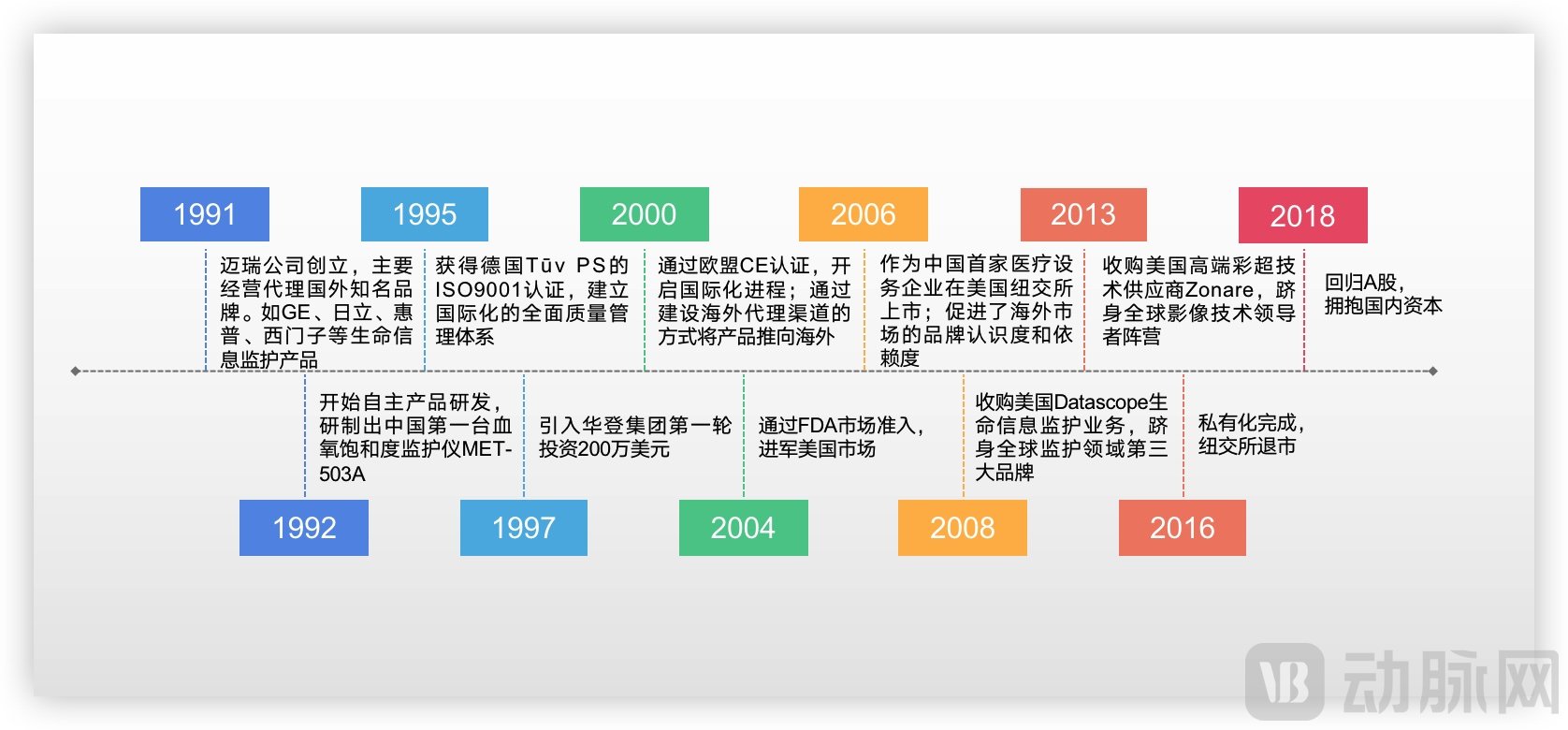
Mindray's Global Expansion Journey
When it comes to building a brand image overseas, Mindray is a name that cannot be overlooked. In the United States, which has the highest barriers to entry and the most stringent technical regulations, Mindray’s products have entered approximately two-thirds of hospitals, with nine of the top ten cardiac hospitals nationwide using its solutions. Meanwhile, in Europe, Mindray provides high-quality comprehensive solutions to core departments in more than 100 leading teaching hospitals.
In brief, Mindray has progressed through three stages: “going out” by entering overseas markets, “going in” by gaining product acceptance, and “moving up” by establishing brand recognition. Market-driven, Mindray continuously enhances its innovation capabilities through sustained R&D efforts and industry–academia–research collaborations, thereby maintaining a competitive edge in product development and innovation and building its brand image.
The higher the brand value, the stronger the enterprise's risk resistance.Pursuing global brand expansion and building brands with greater resilience and distinctiveness will become an inevitable choice for an increasing number of Chinese enterprises in the future.
The medical device industry is a strategic sector characterized by multidisciplinary integration, knowledge intensity, and high value-added, with high barriers to entry, serving as one of the indicators of a country’s manufacturing and technological prowess. This also implies that the medical device market is subject to stringent regulatory approval requirements.
Regardless of the country, the medical device industry is subject to stringent regulation; therefore, the greatest challenge for companies expanding overseas lies in navigating changes in policies and regulations. Regulatory requirements are not mutually recognized across many international markets, as each country has its own distinct regulatory authorities for medical products. Compounded by issues such as mismatches in overseas clinical resources and language barriers, these factors have hindered the global expansion of many Chinese enterprises.
For medical device companies, the journey often begins with a founder and core technology, followed by fundraising, team recruitment, and expansion of the R&D workforce, while also addressing clinical trials and manufacturing. Due to the unique nature of medical devices, a company in its growth stage cannot afford to maintain a complete, experienced team; instead, it must allocate its limited resources to the development of core products.
Under such circumstances, it is easy to imagine the difficulty for enterprises to independently achieve overseas market access. Merely conducting clinical trials and handling regulatory submissions requires a team of professionals to properly execute tasks such as clinical trial protocol design, multi-center site selection, patient enrollment, data management and analysis, and preparation of clinical evaluation documents.
Most medical device companies are unable to assemble such teams, while traditional expert-led CRO services struggle to meet the diversified needs of highly fragmented device enterprises seeking global market access. Therefore, for medical device companies aiming to complete registration filings in a shorter timeframe and prioritizing time and cost efficiency,Partnering with highly specialized CRO service providers is a more efficient choice.。
The pandemic boosted China’s exports of anti-epidemic supplies, but as the impact of the outbreak gradually wanes, this dividend will not last long. Meanwhile, public health emergencies triggered by the pandemic have exposed weaknesses in healthcare systems across countries, prompting them to seek solutions.
For example, the EU’s EU4Health programme is expected to invest €5.3 billion over seven years (2021–2027) to build resilient health systems within the European Union, with €3.1 billion allocated to the strategic reserve of medical supplies. Spain has launched a €36 billion bailout plan, providing €1.4 billion to the Ministry of Health and €2.8 billion to regional health systems. Italy has also approved a €25 billion emergency aid package, planning to invest €3.2 billion to support healthcare.
The construction of public health systems cannot be achieved without the participation of medical devices, which presents an opportunity for domestic medical device companies. Furthermore, in the post-pandemic era, governments worldwide will face greater fiscal pressure, making procurement entities more price-sensitive. Given the significant price advantages of Chinese-made medical devices, companies should seize this timely opportunity to expand and strengthen their operations. Global expansion is an imperative for the development of medical device enterprises; however, navigating these waters successfully requires continuous exploration and strategic experimentation by the companies themselves.