

WeDoctor's Liao Jieyuan Advocates Strengthening an Integrated 'Trinity' Healthcare System Amid COVID-19 Surge
China’s COVID-19 epidemic may experience “one peak with three waves” this winter, posing severe challenges to the healthcare service system. How can primary care hospitals, large hospitals, and internet hospitals collaborate efficiently to provide effective management, care, and treatment for individuals infected with COVID-19?
Recently, Gao Fu, an academician of the Chinese Academy of Sciences; Ma Jing, a professor at the Institute for Hospital Management, Tsinghua University; Liao Jieyuan, founder, chairman, and CEO of WeDoctor; Xue Li, chief researcher at the International Strategy Division of the Institute of World Economics and Politics, Chinese Academy of Social Sciences; and Lu Mengji, a professor at the Institute of Virology, University Hospital Essen, University of Duisburg-Essen in Germany, along with other domestic and international guests, engaged in an in-depth discussion on Phoenix Television’s flagship program “Tiger Talk.” The dialogue focused on topics such as building healthcare service systems amidst the waves of the COVID-19 pandemic.
On January 8, 2023, COVID-19 was officially reclassified as a Class B infectious disease under Class B management. Prior to this, with the release of the “Twenty Measures” and the “New Ten Measures,” social restrictions in China were gradually lifted. The subsequent surge in COVID-19 infections placed immense pressure on the healthcare service system, leading to strained medical resources and even overcrowding in some regions.
Citing the views of Wang Guangfa, Director of the Department of Respiratory and Critical Care Medicine at Peking University First Hospital, the program pointed out that the current peak of COVID-19 infections is not an ordinary surge but a pandemic “tsunami.” Jiao Yahui, Director of the Medical Administration Bureau of the National Health Commission, had previously stated that provinces currently experiencing a peak in severe cases are seeing their critical care bed resources approach critical thresholds.
In response, Academician Gao Fu stated, “We are in the midst of a pandemic crisis. The ‘danger’ is here, but where is the ‘opportunity’? Can we seize the opportunity amid the danger?”
Academician Gao Fu further stated that after years of advancing new healthcare reforms in China, there is now a need to shift public health perceptions. Chinese citizens are accustomed to queuing at large hospitals for treatment regardless of whether their conditions are minor or severe, which is highly detrimental to the prevention and control of infectious diseases. Instead, COVID-19 should be addressed through a graded, classified, and tiered approach based on the severity of symptoms. Academician Gao Fu also emphasized that while combating the COVID-19 pandemic, it is crucial to prevent and control the “infodemic.”
Professor Ma Jing also drew attention to the challenges inherent in the tiered diagnosis and treatment system for COVID-19. She noted that many hospitals have currently converted surgical wards into internal medicine respiratory beds, and national policies emphasize the need to increase the capacity of intensive care unit (ICU) beds by one to two times. Meanwhile, Beijing is currently opening up certain secondary hospitals to provide treatment beds for critically ill COVID-19 patients or for elderly and high-risk populations. “However, I must still emphasize the full utilization of community healthcare institutions and family doctors. Patients with mild or moderate COVID-19 should avoid seeking care at large tertiary hospitals whenever possible, so as not to strain medical resources, which should be reserved for critically ill patients in greater need.”
During this wave of the epidemic, in addition to large hospitals focusing on treating severe and critical COVID-19 cases and primary healthcare institutions providing services for patients with mild to moderate symptoms, internet hospitals were also “entrusted with significant responsibilities.” On December 12, 2022, the Joint Prevention and Control Mechanism of the State Council issued the Notice on Doing a Good Job in Internet Medical Services for COVID-19, marking the first time that initial online consultations for patients with COVID-19 symptoms were permitted.
Liao Jieyuan stated that, as the largest digital healthcare service platform in China, WeDoctor operates 32 internet hospitals across the country. At its peak, the platform handled over 800,000 consultations and patient visits in a single day, equivalent to the patient volume of dozens of Grade A tertiary hospitals. This has played a significant role in alleviating the burden on local healthcare systems by providing guidance and treatment for patients with mild COVID-19 symptoms and chronic diseases.
Wu Zunyou, Chief Epidemiologist at the Chinese Center for Disease Control and Prevention, has projected a “one peak, three waves” pattern for the winter epidemic. The first wave will occur from mid-December 2022 to mid-January 2023, primarily affecting urban areas. The second wave, expected from late January to mid-February, will see a rise in cases driven by pre-Spring Festival population mobility. The third wave will take place from late February to mid-March, coinciding with the return to work and duties after the Spring Festival holiday.
The 2023 Spring Festival travel rush has begun. According to a January 6 announcement from the Ministry of Transport, the total passenger volume during this year’s Spring Festival travel period is projected to reach approximately 2.095 billion trips, representing a 99.5% year-on-year increase. Experts predict that the large-scale population movements associated with the Spring Festival travel rush may trigger peaks in COVID-19 infections across various regions.
Chief Researcher Xue Li believes that it is difficult to address a pandemic of such magnitude through traditional tiered diagnosis and treatment, although global practices have demonstrated its efficacy. However, given China’s current epidemic prevention landscape, it is essential not only to leverage the role of internet healthcare platforms but also to achieve comprehensive coverage of residents by community health centers and general practitioners, which will require long-term implementation.
“Facing the peak of the COVID-19 pandemic, how to comprehensively leverage various healthcare service models to provide the most efficient care for COVID-19 patients is indeed a challenge,” said Liao Jieyuan. He stated that establishing a “tripartite” COVID-19 treatment system integrating primary care hospitals, large tertiary hospitals, and platform-based internet hospitals is an urgent priority and a significant trend.
This service model is also fully aligned with the national policies on epidemic prevention and control. On December 7, 2022, the Joint Prevention and Control Mechanism of the State Council issued the Work Plan for Implementing Tiered Diagnosis and Treatment of COVID-19 Based on Medical Consortia, which requires that regional medical resources be scientifically coordinated in accordance with the principles of “health monitoring, categorized management, vertical coordination between different levels of care, and effective treatment.” Leveraging medical consortia arranged in a grid-based layout as the carrier, the plan calls for improving the referral mechanisms among sub-designated hospitals, designated hospitals, medical consortia, and tertiary general hospitals collaborating externally with these consortia. It also proposes the use of information-based platforms and technological tools, such as internet hospitals and online diagnosis and treatment platforms.
Driven by the new healthcare reform policies and the full support of local governments, the “trinity” integrated medical service system proposed by the guests has already been implemented in Tianjin, Heilongjiang, Shandong, and other regions, achieving significant results.
According to Liao Jieyuan, in Tianjin, the Tianjin WeDoctor Internet Hospital took the lead in collaborating with 266 primary healthcare institutions across the city to establish the Tianjin Primary Care Digital Health Community. During pandemic prevention and control efforts, leveraging the digital connectivity and empowerment of the Health Community effectively enhanced the service capabilities of primary healthcare institutions. It integrated 2.06 million key populations, including elderly individuals aged 65 and above, into family doctor contracted services. On the basis of promoting interconnectivity between hospitals at different levels, it achieved grid-based management and treatment. Meanwhile, home-based medical security service functions were developed, offering online follow-up consultations, psychological support, telephone consultations, and medication delivery services, ensuring that homebound patients could access medical care without leaving their homes.
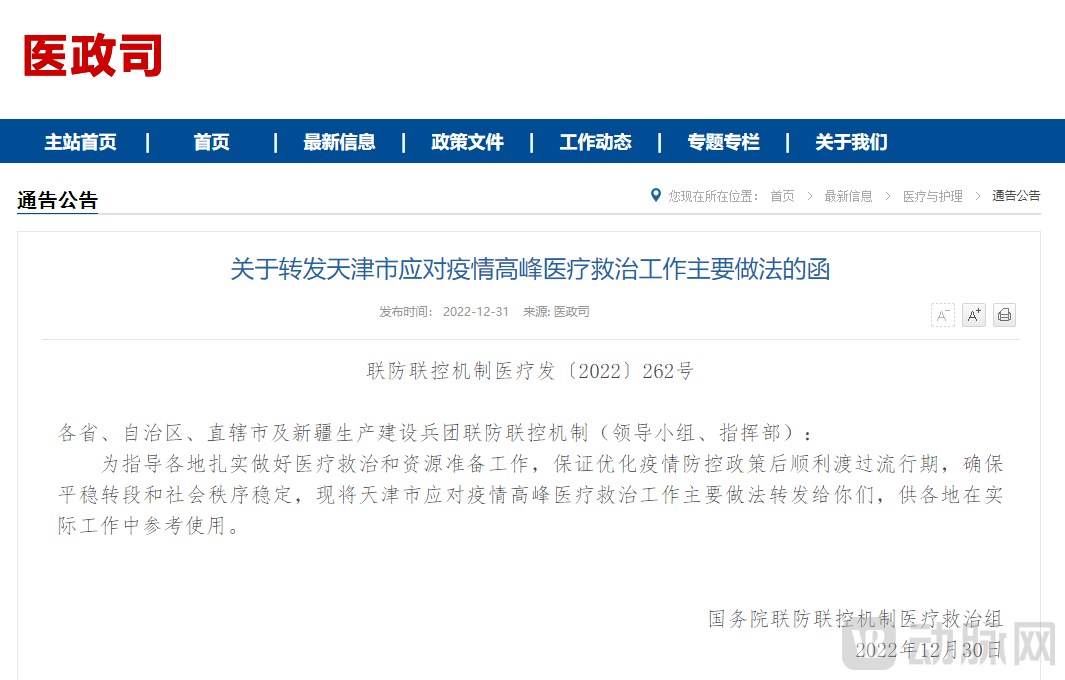
On December 31, 2022, the Medical Treatment Group of the State Council’s Joint Prevention and Control Mechanism circulated Tianjin’s key practices in medical treatment response to the pandemic peak for reference by localities in their practical work, highlighting the positive role of the Digital Health Community.
In Shandong, WeDoctor has partnered with the local government to jointly build a Digital Health Community and an Internet Hospital for Chronic Diseases. By establishing Chronic Disease Service Centers, it provides patients with comprehensive “in-hospital + out-of-hospital” and “online + offline” services covering diagnosis and treatment, health management, and medical insurance payment. Furthermore, by leveraging the “Vehicle, Kit, and Station” model (cloud mobile clinic vehicles, cloud mobile clinic kits, and medical and health workstations), services have been extended to vast rural areas, enabling primary care institutions to conduct online consultations, remote consultations, two-way referrals, and online prescribing, while also enhancing services such as family doctor contracting and health management. Recently, a home-based medical security service platform was urgently launched, further strengthening the “trinity” epidemic prevention and control network.
On January 8, 2023, under the unified deployment of the Heilongjiang Provincial Health Commission, WeDoctor supported the launch of the “Healthy Longjiang COVID-19 Medical Services” platform, providing grid-based, precision medical care and health management services to COVID-19 patients. The day before, WeDoctor facilitated the dispatch of mobile clinic vehicles for Heilongjiang Province’s “Healthy Longjiang” COVID-19 medical services, enabling sample collection at the village level, medication delivery to households, and medical consultations in homes, thereby establishing a county-level epidemic prevention and control grid centered on “mobile hospitals.”
“We have observed that establishing closely-knit internet medical consortiums based on platform-type internet hospitals has enhanced the capacity of primary healthcare services and enabled monitoring and service delivery for key populations,” said Liao Jieyuan. He emphasized that, despite current pressures, efforts should be devoted to consolidating the “trinity” service system by leveraging the respective strengths of primary care hospitals, large tertiary hospitals, and platform-type internet hospitals. Through close integration and mutual empowerment, these entities can work together to provide comprehensive, full-cycle health and medical services to individuals infected with COVID-19.