

AI Medical Imaging Makes a Comeback: Transitioning from 'Seeing Clearly' to 'Calculating Accurately'
January 10,Shanghai Sixth People's HospitalAnnounced the Establishment ofChina's First Clinical Magnetocardiography Center, will diagnose and treat cardiovascular and cerebrovascular diseases using magnetocardiography imaging technology.
The announcement immediately drew widespread attention from the medical imaging community. Currently, imaging for cardiovascular and cerebrovascular diseases primarily relies on techniques such as coronary angiography, coronary CT angiography (CTA), cardiac magnetic resonance imaging (MRI), and cardiac single-photon emission computed tomography (SPECT). These modalities inevitably expose patients to ionizing radiation and/or require invasive contrast agent injection. In contrast, the magnetocardiography (MCG) technology introduced by the Cardiac Magnetism Center at Shanghai Sixth People’s Hospital is radiation-free and does not require contrast administration, enablingTruly Non-Invasive Imaging. Undoubtedly, the introduction of this innovative technology will send ripples through the domestic field of medical imaging technology research and development.
The iteration of innovative medical technologies requires us to look forward and identify the new demands posed by the times; it also necessitates that we pause to reflect on the changes that have occurred over the past year.2022 was a year in which people paid particular attention to medical health, and it was also a year when China's medical imaging industry received significant attention.So, what new changes have occurred in China's medical imaging technology over the past year? What breakthroughs can we expect in China's medical imaging sector?
Profiles of 18 Domestic Medical Imaging Companies
Startups often represent the technological direction of an industry and signal the growth potential of their respective sectors. Based on this, VCBeat has compiled and analyzed startups in the medical imaging sector that completed early-stage financing in 2022.
According to data from Artery Orange,In 2022, a total of 18 early-stage financing deals occurred in China’s medical imaging sector, representing a two-fold increase compared to 2021, with the amount per transaction frequently exceeding RMB 100 million.So, what do these 18 companies actually “look like”? We will begin byTechnical approach, clinical application scenarios, founder background, and venture capital firmsConduct a brief analysis.
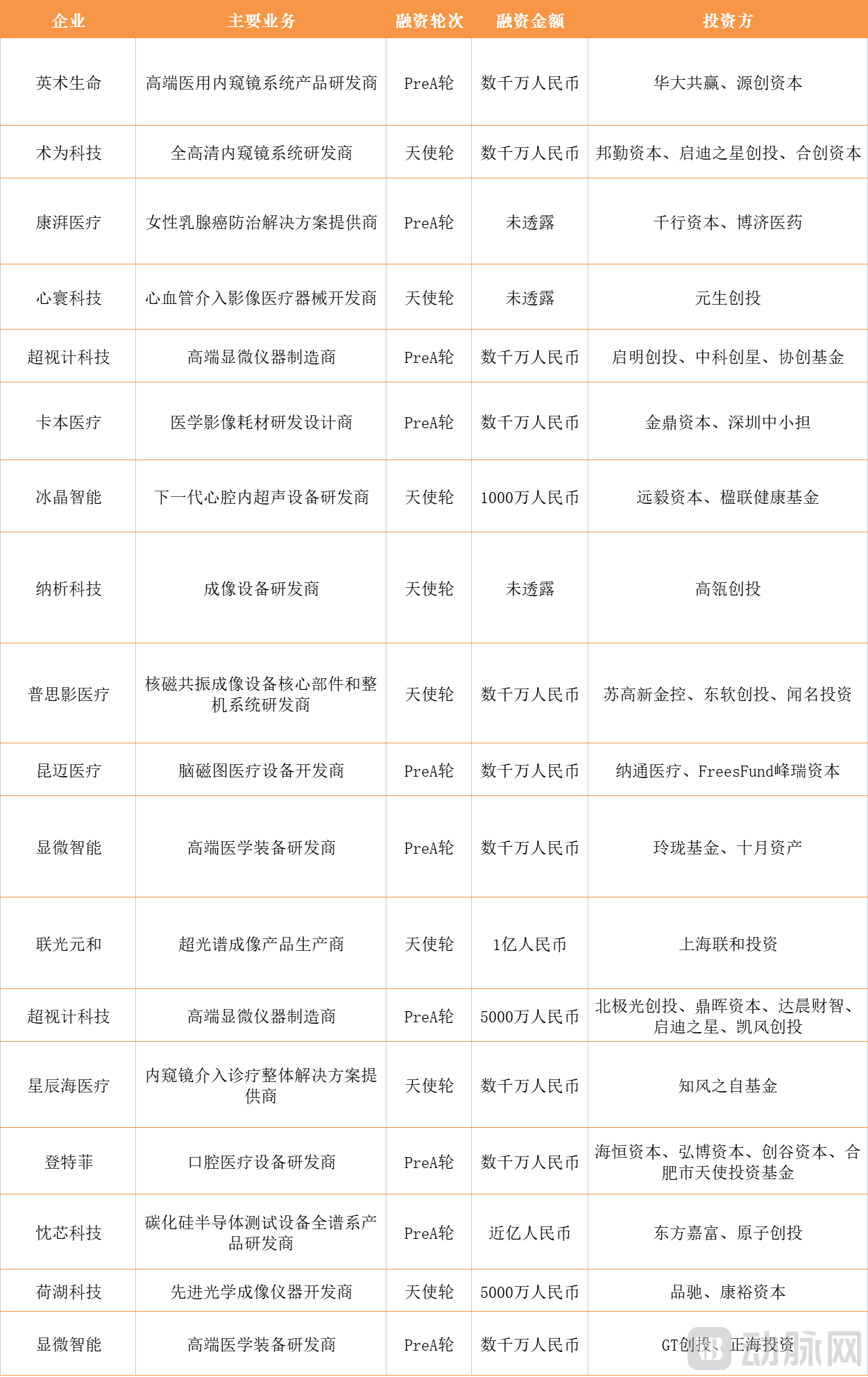
▲ Early-Stage Financing in China’s Medical Imaging Sector in 2022
■ 1. Technological Pathway: AI Becomes an Essential Capability for Medical Imaging Devices
Based on the 18 companies that secured financing in 2022,AI InterventionIt appears to be their most obvious common characteristic.
These 18 companies have nearly all integrated AI technology into their products, whether ultrasound, CT, or MRI. Its application is mainly reflected in two stages.
One application is in the perception stage, performing basic image recognition. In addition to enhancing image clarity, AI analyzes unstructured data. Unstructured data refers to incomplete data, which in the context of medical imaging typically denotes “images plus reports.” The integration of AI helps standardize imaging reports and reduce human error.
The other lies in the learning and analysis phase, which is the core of AI applications. Leveraging its deep learning capabilities, AI’s processing of large volumes of unstructured data simultaneously constitutes continuous deep learning training of neural networks. Once a sufficient number of original cases have been accumulated, AI can acquire diagnostic capabilities. This approach not only saves manpower but also enhances the objectivity and standardization of diagnostic outcomes, laying the foundation for subsequent treatment.
■ 2. Clinical Applications: Focusing on Cardiovascular, Urological, and Women’s Health
While AI serves as a cornerstone for all, these 18 companies employ distinct strategies, with slight variations in their targeted disease areas and technologies utilized.
From the perspective of disease areas, respiratory medicine, gastrointestinal function, the urinary system, cardiovascular intervention, and women's health are all within the scope of focus for medical imaging companies, among whichCardiovascular, Urological, and Women's Healthgreater attention, and there are more related products. Based on such application scenarios, the majority of companies conducting research on endoscopes focus on the technical aspects.
Since cardiovascular, urological, and women’s health-related diseases often present with distinct early warning signs, medical imaging companies that focus on this area can not only provide treatment solutions but also offer early screening services.
For major public health conditions such as coronary heart disease, early screening can be performed using imaging techniques. In 2019, the American College of Cardiology and the American Heart Association released"Guidelines for the Prevention of Cardiovascular Diseases"It states that early screening and prevention of cardiovascular diseases can be achieved by assessing coronary artery calcification. Timely medical intervention yields better outcomes in reversing cardiovascular disease. Given this application, cardiovascular imaging has become a key focus for medical imaging companies.
■ 3. Founder Background: Top-tier universities such as Peking University and Tsinghua University are key focus areas, offering end-to-end services from scientific research to commercialization.
Every advance in medical innovation is inseparable from the support of scientific researchers. Among the core founding teams of these 18 companies, there are university professors, and some even haveSupport from Renowned Universities such as Peking University and Tsinghua University。
which completed a RMB 50 million Pre-A financing round in May 2022SuperVision Technologyas an example, it is a high-tech enterprise focused on the research, development, and application of super-resolution live-cell imaging, founded byJointly developed and incubated by a multidisciplinary team from Peking University. In 2009, Professor Chen Liangyi from the School of Future Technology at Peking University, together with his colleague Mao Heng, co-founded SuperVision Technology. Subsequently, Peking University provided support in terms of facilities, talent, and technical resources, and jointly made strategic investments in the company through the Greater Bay Area Collaborative Innovation Research Institute and the Beijing Collaborative Innovation Research Institute.
Coincidentally, in January 2022, it completed an angel round of financing worth RMB 50 million.Hehu TechnologyAlso led by Academician Dai Qionghai of Tsinghua University, relying onTsinghua University Institute for Brain and Cognitive Sciences, completed under the support of the Major Program of the National Natural Science Foundation of China.
The emphasis placed by universities on medical imaging has provided a continuous influx of fresh talent for the development of the discipline; however, achieving breakthroughs in high-end technologies still requires the support and collaboration of more top-tier professionals. In this regard, China is gradually rising to prominence.
As of December 2022,ShanghaiTech University, Chinese Academy of Sciences, Fudan University, Soochow University, Peking University, and Tsinghua UniversityResearch institutes focused on medical imaging have been established one after another. The youngest among them is the one unveiled in June 2022.“Joint Laboratory of Biomagnetic Medical Imaging Technology”. This is a joint laboratory co-established by the Chinese Academy of Sciences, Shanghai Jiao Tong University Affiliated Sixth People's Hospital, and Mandi Medical Instruments (Shanghai) Co., Ltd., dedicated to the research and development of magnetoencephalography imaging technology.
"Research Institute + Hospital + Enterprise"This collaborative model has enabled the laboratory to establish a complete development chain spanning R&D, clinical studies, safety assessment, and industrialization since its inception. Across all stages of product development—early, mid, and late—the laboratory can directly access primary data. Leveraging this robust scientific foundation, the institute has achieved multiple innovative breakthroughs in fields such as biomagnetic imaging.
Furthermore, an increasing number of Chinese researchers have been elected as Fellows of prominent organizations such as AAAS, IEEE, IAMBE, SPIE, AIMBE, and IAPR in the fields of computer vision and medical image analysis, thereby enhancing China’s influence and voice in the medical imaging sector.
In short, an increasing number of universities are recognizing the growth momentum of medical imaging and are “rallying partners” to invest.
■ 4. Venture Capital Firms: Multiple leading VC firms are focusing on the early-stage development of medical imaging, with continued investment and post-investment services becoming popular options.
After reviewing the investors of these 18 companies, it was found that currentlyHillhouse Ventures, TusStar, CAS InnovationProminent venture capital firms have paid close attention to the early development of medical imaging, with TusStar even investing in two startups. In addition, many university endowment funds, such asGuangdong-Hong Kong-Macao Greater Bay Area Collaborative Innovation Research Institute, Beijing Collaborative Innovation Research Instituteand others are also prioritizing funding for the development of medical imaging startups.
In addition to the background of the investors, their post-investment services are also worth mentioning. Many investors continue to monitor companies closely after investment and chooseFollow-on Investment, Additional Funding。
According to publicly available information from Chenxin Technology, Atom Ventures exclusively funded the company’s angel round, raising tens of millions of RMB, in August 2020. However, the partnership did not end there; in the following period, Atom Ventures provided Chenxin Technology with advice on commercialization and product design, and attracted Oriental Jiafu to co-invest. After two years of growth, Caben Medical announced the launch of its Pre-A financing round in 2022. At this stage, Atom Ventures unhesitatingly chose to increase its investment, completing the Pre-A round together with Oriental Jiafu. Shortly thereafter, Chenxin Technology entered its Series A round, in which Oriental Jiafu also chose to increase its investment and continue the collaboration.
Among these 18 companies, Chenxin Technology’s investment profile is not an isolated case; firms such as Caben Medical and Kangpai Medical have also seen continued capital injections from venture capital firms.
2022: New Developments in “AI + Imaging”: Enriched Imaging Modalities, Processing of Unstructured Data, and Resolution of “Data Silos”
Undeniably, the integration of AI represents the most significant change in the medical imaging sector. However, AI-powered medical imaging is not a new concept. As early as 2018, Dr. Vijay Rao, then President of the Radiological Society of North America (RSNA), emphasized the importance of AI in the advancement of medical imaging during the opening ceremony, sparking a surge of interest in AI-driven medical imaging. Consequently, 2018 came to be known as the “year of implementation” for AI in medical imaging.
Four Years On, What New Developments Have Emerged in AI+Medicine? Which Challenges in China’s Medical Imaging Can It Address?
First, AI enhances the clarity and visualization methods of medical images, thereby reducing the rate of misdiagnosis.
By leveraging computer vision technologies, AI can perform segmentation, registration, fusion, and reconstruction of medical images, resulting in clearer and three-dimensional visuals that enrich the presentation of medical imaging. Meanwhile, AI’s real-time processing capabilities for dynamic images will also be applied to upgrading imaging techniques as well as aiding in the positioning and navigation of medical devices.
Taking Carbon Medical, which completed a tens-of-millions-yuan Pre-A financing round in August 2022, as an example, its core product, VENUS, applies AI to the imaging phase of diagnostic imaging.
On one hand, AI enhances the clarity and accuracy of imaging. During the imaging process, VENUS utilizes AI registration technology to enable 2D-3D linkage of multimodal images. Supported by AI registration, the spatial perception of the images is significantly enhanced, allowing physicians to precisely observe the real-time location of lesions and, based on this information, design surgical plans that best suit the specific case.
On the other hand, AI is also playing a role during surgical procedures. VENUS canAutomatic Recognition of the Movement Trajectory of Surgical Tapered Needles, calculates the most appropriate surgical pathway using AI and precisely guides the surgeon during the procedure.
In summary, with AI support, VENUS not only enables efficient and convenient auxiliary localization and tracking of lesions and planning of puncture paths, but also rapidly and accurately guides the establishment of interventional access, thereby achieving visualized and simplified procedures.Ultimately, the goal is to enhance the safety and efficiency of treatment.
Second, AI standardizes the processing of unstructured data to assist in diagnosis.
According toIDC Digitalof statistics, among the data generated by medical imaging in China80% of the data is unstructured., and imaging reports still lack a unified standard.
Because disease diagnosis requires a comprehensive analysis of multiple parameters, and medical images are only one of many such parameters, radiologists must integrate extensive medical knowledge relevant to diagnosis before finalizing an imaging diagnostic report. However, constrained by factors such as individual radiologists’ practices, their affiliated hospitals, and educational backgrounds, imaging diagnostic reports in China exhibit significant inter-physician variability, resulting in differing imaging report standards across regions and hospitals.
When patients seek medical care in different regions or even at different hospitals, they are often required to undergo repeated medical imaging diagnostics. This practice significantly wastes medical resources and imposes unnecessary financial burdens on patients.
Furthermore, this diagnostic model places radiologists in a critically important position, inadvertently imposing significant pressure on them. Currently, China faces a shortage of at least 150,000 ultrasound professionals. Moreover, after joining hospitals, these practitioners require 3 to 8 years of practical experience to substantially enhance their proficiency in image interpretation. This lengthy training mechanism is also a major contributor to talent attrition.
When processing unstructured data using AI technology, it is possible to manually set parameter templates for imaging reports,Addressing the Challenge of Inconsistent Imaging Report Standards Across Major Hospitals. Furthermore, after learning from large datasets, AI can also facilitate assisted diagnosis,Big Data-Based Diagnostic and Treatment Solutions. It addresses the issue of redundant imaging in patients, while also reducing the repetitive physical workload for physicians and improving diagnostic accuracy. Furthermore, since machine learning typically operates at a faster speed than the human brain, training an “AI proficient worker” to interpret imaging reports is more convenient and efficient than training a radiology expert.
Third, AI effectively addresses the "data silo" problem in medical imaging.
It is reported that the Picture Archiving and Communication System (PACS) is currently the information system within hospital information systems that handles the largest volume of operational data, demands the highest data precision, and requires the most timely data transmission. If clinical data in hospitals cannot be archived and shared in a timely manner, it will continue to impede the pace of related scientific research and industrial development.
With AI intervention,Timely data upload will become possible.Currently, many enterprises’ AI-enabled imaging devices feature real-time data upload capabilities and establish shared spaces via cloud platforms. With appropriate access permissions, physicians from different departments can view patients’ detailed imaging reports at any time, thereby saving time previously wasted on file retrieval and inter-departmental consultations. This approach not only facilitates “online consultations” and promotes healthcare equity between urban and rural areas, but also supports the development of precision medicine, laying a solid foundation for the establishment of “digital hospitals.”
Overall, whether it is enhancing image clarity or processing unstructured data, the purpose of AI in medical imaging is to assist healthcare delivery, improve diagnostic efficiency and accuracy, and empower primary diagnosis.
A Comparison of the Medical Imaging Markets in China and the United States: Clinical Applications, Regulatory Approval, and Reimbursement Perspectives
Currently, both the research and industrial sectors in China are placing increasing emphasis on medical imaging, and there is no doubt that the Chinese medical imaging market has entered a phase of rapid development. However, while one may go fast alone, a group goes farther. As the scale of this sector expands rapidly, we should pause to consider whether the market is presenting us with new demands.
According to statistics from VBInsight, in 2022, the total number of11 companiesThe companies have secured financing, with most of them atSeries B and subsequent rounds, including post-IPO financings, which also reflects that the U.S. medical imaging market has reached a mature stage. Perhaps we can glean insights into our future development direction from the U.S. market.
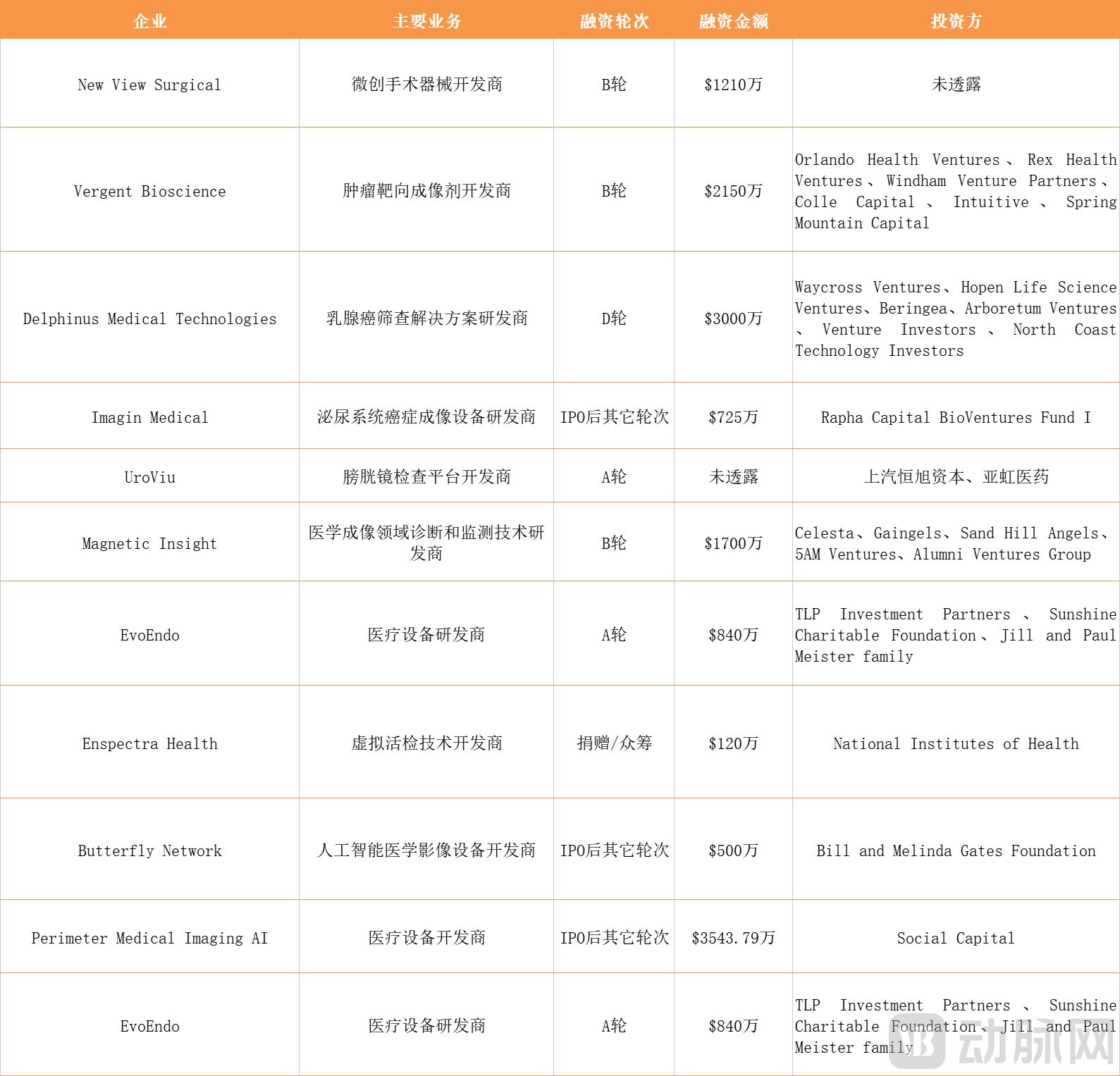
▲ 2022 U.S. Funding Landscape
■ 1. Clinical Applications: The U.S. Focuses on “Niche Segments,” While China Emphasizes Broad Market Coverage
Overall, U.S. medical imaging companies are largely similar to their Chinese counterparts in terms of technology and disease focus areas—both leverage AI technologies and concentrate on cardiovascular health, the urinary system, and women’s health.However, U.S. companies appear to prefer refining their focus within specific domains, pursuing in-depth development through “niche entry points.”
The so-called "small incision" approach involves confining one's technical research to a specific disease, prioritizing precision in that area rather than attempting to cover all related therapeutic fields.
Taking Delphinus Medical Technologies, which completed its Series D financing in September 2022, as an example, this company also focuses on women’s health but specializes exclusively in breast cancer. Its developed device, SoftVue, performs ultrasound imaging and risk assessment through three-dimensional X-ray tomography to detect benign or malignant masses in the female breast, diagnose breast diseases, and monitor treatment.
Delphinus Medical Technologies was founded in 2010. Over the past decade, the company has remained steadfastly focused on breast cancer, regardless of product iterations. Founder Mark Forchette stated, “Our mission is solely to transform early screening and treatment for breast cancer, thereby saving women’s lives worldwide.”
In contrast, very few medical imaging companies in China focus on a single disease; instead, most opt for comprehensive portfolio strategies. While diversifying into more therapeutic areas may expand commercialization opportunities, it significantly compromises the specificity of their equipment and its clinical relevance to particular diseases.
■ 2. Approval System: The United States has enacted the “Three-Part Act” to differentiate the approval of “AI+” products from that of conventional medical devices, while China’s approval process remains relatively stringent.
In addition to the disease areas of focus,Approval PolicyIt may also be a significant variable affecting corporate development.
In China, because AI products for assisted diagnosis and treatment and medical imaging have a guiding effect on doctors' diagnostic and treatment decisions, the CFDA imposes strict approval requirements. In 2018,Not a single company has obtained approval., all AI-plus-imaging companies are stuck in the approval process and unable to go public.
Although this situation is continuously improving as the technology matures,In 2020, approximately 20 AI-based medical imaging products obtained registration approval in China.. However, compared to the United States, we have still failed to seize the first-mover advantage in entering the market.
Following the launch of AI-plus-imaging technologies, the FDA responded swiftly by taking the lead in lifting traditional medical device regulatory restrictions on AI products and tailoring“Three-Step Approval Method”。
First, implement the “Digital Health Innovation Action Plan,” issue new guidelines to enforce legislation, and restructure the regulatory framework for digital health products; second, establish a standalone AI and Digital Medical Review Department; third, accelerate approval processes by lowering entry barriers for medical AI products, such as downgrading certain Class III medical AI products to Class II for regulatory review.
As a result, AI-powered imaging products can be differentiated from conventional medical devices, thereby accelerating the registration and approval process. Meanwhile, the new regulatory framework also encourages more professionals in the medical device industry to focus on the AI-imaging sector, bringing greater possibilities to the field of medical imaging.
■ 3. Attitudes Toward Paying for AI: The U.S. healthcare system operates on market principles, making the public more amenable to paying for services; in China, a culture of “paying for AI” has yet to take hold.
In addition to policy support, market attitudes toward “paying for AI” are also a key consideration for corporate development.
In China,Awareness of Paying for AI Medical Imaging Has Not Yet Taken Hold, and there remains a significant gap between hospitals’ valuations of AI products and the valuations set by the companies themselves. Even if a product demonstrates strong application scenarios and efficacy, it may still not be procured if its price exceeds the hospital’s budgetary constraints.
Additionally,China Currently Lacks a Clear Cost Accounting System for AI Products, there are no uniform standards for machine depreciation fees, imaging diagnosis fees, and AI usage fees. For hospitals, if the cost of AI-powered imaging is no different from that of conventional imaging, it becomes difficult to cover the additional costs incurred by AI implementation; however, for patients who are accustomed to the existing payment models, an additional charge would impose a significant financial burden.
In summary, China currently lacks unified cost accounting standards; only by establishing a robust cost accounting system can greater support be provided for the future development of medical imaging AI.
In the United States, due to years of “healthcare wars” and the formation of social consciousness, medical services have always adhered to market principles, meaning that doctors and hospitals are free to set prices for medical services, and the government has no authority to impose price controls. In such a social context, concepts regarding AI imaging reimbursement are readily accepted and implemented by the market, without the need to consider issues such as costs and benefits.
Today, the curtain has gradually risen on the development of China’s medical imaging sector. The fervor seen this year may well be a clear signal: startups that seize the zeitgeist and possess the acumen to scrutinize the market are poised to gain a first-mover advantage in this golden track.