

Navigating the Critical Phase of Clinical Implementation: The Next Step for Digital Orthopedic Surgery Systems
After a decade of development, “commercialization” has become the core keyword for domestically produced surgical robots.
To date, not only has “robot-assisted orthopedic surgery” been granted government-set pricing as an auxiliary operating system, but it has also been included in the medical insurance reimbursement catalogs of multiple provinces and municipalities alongside disposable robotic-specific instruments. Furthermore, last year, the Hunan Provincial Healthcare Security Administration issued the Notice on Regulating the Use and Charging Practices of Robot-Assisted Operating Systems, which eliminated information asymmetry between healthcare providers and enterprises. By establishing the status of digital orthopedic surgical systems through price regulations, the notice has encouraged hospitals to procure equipment based on their actual needs, thereby creating substantial growth potential for this sector.
Seizing the opportunity, Beijing Noitom Technology Co., Ltd. (hereinafter referred to as “Noitom”), which has accumulated profound expertise in the field of “motion capture and digital twin technology,” made early strategic moves by continuously optimizing and iterating its prior technological advancements in this area and transferring them to the medical sector.Collaborating with the top medical expert team from the Chinese PLA General Hospital, we jointly developed the Holosight “Transparent Orthopedics” minimally invasive intelligent visualization system and swiftly obtained the medical device registration certificate., and stepped into the vast frontier of life sciences.
Perhaps Noitom is still a newcomer to the medical field, but the company has been advancing at a remarkable pace. Last year, despite the severe impact of the pandemic, it continued to leverage its minimally invasive intelligent visualization system,Implemented in dozens of Grade 3A hospitals, achieving a zero-negative-review record in clinical settings; collaborated with leading institutions such as the PLA General Hospital (301 Hospital), the Third Affiliated Hospital of Southern Medical University, Tongji Hospital, Shanghai Tenth People’s Hospital, and the Third Hospital of Jilin University to participate in numerous major national projects, earning multiple prestigious awards.
Moreover, Noitom has achieved a comprehensive layout for the visualization and precision of the entire surgical process, spanning preoperative planning, intraoperative execution, and postoperative rehabilitation.In addition to expanding preoperative and intraoperative solutions and iterating its products, Noitom has begun to focus on patients’ functional rehabilitation, achieving secondary breakthroughs based on its core technologies by focusing on visualized interaction and visualized data flow, and leveraging precise data detection technology and wearable device technology.Providing Postoperative Exercise Rehabilitation Solutions for Patients—A digital therapeutic for musculoskeletal rehabilitation that can be administered remotely at home and delivers proven clinical efficacy, helping patients achieve better recovery outcomes.
Continuous Breakthroughs: What Sets Noitom Apart?
Before entering the healthcare industry, Noitom had already accumulated several years of expertise in the field of “motion capture and digital twin technology.” As one of the few innovators worldwide possessing a full spectrum of motion capture technologies and offering full-stack solutions, the company achieved significant milestones just three years after its establishment. Its motion capture technology was featured on the stage of the CCTV Spring Festival Gala, and it crossed oceans to contribute to crowd rendering and virtual character animation for the classic blockbuster series Game of Thrones. For Noitom at that time, these were already considerable accomplishments.
Yet, as the years have passed, Noitom has continued to leverage its ace card—proprietary, independently developed Chinese technology—to constantly push its own boundaries. Its solutions are blossoming across a range of fields, including film and game development and production, cultural and pan-entertainment experiences, sports assessment and training, industrial simulation and virtual teaching, as well as commercial communication and brand projects.
Noitom’s solutions have been rapidly deployed in the fields of medical diagnosis and rehabilitation, achieving significant success—a testament that can be traced back to the inception of this technology.
During an exchange with orthopedic experts, including Professor Tang Peifu and Professor Chen Hua from the Department of Orthopedics at the Chinese PLA General Hospital, the experts recognized the significant clinical value of Noitom’s technology in orthopedics. They noted that since Noitom’s existing “motion capture and digital twin technology” can align the positions of virtual objects with those of real-world spatial objects, applying this system during minimally invasive surgery could potentiallyAchieve precise sensing and monitoring of subcutaneous bones.
“This technology is significant, and there are currently no relevant solutions available in clinical practice.As a company with years of accumulated expertise in the field of motion capture, Noitom is highly likely to facilitate the rapid deployment of this technology, thereby accelerating the trend toward minimally invasive techniques in clinical orthopedics."An orthopedic expert stated."
Therefore, leveraging the “Research Project on Intelligent Pelvic Reduction and Fixation Technology” supported by the National Clinical Research Center for Orthopedics, Sports Medicine, and Rehabilitation, Noitom collaborated with orthopedic experts to develop the HoloSight “Transparent Orthopedics” minimally invasive intelligent visualization system, enabling visualized assistance throughout the entire workflow of minimally invasive orthopedic surgery.
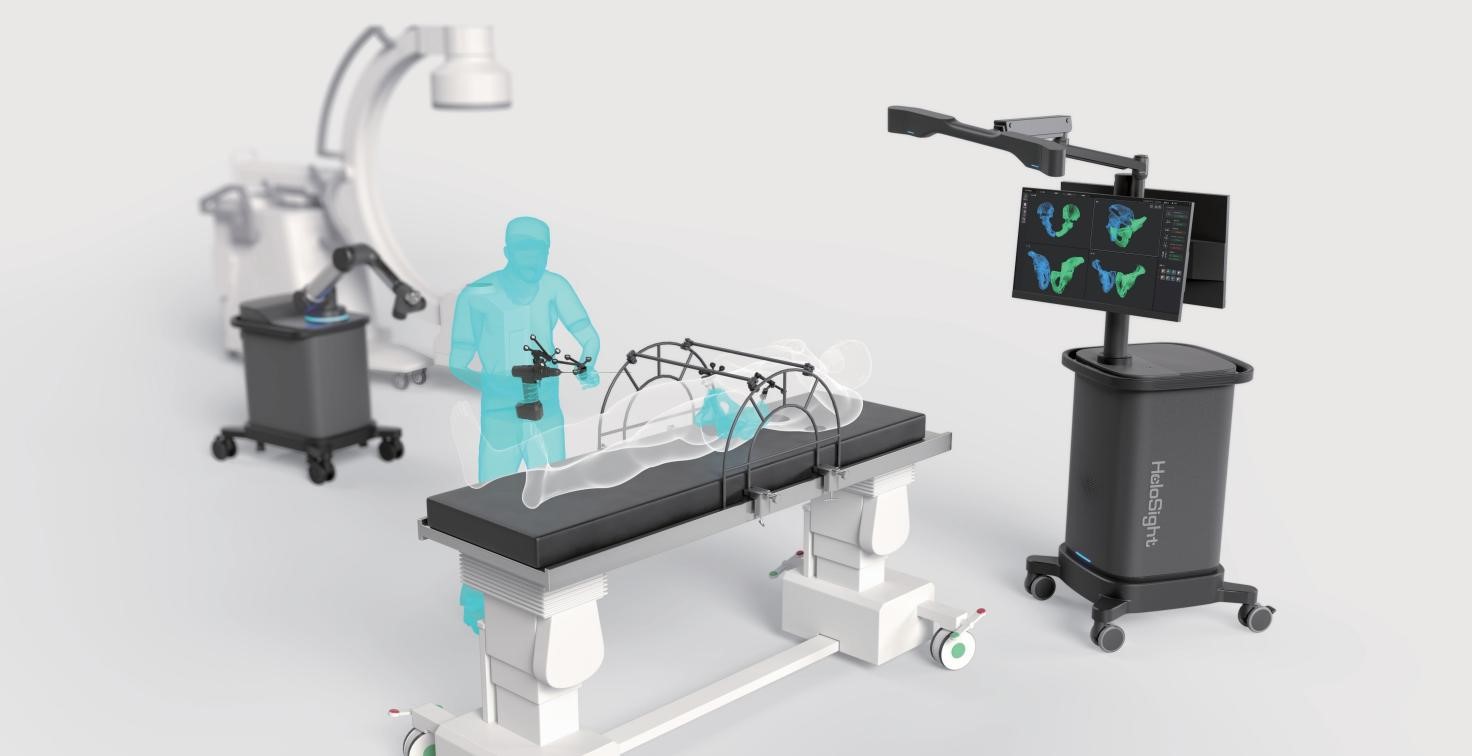
It is understood that this system assists physicians in surgical planning simply by flexibly adjusting the position and angle of the planning lines. In the closed intraoperative environment, high-precision 3D reconstruction of bone models based on CT data is achieved through intelligent feature recognition and automated registration algorithms,Achieve intelligent and precise matching of bone models with spatial tracking data, as well as accurate tracking and real-time visualization of the entire intraoperative process of bone reduction and fixation.Enables 3D visualization of the entire minimally invasive surgical procedure, overcoming the significant reliance on fluoroscopy in current non-invasive or minimally invasive orthopedic surgeries. It meets the critical demand for “precise reduction and fixation” in orthopedic trauma surgery, further reducing operative time, lowering surgical risks, and decreasing dependence on surgeons’ experience, thereby empowering more physicians and hospitals to perform these procedures and treat patients.
More importantly, through long-term collaboration and communication with clinicians and orthopedic specialists, Noitom has recognized that its products"User-friendly, accessible at the grassroots level, compatible with multiple surgical techniques, and applicable to a wide range of indications"importance. Over the past year, the company has consistently advanced in this direction, making targeted adjustments to its development and market strategies. While achieving a second breakthrough in technology, it has established a closed-loop ecosystem covering multiple procedural approaches and indications by expanding its product pipeline.
One of the commercialization challenges currently facing surgical robots or digital surgical systems is their low utilization rate.
From a market perspective, the national volume-based procurement policy and market shifts such as cost containment for surgical robots are influencing the development of digital surgical systems to some extent. The key to addressing this challenge lies in ensuring the cost-effectiveness and operational efficiency of these systems. When digital technologies can reduce costs while enhancing efficiency, they can be applied to every patient and continue to penetrate into a broader range of clinical scenarios.
From a technical perspective, the future development of orthopedics is trending toward intelligence, precision, and minimally invasive techniques. Currently, most intelligent technologies applied in orthopedics are designed to address pain points—specifically, the overreliance on fluoroscopy for localization—that have emerged during the evolution of orthopedic surgery from open procedures to minimally invasive and then to precise minimally invasive approaches. Among these, enhancing surgical precision and shortening the learning curve for surgeons are key to advancing the adoption of minimally invasive surgeries and improving clinical diagnosis and treatment standards.However, the core element of intelligent technology lies in how to better serve patients., and the optimal response to national DRGs and DIPs.
In response to the aforementioned challenges, Noitom has adjusted its market and product strategies, encapsulating its core philosophy as “user-friendly, accessible, multi-procedural, and multi-indication.”
Over the past year, Noitom has continuously optimized this system, expanding its scope of application and indications. The system’s capabilities have been extended from minimally invasive reduction and internal fixation procedures for pelvic fractures, various types of femoral fractures, and tibial fractures to other long bone fractures. Building on its existing technological foundation, Noitom achieved a second breakthrough by developing a postoperative motor rehabilitation solution. This enables visualization and precision across the entire surgical workflow—from preoperative planning and intraoperative execution to postoperative rehabilitation—thereby establishing a closed-loop ecosystem that supports multiple surgical techniques and indications.
“Surgical robots are not deities; rather, they should be essential minimally invasive surgical tools in the operating room. As tools, they must be both user-friendly and affordable. Therefore, Noitom’s product philosophy focuses on enhancing usability and improving clinical outcomes, with its market strategy aligned accordingly,” said Wang Junyi, Deputy General Manager of Noitom.
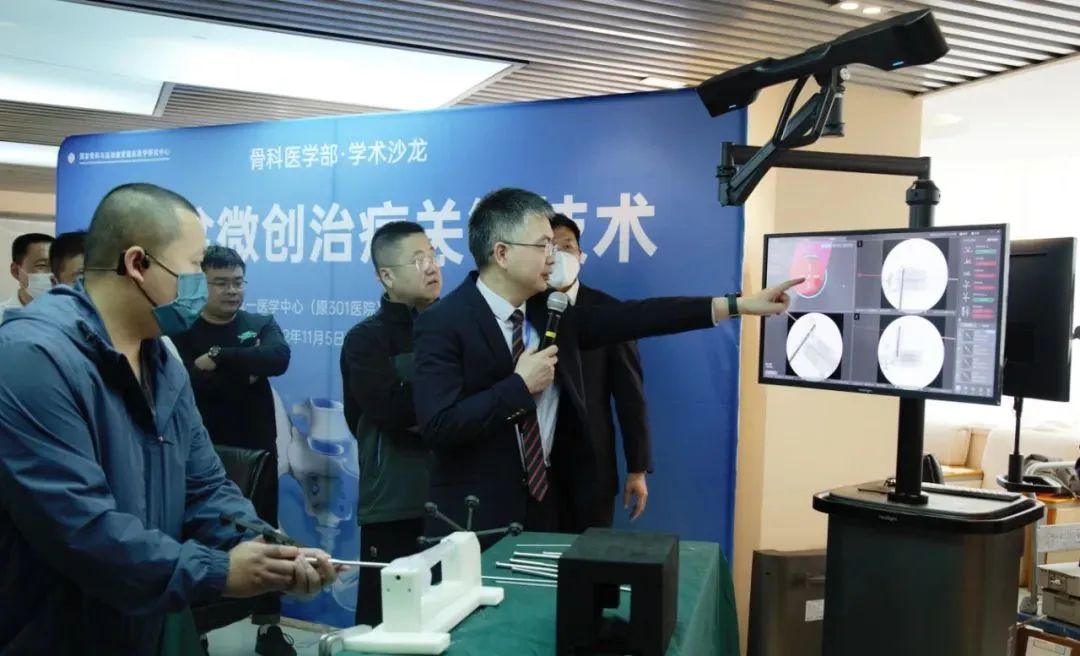
Last year, Noitom established a nationwide training center to facilitate product implementation. On one hand, Noitom collaborated with leading Tier 3 Grade A hospitals to conduct live surgical demonstrations and promote its technologies.Meanwhile, we actively align with government development and guidance policies to help further implement enterprise solutions in clinical settings.On the other hand, companies design product performance and pricing with county-level hospitals in mind to meet the needs of primary healthcare institutions.
Noitom focuses on addressing the critical challenges prioritized by clinicians and enhancing surgical efficiency. First, it leverages technological innovations to reduce solution costs and minimize equipment footprint, thereby resolving issues such as limited space for equipment in operating rooms and the excessive time previously required for positioning and preoperative planning. Second, by ensuring optimal tactile feedback during product use and high precision in visual navigation, Noitom enables surgeons to rapidly assess patient conditions and complete surgeries efficiently, making the devices user-friendly and encouraging their adoption. Finally, Noitom has significantly expanded its range of compatible consumables and obtained necessary regulatory approvals, enabling the actual clinical deployment of its systems and facilitating the practical implementation of its products.
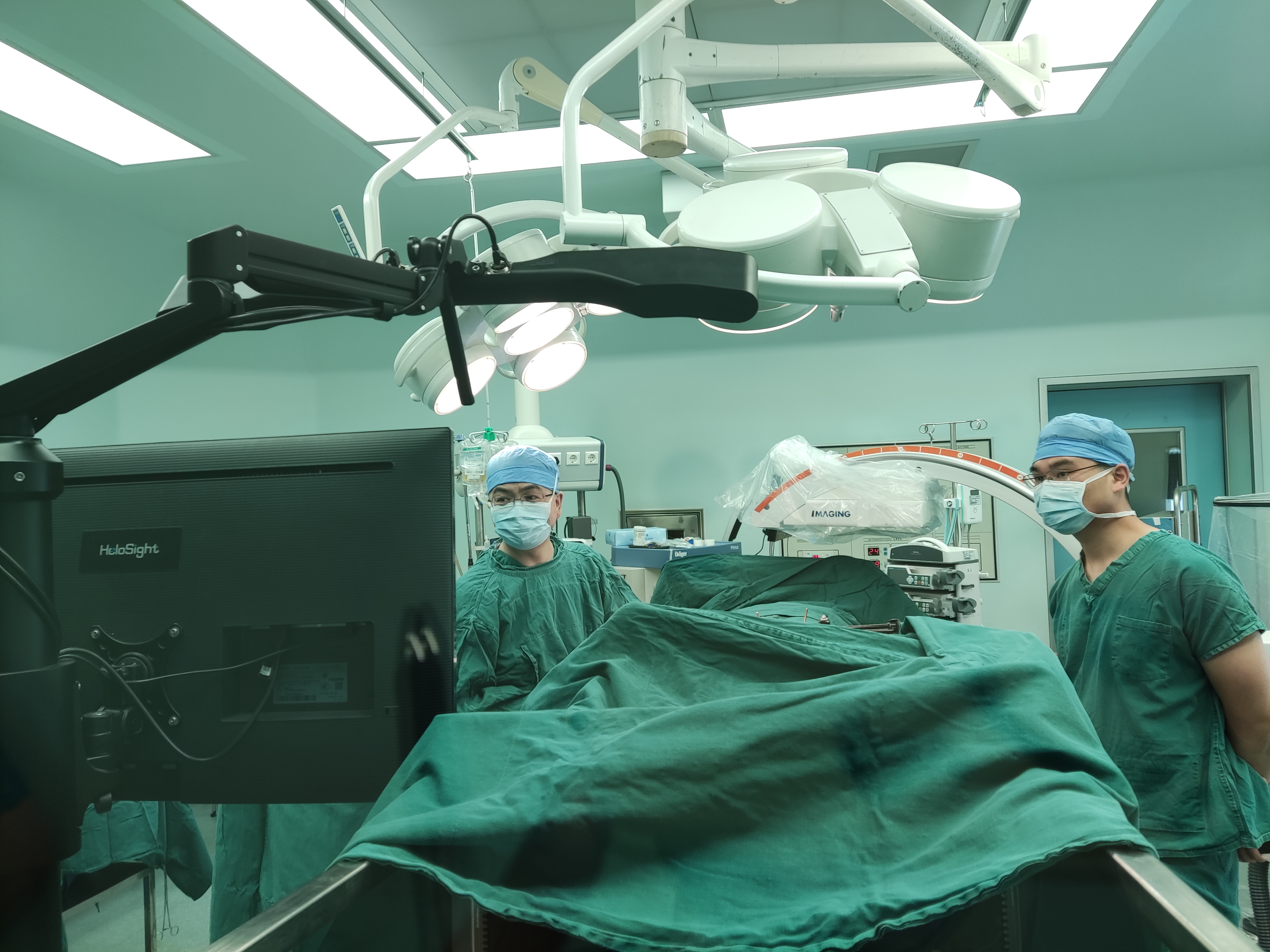
This year, Noitom will also accelerate market education and product implementation in lower-tier markets. In addition to expanding the range of surgical procedures compatible with the Holosight “Transparent Orthopedics” minimally invasive intelligent visualization system and advancing the R&D of associated consumables, Noitom has recognized the trend toward saturation in hospitals. Consequently, the company will expand into out-of-hospital application scenarios and further advance the development and regulatory approval of its digital therapeutics for musculoskeletal rehabilitation. The goal is to ensure that practical devices reach physicians’ hands, thereby enhancing clinical efficiency and delivering tangible benefits to patients.
Constrained by physicians’ experience and the scarcity of intelligent devices, traditional orthopedic surgery has long suffered from high operative risk, low accuracy in implant placement, and difficulty in popularizing complex surgical techniques, resulting in significant trauma, numerous complications, and challenges in accessing medical care for patients. An increasing number of physicians are beginning to prioritize the accumulation, analysis, and synthesis of clinical data, and aspire to integrate digital technologies into clinical practice and research. This integration aims to facilitate a more efficient, precise, and objective understanding of diseases, as well as the design and execution of surgical procedures, while also enabling digital remote information exchange.
The advancement of digital orthopedics and minimally invasive surgical technologies represents the most effective response from industry, academia, research, and clinical sectors to the aforementioned challenges. The emergence of digital orthopedic surgical systems marks a significant breakthrough, enabling more physicians and hospitals to perform surgeries and treat patients. These systems address the need for cost-effective solutions and improved operational efficiency, align with policy directives to “return to the essence of healthcare,” empower surgeons’ cognitive and visual capabilities, and reduce clinical reliance on individual physician experience.
By iterating and optimizing its existing "motion capture and digital twin technologies" and ultimately transferring them to the medical field, Noitom has undoubtedly accelerated, to some extent, the development of digital orthopedics and minimally invasive surgery, as well as the clinical translation of related technologies. Its continued exploration in the field of orthopedics, along with its deep engagement in niche segments, will surely guide this team to achieve greater success.