

HeartBeat Medical Aims to Become the 'Omron' of Cardiac Care with Full-Cycle Post-Surgical Management Solutions
Each year, more than 500,000 people in China die from sudden cardiac death.
However, patients with underlying conditions face a different dilemma: those experiencing symptoms such as chest tightness and palpitations often show no abnormalities on standard electrocardiogram (ECG) tests performed at hospitals. Even with ambulatory ECG monitoring over a 1–3 day period, the condition may remain undetected if no arrhythmia occurs during the wearing period.
24-hour continuous dynamic ECG monitoring devices are becoming increasingly important for patients with potential cardiac conditions. However, medical-grade monitoring devices often pose challenges such as inconvenient wearability and interference with daily activities. Industry practitioners have undoubtedly recognized these issues.
In August 2022, at the launch ceremony of the Medlinker Cardiovascular Digital Therapeutics Alliance, Medlinker and HSINTIAO entered into a strategic partnership to collaborate comprehensively on ECG monitoring and out-of-hospital disease management. This collaboration also brought HSINTIAO into the public spotlight.
Why Did Internet Healthcare Giant Medlinker Choose to Partner with HSINTIAO? What Is the Background of This Company? Li Nayun, Founder of HSINTIAO, Provides an Answer.
Unlike many founders in the healthcare industry who have some sort of “medical background,” Li Nayun, founder of HSINTIAO, comes from a mathematics background.
Li Nayun completed his undergraduate studies in the Department of Mathematics at Xi’an Jiaotong University and pursued his master’s degree in the United States, continuing to specialize in mathematics. This academic trajectory may serve as one of the footnotes to Li Nayun’s profile. After graduation, he joined a private equity firm, where he primarily engaged in quantitative trading for private equity funds. While this experience may appear entirely unrelated to the healthcare industry, it endowed him with a more macroscopic perspective on the market and cultivated a rational and composed demeanor.
For Li Nayun personally, he is more inclined to break through “boundaries” and try new things. He admires Wang Xing, who founded Meituan after a series of entrepreneurial failures. Wang Xing once mentioned, “There is a book that has had a significant influence on me—Finite and Infinite Games. Finite games are played within boundaries, while infinite games are played with boundaries, that is, with ‘rules,’ exploring and changing the boundaries themselves. In fact, there is only one infinite game, and that is your life; death is an insurmountable boundary. Compared to this, other boundaries are not so important.”

Li Nayun, Founder of HSINTIAO
2020 was a year in which Li Nayun broke through his self-imposed “boundaries.” During this year, he entered the healthcare industry. This move was not without reason—
On the one hand, the outbreak of the pandemic in 2020 has introduced a significant number of uncertaintiesThis prompted Li Nayun to begin considering whether there are industries capable of withstanding economic cycles. Aligning with the prevailing view among most healthcare professionals, he firmly believes that the healthcare industry will continue to experience a period of upward growth in the future.
On the other hand, objective conditions facilitated his shift.At that time, Li Nayun, who was still working in private equity, came into contact with a team from Tsinghua University. After conducting on-site due diligence, he could hardly contain his excitement and chose to lead the team in translating their scientific and technological achievements into commercial applications. However, disagreements over future development directions prompted Li to consider launching his own venture for further growth.
In 2020, HSINTIAO was officially established.
In fact, in addition to numerous objective factors,A subjective factor is also influencing Li Nayun’s career choice—his family background.His mother was a doctor, and in his memory, the department at her hospital was where he had played since childhood. The department where his mother worked was Cardiology.
Having grown up immersed in the field, Li Nayun possesses an intimate understanding of the challenges in cardiovascular disease management. Years later, he followed in his mother’s footsteps and returned to the healthcare sector, aiming to address a persistent pain point that has plagued the industry for over three decades.
What exactly are the industry pain points that have persisted for over three decades in this sector?
Perhaps we can begin by examining a set of data. From 1990 to 2020, the mortality rate from cardiovascular diseases among Chinese residents increased year by year. Among these cases, 550,000 people die suddenly each year due to arrhythmia. The success rate of resuscitation for out-of-hospital cardiac arrest is only 1%. This highlights the challenges faced by patients: the onset of the disease is often insidious, and patients do not receive timely medical intervention when symptoms occur.
On the one hand, even if patients notice abnormal physical conditions and seek medical attention at a hospital, dynamic electrocardiogram (ECG) monitoring itself is extremely time-consuming. Furthermore, if no arrhythmia occurs during the monitoring period, the patient’s underlying issues may remain undetected.Patients face the risk of undetected diseases while wearing monitoring devices; furthermore, the bulkiness of medical-grade wearable monitoring devices often disrupts daily life during use.
On the other hand, the shortage of medical resources is also evident. Despite the large number of patients, there remains a deficit in electrocardiogram (ECG) equipment networks and specialized diagnostic physicians.Currently, as dynamic electrocardiogram (ECG) coverage in primary healthcare institutions remains below 5%, these facilities are clearly unable to fulfill their role in the tiered diagnosis and treatment system. Consequently, most patients at the primary care level have no choice but to seek diagnosis and treatment at tertiary hospitals, which further exacerbates the burden on both physicians in these tertiary institutions and the patients themselves.
“The biggest issue is actually that the ‘screening management system is unscientific.’”“When addressing the pain points in patient diagnosis and treatment, Li Nayun stated, ‘The establishment of HSINTIAO was precisely aimed at resolving these existing challenges. Pain points that have persisted for over three decades are particularly worthy of attention and resolution.’”
Why Have These Pain Points Persisted for Over 30 Years?This may be related to the inherent barriers within the industry. He pointed out that technical barriers are only one factor; the persistence of these pain points is more likely the result of comprehensive, multifaceted causes. It was precisely due to this realization that when HSINTIAO initially entered this field, it attempted to cover all aspects of the value chain, demonstrating a strong ambition to “break through boundaries.” However, the company later recognized that, based on its core competencies and strategic direction, it needed to allocate its limited resources to where patients had the most critical needs. Focusing on “serious medical care” and addressing the pain points of offline medical institutions—such as tertiary Grade A hospitals and primary care facilities—HSINTIAO began to build its business by integrating into both offline physical healthcare institutions and online internet hospitals. Ultimately, the company chose post-operative health management for cardiac patients as its entry point.
Currently, HSINTIAO is gradually building a system for postoperative management of cardiac patients that covers both in-hospital and out-of-hospital settings, achieving comprehensive coverage of the entire postoperative care process.
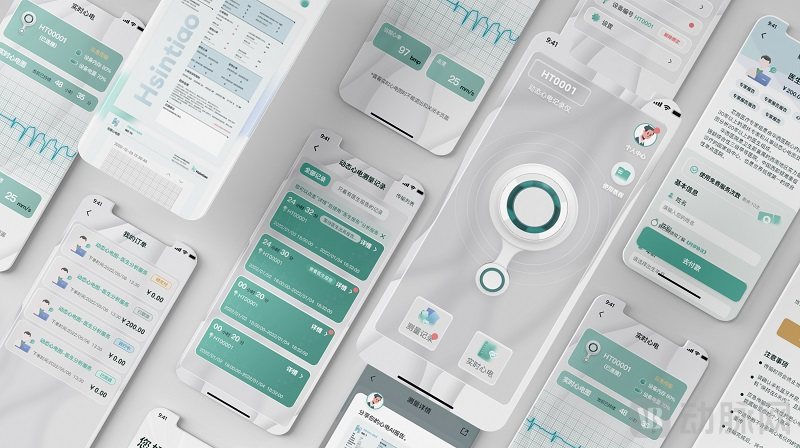
HSINTIAO Medical App System Interface
HSINTIAO is conducting clinical collaborations with more than 10 Grade A tertiary hospitals, including West China Hospital., thereby assisting physicians in managing patients more scientifically. Previously, postoperative management for cardiac patients relied primarily on physician-patient communication, including inquiries about symptoms such as cardiac pain, angina, and syncope, followed by symptomatic treatment. In contrast, HSINTIAO’s devices, algorithms, and platform now enable data-driven, refined patient management. It is reported that HSINTIAO is clinically validating the effectiveness of its postoperative cardiac care solutions and adjusting its future development directions—including device technology—based on clinical outcomes to achieve more precise monitoring and higher-quality management.
Outside the hospital, HSINTIAO is also implementing patient management based on its own devices, platform systems, and internet hospital.The collaboration with Medlinker is indeed based on its advantages in reaching patients and physicians, as well as its expertise in disease-specific standard operating procedures (SOPs). Currently, the key areas of cooperation include preoperative screening for cardiac patients and postoperative management. Through this partnership, both parties jointly provide patients with services such as home monitoring, risk assessment, early warning systems, remote guidance, and physician reports.
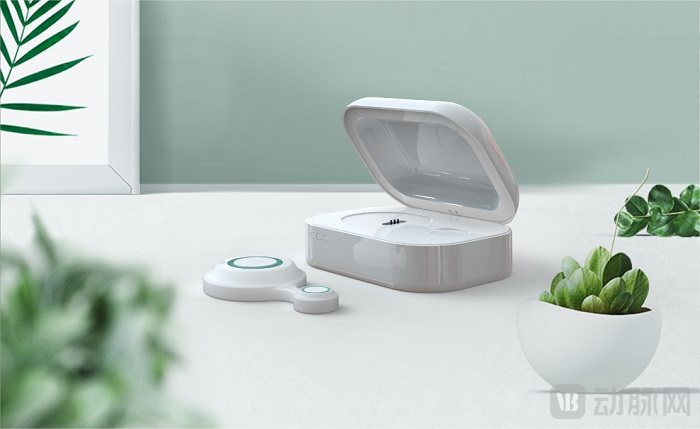
HSINTIAO's Portable Dynamic ECG Recorder with Medical Device Registration Certificate
HSINTIAO’s ability to support post-cardiac surgery management is attributable to its robust technological and product capabilities, exemplified by the launch of its portable dynamic ECG recorder tailored to market demands. It is worth noting that this device is not limited solely to post-cardiac surgery patients but also meets the monitoring needs of individuals with chronic diseases.
Li Nayun noted that accuracy is the primary requirement for devices seeking to enter serious medical settings such as hospitals. Currently, in the field of atrial fibrillation, HSINTIAO’s portable dynamic ECG recorder has already achieved an exceptionally high screening rate. The company is now working to further improve the disease screening rates for other diagnostic indicators, such as myocardial ischemia.
In addition to precision, another major advantage of HSINTIAO’s portable ambulatory ECG recorder lies in its robust noise reduction and anti-interference capabilities. During the 24-hour monitoring period, patients often engage in various activities such as exercise and work. Previously, some manufacturers faced the challenge of obtaining normal detection data only when patients were at rest, while failing to capture valid data during movement or other active states. To enhance device interference resistance and ensure data validity, HSINTIAO has made substantial efforts by developing a comprehensive solution integrating hardware, algorithms, and structural design, culminating in the iterative development of its portable ambulatory ECG recorder.
The device’s inherent anti-interference capability and precise detection performance, along with additional features such as water resistance and Bluetooth-enabled data storage, have facilitated the rapid expansion of applications for this cost-competitive product.
In 2022, the first batch of high-tech enterprises certified by Sichuan Province’s accreditation bodies was publicly announced, with HSINTIAO included on the list.
Actually,Since its establishment, HSINTIAO has spearheaded a major national 5G + smart healthcare project and participated in multiple initiatives, including key special projects of the Sichuan Provincial Department of Science and Technology and the National Key R&D Program. Its products have been successfully deployed across various scenarios, including government agencies, state-owned enterprises, and hospitals, establishing a novel chronic disease management system that encompasses post-cardiac surgery care.
Currently, HSINTIAO has filed 43 patent applications and obtained relevant medical qualifications for its products, including Medical Device Registration Certificates.
Li Nayun stated that the company plans to cover hundreds of thousands of patients in the short term, with the ultimate goal of reaching over ten million patients. Currently, it is also considering fundraising, which will be primarily used for innovative technology research and development, market expansion, talent recruitment, and other areas.
Regarding future development, HSINTIAO is undoubtedly full of confidence—
First, leveraging relevant projects undertaken over the past three years, HSINTIAO is expected to exceed its current target of serving hundreds of thousands of patients. Second, disease prevention awareness among the potential patient population is rising significantly. As this large patient demographic places greater emphasis on heart health, it will further drive HSINTIAO’s rapid development. Third, exploration and implementation across multiple scenarios have equipped HSINTIAO with the capability for horizontal expansion and replication. Most importantly, HSINTIAO has already achieved self-sustaining revenue generation, enabling rapid corporate expansion during its commercialization process.
Exploring serious medical care remains the unwavering goal of HSINTIAO. In the future, HSINTIAO will continue to optimize management processes, including post-cardiac surgery health management, based on feedback from physicians and patients both inside and outside hospitals, thereby facilitating better patient recovery.
“Our goal is to create the ‘Omron’ of the cardiac field, providing medical diagnostic devices that are readily accessible at any time for patients with heart disease or those at risk,” emphasized Li Nayun.