

Nature Biomedical Engineering (IF=26.8) Publishes MindRank's AI-Driven Breakthrough in Alzheimer’s Drug Discovery

MindRank
AI Drug Developer
▲Click 【Read Original】 at the end of the article to access the original text.
This study successfully established an artificial intelligence platform for the discovery of active ingredients in traditional Chinese medicine and natural products, which integrates millions of compound information and multiple predictive modules. The platform was used for virtual screening, combined with cross-species experimental validation, to identify small-molecule compounds from traditional Chinese medicine with potential for treating Alzheimer’s disease (AD).This marks a verifiable, milestone step in the application of large AI models to the research and development of new drugs for complex central nervous system diseases.

Research Background: The "Valley of Death" in AD Drug Development
Currently, there are over 50 million Alzheimer's patients globally, but treatment options in this field have seen slow progress for a long time."Dysfunction of 'cellular autophagy' is one of the key pathological features of AD."When this "scavenger system" of the brain becomes imbalanced, harmful proteins (such as β-amyloid and hyperphosphorylated tau proteins) will accumulate excessively.Therefore, the development of autophagy enhancers is considered a highly forward-looking therapeutic strategy.
However, the development of AD drugs faces extremely high technical barriers:Existing autophagy enhancers mostly rely on the mTOR pathway, a crucial metabolic hub in the human body that is highly prone to off-target side effects, disrupting normal physiological homeostasis. Additionally, the obstruction of the blood-brain barrier (BBB), the complexity of AD pathogenesis, and the lack of autophagy markers in the brain collectively form the "valley of death" for AD drug development.
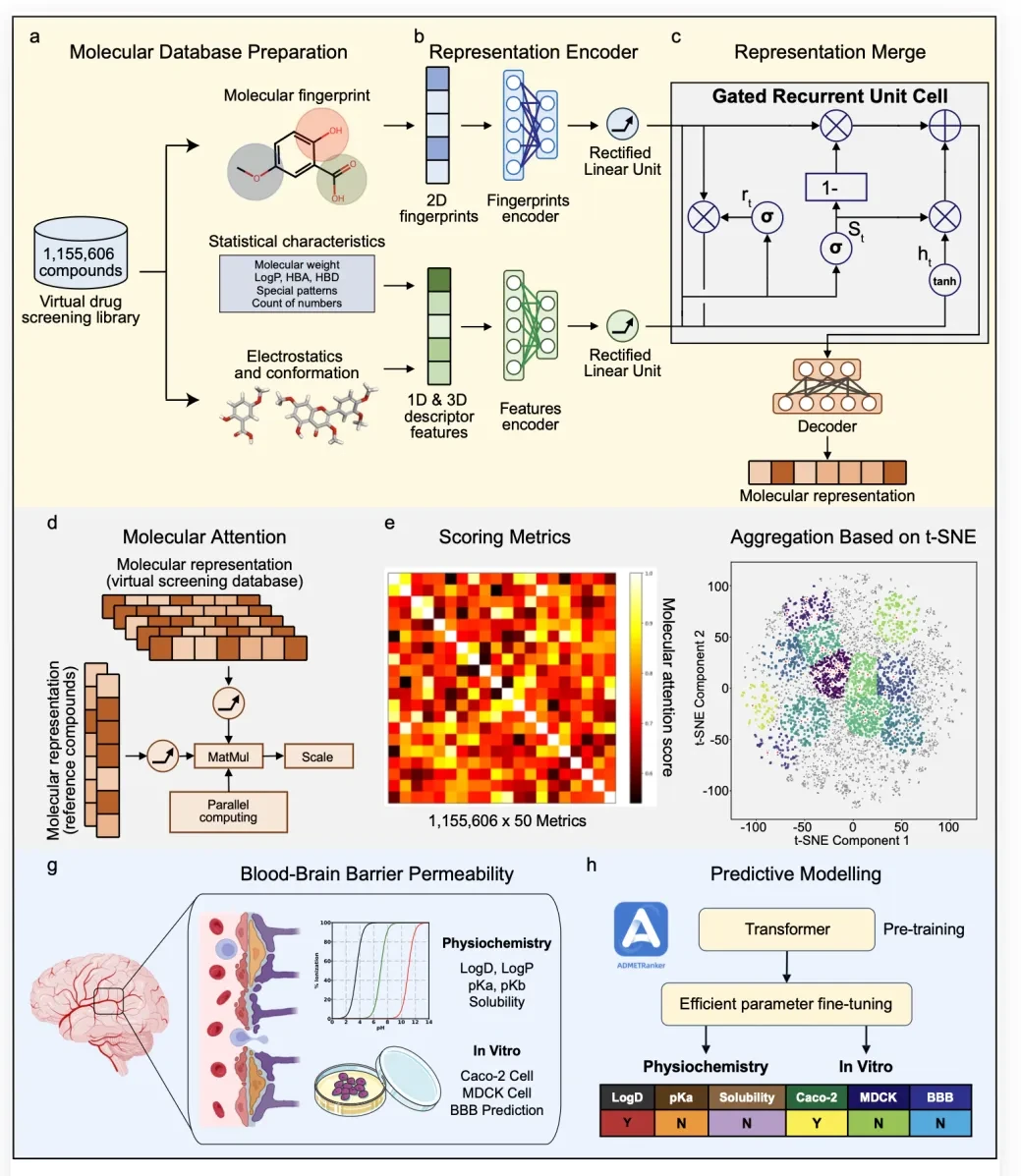
▲AI Combined Experiments Yield Lead Compounds Against AD

DeepDrugDiscovery: Leading the Revolution in Screening Paradigms
Faced with this world-class medical challenge, the research team, led by MindRank, introduced cutting-edge AI technology and built"DeepDrugDiscovery" AI-Driven Screening Platform,Achieved a "fundamental reconstruction" of the drug discovery process for brain diseases.
The platform adopts a hybrid representation architecture that integrates Variational Autoencoders (VAE) with Gated Recurrent Units (GRU), combining 2048-bit Morgan fingerprints and 19 one-dimensional and three-dimensional molecular descriptors for integrated encoding, learning information-rich latent molecular representations during unsupervised pretraining.
Unlike traditional screening methods that rely on a single target or molecular structural similarity, this technology focuses on "common biological mechanisms," achieving a paradigm-level elevation and demonstrating astonishing screening accuracy and efficiency.
The team firstScreening of 1.16 million compounds from the University of Macau's million-level natural product and traditional Chinese medicine compound library using the DeepDrugDiscovery platform.Leveraging GPU-accelerated molecular attention mechanisms, the platform completed the computation of a 50×1,155,606 ultra-large-scale similarity matrix in an extremely short time, pre-selecting 6,834 initial hits.
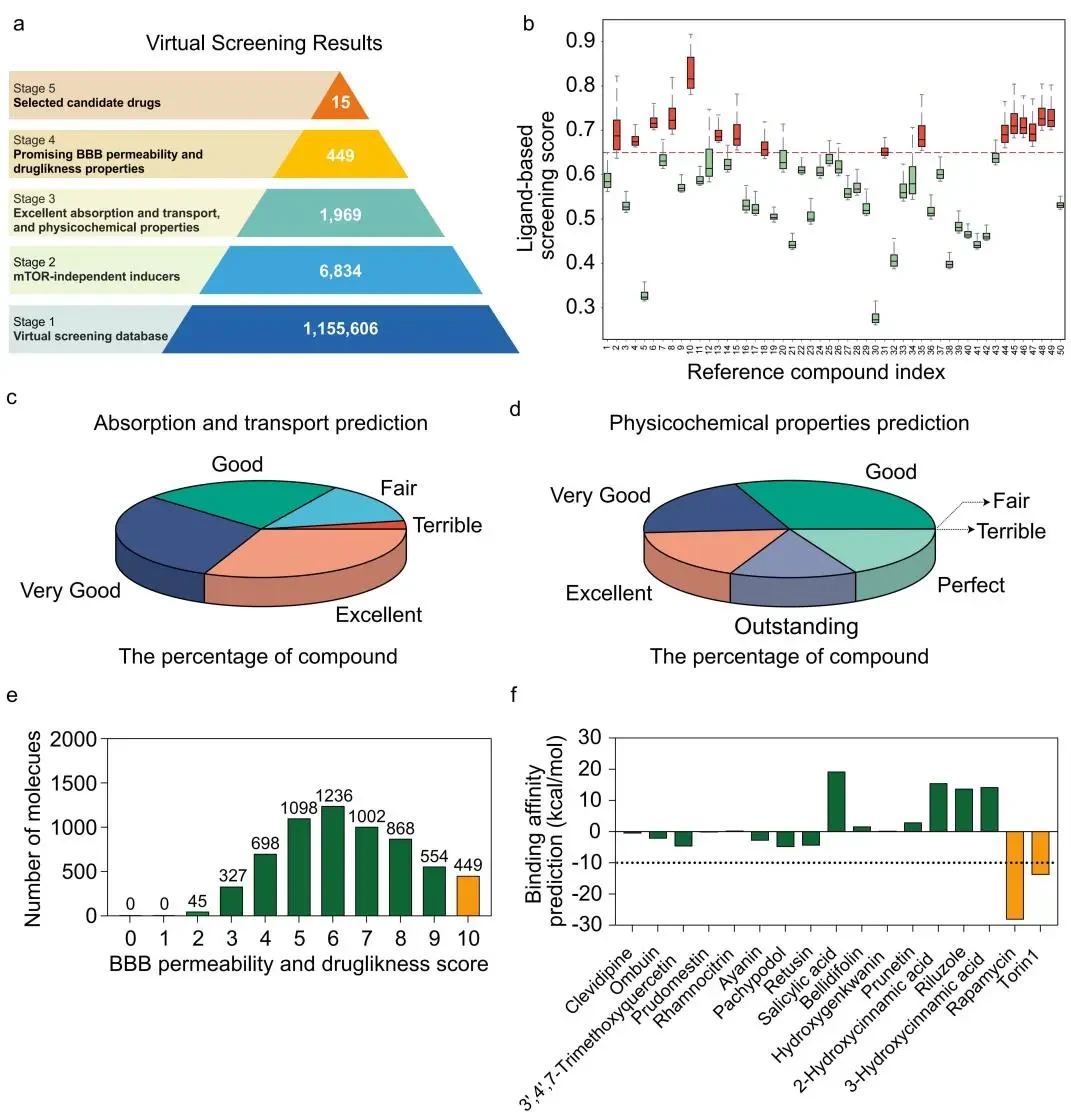
Subsequently, MindRank was applied.ADMET Ranker™The graph neural network/graph Transformer prediction module jointly evaluates key drug-likeness indicators of candidate molecules, such as BBB penetration, Caco-2, MDCK, LogD, pKa, and solubility. The research team successfully narrowed down the candidates to 449 high-potential molecules. Further, by combining molecular docking targeting FKBP12, mTOR kinase, and the FKBP12-mTOR complex, along with commercial availability verification,Finally, 15 candidate compounds were selected to enter the experimental stage.
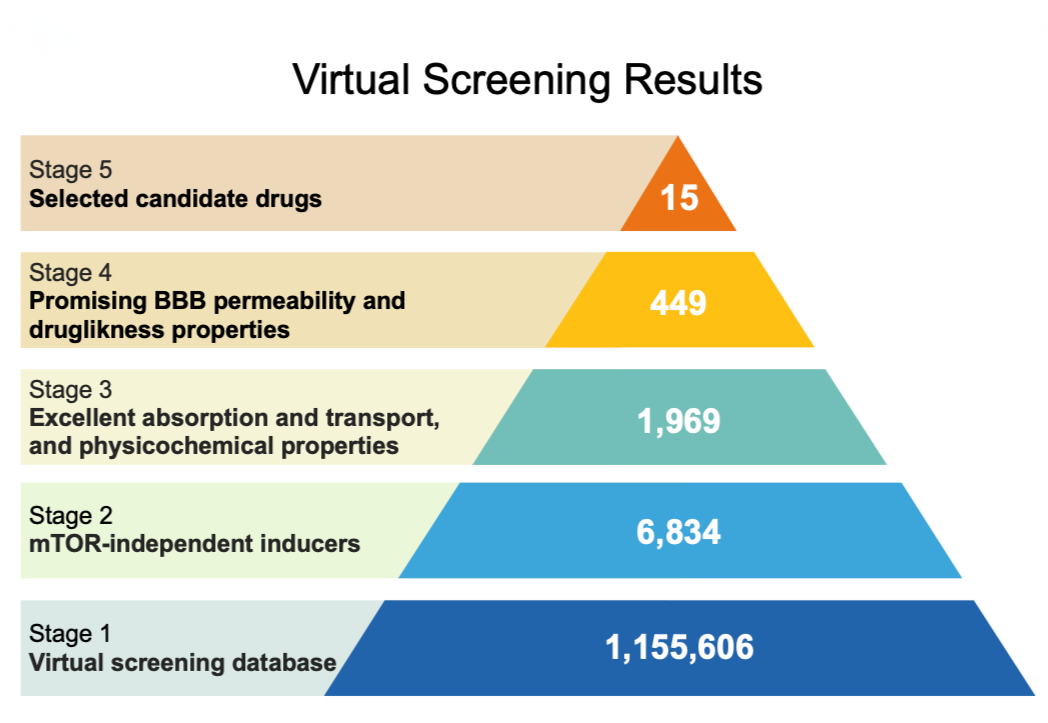

AI Empowered, Efficient and Precise Screening of High-Potential Lead Compounds
Verified through testing,The 15 candidate molecules screened out all demonstrated the ability to promote autophagy in cell experiments.Subsequently, the team further combined the changes in autophagy markers in N2a cells with the detection of mTOR and its downstream signals, screening out seven candidate molecules that could enhance autophagy without significantly affecting the mTOR pathway.
Based on the novelty of the mechanism of action, the innovativeness of neuroprotective activity, and chemical structural diversity, the research team selected four more drug-like candidates from seven molecules for further study. In Alzheimer's disease-related cell models, all four molecules were able to promote the clearance of abnormal proteins.Among them, Ombuin and 2-Hydroxycinnamic acid showed the most promise and were identified as core lead compounds.
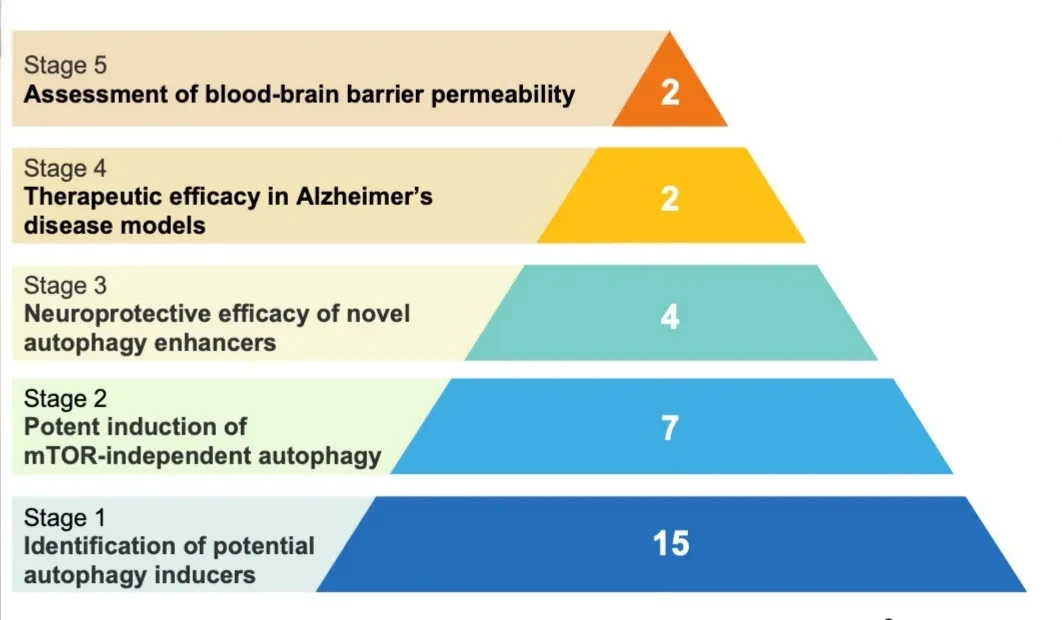
These two lead compounds have completed in vivo validation in Caenorhabditis elegans and 3×Tg-AD mouse models and further underwent assessment for blood-brain barrier penetration, both showing good neuroprotective potential.

Research Significance and Prospects
The corresponding authors of this study are Professor Jiahong Lu from the University of Macau and Dr. Zhangming Niu, founder and CEO of MindRank. The co-first authors are Postdoctoral Researchers Yu Dong and Xuxu Zhuang from the University of Macau, Dr. Xianglu Xiao, and Wenfan Wu from MindRank. Vice Dean Hanming Shen of the Faculty of Health Sciences at the University of Macau, Vice Dean Jianbo Wan of the Institute of Chinese Medical Sciences, Professor Huanxing Su, Associate Professor Hua Yu, and Associate Professor Defang Ouyang also provided significant support for the research.
The research team has open-sourced the platform.(https://deepdrugdiscovery.mindrank.ai) in order to empower more research on the mechanisms of traditional Chinese medicine and the development of innovative drugs.
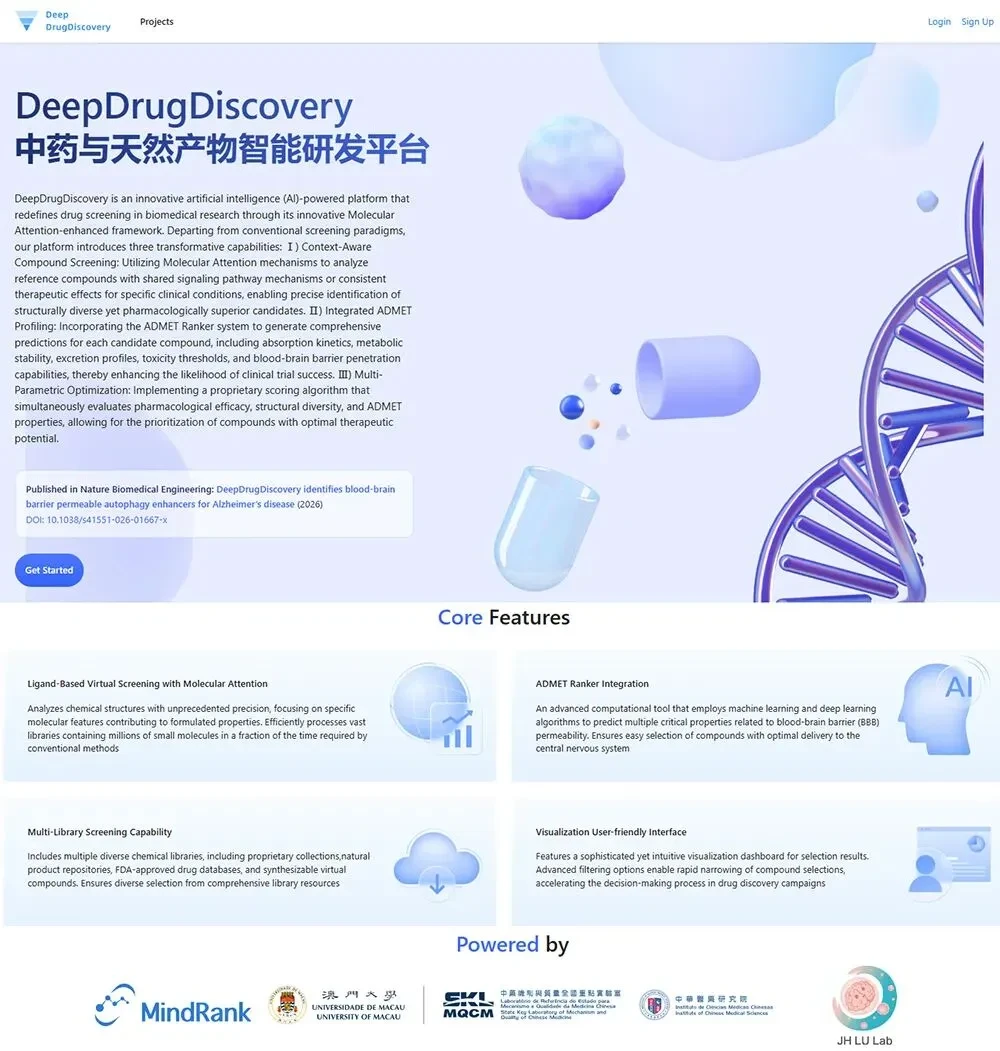

DeepDrugDiscovery
Traditional Chinese Medicine and Natural Products
Intelligent Development Platform
This study not only contributed two highly promising candidate molecules for the treatment of Alzheimer's disease,More importantly,Fully validated a highly viable, replicable, and scalable AI-driven new drug R&D pathway.By efficiently integrating mechanism-oriented screening, drug-likeness evaluation, and cross-species experiments,AI large model technology can significantly shorten the early discovery cycle, reduce screening costs, and substantially increase R&D success rates in challenging fields such as the central nervous system.
Looking to the future, MindRank will adhere to the value of "Technology for Good" and continue to focus on applying AI technology to solve major medical challenges such as Alzheimer's disease that threaten human health.Accelerate the transition of cutting-edge biotechnology from the laboratory to clinical settings, allowing innovative treatment hopes to benefit hundreds of millions of patients as soon as possible.
About MindRank

MindRank is a globally leading AI for drug discovery technology innovation company dedicated to empowering new drug research and development through machine learning, reinforcement learning, and first-principles calculations. Relying on its self-developed one-stop AI platform that deeply integrates biology, structural biology, chemistry, and medicine, it pushes the boundaries of pharmaceutical technology, making more diseases treatable and restoring health to more lives.
For more information, please visit the website:
www.mindrank.ai
Cooperation: bd@mindrank.ai
Other: info@mindrank.ai
END
IND Approved | MindRank's Self-developed WEE1/YES1 Dual Inhibitor Receives FDA Clinical Approval

Click 【Read More】 to get the full paper