

Microba Life Sciences: Building a Data-Driven Microbiome Diagnostics and Therapeutics Platform with Four Years of Revenue Growth and >50% Gross Margin

Microba
Microbial Genomics Technology Developer
The human gut is a “secret garden” harboring 10 trillion diverse symbionts (spanning 50 bacterial phyla and approximately 100–1,000 bacterial species). The aggregate of their genetic information constitutes the “microbiome,” also known as the “metagenome,” which contains 150 times more genes than the human genome and is therefore referred to as the “second human genome.”
In recent years, research on the gut microbiome has gained increasing momentum and yielded several important findings. For example, alterations and dysbiosis in the structure of the gut microbiota can lead toIntestinal Diseases, and is also associated with conditions such as diabetes, obesity, or type 2 diabetesChronic Systemic Metabolic Disease, rheumatoid arthritis, etc.Immune Diseases,Depression or anxiety, etc.Mental Disorders, or evenCanceris closely related to the occurrence of.
A growing body of research has confirmed that microbiomics holds great promise in the fields of detection and treatment. At the end of last year,First Microbiome Drug Approved by FDA, confirming the potential of microbiomics in drug and therapy development, the “spring” of microbiome-based therapies may have already arrived.
Microba Life Sciences (hereinafter referred to as “Microba”) is an Australian precision microbiomics company dedicated to developing data-drivenMicrobiome Diagnostic Analysis and Treatment Platform. Currently, Microba has advanced three therapeutic pipelines, including those for inflammatory bowel disease, immuno-oncology, and autoimmune diseases.
In April last year, Microba officially listed on the Australian Securities Exchange (ASX). Recently, Sonic Healthcare, a renowned medical diagnostic services provider, successfully acquired a stake in Microba, becoming its key strategic partner with plans to expand into markets across Europe and North America.
Founded in 2017, Microba went public within just five years after completing two rounds of financing. As the microbiome sector approaches its “spring,” how is Microba breaking through the competition, from diagnostics to the development of novel therapies?
From cardiac pacemakers and penicillin to cochlear implants and the cervical cancer vaccine, as well as the discovery of Helicobacter pylori, Australian scientists have left an indelible mark on the history of human medicine, making significant medical contributions. This nation, with a population of only 25 million, has produced eight Nobel laureates in Physiology or Medicine and cultivated more than 10,000 professionals in biomedical engineering.
The University of Queensland, as one of Australia’s oldest and largest universities, is home to the country’s first and onlyGenetic DiagnosticsMaster’s degree conferral authority. The Australian Centre for Ecogenomics is located here.
The Australian Centre for Ecogenomics, led by Professor Philip Hugenholtz with Gene Tyson as an Honorary Professor, employs ecogenomic approaches to explore the overall profile of microbial communities. It was here that the two researchers connected and jointly conducted metagenomics research.
Dr. Philip Hugenholtz earned his Ph.D. in Microbiology from the University of Queensland and served as the Metagenomics Program Leader at the renowned Lawrence Berkeley National Laboratory (LBNL) in the United States. Over his nearly 30-year career, microbiology and genomics have been the central themes, during which he led a team in establishing new international standards for bacterial taxonomy.
Gene Tyson completed his postdoctoral research in genomics at MIT, specializing in the development of culture-independent molecular methods for studying microbial communities. He has published numerous papers in journals such as Science and Nature, and was listed among the Highly Cited Researchers by Web of Science for two consecutive years. At the University of Queensland, Gene also leads the Centre for Microbiome Research (CMR).
“Metagenomics holds significant potential for revealing the role of the microbiome in human health and disease,” Gene stated. Guided by this insight, Gene co-founded Microba with Philip in 2017, with a vision to advance understanding of the impact of the human gut microbiome on health through expertise in metagenomic sequencing.
With the advancement of cutting-edge technologies such as gene sequencing, the field of microbiomics has accumulated a vast amount of research data.How to mine microbiota that play crucial roles in the onset and progression of diseases from massive datasets, and leverage these findings to inform the development of disease therapies, has become a key driver in the advancement of microbiomics.
Microbiomics can be applied in multiple specialized fields, including microbiome sequencing, microbial therapy, fecal microbiota transplantation (FMT), and improvement of infant gut microbiota. Many companies have already established a presence in these areas. Microba, a latecomer to the field of microbiomics, isTargeting microbial detection and therapeutic development, deploy three platforms for microbiome analysis, discovery, and therapy to fully leverage microbiomics data.。
To elaborate, Microba partners with distributors worldwide to distribute microbiome testing services. The resulting test data is stored in a database, where the microbiome analysis and discovery platform identifies microbiomes associated with diseases or health conditions, thereby generating therapeutic leads. Subsequently, Microba can collaborate with CROs or other pharmaceutical companies to develop new therapies.
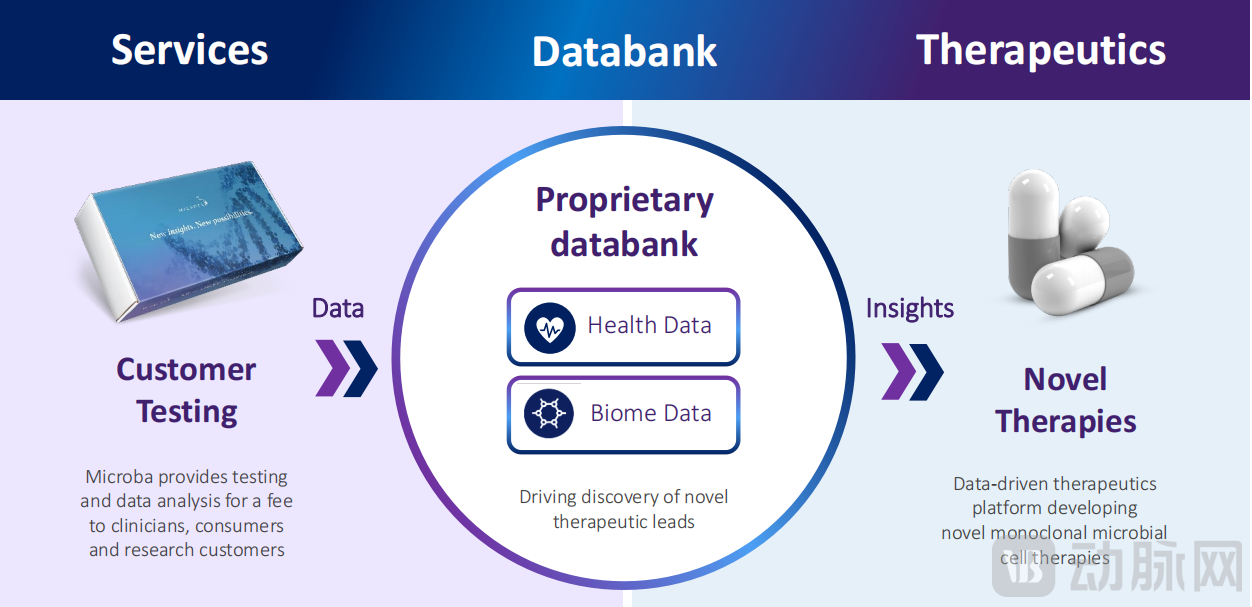 Microba Business Model Source: Microba Financial Report
Microbiome Analysis Platform: 95% Microbiome Coverage
Due to the limitations of traditional analytical techniques, many microbiomes remain undiscovered by science. “Better microbiome therapies depend on more precise microbiome science and technology,” which is the development philosophy of Microba. To this end, Microba has developed its core technology for microbiome analysis, the Microba Community Profiler (MCP).
MCP is a tool with high accuracy and specificity, capable of clearly identifying species that may be present in the community. According to data from published papers,MCP achieves up to 95% microbiome coverage, with a 34-fold improvement in species identification accuracy compared to other classifiers.。
Microbiome Discovery Platform: A Database of Over 1.2 Million Microbial Genomes
Based on the MCP platform, Microba has developed the Microba Genome Database, which includesOver 1.2 million microbial genome datasets—comprising 3.6 billion genes—and more than 15,000 analytical samples provided by 70% of consumers, with each sample generating 1,500 health metadata points covering medical history, medications, diet, lifestyle, and various reference recommendations.。
Microbiome databases can help drive the development of evidence-based medicine, discover diagnostic or prognostic biomarkers, and serve as a reference for novel food and nutritional solutions. Prior to its initial public offering (IPO), analysis leveraging the microbiome database had preliminarily identified therapeutic leads for 18 diseases.
Microbiome Therapeutics Platform: Advancing Three Pipelines in Inflammatory Bowel Disease, Immuno-oncology, and Autoimmune Diseases
The microbiome database contains a vast array of samples and rich, relevant data, making the application of interdisciplinary approaches to its development an essential strategy.
Leveraging its developed analysis and discovery platforms, Microba has employed bioinformatics, artificial intelligence, and biostatistics to identify key species and subspecies that distinguish healthy individuals from those with disease, while utilizing proprietaryGenome-Directed Isolation (GDI) Strategy“, accelerating the isolation of the gut microbiome, ‘to screen for disease-associated specific microbes within the microbiome in a manner akin to ‘designer drugs,’’” said Ian Frazer, Vice Chairman of the Board of Microba.
Conventional microbiome therapies are developed using fecal extracts or complex microbial consortia, with an average discovery timeline of 5–7 years for candidate drug pipelines, whereasMicrobaBy leveraging data-driven approaches to “design drugs,” the drug pipeline screening time has been significantly reduced, with its first lead candidate taking only 18 months.
Currently, the three therapeutic areas being advanced by Microba are inflammatory bowel disease, immuno-oncology, and autoimmune diseases.
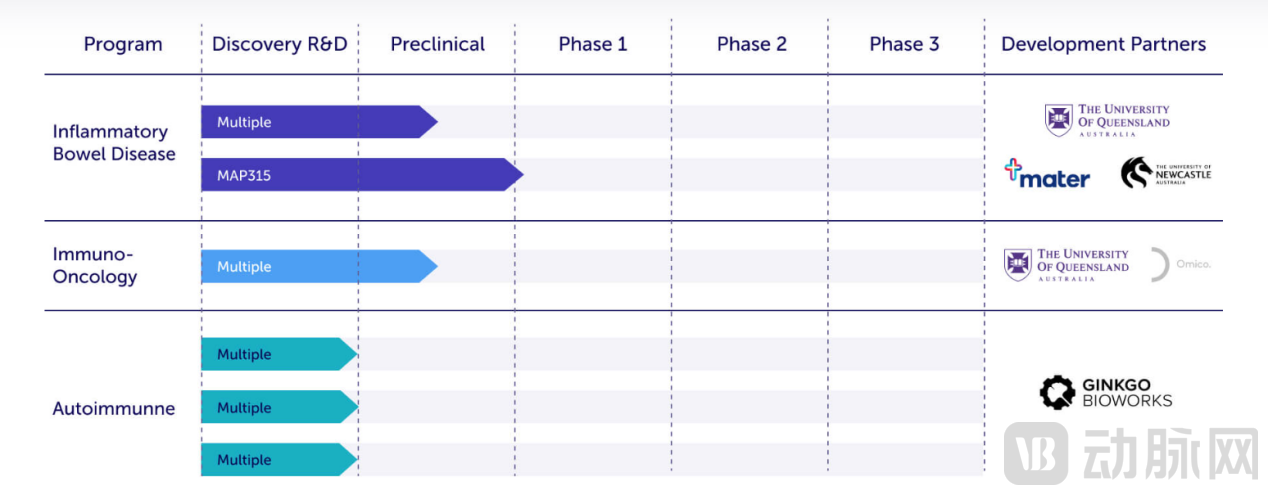 Microba’s Drug Development Pipeline Source: Microba Official Website
Microba has developed a using MCP technologyInflammatory Bowel Disease (IBD)The model identified microbes that are common in healthy individuals but significantly reduced in patients with ulcerative colitis. After multiple rounds of experiments, the candidate drug MAP315 emerged as a standout.MAP315 is a single-strain product, with Phase I clinical trials planned for 2023.
Through its collaboration with Ginkgo Bioworks, the companies are jointly identifying drug candidates for the treatment of lupus, psoriatic arthritis, and certain autoimmune liver diseases. Additionally, Microba has identified three potential leads for immune checkpoint inhibitor (ICI) combination therapy, as well as relevant leads for asthma and allergic rhinitis.
Data is the gold standard for validating whether a business model is viable; judging from its published financial reports, Microba’s business model has already matured.
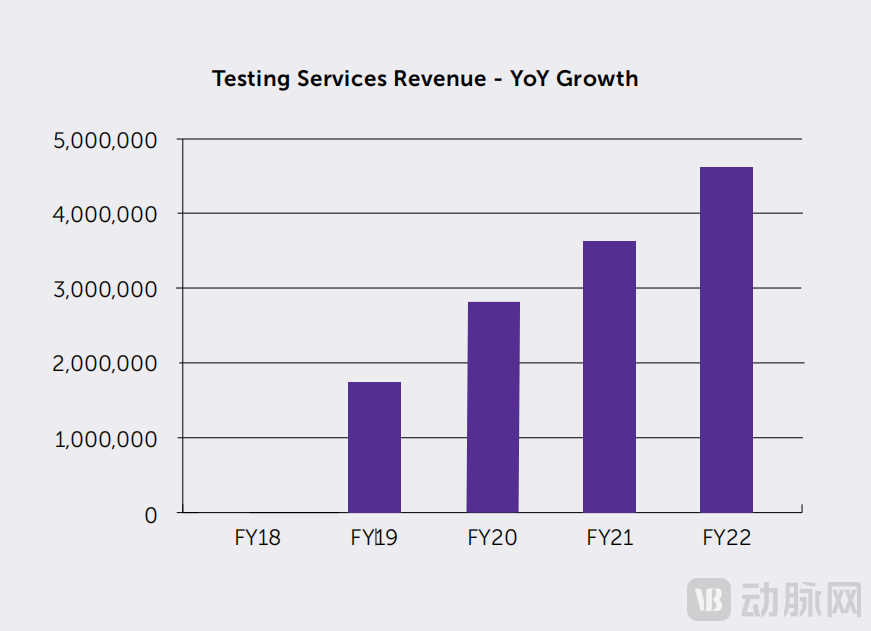 Testing Service Revenue (in USD) Source: Microba 2022 Annual Report
According to the annual report,Microba’s total revenue for fiscal year 2022 was approximately $4.69 million, representing a 25% year-on-year increase.. Among them,Testing services, as the primary revenue source, achieved year-on-year growth for four consecutive years, demonstrating strong momentum.. Affected by the COVID-19 pandemic, raw material prices from upstream suppliers have risen, butMicroba’s testing services continue to deliver a gross margin exceeding 50%.
Microbiome Testing Services Are Microba's Core BusinessAfter subscribing to the service, users receive a home sampling kit. Once they complete the sample collection and mail it back, they will receive a personalized microbiome analysis report within a few weeks. The report covers bacterial, fungal, archaeal, and protist species, providing insights into the gut microbiota’s capacity to metabolize proteins, fibers, and fats, as well as an analysis of metabolites that may impact health. It also offers personalized dietary recommendations to help improve gut microbiota and overall health.
Financial reports indicate that prior to its IPO, Microba had directly sold over 20,000 testing services at a price of $349 per test (compared to the market average of $300).
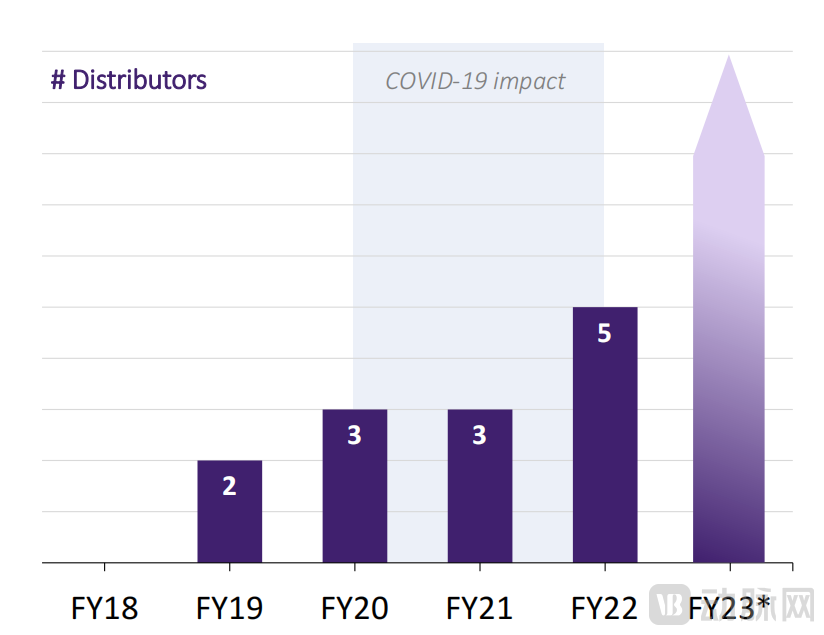 Number of Distributors Source: Microba Q1 FY2023 Financial Report
Currently, Microba isAustralia, New Zealand, the United States, Europe, and the Middle EastEstablished distribution partnerships with Metagenics, SYNLAB, Genova Diagnostics, G42 Healthcare, and midnight health. The distributors are responsible for selling testing services and processing samples to generate raw data, which is then sent back to Microba. Microba’s analytics platform processes and analyzes the data to generate personalized microbiome reports for delivery to customers.
According to the financial report, Microba is advancing distribution partnerships in 18 other regions, including four U.S. regional distributors.
Next is the microbiome database research service.Microba provides an end-to-end solution encompassing participant recruitment, sample collection and processing, metagenomic sequencing, multi-species and functional microbiome analysis, and complex bioinformatics statistics. To date, Microba has executed over 200 research projects for more than 50 organizations across seven countries, with clients including Unilever, The University of Queensland, the Australian Department of Defence, and Illumina.
According to Canaccord Genuity’s analysis, although the business volume is growing, database services are unlikely to become Microba’s primary revenue source. The more significant value lies in expanding partnerships and uncovering potential therapeutic leads through the database.
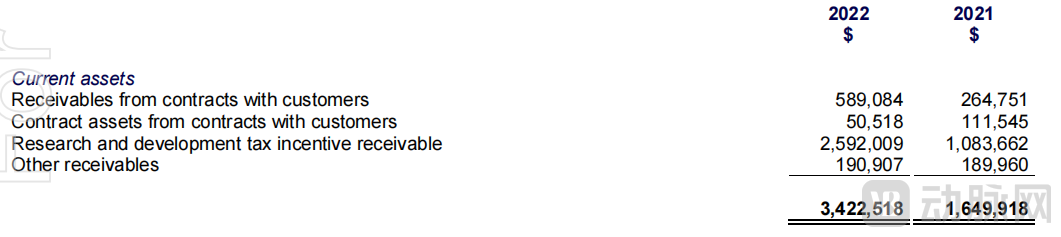 Accounts Receivable Source: Microba 2022 Annual Report
Finally, there is Microba's development of microbiome therapies.. According to the annual report, Microba invested approximately USD 7.12 million in therapy development, with losses reaching USD 11.47 million as of June 2022, representing a year-on-year increase of about 52%. This indicates that Microba’s therapy development has not yet become profitable and remains in a phase of increased investment.
However, based on its accounts receivable for fiscal year 2022, the receivables from R&D tax incentives amounted to USD 2.59 million. It is expected that microbiome therapy development will become one of the business growth drivers as its candidate drug MAP315 enters Phase I clinical trials and therapeutic pipelines in immuno-oncology and autoimmune diseases advance into the development stage.
Overall, Microba has shown significant changes in several key metrics, and this trend is likely to continue into the next fiscal year. As the company advances its global business expansion strategy, operating expenses may increase. However, microbiome testing services have already become a stable profit center with clear growth momentum, which is expected to persist as the market continues to expand. On the other hand, the newly added microbiome R&D business is still in its early stages, requiring substantial investment and resulting in increased losses. Once its drug candidates successfully enter clinical trials, these losses are expected to narrow.
With the FDA’s approval of the world’s first microbiome-based drug, such therapies are no longer merely conceptual. In the future, multiple therapeutic candidates from Microba may gain priority in the market. Its data-driven approach to microbiome drug development could become a promising direction for similar companies, echoing Canaccord Genuity’s analysis that “Therapeutic platform is the end game.”
According to the Crunchbase database, U.S. companies in the gut microbiome sector have secured over $1 billion in financing over the past five years. Data from MarketsandMarkets projects that the global microbiome market will grow to $1.37 billion by 2029, with a compound annual growth rate (CAGR) of 31.1% from 2023 to 2029.
Over the past decade, the number of microbiome-related publications has increased tenfold. As more scientists recognize the immense potential of microbiome research, countless startups have emerged in this field. With the application of next-generation sequencing (NGS) to microbiomics, enabling precise detection of the composition and abundance of gut microbiota, an increasing number of associations between the microbiome and health have been identified and validated, thereby expanding the scope of microbiome applications.
By application area, the microbiome market is divided intoDiagnosis and Treatmentas well as a small portion ofGenetic Engineering。Microbiome therapeutics is the commercialization direction with the largest number of companies and the highest amount of financing., it is evident that this represents one of the most promising avenues for the application of microbiome data. These therapeutic approaches can be broadly categorized into two types: one involves the development of new drugs to modulate the gut microbiota, while the other leverages live agents such as bacteriophages to selectively eliminate harmful intestinal bacteria.
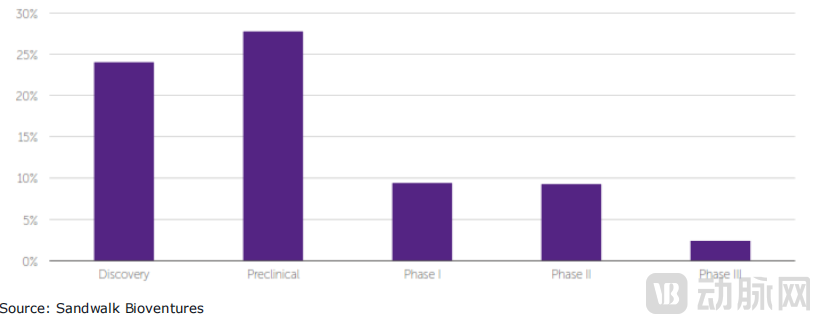 Statistics on Microbiome Drug Development Stages (Data as of August 2022) Source: Sandwalk Bioventures
Based on disease scope, the microbiome market can be segmented intoGastrointestinal Disorders, Endocrine and Metabolic Disorders, Infectious Diseases, Cancer, and Other Diseases. Affected by the pandemic over the past two years, the priority of infectious diseases has been significantly elevated. Microba is also developing a product called MetaPanel for identifying causative agents of gastrointestinal infectious diseases in clinical settings. With Microba’s ISO 15189 accreditation, the delivery of this product has become feasible.
According to PubMed data, more than 100 clinical studies have shown that microbiome modulation can improve health outcomes associated with chronic diseases, and one of the next frontiers in medicine and chronic disease management will beAnalysis and Modulation of Individual Gut Microbiota。