

LingTong Technology Breaks Foreign Monopoly with Proprietary Algorithms and Chips in Hearing Aids
How Has the Hearing Aid Industry in China Developed?
In terms of the number of enterprises, VCBeat searched for “hearing aids” on Tianyancha and found that, as of now, there are a total of 22,472 hearing aid-related companies. Among them, 669 were established within the past year, 5,938 were established 1–5 years ago, 7,556 were established 5–10 years ago, 4,200 were established 10–15 years ago, and 3,798 were established more than 15 years ago. The data indicate that the past decade has been the peak period for the establishment of hearing aid companies.
However, it is worth noting that,The global hearing aid market has long been monopolized by five major foreign companies: WS Hearing Group, Sonova Hearing Group (Switzerland), W.D.H. Hearing Group, GN ReSound Hearing Group (Denmark), and Starkey Hearing Group., with its product portfolio primarily consisting of high-end digital hearing aids and personalized custom-fit devices, it focuses on an offline professional fitting and sales model. The average unit price is high, at approximately $2,400 per device, accounting for nearly 90% of the global market share.
The remaining approximately 10% of the market share is fragmented among numerous micro and small enterprises, which primarily target the mid-to-low-end market. Their product portfolios consist mainly of analog hearing aids, with a limited number of digital models, resulting in lower unit prices. However, it is evident that no company would willingly confine itself to competing fiercely within this mere 10% slice of the market. Consequently, the localization and substitution of mid-to-high-end hearing aids with domestically produced alternatives have been prioritized on the industry agenda.
Thus, behind this “grand ambition,” the development path has become the most immediate and critical issue facing most hearing aid companies. With core hearing aid algorithms proving difficult to break through and application-specific chips monopolized by foreign companies, domestic enterprises are left with only two options: either purchase core components such as application-specific chips at high prices, become product integrators, and invest heavily in marketing to quickly enter the market; or focus on R&D to overcome technical barriers and independently master the core technologies of hearing aids. Chen Chirong, founder of Beijing Lintong Technology Co., Ltd., firmly chose the path of independent R&D.

Established in 2018, Lintong Technology focuses on the independent research and development of core algorithms and application chips for medical hearing aids. Its core team comprises experts in artificial intelligence, internet technology, audiology, acoustics, and signal processing. Currently, Lintong Technology possesses a comprehensive suite of hearing aid technologies and offers mature solutions including medical hearing aids, OTC (Over-the-Counter) hearing aids, and hearing assistance headphones. Its OTC hearing aids have received approval from the U.S. FDA.
“In fact, everyone has recognized the market’s growth potential and has consistently advocated for ‘domestic substitution,’ yet why has there been no substantial progress?” said Chen Chirong. “I believe the core issue lies in whether companies can devote themselves to R&D, truly overcome the key technical challenges monopolized by foreign hearing aid manufacturers, and thereby address users’ pain points with their products. The approach of third-party technology integration is somewhat too eager for quick results.”
Hearing aids have always been a promising business that requires significant effort from companies.
The primary reason lies in the large base of individuals with hearing loss within the hearing aid industry. According to the latest epidemiological statistics on hearing impairment in China, the total number of people with hearing disabilities exceeds 200 million.
Second, the hearing aid market remains highly untapped. According to relevant statistics from the Centers for Disease Control and Prevention, China’s hearing aid penetration rate was approximately 5% in 2016, while that of developed countries such as the United States stood at only 20%–30%.
Recently, the hearing aid market, which already held significant growth potential, has been further stirred by the approval of a new regulation.
In August 2017, the United States enacted the OTC Hearing Aid Act, allowing for the establishment of a new category of hearing aids that could be sold without a physician’s prescription, known as over-the-counter (OTC) hearing aids. In August 2022, the U.S. Food and Drug Administration (FDA) announced the creation of a new OTC hearing aid category, which took effect on October 17, 2022.
This regulation is of significant importance to innovative enterprises in the hearing aid market, as it fosters a more open market and allows more innovative companies to enter.
As early as 2017, when the legislation was initiated, Beijing Lintong Technology Co., Ltd., with its keen business acumen, seized this development opportunity and officially entered the hearing aid industry.
“In fact, the historical constraints on the hearing aid industry’s development have primarily stemmed from technological monopolies, low cost-effectiveness, and an excessive reliance on service-oriented models. To break free from these shackles, achieving independent breakthroughs in core algorithms and chips for digital hearing aids is undoubtedly the key, representing a critical opportunity that innovative technology companies must seize,” stated Chen Chirong. Beijing Lintong Technology Co., Ltd. will certainly not let this opportunity slip by.
Furthermore, Beijing Lintong Technology Co., Ltd. has keenly identified another significant trend: the rapid growth in hearing aid sales through e-commerce channels in recent years. Industry insiders reveal that hearing aid sales on e-commerce platforms have grown by an average of approximately 50% annually in recent years. This represents another opportunity for hearing aids in terms of distribution channels.
The first step in entering the market is to choose between self-developed or integrated technical paths. The answer is obvious—Lintong Technology chose to independently develop its core algorithms.
“The hearing aid industry is a technology-driven sector. Medical-grade hearing aids, akin to medical devices and pharmaceuticals, must rely on core technologies and functionalities to attract users; this constitutes the industry’s core and serves as the foundation for corporate sustainability.”Chen Chirong stated to VCBeat, “The core technologies in the hearing aid industry lie in algorithms and chips. The five major overseas hearing aid manufacturers all develop their own algorithms and chips, which constitute their core competitive barriers and also serve as the entry point for our technological R&D.”
VCBeat has learned that Lintong Technology’s R&D team primarily hails from the internet audio-video conferencing industry, with substantial expertise in speech algorithms, digital signal processing, and cloud computing.
Through the relentless efforts of its core team over several years, Lintong Technology has completed the development of a comprehensive suite of core algorithms for hearing aids, including wideband dynamic sound loudness compensation, intelligent noise reduction, echo suppression, and feedback management.
“Lintong has successfully developed the core algorithms for hearing aids in-house,” said Chen Chirong. “However, the computational power of hearing aid chips is extremely limited—nearly 1,000 times less than that required for cloud-based audio conferencing. This means that optimizing these algorithms to run effectively on the small chips in hearing aids presents another major challenge for hearing assistance technology.”
In this regard,Through continuous algorithm iteration and optimization, as well as close collaboration with system-on-chip (SoC) manufacturers, the Lintong team has achieved the integration and optimization of the aforementioned core algorithms on digital signal processing (DSP) chips. Building on this foundation, they have successfully developed a complete hearing aid device.
Currently, Lintong Technology’s underlying algorithm framework supports 32–128 adjustable frequency bands, whereas typical domestically produced hearing aids offer only 4–16 adjustable bands, and foreign brands provide merely 12–24. Furthermore, Lintong Technology’s hearing aid chip is an “Application-on-Chip” (AoC) with fully independent intellectual property rights. It features low latency, seamless integration of Bluetooth wireless technology, and high cost-effectiveness, with its cost amounting to only one-fifth that of traditional hearing aid chips.
Furthermore, beyond core technical challenges such as algorithms and chips, the medical nature of hearing aids underscores the critical importance of the fitting process. Traditional professional hearing aid fittings require patients to visit clinics in person, where licensed audiologists assess their hearing loss profiles and adjust the hearing aid parameters accordingly.
Therefore,To streamline operations, Lintong Technology leveraged its prior experience in cloud computing for web conferencing to successfully develop the intelligent fitting app, Lintong Hearing Aid.
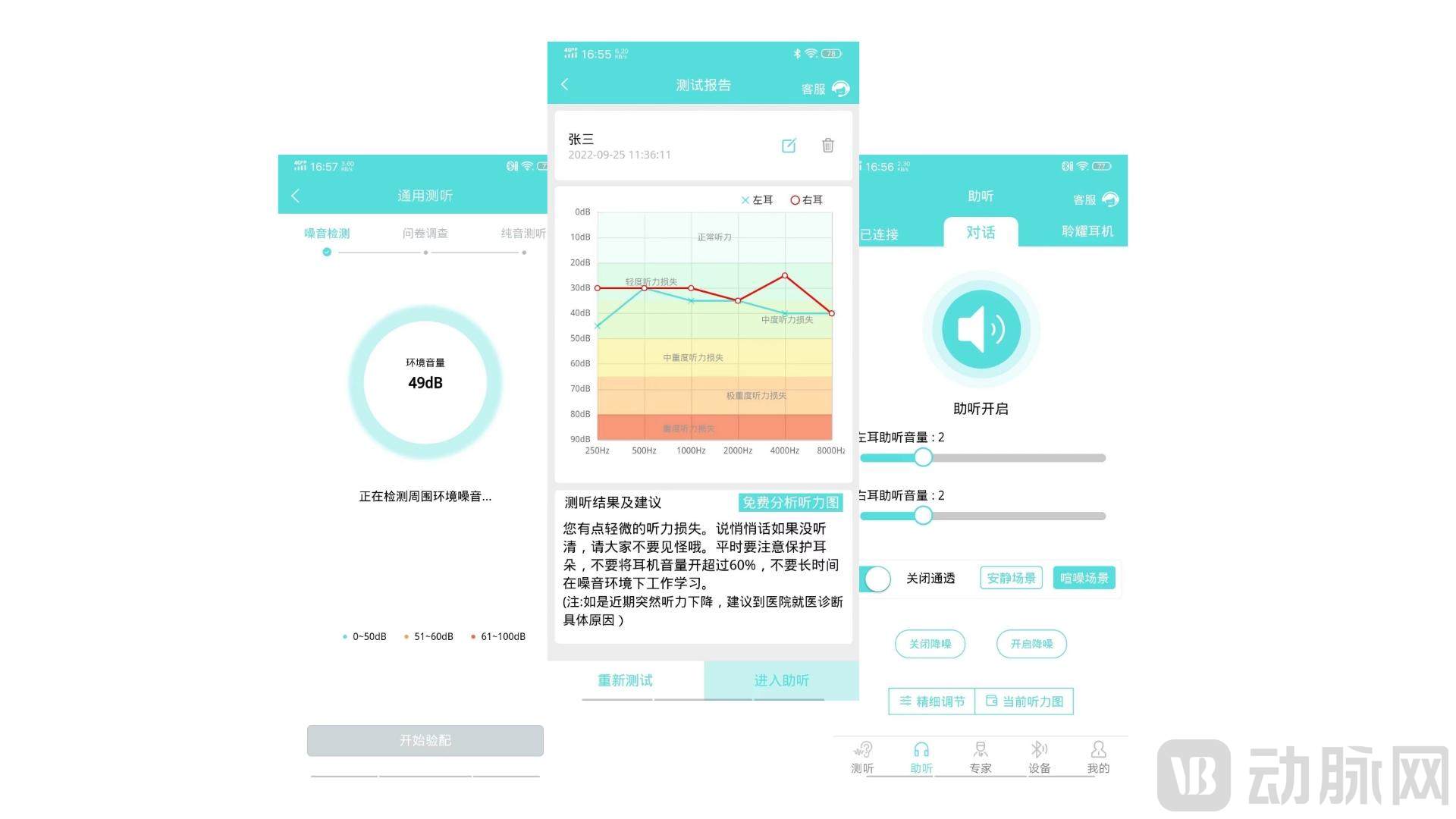
“We aim to handle 80% of fittings solely through this app, with the remaining 20% completed via online video conferencing,” stated Chen Chirong. He noted that this is entirely achievable, leveraging the deep expertise accumulated by Lintong Technology’s core technical team in cloud-based video conferencing.
Currently, the testing software integrated into the “Lingtong Hearing Aid” app has been certified by the National Institute of Metrology, China, meeting the national standards for audiometers, which sufficiently demonstrates the accuracy of its hearing tests.
Just one month after the formal implementation of the FDA OTC Act, Lintong Technology’s hearing aid products received FDA approval, making the company among the first in China to obtain such authorization.
In China, the complete Lintong hearing aid device is also under review. It is expected to receive medical device approval from the NMPA in early 2023.
However, Chen Chirong emphasized,Lintong Technology’s ambition is not confined to the traditional medical hearing aid market targeting individuals with moderate-to-severe or severe hearing loss. Instead, it aims to leverage its algorithmic strengths to extend its value chain into the hearable headphone market for those with mild hearing impairment, providing assistive-listening algorithm solutions to premium headphone manufacturers.
Regarding the rationale for entering the over-the-counter (OTC) hearing aid market, Chen Chirong stated that the decision was primarily driven by two factors: first, the substantial market size of OTC hearing aids, and second, marketing innovations enabled by internet-centric thinking.
According to the World Report on Hearing released by the WHO in March this year, 5% of the global population currently has moderate to severe hearing loss, while those with mild hearing loss account for 15% of the total population. Currently, hearing loss affects more than 1.5 billion people worldwide. By 2050, it is projected that nearly 2.5 billion people will have some degree of hearing loss.
Where there is demand, there is a market. Consequently, in recent years, hearing-assist earbuds have become one of the mainstream directions for TWS (True Wireless Stereo) earbud manufacturers seeking transformation in a fiercely competitive market environment.
Taking Apple and Huawei as examples, in 2021, Apple added “Noise Cancellation” and “Conversation Boost” features to the AirPods Pro, making it easier for users to hear face-to-face conversations.
andHuawei has also added a “Hearing Optimization” feature to its FreeBuds Pro earphones.After completing the hearing test, users can enable "Hearing Optimization" to receive personalized gain compensation based on their individual hearing profiles.The core algorithm of this feature was developed through a collaboration between Huawei and Beijing Lintong Technology Co., Ltd.
More importantly, the Lintong team possesses an internet industry DNA—continuous innovation is the essence of the internet, which is reflected not only in technology but also in market expansion and marketing.
“Lintong has simplified algorithms originally designed for medical-grade hearing aids to provide headphone manufacturers with an algorithmic solution tailored for individuals with mild hearing loss,” said Chen Chirong. This represents Lintong’s strategic logic in the hearable assistive listening market, as well as its innovation in market expansion and marketing strategies, leveraging its in-house R&D capabilities in hearing aid algorithms and chips.