

Concemed Medical Completes Tens of Millions RMB Pre-A Financing to Accelerate Domestic Soft Endoscopy Innovation
VCBeat has learned at the earliest opportunity that, in recent days,Shenzhen Cosmo-Med Medical Technology Co., Ltd.(hereinafter referred to as"Kesi Mingde") CompletedTens of millions of yuan in Pre-A roundFinancing, byCO-WINLead Investor,National Innovation Center for High-Performance Medical Devices (hereinafter referred to as the "National Innovation Center")Co-investment. The funds raised in this round will be invested to further consolidate and expand the R&D pipeline, accelerate product commercialization, and increase brand marketing expenditures.
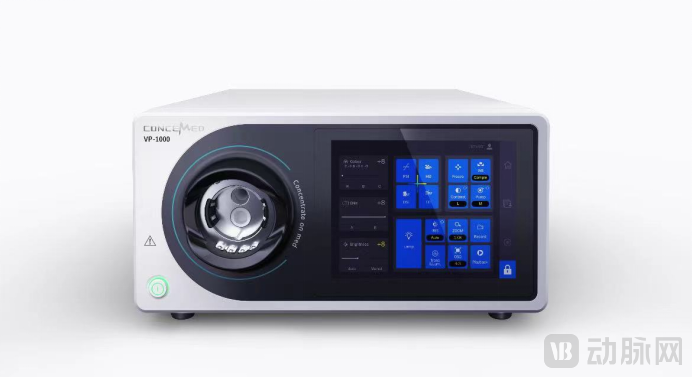
Cosming was established in 2022. The company specializes in flexible electronic endoscopes for gastroenterology, committed to identifying clinical needs and meticulously crafting high-quality products to provide clinicians with optimal diagnostic and therapeutic solutions. The Cosming team possesses extensive experience in product research, development, and manufacturing. It has built a robust foundation of core technologies around its flexible electronic endoscopy platform for gastroenterology, enabling in-house deep-level R&D and manufacturing of both processor units and endoscope insertions. Its innovative technical solutions encompass dozens of patented technologies. Currently, Cosming has independently developed China’s first integrated flexible endoscopy platform, along with complementary innovative gastroscope and colonoscope products, and has laid out multiple groundbreaking products centered on this flexible endoscopy platform.
According to the latest 2020 global cancer burden data released by the International Agency for Research on Cancer (IARC) of the World Health Organization, colorectal cancer, gastric cancer, and esophageal cancer ranked 2nd, 3rd, and 6th, respectively, among the top ten cancers by incidence in China. The incidence and mortality rates of malignant tumors increase with age, rising rapidly after the age of 40. With the aging of China’s population, the incidence of gastrointestinal cancers is steadily increasing. Currently, flexible electronic endoscopy remains the primary tool for screening and treating gastrointestinal cancers. There is a growing consensus on the importance of “early detection, early intervention, and early treatment” for precancerous conditions and tumors of the digestive tract. Pathological examination of biopsy or resection specimens obtained via endoscopy is the gold standard for diagnosing gastrointestinal cancers, and endoscopic resection of precancerous lesions can reduce both the incidence and mortality rates of these cancers.
However, according to 2021 bidding data from China Medical Procurement Network, domestic brands hold less than a 10% market share in the endoscopy sector, with imported brands still dominating Chinese hospitals. Domestic manufacturers urgently need breakthroughs in specialized technical areas such as scope craftsmanship, duodenoscopes, 4K flexible endoscopes, optical magnifying endoscopes, and ultrasound endoscopes. According to research data from CITIC Securities, the domestic market size for flexible endoscopy equipment is growing rapidly, projected to reach RMB 8.12 billion by 2025 and RMB 11 billion by 2030.
As China’s population continues to age, the demand for early screening, diagnosis, and treatment of gastrointestinal cancers will rise accordingly. Consequently, domestic brands of flexible endoscopes—devices closely associated with these procedures—will become a focal point for both the industry and the market. Meanwhile, as serious medical products that combine diagnostic and therapeutic functions, flexible endoscopes are subject to stringent user expectations regarding safety and efficacy. Companies like CosmoMed, which boast years of accumulated expertise in the industrialization of medical devices, excel at leveraging technological innovation while ensuring product quality and stability, and thus are poised to gain greater market favor.
Ms. Huang Li, Founding Partner of CO-WIN Venture Capital“It stated: ‘The flexible endoscope market boasts a scale of tens of billions of yuan, featuring numerous innovative procedural techniques. However, the domestic production rate stands at only 10%, with market share still monopolized by imported brands such as Olympus. This makes it a highly promising and high-quality sub-sector within the medical device industry. Our team has long focused on this sector, consistently seeking teams that truly master core technologies and process know-how to deliver high-quality products. The CosmoMed team possesses extensive technical accumulation and R&D experience in this field, having successfully developed multiple excellent products validated by top-tier hospitals both domestically and internationally. We believe that the team can produce even more superior high-end endoscopes, achieve further breakthroughs in innovation, and become a leading comprehensive solution provider in the flexible endoscopy field, thereby creating significant value for clinical specialties such as gastroenterology and delivering greater benefits to patients.’”
Dr. Liu Heng, Deputy General Manager of the National Innovation Centerstated: “Cosming’s breakthroughs in endoscopic products represent an innovative case within the domain of high-end domestically produced medical devices. The Cosming team not only possesses strong capabilities in translating scientific and engineering innovations into practical applications, but also demonstrates the resilience and mature management philosophy characteristic of outstanding entrepreneurs. The National Medical Device Innovation Center is honored to participate in this financing round for Cosming. Flexible endoscopy is a key focus area for the Center, and this investment marks a significant step in its strategic layout within the flexible endoscope sector. It will deepen collaboration between the Center and Cosming in areas such as technological breakthroughs, product development, and clinical application, thereby increasing the domestic production rate of flexible endoscopes and breaking the monopoly held by foreign giants.”
Kesi Mingde Teamstated: “We extend our gratitude to both new and existing shareholders, including CO-WIN Venture Capital and the National Center for Technology Innovation, for their support. Kesi Mingde will continue to proactively respond to clinical needs by developing more innovative flexible endoscopy products, striving to become a leading domestic and world-class provider of comprehensive solutions for flexible endoscopes.”
CO-WIN
Shenzhen CO-WIN Asset Management Co., Ltd. (hereinafter referred to as “CO-WIN”) was established on June 26, 2000, and is among the first batch of domestic professional venture capital firms in China. With over 22 years of investment management experience, the company manages assets exceeding RMB 30 billion, has invested in more than 600 enterprises, and facilitated the public listing of over 100 portfolio companies, including 24 listed on the STAR Market. It is a leading domestic professional investment institution with a long operational history and consistently outstanding returns.
CO-WIN Venture Capital leverages industrial chain investment as its entry point, focusing on emerging industries and specializing in sectors such as healthcare, technology, information, and consumer goods. With extensive investment experience in hard-core and frontier technologies, the firm employs a prudent investment strategy to deeply uncover hidden champions and supports innovation and entrepreneurship through empowering investments, fully serving the real economy. Guided by the philosophy of being “a companion to startups and a guide to great enterprises,” CO-WIN is committed to progressing and growing alongside founders and entrepreneurs with an open mindset, acting as a “super partner” to businesses.
National Innovation Center
National Innovation Center for High-Performance Medical Devices (hereinafter referred to as the “National Innovation Center”) was jointly established under the leadership of the Shenzhen Institutes of Advanced Technology, Chinese Academy of Sciences; Shenzhen Mindray Bio-Medical Electronics Co., Ltd.; Shanghai United Imaging Healthcare Co., Ltd.; LifeTech Scientific (Shenzhen) Co., Ltd.; and Harbin Institute of Technology. It was approved for construction by the Ministry of Industry and Information Technology in April 2020. As Shenzhen’s first national-level manufacturing innovation center, it is also the sole innovation center established by the state in the field of medical devices. Focusing on the critical demands for high-end medical equipment in prevention, diagnosis, treatment, and rehabilitation—areas closely linked to healthcare—the National Innovation Center prioritizes key sectors including high-end medical imaging, in vitro diagnostics and vital signs monitoring, advanced therapies, implantable and interventional devices, and rehabilitation and health informatics. It is committed to overcoming common core key technologies that constrain industry development, covering all stages from technology development and transfer to initial commercial application, thereby building an innovative ecosystem for the high-performance medical device industry that integrates the innovation chain, industrial chain, and capital chain.