

Shenzhen TechBio Launches China's First Pet Cancer Early Screening Product, PetCanSeek®
Cancer is the leading cause of death in dogs.
Similar to humans, both genetic and environmental factors contribute to the development of cancer in dogs: mutations conferring cancer susceptibility are concentrated in many breeds, an unintended side effect of selective breeding; dogs share the same environment as humans, including exposure to numerous carcinogens. Pets of any age can develop cancer, and the likelihood increases with longevity.
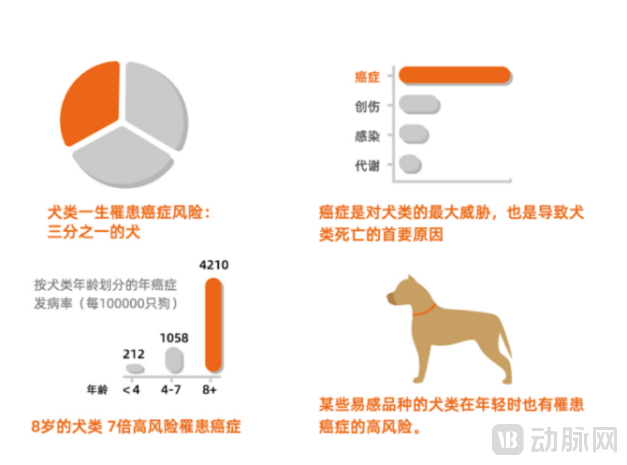
Animals have a much higher pain tolerance than humans, and since dogs cannot verbally express their symptoms as humans do, they often exhibit few signs in the early stages, making it difficult for owners to detect any abnormalities.
Dogs grow five to seven times faster than humans, leading to rapid disease progression once they fall ill. As cancer develops, dogs begin to exhibit various symptoms, such as loss of appetite, weight loss, frequent withdrawal or hesitation, and the emission of a foul odor (while dogs naturally have a body odor, it turns into an unpleasant stench after developing cancer, particularly around the mouth, nasal cavity, and anus)... By the time owners notice these issues and take their pets to the hospital, the cancer is often already in its middle to late stages, resulting in poor treatment outcomes and low survival rates.
In fact, cancer in dogs is not insurmountable; early detection is crucial. If detected early enough, it can be cured in most cases.
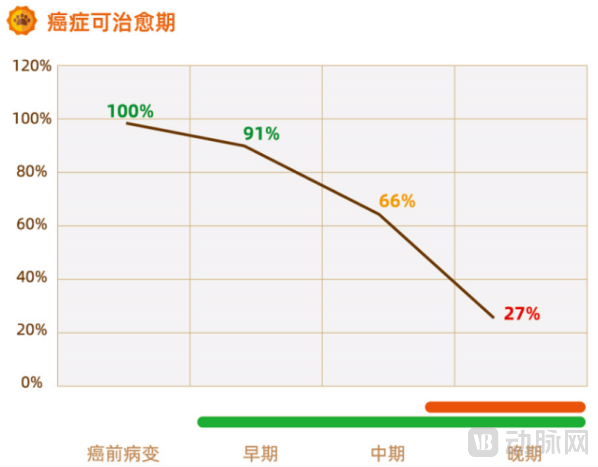
The earlier the detection, the higher the cure rate. Image source: Tequ Bio
Currently, pet early-screening companies such as PetDx in the United States and Medical Ark in Japan have begun to establish their presence. Notably, PetDx had cumulatively raised $72 million in financing by 2022, successfully commercialized its offerings, and entered a phase of scaled-up deployment.
Looking at the domestic market, a Shenzhen-based pet early screening company has taken the lead in launching a pan-cancer early detection product for canine cancers, firing the first shot in China’s pet early screening market. This company isShenzhen Tequ Biotechnology Co., Ltd. (hereinafter referred to as “Tequ Bio”).

Founded in March 2022, Tequ Bio is dedicated to streamlining the cumbersome nature of traditional pet cancer diagnostics, optimizing the veterinary care experience for pets and their owners, enhancing the professional standards of pan-cancer detection in pets, and facilitating earlier cancer diagnosis in dogs, thereby enabling them to enjoy a healthy life with their families.
Dr. Mao Mao, the company’s founder, studied under the renowned hematology and genetics experts, Academician Wang Zhenyi and Academician Chen Zhu. He has over 30 years of experience in clinical practice, genetics, genomics, molecular diagnostics, and drug development. He has published more than 100 academic papers in prestigious journals such as Nature, Cell, and Nature Genetics. As a founding member of the Shanghai National Human Genome Center, he previously served as Chief Scientific Officer at BGI (formerly Beijing Genomics Institute) and as Senior Vice President at WuXi AppTec. He is also one of the inventors of MammaPrint, the breast cancer diagnostic kit approved by the U.S. FDA, which represents the world’s first multivariate assay method.

Dr. Mao Mao, Founder of Tequ Bio
Prior to founding Tequ Bio, Dr. Mao Mao established Siqin Medical, an early cancer screening company, in 2018. Its products achieved strong sales in both domestic and international markets, laying a solid technical and resource foundation for the subsequent development of Tequ Bio.
The company currently has a team of approximately 10 employees, primarily composed of R&D professionals who have dedicated many years to the fields of genetic testing and early cancer screening, possessing extensive R&D experience and robust technical expertise.
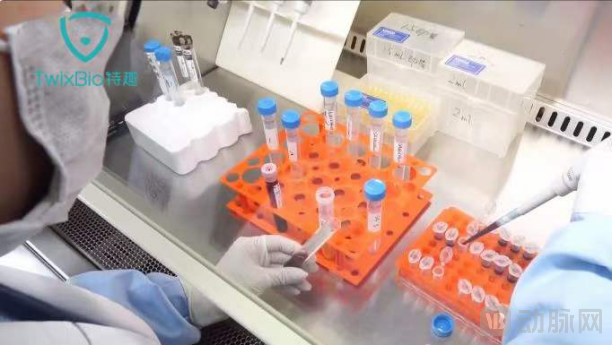
ChongkexinⓇ(PetCanSeekⓇ) Not only is it Tequ Bio's inaugural flagship product, but also China's first early screening product for pet cancer.
It addresses the operational complexities of conventional cancer screening methods (imaging and cytology) by requiring only a 4 mL blood sample from dogs. Centered on mapping the comprehensive landscape of cancer genomic alterations in canine peripheral blood cell-free DNA (cfDNA) fragments, it employs whole-genome sequencing (WGS) and advanced bioinformatics algorithms to generate a cfDNA profile for detecting cancer-related signals. Furthermore, it utilizes a novel Pet Cancer Score (PCS) algorithm, integrated with big data and artificial intelligence, to determine whether the tested dog has cancer. The test covers high-incidence canine cancers, such as mammary gland tumors, lymphoma, mast cell tumors, and osteosarcoma.

ChongkexinⓇ(PetCanSeekⓇ) Replacing vocalizations with molecular diagnostics to convey pain in non-verbal pets
Chong KexinⓇ(PetCanSeekⓇ) Breakthrough multivariate CRS technology, integrated with pan-cancer genomic and epigenomic profiling, enables highly sensitive and precise detection of early cancer signals. By leveraging whole-genome sequencing (WGS) to map the comprehensive landscape of the cancer genome, this approach captures a broader spectrum of genomic features, identifies cancer signals at the microscopic molecular level, and facilitates the earlier detection of occult cancerous lesions.
ChongkexinⓇ(PetCanSeekⓇ) No fasting or water restriction is required for the dog prior to testing. The procedure is straightforward: the veterinarian simply collects a 4 mL sample of peripheral venous blood from the dog. After collection, invert the blood collection tube 8 to 10 times to gently mix the blood. Then, place the blood-filled tube and the completed Test Request Form back into the original sampling kit, package it, and ship it at room temperature to Tequ Bio. Within two weeks, the laboratory will provide the owner with an electronic report indicating whether the tested pet dog has cancer.
Dr. Mao Mao noted that many veterinary medical solutions have evolved from human medical practices. Although there are genetic differences between humans and dogs, their genomes are largely similar, allowing certain testing technologies and methodologies to be directly applied, such as detecting cancer mutations in blood and assessing genomic stability. However, precisely because of the differences between humans and dogs, extensive research and development are still required after such translation to address challenges like identifying cancer biomarkers and improving detection sensitivity. Leveraging the vast amount of real-world data accumulated through previous entrepreneurial ventures, Tequ Bio can more rapidly and accurately identify early screening methods for canine cancers and achieve favorable clinical outcomes.
In addition, Tequ Bio recently launchedPet Cancer Postoperative Monitoring Product “Chongkeming”, by establishing real-time dynamic curves of molecular efficacy indices from the pre-treatment baseline through the course of therapy in pets with advanced-stage cancer, to achieve individualized treatment management for these patients, thereby providing critical clinical reference information for decisions on whether to continue the current treatment regimen and for the timely formulation of subsequent treatment plans.
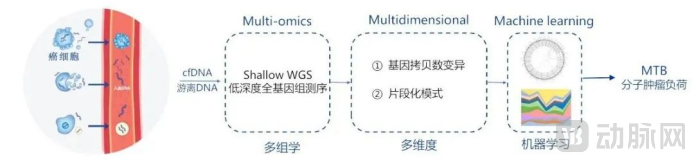
Design Principles of Chongkeming
At present, Tequ Bio is in negotiations with several leading chain pet hospitals in China regarding collaborations. The company expects to disclose the details of these partnerships in the first half of 2023 and is now accelerating its development trajectory.
Regarding business layout, Dr. Mao Mao stated that while it is widely believed that the markets in Beijing, Shanghai, Guangzhou, and Shenzhen are larger, the pet market is actually more mature in Guangdong and Shenzhen. Therefore, Tequ Bio will first penetrate the Shenzhen market in Guangdong to consolidate its position, and then collaborate with chain pet hospitals to promote Chongkexin.Ⓡ(PetCanSeekⓇ) to be extended nationwide.
In the future, as technology deepens and the market matures, Tequ Bio will expand its offerings to include cats and other pets, thereby broadening the range of species covered by its early-screening tests. Currently, Tequ Bio is seeking angel-round financing to optimize its technical team, increase R&D investment, strengthen brand building, and accelerate commercial promotion.