

NaoWuNao Networks Secures Nearly RMB 10 Million in Angel Funding to Advance Digital Therapeutics for Cognitive Assessment and Training
VCBeat has learned that Shenzhen Naowunao Network Technology Co., Ltd. (hereinafter referred to as “Naowunao”) recently completed an angel financing round of nearly RMB 10 million from Nuoyu Capital. Founded in July 2022, Naowunao focuses on the field of brain health and is developing a digital therapeutic for “cognitive function assessment and training of the brain.”
The BrainWuNao team advocates “training your brain like you train your muscles,” adhering to the philosophy of “integrating neuroscience and cutting-edge technology into warm, human-centered products.” Through engaging, customized, and digital formats, it provides scientifically grounded, easily accessible brain health solutions for the general public. Centered on cognitive assessment and training software, the team has further developed a “light social” training mode featuring multiplayer cooperation and competition. By continuously refining algorithmic models and thoroughly analyzing user data, it delivers more personalized training programs aimed at improving and restoring users’ cognitive functions. Moreover, the system incorporates numerous neuroscience technologies—such as neuromodulation, virtual reality, eye-tracking, and functional near-infrared spectroscopy (fNIRS)—to constantly expand its capabilities.
As life expectancy continues to rise, cognitive decline and cognitive disorders are increasingly becoming unavoidable challenges for aging societies. A 10-year follow-up study published in The BMJ (British Medical Journal), involving more than 7,000 middle-aged and older participants, revealed that brain functions such as memory, vocabulary, and comprehension begin to deteriorate as early as age 45. China has a substantial number of individuals with cognitive disorders; among those aged 65 and above, there are approximately 38 million people with mild cognitive impairment and around 15 million patients with dementia.
Dr. Zhu Yingbo, Founder and CEO of Naowu NaoHe stated, “Modern elderly life can no longer be satisfied by mere living assistance and social interaction; we need to rediscover the value of older adults. The prerequisite for ‘value-based aging’ is a healthy and active brain, which is also the original intention behind our work in brain assessment and training. As the post-1960s generation gradually retires, these ‘new seniors’ are more receptive to digitalization and the internet, and they increasingly emphasize their personal value after retirement. Therefore, it is particularly important to determine whether the ‘age-appropriate’ design of functional digital therapeutic games can meet the needs of these ‘new seniors’ beyond brain training, including social interaction, companionship, and value realization. Gamified digital therapeutics can effectively address user adherence issues, enabling users requiring long-term rehabilitation or training to find a more sustainable and effortless way to persist.”
Zhang Yan, Co-founder and CTO of NaowunaoHe stated, “During my master’s studies at the Entertainment Technology Center of Carnegie Mellon University in the United States, I recognized the therapeutic role of serious games in the field of psychological trauma. My previous entrepreneurial venture also leveraged games to assist stroke patients with rehabilitation training, giving me firsthand experience in applying game technology to address issues in disease diagnosis and treatment. By integrating into medical scenarios, games have unlocked greater intrinsic value, while certain diseases have achieved improved therapeutic outcomes through gamified interventions.”
Latest Release"Chinese Guidelines for Cognitive Training (2022 Edition)"It is clearly stated that cognitive training in the form of games can improveHealthy Adults and Patients with Mild Cognitive Impairmentoverall cognitive function and functions across multiple cognitive domains(Grade 1A Recommendation). The guideline also points out that cognitive training games leverage systematically designed tasks to deliver difficulty-adaptive training targeting cognitive domains such as attention and memory, thereby enhancing individual cognitive function.(Note: Grade 1A represents the highest level of recommendation)
Based on the aforementioned evidence from evidence-based medicine, Naowu has developed a comprehensive solution for gamified cognitive assessment and training grounded in brain modulation technology. The product covers five primary cognitive domains—attention, memory, executive function, perception, and psychomotor skills—as well as 27 secondary cognitive functional units. It features over 30 types of cognitive training content, with each training game backed by industry-recognized neuropsychological experimental paradigms, such as the n-back task, go/no-go task, and Wisconsin Card Sorting Test, to provide scientifically targeted training for specific cognitive functions.
In the realm of brain health management, games are well-positioned to address the three core needs of target users.
First, chronic disease management. The greatest obstacle to activities requiring long-term adherence, such as training and rehabilitation, is "delayed gratification," which runs counter to human nature. Clinically, many patients struggle to persist when they fail to see short-term improvements, particularly after discharge in the absence of supervision, leading them to adopt a passive approach. In contrast, the enjoyment derived from gaming hinges on "immediate feedback" and "on-demand rewards." Well-designed games break down challenging tasks into smaller objectives and provide instant rewards throughout the process, keeping users in a state of high satisfaction and motivating them to continually accept new challenges.
Second is the sense of self-worth. As individuals age, experiencing declines in brain function, physical capabilities, and social engagement, their sense of personal value increasingly diminishes. This is particularly true for patients with neurological conditions such as stroke and mild cognitive impairment, who are in greater need of confidence and encouragement. In clinical practice, we have genuinely observed the sense of achievement users display when they overcome challenges in games that are difficult to accomplish in daily life. This experience is crucial for helping them regain a lost sense of self-worth and persistently engage in health-related tasks.
Third, social interaction and companionship. Many elderly users and patients experience profound loneliness, whether in hospitals or at home; they crave social engagement and emotional support. By incorporating cooperative and competitive elements into games, we can effectively encourage their active participation in enjoyable training exercises while fostering social interactions through these activities. Furthermore, the platform itself serves as a companion, helping them overcome challenges encountered during their training.
Digital therapeutics has long faced a persistent challenge: given the wide variability in individuals’ capabilities and interests, what types of gameplay mechanics, difficulty levels, and intervention strategies can sustain user engagement while maximizing training efficacy?
AI serves as the ideal whetstone. By deploying products at scale in real-world settings, we can collect extensive data on users’ actual behaviors and physiological metrics. Leveraging artificial intelligence technologies such as deep learning algorithms and big data analytics, we can uncover hidden correlations, thereby optimizing the entire system and delivering customized cognitive training and brain modulation intervention plans tailored to users with diverse characteristics.
“The Chinese Guidelines for Cognitive Training (2022 Edition)” states that combined intervention of cognitive training with non-invasive neuromodulation techniques (such as transcranial electrical stimulation and transcranial magnetic stimulation) yields significantly greater improvements in cognitive function than cognitive training or neuromodulation alone.(Grade 1B recommendation)。
Currently, there are few comprehensive solutions on the market capable of delivering combined interventions. Therefore, the BrainWuNao team is actively engaged in the research and development of related products, striving to rapidly validate this technology in clinical settings to fill this market gap.
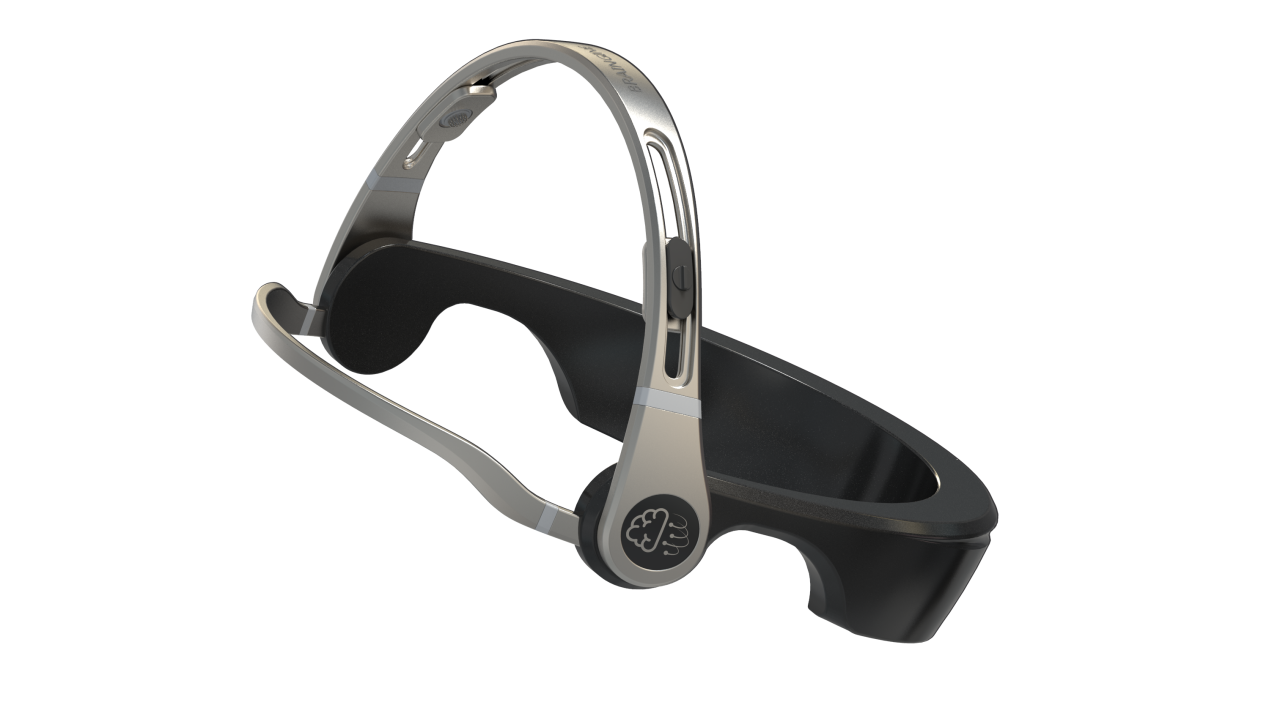
“BrainWuBrain” transcranial electrical stimulation headband has currently applied for a design patent (Patent No. 202230784220.3), with multiple other patents pending.
By integrating gamified training content with a variety of hardware technologies for assessment and intervention, we can create a highly diverse product portfolio. In the future, BrainWuNao will remain committed to technological innovation as its core and practicality and efficacy as its foundation, continuously refining its products to pioneer digital therapeutics for brain training!
Yang Zhiwen, Founding Partner of Nuoyu CapitalHe stated, “China’s population aged 65 and above has exceeded 200 million. Without effective interventions, Alzheimer’s disease (AD) will become a massive and unsustainable burden on families and society. In the absence of effective pharmacological treatments, preventive intervention is currently the only viable approach. However, prevention is a protracted process spanning years, decades, or even longer, with adherence posing the most significant challenge to intervention efficacy. BrainWuNao has effectively addressed this challenge through gamification, making the intervention process engaging and enjoyable. This approach allows older adults to experience a sense of achievement and self-fulfillment through gameplay, while team-based games also provide valuable social interaction opportunities. The founding team possesses deep industry expertise in psychology, neuroscience, and game development, demonstrating exceptional execution capabilities. We have high expectations for their future growth.”
About Nuoyu Capital
Noah Capital is a venture capital fund founded by seasoned medical professionals and investors, focusing on the fields of medical devices and digital health.
We are committed to identifying entrepreneurs who can genuinely address healthcare challenges through a long-term perspective, and we strive to help them achieve significant progress and sustainable growth. We aspire not only to successfully incubate outstanding healthcare enterprises but also to serve as a catalyst for the healthy and orderly development of the industry.