

Junliang Capital's Wang Junfeng: Focusing on Four Key Areas in 2023 with Global Innovation as the Benchmark
Legend Capital
Early-stage venture capital and growth-stage private equity investment institutions
According to statistics from the VCBeat database, 29 healthcare companies that “officially announced” financing in 2022 received investment from Legend Capital.
Since 2007, Legend Capital has been actively investing in the healthcare sector, with a balanced portfolio spanning innovative drugs, biotechnology, medical devices, and diagnostic technologies. It has established an extensive healthcare ecosystem covering more than 140 companies, delivering substantial value beyond financial investment through value-added services such as management support and industrial empowerment.
Amid an unpredictable external environment, hard-core innovation and global innovation have remained the fundamental criteria Legend Capital consistently adheres to in its project selection. In light of the characteristics of healthcare investments in 2022 and market trends in 2023, how does Legend Capital navigate the changes and constants? Which specific subsectors are receiving particular attention? To address these questions, VCBeat conducted an interview with Wang Junfeng, Co-Chief Investment Officer at Legend Capital.
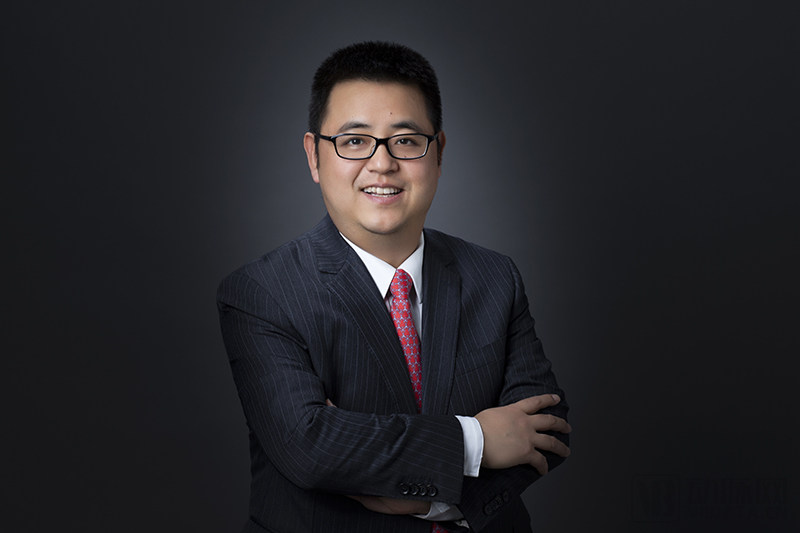
Wang Junfeng, Co-Chief Investment Officer at Legend Capital
VCBeat: From Legend Capital’s perspective on the industry, what changes occurred in financing and investment within the healthcare sector in 2022 compared to previous years?
Wang Junfeng:First, the pace has slowed. The number of projects and investment amounts have decreased, and decision-making has slowed significantly.The growth trajectory and value creation pathway of healthcare companies possess unique characteristics. Following the market overheating in 2020–2021, key metrics in 2022 largely returned to 2019 levels, signaling a reversion to a normal pace.
Second, institutions have changed their criteria for project selection, shifting from a previous approach of embracing diverse options to a current strategy of meticulous selection.Institutions are increasingly focused on whether projects feature hard-core innovation, rank among the top three in their niche segments, and have the potential to achieve global best-in-class or first-in-class status, with attention converging on industry leaders.
Third, there is a unanimous emphasis on exit strategies.However, exiting is never easy. Failing to exit when the market is favorable and attempting to do so only after conditions deteriorate often leads to suboptimal outcomes.
Fourth, the goal of internationalization has shifted from being primarily focused on Europe, America, Japan, and South Korea to now targeting emerging markets.On one hand, investment firms are accelerating their expansion into emerging markets; for instance, Legend Capital is moving into Southeast Asia and other emerging regions. On the other hand, more industrial companies are actively going global, aiming to introduce their products and services to broader emerging markets. Over the next 5–10 years, expanding into emerging markets will remain a clear overarching trend.
Finally, the industry has recognized that the window for biotech companies to transition into biopharma has temporarily closed.Biotech companies should focus on their core competencies—innovation, technology, and product development—while leaving production, manufacturing, supply chain management, and downstream commercialization to strategic partnerships with industry leaders.
VCBeat: In response to industry changes, what adjustments and adaptations did Legend Capital make to its healthcare investment strategy in 2022?
Wang Junfeng:We remain committed to value investing and innovation-driven investment, focusing on early-stage and emerging opportunities, long-cycle projects, and hard-tech sectors. Unswayed by external factors, we continue to uphold high standards and stringent criteria in project selection.
In 2022, Legend Capital established a new fund—the Frontier Biotechnology Fund—dedicated to investing in very early-stage innovative biotechnologies.While such investments carry higher risks, successful outcomes can be transformative forces that reshape the industry landscape. Our focus is primarily on projects involving the commercialization of scientific research achievements from academies and institutes, as well as ventures founded by overseas returnees and leading industry figures. We prioritize technological frontier, innovation, and disruptiveness, and are willing to place larger bets and commit more resources at the early and very early stages.
Legend Capital is also firmly investing in the autonomy and controllability of supply chains.Two years ago, we posited that supply chain autonomy and import substitution represent a certain demand over the next five years. This perspective extends beyond the Chinese market to encompass enterprises’ internationalization potential. Supply chain autonomy primarily aims to resolve domestic “chokepoint” vulnerabilities and, secondarily, to serve the global market.
In terms of the healthcare ecosystem, Legend Capital continues to expand its scope and boundaries while enhancing internal strategic synergies.Previously, our value-added services excelled in management. Two years ago, we proposed that professional funds must intensify their efforts in industrial empowerment.
To date, Legend Capital has invested in more than 140 healthcare and medical companies, establishing a comprehensive one-stop value-added service system encompassing R&D, production, supply, and sales. Its portfolio spans the entire industry chain, from life science tools and preclinical research to clinical CROs, industrial-scale manufacturing, and commercialization. This enables us to deliver greater strategic synergy to our portfolio companies.
As our value-added service system takes shape and portfolio companies reap the benefits, we have attracted potential partners who are willing to accept our investment and view us as investors with deep industry resources, rather than merely as financial investors.
In addition to value-added services, we also integrate resources across various aspects of our ecosystem. For instance, in 2022, we organized workshops that facilitated multiple discussions on business development (BD). Our next step is to host workshops focused on themes such as clinical development and post-merger integration, thereby delivering unique value-added services to our portfolio companies.
In addition, Legend Capital actively collaborates with industry companies.On the one hand, this is driven by the need to build a healthcare ecosystem; on the other hand, portfolio companies require deeper collaboration with large industrial corporations. Therefore, we strengthen linkages among the ecosystem, enterprises, and industrial partners through approaches such as product licensing-in and strategic cooperation.
Collaboration with industrial companies can not only effectively support the growth of portfolio companies but also open up new opportunities for us. For instance, by partnering with industrial firms through spin-offs, incubation, and co-investment, we can create new investment opportunities. In the future, this approach may well become a widely accepted investment strategy in the market.
VCBeat: What were Legend Capital’s major achievements in investment and exits in 2022? What are some typical cases?
Wang Junfeng:In 2022, five healthcare companies invested in by Legend Capital went public, including Recombio, Nuosi Ge, MicuRx Pharmaceuticals, Sifang Health, and Lunit; nearly 10 projects exited through mergers and acquisitions.
We have undertaken extensive work in mergers and acquisitions, including S-fund transactions. Following the completion of a $270 million S-fund transaction in 2021, we closed another RMB 300 million S-fund transaction in 2022. Moving forward, we will continue to leverage this approach to facilitate bulk, scaled exits for our limited partners (LPs), create new investment opportunities for incoming LPs, and support portfolio companies in achieving long-term growth, thereby delivering mutual benefits for all stakeholders.
Overall, in addition to IPOs, we place significant emphasis on mergers and acquisitions (M&A), S-fund transactions, and other avenues to create more exit opportunities.
Legend Capital has also helped its portfolio companies achieve remarkable results.
LePure Biotech is a representative project invested by Legend Capital, showcasing an autonomous and controllable supply chain.In 2021, Lepu Biopharma was at a business turning point. After Legend Capital’s investment, it assisted the company in rapidly improving its lean production system. Within three months, without significant expenditures, production volume tripled, laying a solid foundation for the several-fold revenue growth achieved by the company in 2021.
In 2022, Lepu Biotech also achieved significant inorganic growth. The company recently announced the completion of a new financing round amounting to hundreds of millions of yuan, led by several internationally renowned investment institutions, including Novo Holdings, General Atlantic, and Goldman Sachs. Securing such substantial funding in the current environment is no small feat, demonstrating that Lepu Biotech has reached a globally competitive level in terms of technology, products, and services.
Langxin Biologics is a typical case of establishing a company jointly with industry partners based on innovative technologies, and relying on technical experts to transform scientific research achievements.
In 2020, Legend Capital co-founded Langxin Biopharma with the company’s founding team, becoming its earliest investor. Within just two years, Langxin Biopharma achieved rapid progress: in 2022, investigational new drug (IND) applications for two gene therapy products targeting ophthalmic diseases were approved, with one product having completed enrollment and dosing of the first subject, demonstrating exceptional R&D efficiency and execution capability.
Longxin Bio’s management team, previously composed mainly of technical experts, completed the company’s structural setup, organizational design, strategy formulation, and pipeline planning with the support of Legend Capital. The team also achieved significant progress in R&D, demonstrating Legend Capital’s strong capabilities in incubation and value-added services.
VCBeat: From the perspective of Legend Capital, which sub-sectors in healthcare are likely to receive more attention in 2023? Why?
Wang Junfeng:Legend Capital has adopted a strategy of balanced investment across tracks such as innovative drugs, biotechnology, medical devices, and diagnostic technologies, actively investing in any suitable projects. However, it shows certain preferences for different tracks at various stages, which were mainly reflected in four major directions in 2023.
Innovative Drug Sector,Greater attention is being paid to areas such as small nucleic acid drugs, as well as CGT-related fields including gene editing and induced pluripotent stem cells.
Medical Devices and Diagnostic Technologies,Place greater emphasis on life science tools, import substitution, and consumer healthcare.
Professional Service Orientation,With the rise of cell and gene therapy (CGT) and oligonucleotide drugs, new investment opportunities may emerge in the CRO and CDMO sectors. In addition to pharmaceutical CROs and CDMOs, Legend Capital achieved certain results in 2022 through investments in CROs and CDMOs focused on medical devices and diagnostics, and will continue to pursue this direction.
Certainly, Legend Capital will steadfastly continue to invest in the autonomy and controllability of the supply chain.Including the self-sufficiency and controllability of upstream consumables, equipment, and life science tools.
Leveraging its established industrial ecosystem, Legend Capital may also collaborate with leading portfolio companies in the future to engage in co-investments or facilitate mergers and acquisitions, thereby reinforcing the competitive advantage of these industry leaders.
VCBeat: How should healthcare companies respond to new market changes in 2023?
Wang Junfeng:While the secondary market has rebounded, this does not imply a swift recovery in the primary market; the new year remains fraught with challenges. Some institutions previously invested in projects at high valuations, and it will take time to fill the resulting “valuation gaps.” For certain enterprises, 2023 may even prove to be their most difficult period. By the third quarter, some companies may encounter funding bottlenecks, and failures cannot be ruled out. Nevertheless, industry consolidation is essential for shedding burdens and moving forward more agilely.
In 2023, companies must make adequate preparations: cut costs wherever necessary, stretching every penny to the limit. In terms of financing, avoid fixating on valuations; instead, adopt a “small steps, fast pace” approach to maintain healthy operations and leverage time to create room for rapid corporate growth. The second half of the year may also see a surge in mergers and acquisitions, driven both by strategic alliances between industry leaders and by the need for collective resilience in challenging times.
It is worth emphasizing that, at the end of 2022, the Shanghai Stock Exchange and the Shenzhen Stock Exchange issued new review guidelines, placing greater emphasis and providing more policy guidance for “Specialized, Refined, Differential, and Innovative” (SRDI) enterprises. This indicates that future investments should continue to revolve around the themes of “SRDI” and “Three Innovations and Four New Areas.”
New IPO review standards have raised the bar for healthcare companies seeking public listings, necessitating that: companies possess robust proprietary technologies to substantiate their value; demonstrate strong self-sustaining capabilities and solid financial performance to withstand economic cycles; and maintain sufficiently differentiated competitive advantages to achieve favorable valuation in the secondary market and strong post-listing performance. These requirements pose significant challenges to entrepreneurs and primary market investors.
In short, opportunities invariably lie in truly innovative projects. For instance, Harbour BioMed, a portfolio company of Legend Capital, recently announced that its first-in-class B7H7-targeting antibody has received Investigational New Drug (IND) clearance from the U.S. Food and Drug Administration (FDA). This marks the world’s first monoclonal antibody targeting B7H7 to be formally approved for clinical development, holding promise as a novel anti-tumor therapy for patients who derive limited benefit from PD-(L)1 inhibitors, particularly those with PD-L1-negative or refractory disease.
Regardless of the final outcome, only by having the courage and boldness to pursue “Global Novelty” can a company stand out from fierce competition.