

BGI Cowin: Market Correction Clears Speculative Bubbles, Continues Strategic Investment in Bioeconomy
In May 2022, China’s National Development and Reform Commission released the “14th Five-Year Plan for Bioeconomy Development,” the nation’s first five-year plan dedicated to the bioeconomy. That September, the United States launched its “National Biotechnology and Biomanufacturing Initiative.” With both of the world’s largest economies simultaneously turning their attention to the bioeconomy and biomanufacturing, they are leading the global community in making significant strides into the bioera.
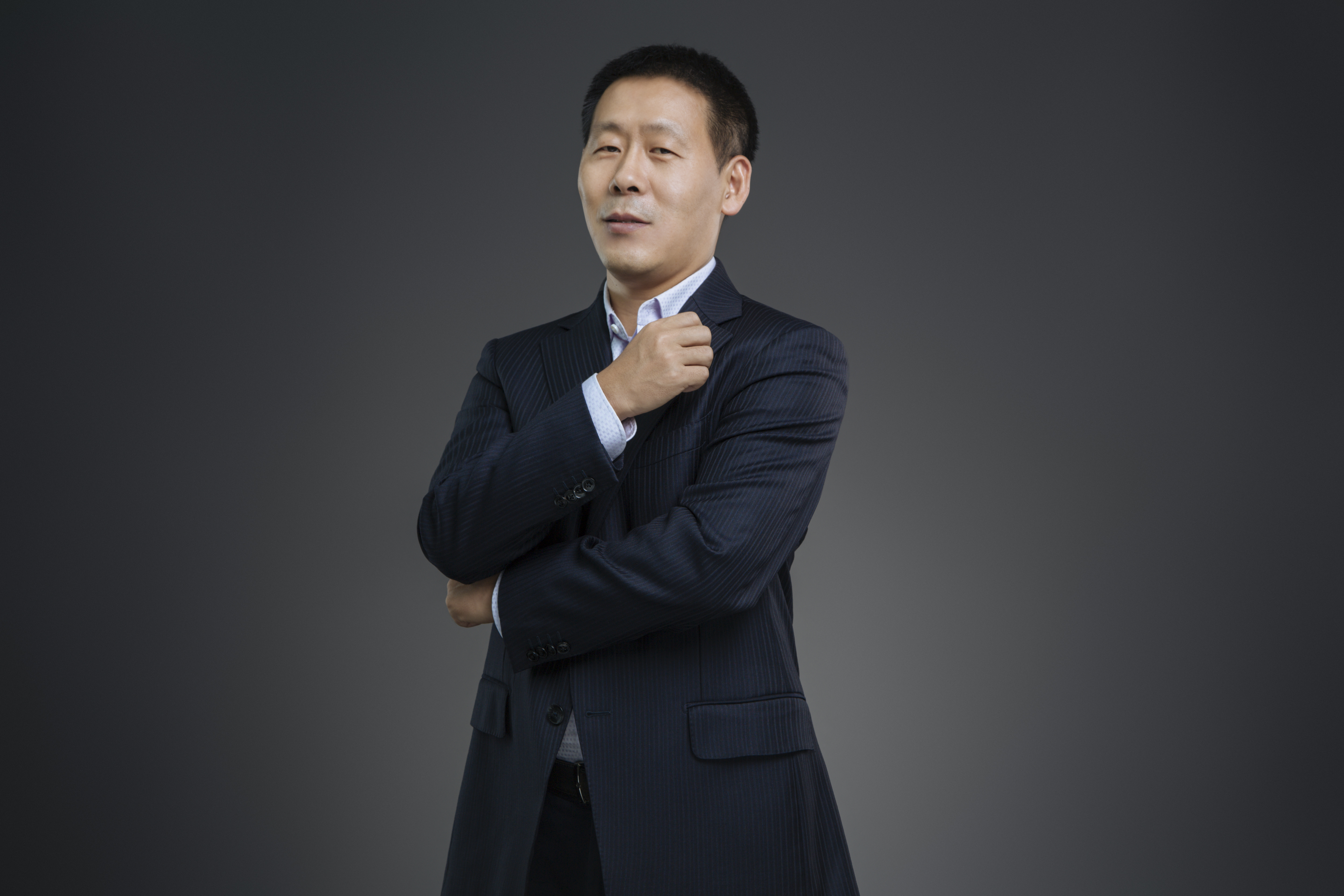
Liu Yu, Managing Partner of Huada Win Win Industrial Fund
As the corporate venture capital (CVC) arm of BGI Group, the Huada Win-Win Industrial Fund has continuously invested in the bioeconomy since its inception. It remains focused on frontier biotechnologies such as bio-intelligent manufacturing and cell and gene therapy, while also actively exploring applications of biotechnology across industries beyond clinical healthcare.
How to leverage shareholder backgrounds to drive industrial synergy? How to thoroughly scout early-stage projects and identify targets with strong commercialization potential? Which sectors offer promising investment opportunities in the future? Recently, Liu Yu, Managing Partner of Huada Win Win Industrial Fund, shared his insights with VCBeat.
VCBeat: What changes have occurred in the healthcare investment sector in 2022 compared to previous years?
Huada Win Win, Liu Yu: In 2022, the healthcare investment sector was abuzz with chilling terms such as “winter,” “freeze,” and “surviving the downturn.”
Based on the JPMorgan Healthcare Conference and annual statistics from various professional institutions, the healthcare sector witnessed a significant year-on-year decline in 2022 across multiple metrics, including the number of initial public offerings (IPOs), capital raised, merger and acquisition (M&A) transaction volume and value, primary market investment amounts, and the number of investment deals.Fewer institutions are investing in healthcare; those still active are moving their investment stages earlier, and the amount per transaction has decreased.。
From another perspective,The Significance of Winter Lies in Ecological Purification。
On the funding side, the surge of hot money in healthcare investment triggered by the onset of the COVID-19 pandemic in early 2020 has receded. The speculative capital that had rushed to pursue IPOs through Chapter 18A of the Hong Kong Stock Exchange Listing Rules and the fifth set of listing criteria for the STAR Market was largely frozen in 2022.
On the project front, many teams behind innovative drugs and medical devices have fallen from grace after experiencing sky-high valuations and rapid fundraising during the hype cycle. They are now forced to focus on cash flow management, streamline their R&D pipelines, or secure lifeline funding at lower valuations.
In summary, the winter of 2022 cleared out a significant portion of non-professional and non-industrial capital, as well as many projects with uncertain commercialization prospects. The valuation system in the healthcare sector is undergoing a difficult restructuring. However, this is not a bad thing. After being tempered by the harsh winter, the industry ecosystem has seen greater rationality and professionalism on the part of investment institutions, deeper understanding of technological products, and more profound insights into the cyclicality and risk implications of the healthcare industry.Project sponsors are adopting a more objective approach to self-valuation, placing greater emphasis on the innovativeness of their R&D pipelines, clinical value, commercialization progress, and market prospects.. These changes have undoubtedly laid a healthier foundation for industry development, with promising prospects ahead!
VCBeat: What adjustments and changes have investment institutions made to their investment strategies?
Huada Win Win, Liu Yu: The changes in institutional strategies that I have observed are mainly reflected in the following aspects:
First, many institutions have slowed their investment pace, preferring to wait until industry valuations adjust to reasonable levels before making moves.
Second, institutions that continue to invest are shifting further toward early-stage opportunities, with a large number of portfolio companies concentrated in the angel and Pre-A rounds. Notably, there has been a rise in early-stage projects focused on translating scientific research outcomes, co-created by investment firms and scientists.
Third, the “Series C curse” has reemerged for mid-to-late-stage projects. Startups that secure Series C and subsequent financing rounds are largely backed by follow-on investments from their earlier-round investors. Venture capital firms also strategically reserve a portion of each fund to provide additional financing rounds for their early-stage portfolio companies, provided that these companies’ progress meets expectations.
Fourth, institutional healthcare investment is undergoing partial de-medicalization, shifting toward sectors with stronger industrial or consumer attributes, such as synthetic biology and consumer-oriented medical aesthetics.
VCBeat: What were the major investment achievements of Huada Win Win in 2022?
Liu Yu, Huada Win Win: In 2022, Huada Win Win intensified its efforts in conducting industry research on the broader life sciences sector based on multi-omics technologies, as well as in identifying and investing in projects across the industrial chain.
For instance, in the CGT sector, investments have been made not only in Yiming Cell, one of the top three CDMOs, but also in Weike Bio, a company specializing in technologies for detecting gene insertion mutations or gene editing off-target risks during the development of cell and gene therapy drugs, thereby addressing critical pain points in industry safety management.
Against the backdrop of China’s loosening policies on genetically modified and gene-edited breeding, Weike Bio is also developing technologies for the safety assessment of biological breeding. We remain optimistic about the R&D and industrialization progress in the CGT sector; accordingly, we have invested along the industry chain in Jiangsu Hanbang Technology, a leading enterprise in upstream biopurification equipment.
For downstream applications, our ongoing projects include the iPSC cell therapy project, the biological culture medium project, and the innovative single-arm cell antibody discovery platform project. In addition, we alsoFully leverage the advantages of serving as the CVC investment platform for the BGI Group, and vigorously identify projects incubated by the BGI Research Institute or supply chain projects within the Group’s industrial segments., among which we invested in Wuhan Genoin, a leading enterprise in neoantigen-based cellular immunotherapy incubated by BGI Research. This is the first neoantigen-based immunotherapy product in China to have its clinical trial application accepted by the National Medical Products Administration.
We have also invested in collaborative manufacturers within the industrial sector, including Huoshui Kuaiyizhun, a CDMO enterprise specializing in in vitro diagnostic instruments and equipment, as well as multiple multi-omics R&D incubation projects currently in our pipeline.
Brief Summary,In 2022, contrary to previous trends, Huada Win Win did not slow down its investment pace or reduce its investment amount; instead, both its total investment volume and the number of projects surpassed those of 2021. We remain firmly bullish on investments in the broader biomedicine and health sector driven by multi-omics technologies.。
VCBeat: Which healthcare sub-sectors will Huada Win Win focus on in 2023?
Huada Win Win Liu Yu: First, we remain firmly bullish on the cell and gene therapy (CGT) sector. From a global perspective, this field continues to boast the highest density of innovation and the largest investment in R&D within the biopharmaceutical industry over the next few years. We are confident that clinical developments will yield surprising progress and remarkable outcomes.
Secondly, innovative medical devices that offer substantial clinical value and significantly improve patient outcomes continue to see strong demand in surgical settings. Furthermore, based on the implementation of national centralized procurement, the process is becoming more scientific and rational, and innovative devices are currently not subject to procurement pressure.
Finally, regarding life science instruments and key segments of their industrial chain, China’s sustained high-level investment in life science research has driven rigid growth in demand for related scientific instruments, reagents, and various consumables. Moreover, it is essential to address the majority of domestic substitution issues from the perspective of supply security.
VCBeat: How Should Companies Respond to Market Changes in 2023?
Liu Yu, Huada Win Win: For startups, 2023 should be viewed with cautious optimism. On one hand, as China ended the “Class B management under Class A measures” policy for COVID-19, economic growth expectations are optimistic, and both fiscal and monetary policies will exhibit a certain degree of expansion. In the healthcare sector, the significant pressure from centralized volume-based procurement and cost containment under the national medical insurance scheme is gradually becoming normalized and easing. These are all positive developments that will improve the financing environment. However, on the other hand, the return of the economy to a growth trajectory will not be smooth sailing,The funding winter will not turn into spring or summer overnight; managing R&D spending and cash flow remains the core of startup operations.。