

Tongliang District Hospital of Traditional Chinese Medicine Launches Cloud-Native Integrated Information Platform
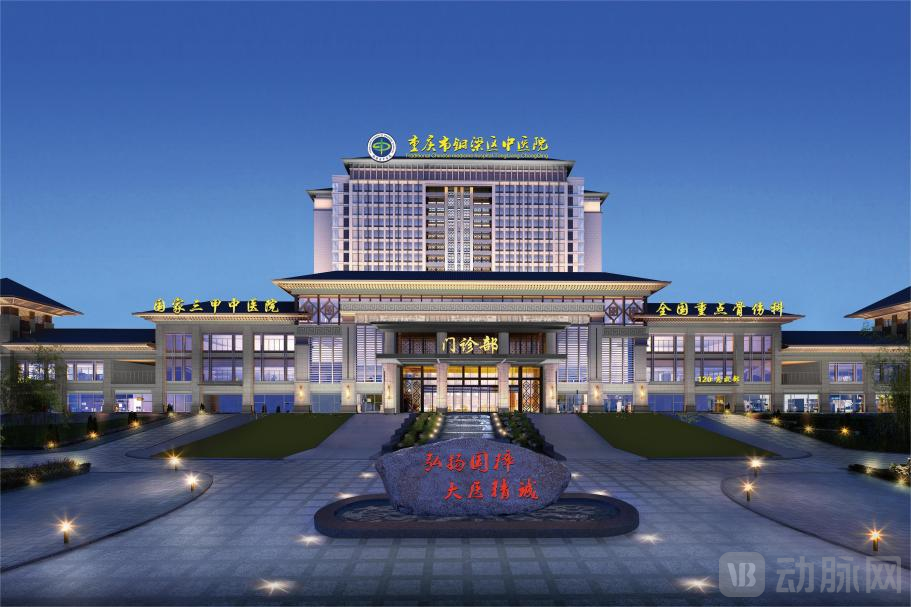
Chongqing Tongliang District Traditional Chinese Medicine Hospital (hereinafter referred to as “Tongliang District TCM Hospital”), established in 1986, is currently a national Grade III Class A traditional Chinese medicine (TCM) hospital. With advanced equipment, standardized management, exceptional technical expertise, significant influence in specialized disciplines and disease-specific care, and prominent TCM characteristics and advantages, the hospital is a comprehensive TCM institution integrating medical care, teaching, scientific research, prevention, healthcare, and rehabilitation.
As the number of hospital business systems continues to grow, interface integration complexity increases day by day, “information silos” become more severe, limiting the degree of resource integration and increasing the difficulty of unified management, thereby constraining the quality and efficiency of hospital operations.
To this end, there is an urgent need for hospitals to build a platform with business collaboration capabilities that can integrate internal data resources. By addressing issues such as fragmented data, inconsistent exchange standards, non-standardized interfaces, and poor integration through data and business integration, the platform will consolidate patient information—including examinations, laboratory tests, diagnosis and treatment, and medical records—to provide decision support for healthcare professionals and administrators.
November 2022,Tongliang District Traditional Chinese Medicine Hospital Officially Launches New-Generation Information Integration Platform(hereinafter referred to as the “Information Integration Platform”), driven by the dual engines of the Information Integration Platform and the Clinical Data Center, effectively integrates data across existing hospital information systems, enables hospital-wide information sharing and data interoperability through informatization measures, and supports Tongliang District Hospital of Traditional Chinese Medicine in its assessment for maturity of interconnectivity.
Clinical Data Center,Using patient information as the primary index, this system collects and shares data from Hospital Information Systems (HIS), Electronic Medical Records (EMR), Laboratory Information Systems (LIS), and Picture Archiving and Communication Systems (PACS) in real time. By aggregating, analyzing, and managing massive volumes of data, it enhances the circulation and value of healthcare data, providing services to patients, medical staff, and administrators, thereby improving the quality of medical care and strengthening hospital competitiveness.
Information Integration Platform,Built on a cloud-native microservices architecture and centered around the Healthcare Cloud Service Bus (HCSB) to replace traditional ESBs, this solution features high performance, high availability, ease of maintenance, and localization. It also supports international health information exchange standards such as HL7 V2, V3, and FHIR, serving as the new “foundation” for hospital digital transformation.
At the architectural level,The information integration platform seamlessly supports medical institutions of varying scales, including standalone hospitals, hospital groups, and medical consortia (alliances).By providing platform-based services and open capabilities, we help hospitals integrate internal and external, legacy and new business systems, effectively achieving interoperability across environments and application systems.
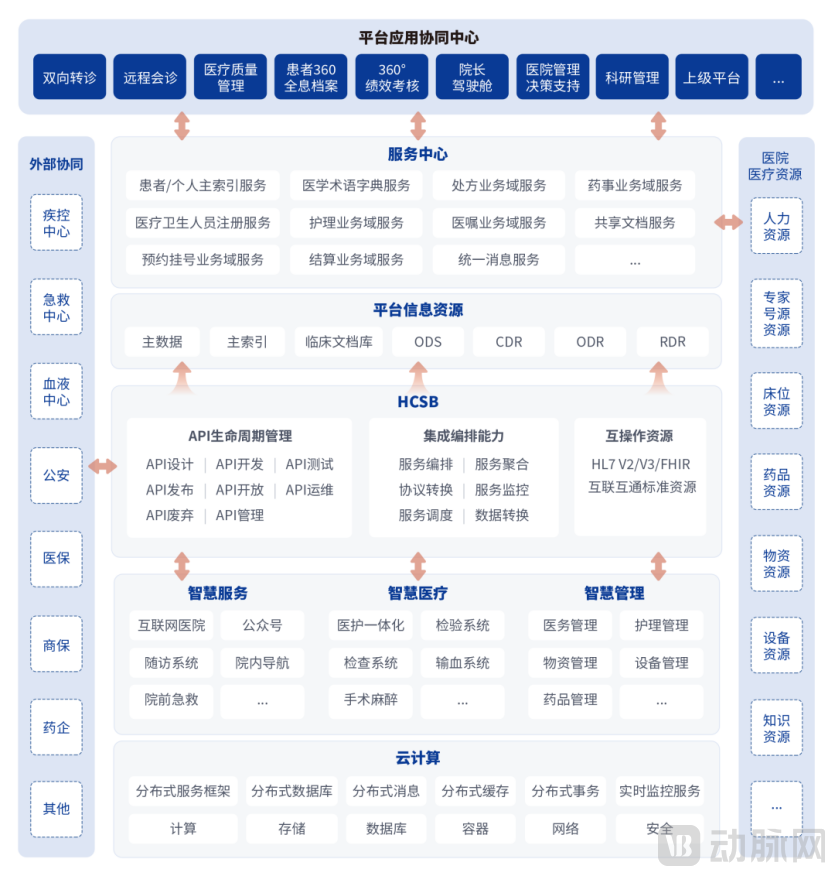 Huazhuo Information Integration Platform Business Architecture Diagram
Impacted by the pandemic in 2022, the project implementation faced numerous challenges. As the contractor, Huazhuo worked closely with the hospital’s Information Department, administrative functional departments, and clinical and medical technology departments. Through intensive, around-the-clock deployment and debugging, the Information Integration Platform was officially launched in November 2022.Establish standardized clinical data centers and shared document repositories, providing applications such as a 360° holistic patient view, executive dashboard, mobile physician assistant, master data management, and enterprise master patient index.
After the information integration platform of Tongliang District Hospital of Traditional Chinese Medicine was launched, it connected the hospital’s basic business systems with the clinical data repository, including the Hospital Information System (HIS), Electronic Medical Record (EMR), Laboratory Information System (LIS), Picture Archiving and Communication System (PACS), surgical anesthesia, and blood transfusion management systems.Eliminate information silos and achieve data interoperability among basic systems within the hospital,With over 1 million messages exchanged daily, the platform is increasingly demonstrating its efficacy in both clinical and administrative workflows:
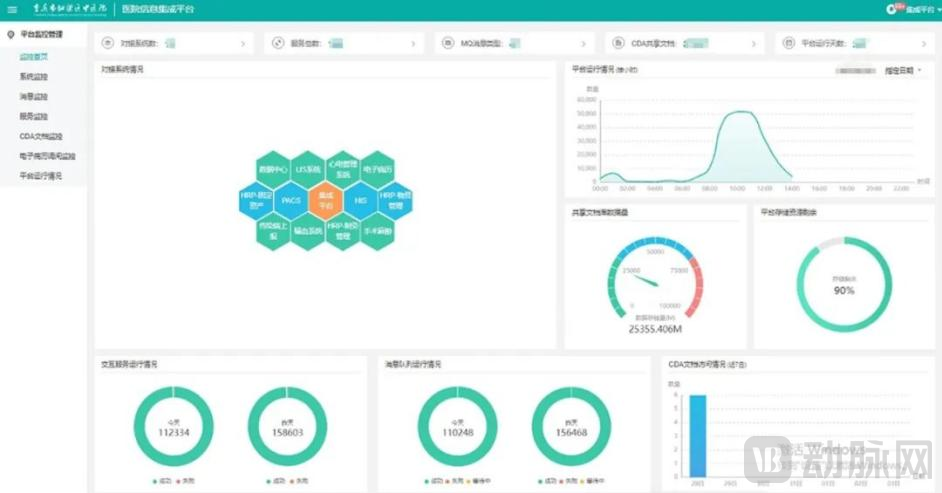 Example Diagram of the Information Integration Platform Monitoring System
1. Meets the requirements for electronic medical record (EMR) systems and interoperability ratings
Currently, Huazhuo has assisted the Tongliang District Traditional Chinese Medicine Hospital in conducting its Electronic Medical Record (EMR) grading assessment. The Huazhuo Integration Platform embeds standardized models from the 2020 version of the Interconnectivity CDA, datasets, and interaction services. It provides efficient standard mapping tools to ensure compliance of EMR data and shared documents with relevant standards, significantly improving the efficiency of data standardization for interconnectivity upgrades, and meeting the requirements for passing the Level 4-A Interconnectivity Assessment.
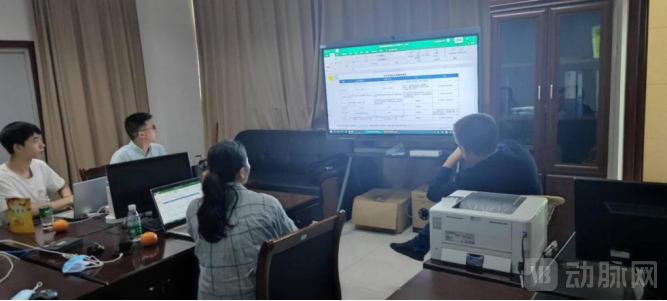
Huazhuo Assists Tongliang District Traditional Chinese Medicine Hospital in Conducting Electronic Medical Record Grading Assessment
2. Unified Interface Management to Reduce Construction Costs and Development Time
In accordance with the requirements of the 2020 Edition of the Interconnectivity Standardization Maturity Assessment Scheme, national standard interactive services shall be provided. Newly built business systems accessing the platform must comply with the requirements for national standard interactive services, thereby reducing the development costs and time associated with a large number of reusable interactive service interfaces in hospitals, and alleviating the difficulty and workload of subsequent operation and maintenance. Furthermore, standardized service interfaces that best align with hospital business processes shall be established to minimize interface redundancy, decouple systems, and avoid incurring high interface-related costs.
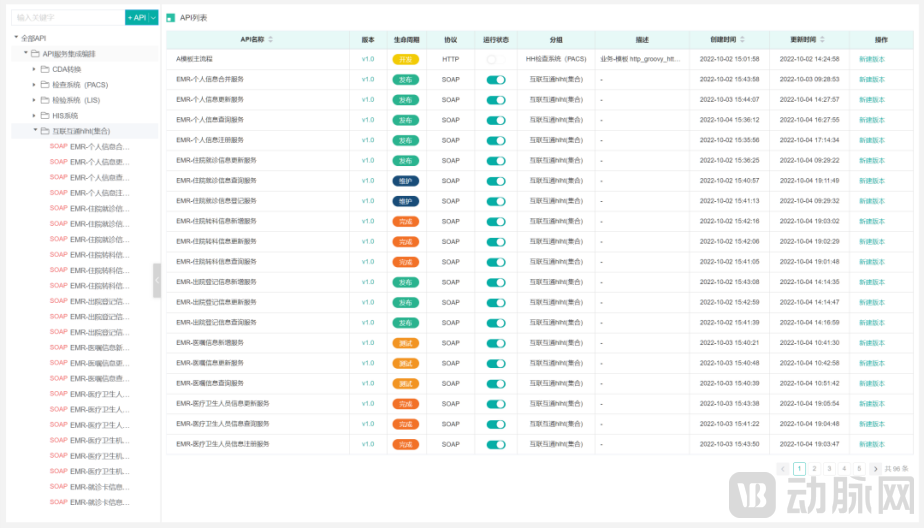 Example Diagram of API Full Lifecycle Management
3. Integrate Patient Data to Enhance the Quality of Medical Services
The Patient 360° Holographic View is built upon the hospital’s Clinical Data Center. With the patient at its core, it standardizes, organizes, and stores patient diagnosis and treatment data, enabling unified browsing and visualization of clinical care data.
On one hand, the system integrates information interfaces across the entire hospital and supports embedded calls from the Hospital Information System (HIS) or other clinical business systems. On the other hand, its browsing interface centrally presents a complete historical record of patient diagnosis and treatment activities, ensuring that clinical data is displayed in a comprehensive, accurate, timely, and intuitive manner, thereby facilitating improvements in medical interoperability and the informatization level of electronic medical record management.
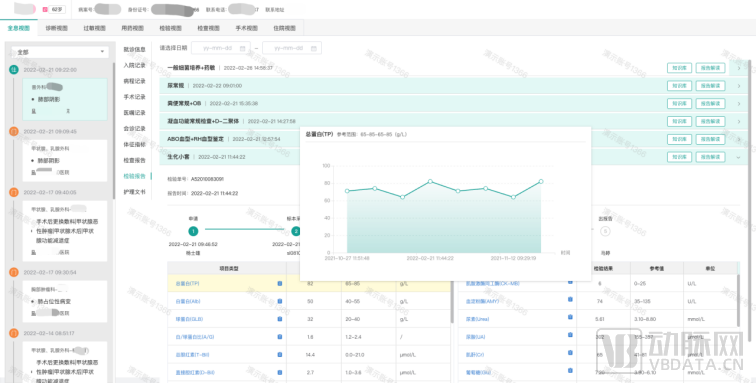 360° Holographic View of the Patient
4. Optimize workflows to enhance the work experience of medical and nursing staff
Mobile Physician Assistant, built upon the Clinical Data Center, transitions physician workstations from desktop to mobile applications, enabling paperless, film-less, and wireless workflows. This facilitates intelligent remote diagnosis and treatment, access to clinical guidelines, online approvals, and smart reminders by integrating patients’ holistic medical records with remote knowledge bases, thereby enhancing consultation quality and diagnostic efficiency. Currently, over 70 physicians within the hospital are actively using the system.
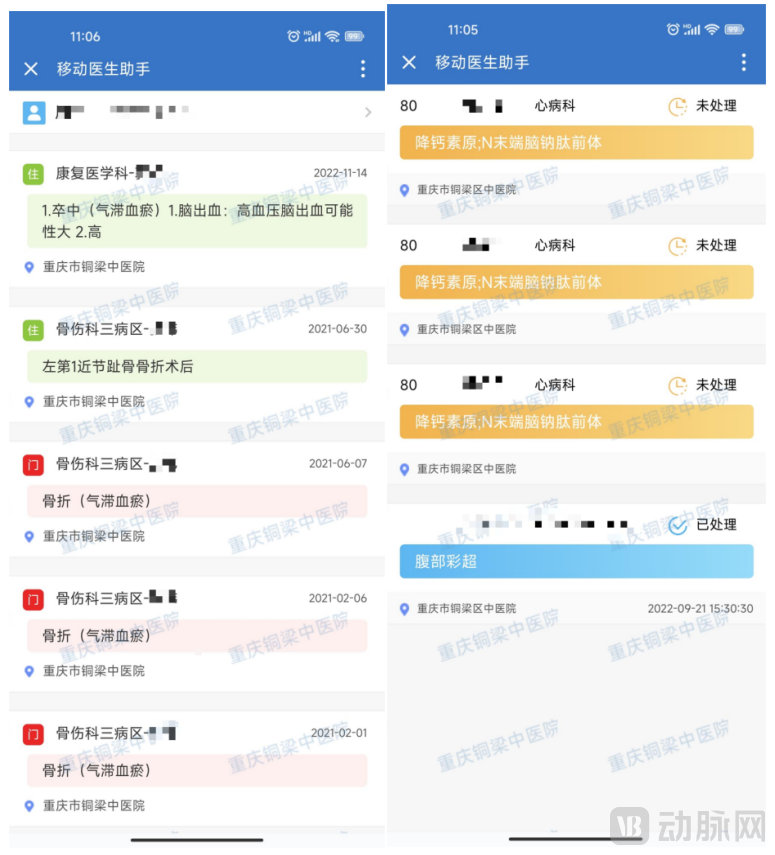 Mobile Physician Assistant Sample Image
5. Enhance Operational Management Efficiency
Dean’s Cockpit effectively streamlines the hospital’s complex data reporting processes, providing multi-dimensional visual analytics of hospital operations. This enables management to promptly monitor various medical and operational indicators, optimize resource allocation, reduce input costs, improve resource utilization, and support hospital-wide deployment and decision-making. It has now achieved broad adoption among hospital leadership.
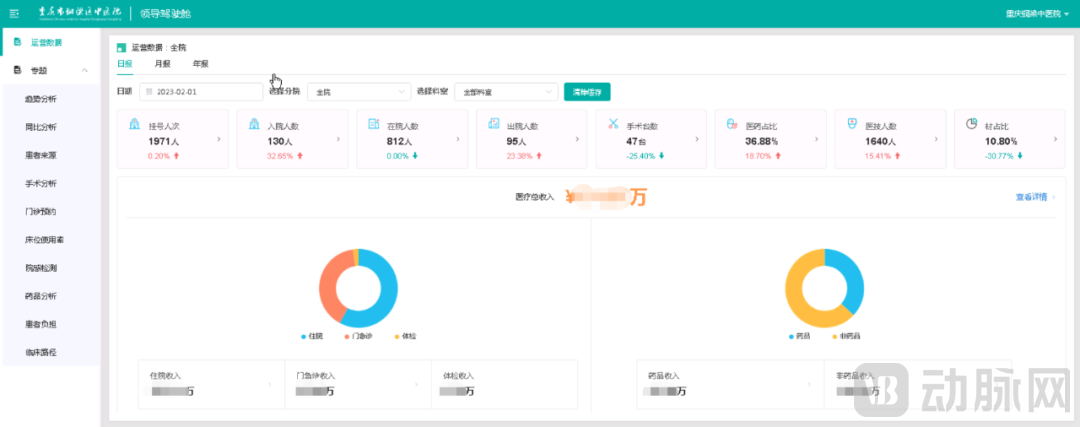 Hospital Dean's Dashboard Sample Image
6. Minimize Dependence on Business Systems
When hospitals need to add new business functions, the original vendors of the business systems often charge exorbitant prices. To address this, hospitals can build a unified data center, allowing newly developed business systems to access clinical data from it, thereby minimizing the hospital's reliance on any single business system.
The head of the hospital's information department stated:“Our hospital’s Information Center has five management staff members. Since the launch of the Hospital Information Integration Platform, multiple users can log in simultaneously to perform interface development, testing, joint debugging, and operational monitoring on a single interface, thereby improving interface development efficiency and accelerating deployment. In terms of business system user experience, medical staff across various departments have noticed faster response times, which facilitates departmental workflows and enhances management efficiency, enabling everyone to fulfill their respective responsibilities in an organized manner despite heavy workloads.”
The hospital executive in charge of information technology stated:“The construction of the hospital integration platform has enhanced our hospital’s overall management level, met the requirements for strengthened management and improved work efficiency, effectively controlled medical costs, reduced patients’ financial burden, increased patient satisfaction, achieved competitive advantages, and laid a digital foundation for our hospital’s high-quality development.”