

MinKang Bio Achieves Breakthrough in CGM Core Biosensing Technology and Partners with University of Science and Technology of China to Advance Artificial Pancreas Project
In recent years, the global continuous glucose monitoring (CGM) industry has experienced rapid development, with the global market size surpassing $5 billion. In China, approximately 10 CGM products have been approved for market launch, demonstrating strong growth momentum.
However, due to high technical barriers, complex manufacturing processes, intricate regulatory approval procedures, and substantial investments required for market promotion and patient education, the domestic CGM market remains dominated by Abbott and Medtronic, with a localization rate of less than 10%. To break this import monopoly and capture a larger share of the Chinese CGM market, domestic manufacturers must still overcome challenges in manufacturing techniques, wearability, and monitoring performance.
Despite numerous challenges, domestic startups have recently entered this sector with leading technologies, achieving significant innovative breakthroughs. Meanwhile, established Chinese manufacturers of blood glucose meters (BGM) have also begun to enter the continuous glucose monitoring (CGM) market, leveraging their accumulated technical expertise to develop multi-technology solutions. One such company is MYCura (MinKang Medical Technology (Tianjin) Co., Ltd.), founded in 2010.
As a long-established domestic enterprise dedicated to the research, development, and production of blood glucose monitoring products,MYCura has established four major technology platforms—electrochemistry, photochemistry, colloidal gold, and immunofluorescence—and has obtained more than 50 patents and software copyrights.Leveraging its technological expertise, collaborations with universities, and years of experience in blood glucose meter (BGM) production, MYCura has now achieved the research, development, and manufacturing of a comprehensive product portfolio covering the detection of multiple indicators, including blood glucose, blood lipids, blood ketones, uric acid, and glycated hemoglobin. The company is rapidly upgrading along the developmental trajectory from blood glucose testing to multi-indicator testing and, ultimately, to intelligent testing.Established a closed-loop ecosystem for chronic disease management, spanning from monitoring and data analysis to the implementation of treatment plans.
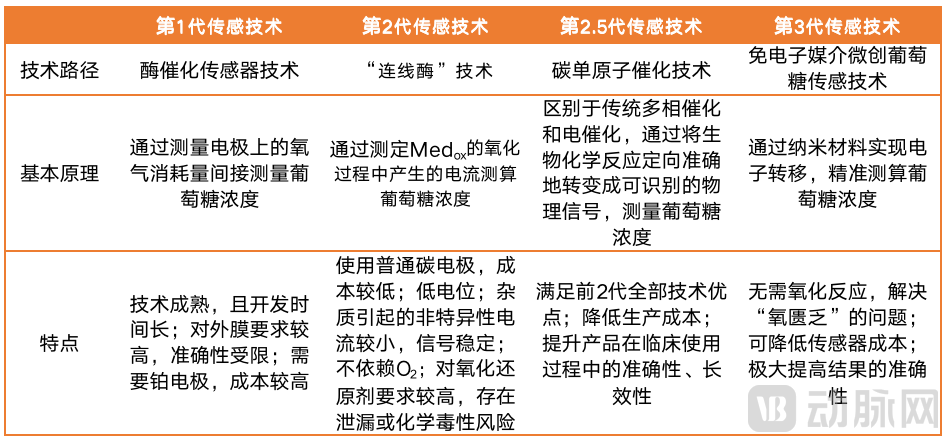
“Although CGM devices are compact, achieving breakthroughs requires overcoming four major technical barriers: sensors, transmitters, algorithms, and integration with insulin pumps.As the most critical component of continuous glucose monitoring (CGM) systems, sensors present the greatest challenge for technological breakthroughs. Throughout the three major technological transformations in CGM history, advancements have almost exclusively centered on capturing electrical signals generated during the glucose oxidation process.“said Lan Chunbo, the project leader at MYCura.”
Not long ago, MYCura, in collaboration with the team of doctoral supervisors from the Department of Applied Chemistry at the University of Science and Technology of China, achieved a breakthrough in carbon single-atom technology, overcoming a core biosensing challenge in continuous glucose monitoring (CGM).
Unlike traditional sensing technologies, carbon single-atom technology enables more precise and specific molecular recognition and interactions due to the uniformity of each reactive site on the carbon single atoms. Therefore, by leveraging this technology to directionally convert biochemical reactions into identifiable physical signals, more accurate glucose concentration measurements can be achieved. As a result, the accuracy and long-term stability of the product in clinical use will be significantly enhanced, and the microneedles will exhibit greater stability.
It is reported that the MARD value of MYCura’s CGM product has approached 7.5%. (The MARD value is generally regarded as a core metric for assessing CGM accuracy; a lower MARD value indicates higher blood glucose measurement accuracy. CGM systems with a MARD <10% are typically considered to have good analytical performance.)
Leveraging breakthroughs in carbon single-atom technology, MYCura has successfully replaced expensive imported precious metal carbon black inks with single-atom carbon black inks.
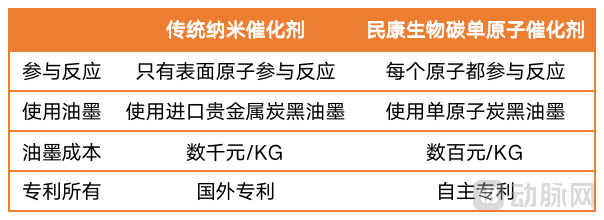
Single-atom carbon black ink is not only low in cost, but its use in production can also reduce the consumption of oxidases and dehydrogenases to a certain extent, further lowering the overall manufacturing cost of blood glucose test strips. MYCura emphasizes that the tunable characteristics of single-atom catalysts may also address the high energy consumption and pollution associated with traditional catalytic processes.
Currently, MYCura is continuously advancing the integration of the aforementioned technologies into its continuous glucose monitoring (CGM) and blood glucose monitoring (BGM) products. Furthermore, the company has prioritized enhancing wearing comfort as a key focus in product development, aiming to achieve CGM product specifications of 25×15 mm in size, 6 mm in thickness, and 5.5 g in weight; an insertion depth of 4–6 mm; fingerstick blood calibration-free operation; and a wear duration of up to 21 days.
In the future, MYCura will build on this foundation to further extend the technology into application areas such as mobile health sensors for chronic disease management, sensors for cardiovascular disease monitoring, and geriatric care.
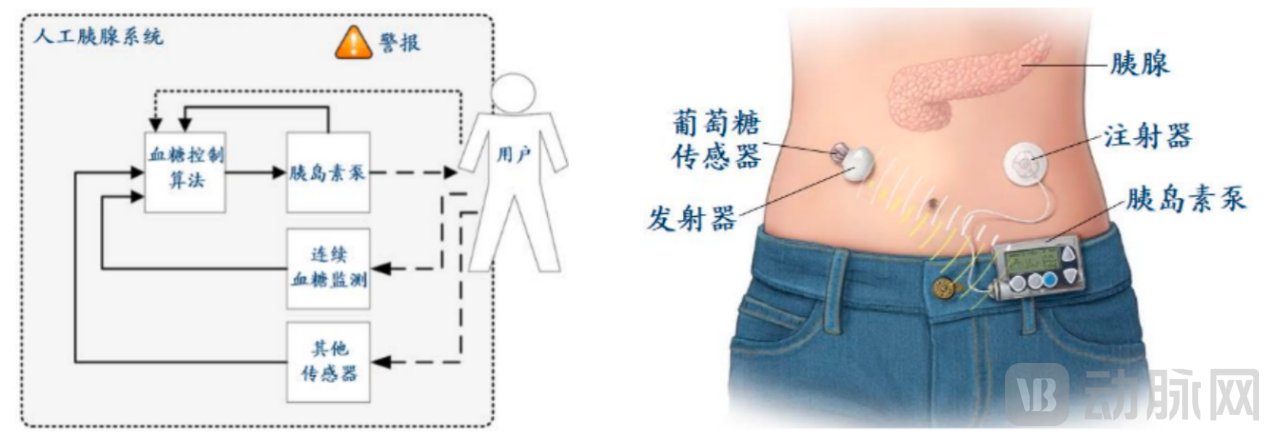
The basic components of a closed-loop artificial pancreas system include a continuous glucose monitor (CGM), an insulin pump, and control algorithms. In 2021,MYCura, with its CGM products as the cornerstone, has officially launched research in the field of artificial pancreas projects, achieving independent R&D of CGM, insulin pumps, and artificial algorithms, to provide an ultimate solution for insulin-applicable populations.
It is understood that this artificial pancreas (closed-loop insulin pump) can replace manual blood glucose monitoring and manual insulin injections by patients, closely mimicking the physiological secretion of human insulin. Its working principle involves transmitting the patient’s blood glucose levels to an algorithmic control system via a continuous glucose monitoring (CGM) device. The control algorithm then processes information such as the patient’s current blood glucose level, meal status, and target blood glucose values. Finally, the computational results are transmitted to the insulin pump to adjust the insulin infusion rate and volume in real time, forming an automated closed-loop system that continuously maintains the patient’s blood glucose within the normal range.
Lan Chunbo told VCBeat,CGM is a critical data source for MYCura’s closed-loop artificial pancreas system, enabling it to closely mimic the physiological function of the human pancreas, improve the TIR (Time in Range) metric, and reduce the risk of complications., thereby achieving the ultimate goal of diabetes management: enabling patients with diabetes to return to normal life to the greatest extent possible. MinKang Bio’s extensive foundational research and accumulated data surrounding continuous glucose monitoring (CGM) and artificial pancreas systems will position the company to rapidly achieve technological breakthroughs.
In fact,The development of closed-loop artificial pancreas systems has always been one of MYCura’s key strategic priorities.MYCura aims to meet the needs of primary healthcare institutions for patient blood glucose management by launching affordable, user-friendly, and compact continuous glucose monitoring (CGM) devices, as well as by developing a chronic disease management platform and a closed-loop artificial pancreas system. This approach effectively addresses the pain points of lagging informatization and data fragmentation in blood glucose management within primary healthcare settings.Enable interoperability of patient blood glucose data with large hospitals to ensure effective utilization of medical information resources, facilitate large-scale deployment of the product in primary healthcare institutions, and break the traditional home-centric model of blood glucose monitoring.
“Approximately 900 million people in China live in grassroots communities, presenting a vast market potential for primary healthcare. This strategic layout not only aligns with the national policy on tiered diagnosis and treatment but also helps prevent geriatric diseases, optimize daily disease management, and reduce national medical insurance expenditures through the collection of baseline data from the elderly and patients with diabetes,” said Lan Chunbo.
In 2020, the Anhui Chuancheng Biosensor Technology Industrial Park, fully invested by Minkang Bio, commenced construction. Covering an area of nearly 100 mu, the project will introduce 15 automated production lines imported from Germany and establish four R&D centers, becoming the largest specialized industrial park in China’s chronic disease detection technology industry.
With the gradual completion and commissioning of the Anhui Inheritance Biosensing Technology Industrial Park, MYCura’s production capacity is expected to increase significantly in the future. The production costs of its continuous glucose monitoring (CGM) products will also be optimized, potentially enabling the company to achieve further innovative breakthroughs.