27-Provincial Alliance Announces Preliminary Results of National Pacemaker Volume-Based Procurement; Medtronic, Abbott, Biotronik, and Boston Scientific All Secured Selection

Medtronic
Medical Device Manufacturer

Abbott
Provider of Health Diagnostic Products and Health Diagnostic Management Solutions

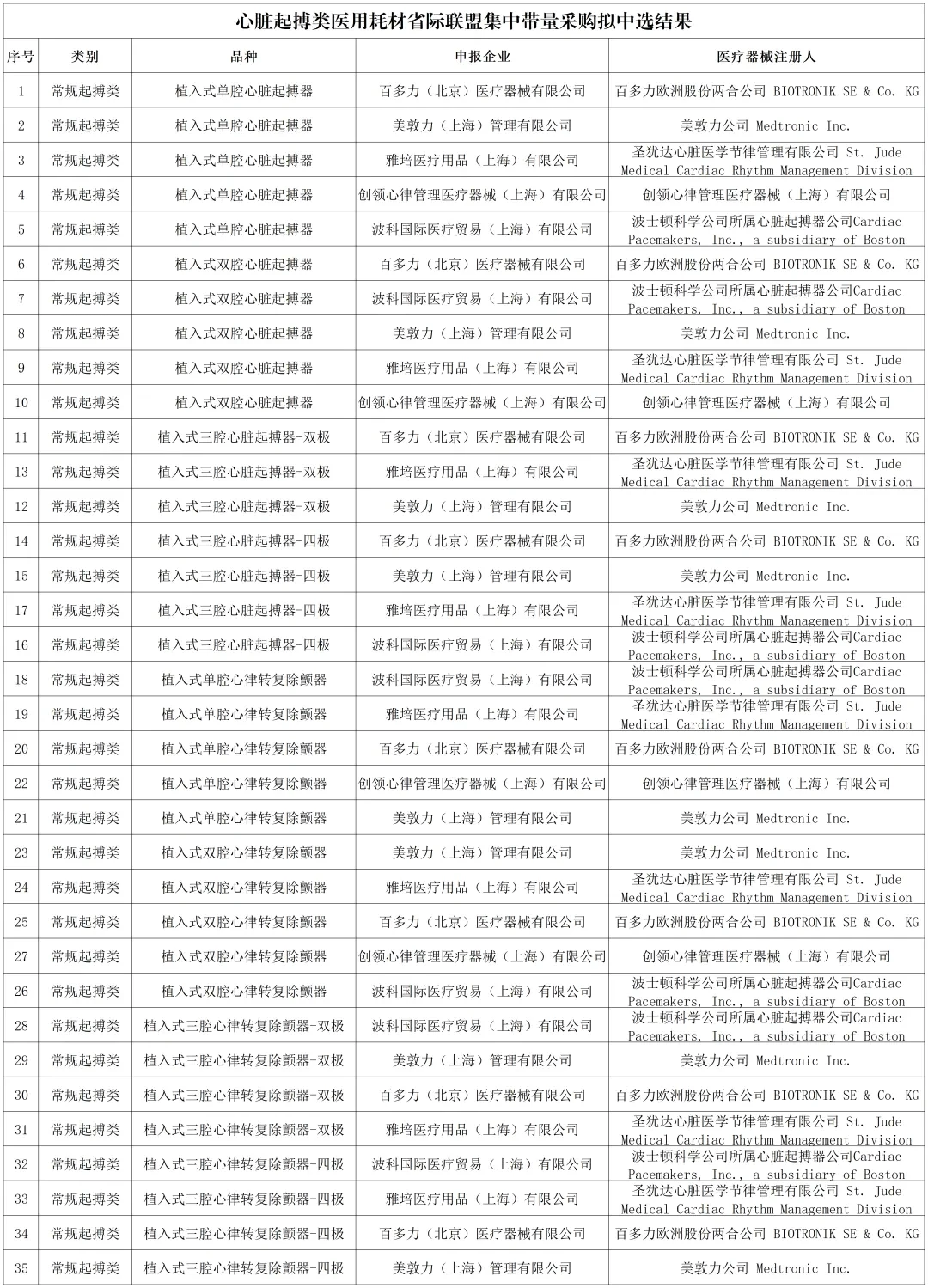
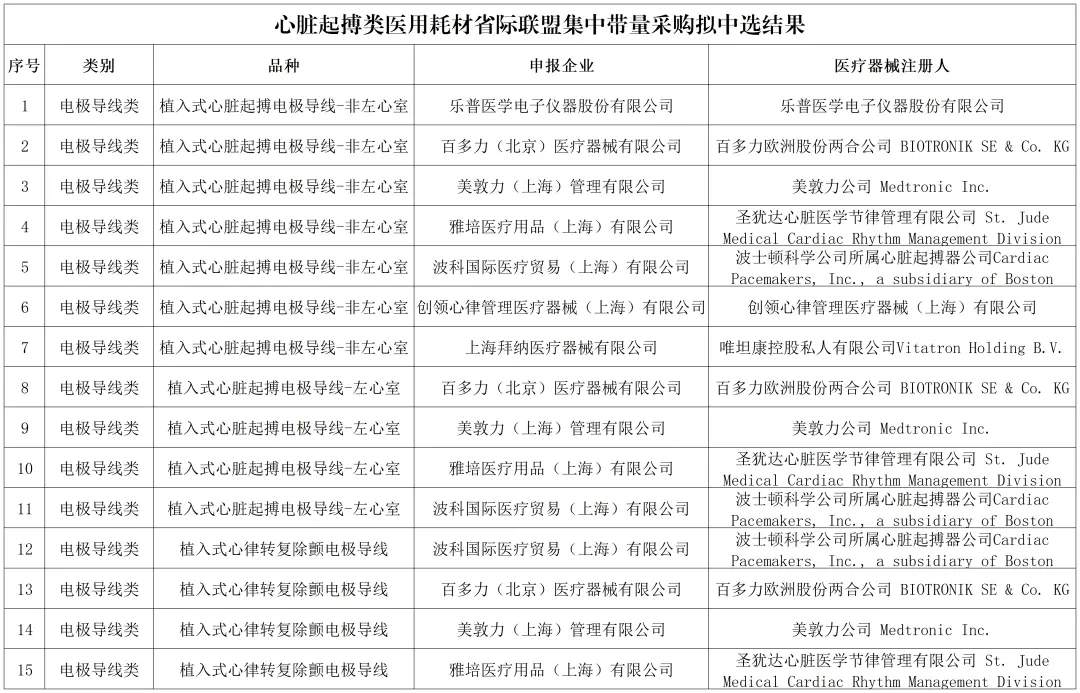
April 28,Zhejiang Provincial Medical Insurance Bureau Officially Releases the "Public Notice of Intended Winning Results for the Provincial Alliance's Centralized Volume-based Procurement of Cardiac Pacemakers and Peripheral Vascular Intervention Microcatheter Medical Consumables"The centralized procurement of cardiac pacemakers, for the first time reaching the scale of a "small national procurement," has officially concluded, with broad coverage, large procurement volume, and clear price reductions.A Heavyweight Benefit for Patients and the Industry.
Encouragingly, all the top five enterprises in terms of hospital demand have successfully made it to the proposed selection list.
***See the full list at the end of the article.
This centralized procurement has a procurement cycle of 3 years, covering 27 provinces (autonomous regions and municipalities) including Beijing, Shanghai, and Jiangsu, plus the Xinjiang Production and Construction Corps.
Total Annual Demand:
Conventional Pacing Category: 84,800 units;
Leadless Pacemakers: 5,639 units;
Electrode leads: 171,400 units.
Extended Reading:Latest! National Joint Procurement of Pacemakers Launched in China, Medtronic, Abbott, BIOTRONIK, and Boston Scientific Account for 80% of Demand
Cardiac PacemakerIt is an electronic therapeutic device implanted in the body. It delivers electrical pulses powered by a battery through a pulse generator, and via the conduction of lead electrodes, it stimulates the myocardium in contact with the electrodes, causing the heart to depolarize and contract, thereby achieving the purpose of treating bradycardia and conduction block.
Main indications include heart failure, sinus node dysfunction or atrioventricular block, atrial fibrillation, cardiac arrest, and patients who must undergo long-term drug treatment with medications that have the effect of slowing heart rate due to other conditions.
Data from the Arrhythmia Technology Branch of the China Association of Medical Equipment shows that in 2024, there were 147,748 pacemaker implants in China (+6.6%); including 122,358 dual-chamber pacemakers (accounting for 83%), and 6,031 leadless pacemaker implants (+2%).
Medtronic, Abbott Medical, BIOTRONIK, and Boston Scientific, four multinational corporations, collectively account for over 80% of the demand, particularly exceeding 90% in high-end categories such as triple-chamber pacemakers and implantable cardioverter-defibrillators.
Before the centralized procurement, the prices of related products were high, with a single unit costing tens of thousands to hundreds of thousands of yuan; after the centralized procurement, the product prices generally dropped to within ten thousand to one hundred thousand yuan.
The specific price reduction figures for this round of centralized procurement have not been announced yet, but based on the highest valid bid price and the "Re-quotation Rule," the expected price reduction is considered to be more significant than the previous winning bid prices.
Reference price for public bidding nearly a year before centralized procurement
Implantable Single-Chamber Cardiac Pacemaker: Made in China 13,993-24,000 yuan, Imported 18,000-34,000 yuan;
Implantable Dual-Chamber Pacemaker: Made in China 36,000-49,800 yuan, Imported 31,000-80,000 yuan;
Implantable Three-Chamber Cardiac Pacemaker - Bipolar: Made in China 58,000-80,000 RMB, Imported 80,000-140,000 RMB;
Implantable Three-Chamber Cardiac Pacemaker - Quadripolar: Domestically Produced 65,000-90,000 RMB, Imported 95,000-150,000 RMB;
Leadless Implantable Cardiac Pacemaker: 150,000-180,000 RMB.
This centralized procurement corresponds to the most of each variety.High Effective Bid Price(Including delivery fees, delivery fees for supporting tools, usage fees for supporting tools, and accompanying service fees, etc.)
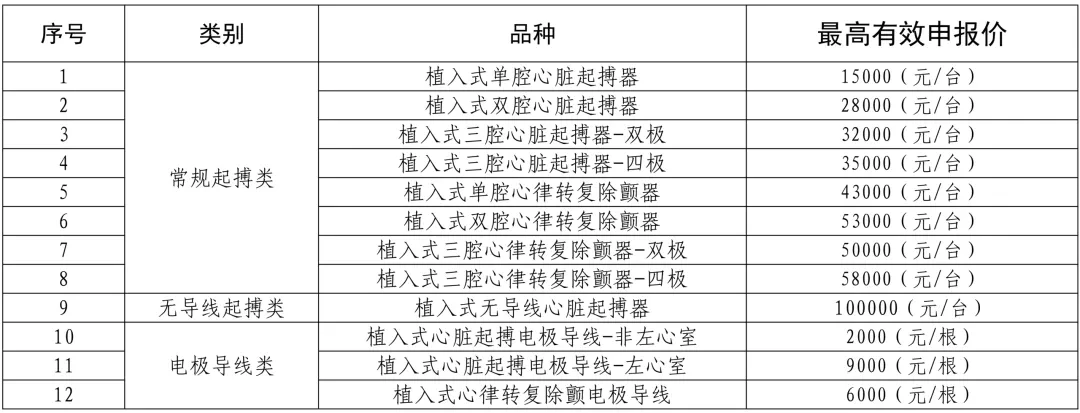
The proposed selection rules provide multiple opportunities for enterprises.
Rule One
If the benchmark product quotation of an effectively declared enterprise is no higher than the highest valid declared price of the bidding unit + the provincial online listing price of the same product in each province, it will be eligible for tentative selection; ranked from low to high based on the benchmark product quotation.
Rule Two
If all products from the validly declared enterprises fail to meet all the requirements of the benchmark product in the same bidding unit, but the quotation and proposed supply price of the benchmark product (substitute) meet the document requirements, it may obtain the proposed winning qualification, with the quotation of the benchmark product (substitute) as the proposed winning price.
Rule Three (Previous Selection Price Reduction)
Valid bidding enterprises that have been selected in national or provincial centralized procurement in China and cannot quote according to Rule One, if their bid does not exceed 90% of the lowest price among the already enforced/pending enforcement centralized procurement of the same product by the same company in other provinces, will be granted tentative selection eligibility.
Rule Four (Final Re-quotation)
The proposed winning enterprise ranked last according to Rule One may submit a new bid;
The subsequent bid shall not exceed the arithmetic average of all non-last-place winning bids in the first round, and once the criterion is met, it will be considered as non-last-place.
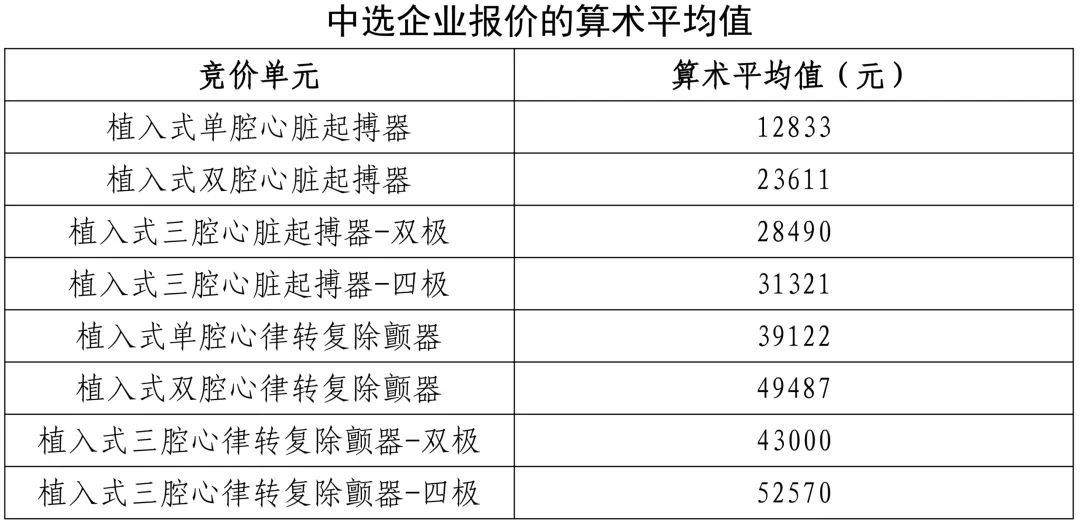
Re-quotation = Enterprises' "revival/re-election opportunity," only applicable to conventional pacing categories.
Leadless Pacemaker Category: Only Rule One applies; a company's bid is valid if it does not exceed the highest valid bid in the bidding unit, thereby qualifying for provisional selection; companies are ranked from lowest to highest bid.
*** As of now, the only implantable leadless pacemakers approved for the Chinese market are products from the two major brands, Medtronic and Abbott.
Lead Electrodes: Only Rule One applies; a valid bid from a qualified company must not exceed the highest valid bid price in the bidding unit to be eligible for provisional selection; companies will be ranked from lowest to highest bid.
From the tentative selection results,
Implantable Single-Chamber Cardiac Pacemaker: BIOTRONIK, Lepu Medical, and LifeTech Scientific did not make the shortlist.
Implantable Dual-Chamber Pacemakers: BIOTRONIK, Lepu Medical, and LifeTech Scientific Did Not Qualify for Selection.
Implantable Three-Chamber Cardiac Pacemaker - Bipolar: Boston Scientific did not intend to be selected.
For the remaining categories, all companies that successfully submitted bids were successfully shortlisted.
In addition, MicroPort Medical (Chuangling Heart Rhythm), Medtronic, BIOTRONIK, and Boston Scientific have products that have achieved re-quotation through "Rule Four" to be selected.
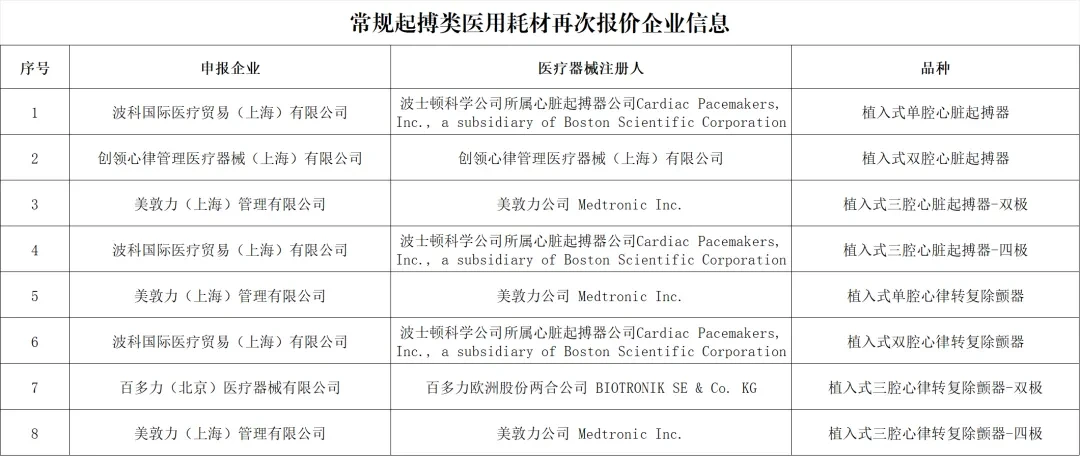
The allocation of the agreed procurement volume is still related to the gradient ranking of the proposed winners.
Conventional Pacing Category: Allocation by ranked tiers (1st place 85%, 2nd place 80% ... last place 50%), remaining volume to be independently distributed by medical institutions.
Leadless Pacemakers: Determine the contracted procurement volume based on 60% of the annual demand.
Lead Electrodes: Medical institutions procure as needed, without fixed allocation.
This pacemaker alliance volume procurement has realized a reconstruction of the price system and a fine-tuning of competitive logic, essentially driving the transition of products from high-priced essential consumables to categories covered by medical insurance for broader public benefit. Foreign companies have secured over 80% of the agreed procurement volume by reducing prices on single-chamber and standard dual-chamber basic products, while also pushing domestic manufacturers to step away from cutthroat price competition and focus on technological breakthroughs.
After the centralized procurement is implemented, the overall industry pattern may remain stable, while the profit pressure on companies across the entire industrial chain may further increase.