Ronovo Surgical's HaiShan Modular Robotic Platform Completes Multi-Specialty, Multi-Procedure Animal Trials with Unanimous Endorsement from Leading Clinical Experts
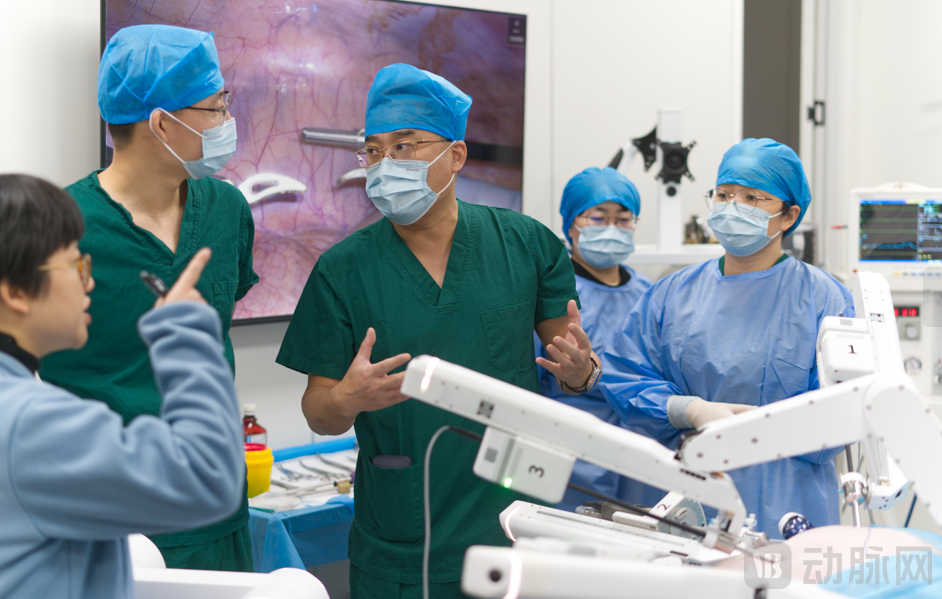
Recently, Ruilong Nuofu invited Professor Ye Dingwei, Vice President of Fudan University Shanghai Cancer Center, and his team; Professor Ji Mei, Deputy Director of the Department of Gynecology at the First Affiliated Hospital of Zhengzhou University; and Professor Wu Dapeng, Deputy Director of the Department of Urology at the First Affiliated Hospital of Xi’an Jiaotong University, to conduct a three-day animal study. The experts evaluated the clinical performance of Haishan, Ruilong Nuofu’s modular laparoscopic robotic platform, and unanimously gave it high acclaim.
For the past 16 years, the Chinese market for laparoscopic surgical robots has been monopolized by foreign brands. Although their clinical value has been fully validated in urology, earning strong preference from physicians and recognition from patients, high costs and slow expansion into specialized applications have hindered the widespread adoption of this advanced technology. Ruilong Nuofu’s pioneering Haishan Yi™ laparoscopic robotic platform is developed specifically for the surgical scenarios encountered by Chinese laparoscopic surgeons, addressing the practical needs of nearly ten million minimally invasive surgery patients, 120,000 endoscopic surgeons, and over 10,000 secondary and tertiary hospitals in China each year. The Haishan Yi™ features a modular design, with individual surgical arm bedside carts positioned around the operating table. This configuration reduces floor space requirements and enhances spatial efficiency, providing surgeons and assistants with more flexible and ample working space. The modular carts can also be easily moved between different operating rooms, better adapting to the existing operating room environments in China’s secondary and tertiary hospitals. With the Haishan Yi™ laparoscopic robot, physicians can flexibly select the types, quantities, and arrangement of surgical instruments, thereby preserving and enhancing their surgical expertise, reducing the learning curve for robotic surgery, and enabling robotic-assisted laparoscopic procedures across a broader range of specialties. Development of the Haishan Yi™ laparoscopic robotic platform officially began in 2021. Within just two years, it underwent multiple design iterations as well as animal and cadaveric experiments, culminating in successful three-day multi-specialty, multi-procedure live animal trials conducted on January 13, 15, and 17, 2023.
On January 13, the first live animal trial was conducted by Professor Ji Mei, Chief Gynecological Consultant at Ruilong Nuofu, a senior expert in robotic gynecologic surgery, and a gynecologist at the First Affiliated Hospital of Zhengzhou University. Assisted by the Haishan Robotic System, Professor Ji successfully performed a hysterectomy with bilateral salpingo-oophorectomy and bilateral iliac vessel lymph node dissection on a porcine model. The trocar placement adopted a layout similar to that of conventional laparoscopic surgery. During the procedure, Professor Ji operated the Haishan robot to precisely achieve surgical field exposure, isolation, coagulation, and transection of the uterine arteries, distal cervical transection, and vaginal cuff suturing, completing the surgery seamlessly in a nearly bloodless field. Subsequently, Professor Ji confidently simulated an internal and external iliac vessel lymph node dissection, performing precise dissection, electrocoagulation, and resection around the vessels, thereby fully skeletonizing the bilateral internal and external iliac vessels. This demonstrated the superior surgical performance of the Haishan System. In her post-operative assessment, Professor Ji stated, “The Haishan System developed by Ruilong Nuofu features a fully modular design with separate components. It demonstrated outstanding clinical surgical capabilities in animal experiments, and the performance of both the system and its associated instruments is fully ready for initiation of human clinical trials.”
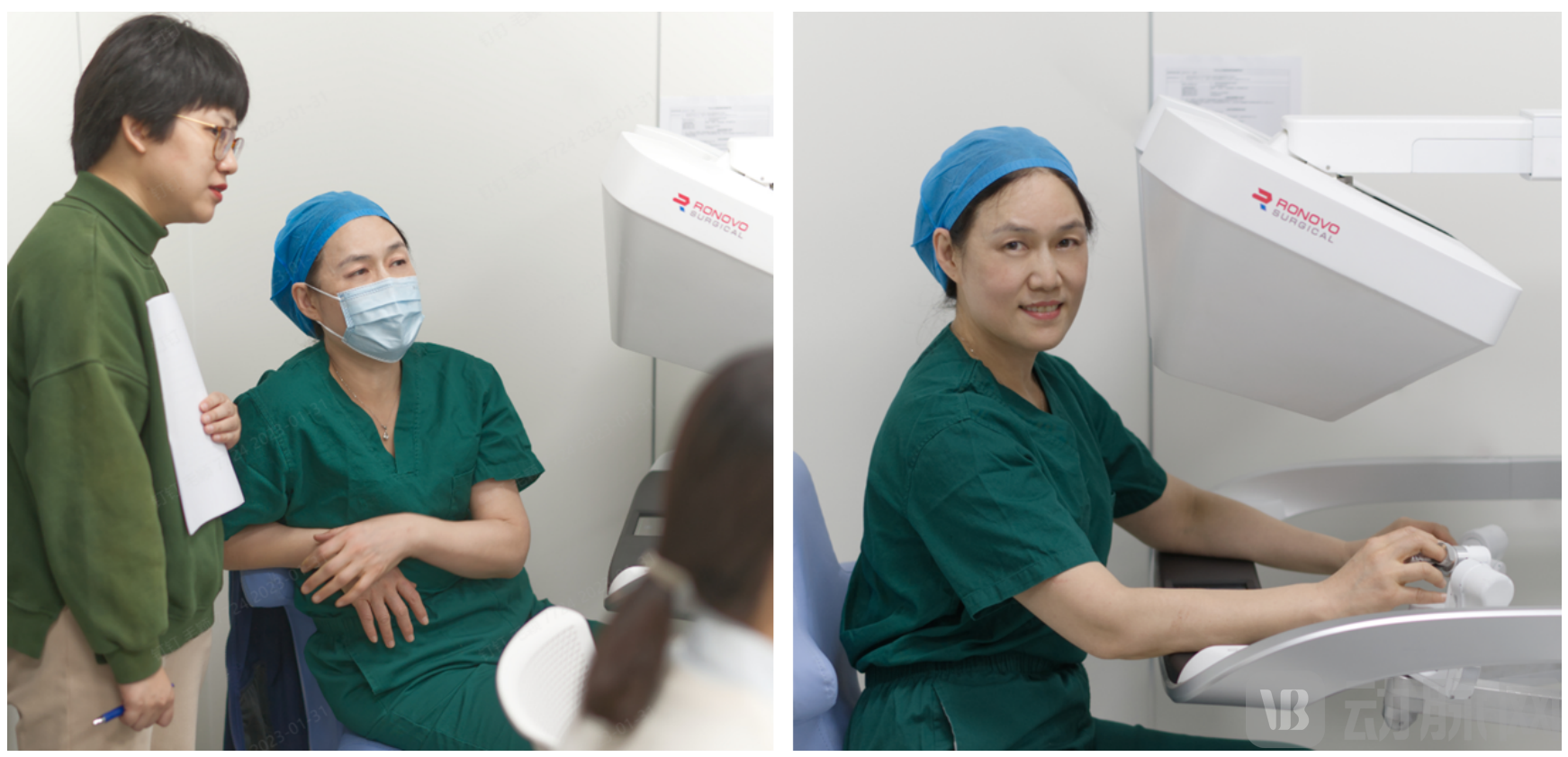
On January 15, Professor Ye Dingwei, Chief Urology Consultant at Ruilong Nuofu, Chairman of the Urology Branch of the China Anti-Cancer Association, Vice President of Fudan University Shanghai Cancer Center, and a renowned urology expert, led Professors Wang Hongkai and Cao Dalong in successfully conducting live-animal urological trials. Professor Ye and his team first observed the Haishan Laparoscopic Robotic Surgical System. They praised the system’s unique modular cart design, noting that its dexterity and practicality offer distinct advantages in clinical surgery, and provided specific examples based on clinical application scenarios. Subsequently, Professor Ye successfully performed a porcine unilateral partial nephrectomy using the Haishan Laparoscopic Robotic Surgical System. He first commended the system’s clear and realistic 3D visualization. During the procedure, Professor Ye operated with ease at the master console, while the instruments on the patient side responded quickly and precisely to the surgeon’s intentions, successfully achieving exposure and dissection of the renal artery, as well as resection and suturing of the renal tissue. Professors Wang Hongkai and Cao Dalong then performed related surgical procedures, expressing satisfaction with the surgical capabilities of the Haishan robotic system. Professor Wang specifically noted that the Haishan system could smoothly complete bladder neck-urethral anastomosis from all angles. After the surgery, Dean Ye commented, “By performing surgeries with the Haishan Laparoscopic Robotic System, I personally experienced the excellent performance of domestically produced robotic surgical systems. The robotic surgical system from Ruilong Nuofu features novel design, unique characteristics, and superior performance.” He further stated, “I fully support the early initiation of clinical trials for the Haishan robotic system in urology and am confident in its clinical application prospects.”
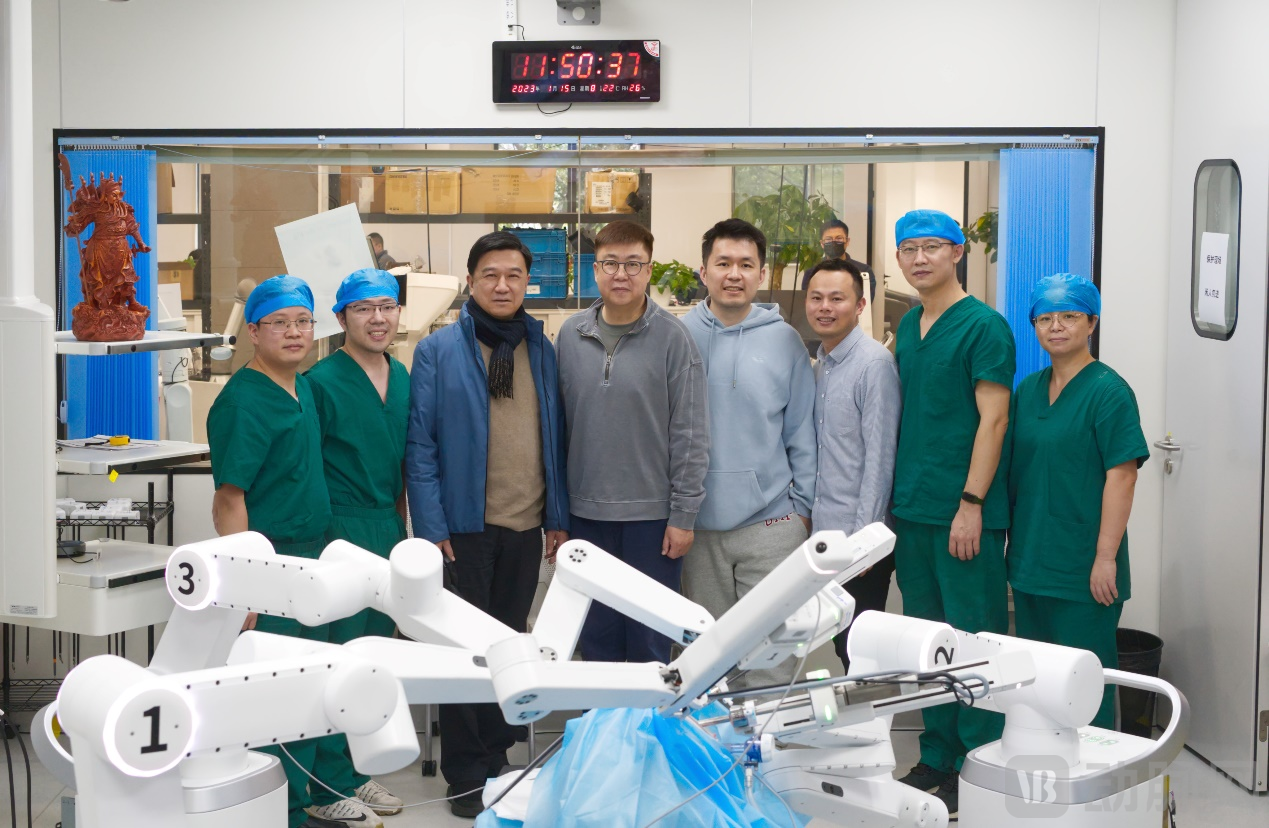
On January 17, Professor Wu Dapeng, Senior Clinical Advisor at Ruilong Nuofu and Deputy Director of the Department of Urology at the First Affiliated Hospital of Xi’an Jiaotong University, conducted the final round of in vivo urological animal trials. Operating the Haishan Laparoscopic Robotic Surgical System, Professor Wu successfully completed four procedures—unilateral partial nephrectomy, ureteral transection and anastomosis, renal venotomy with suturing, and radical nephrectomy—in a single session lasting less than three hours. During the procedures, he dissected the ureter down to its junction with the bladder, achieving a warm ischemia time of only 10 minutes for the partial nephrectomy. After rapidly familiarizing himself with the Haishan robot, Professor Wu demonstrated agile and effortless control, fully showcasing the system’s rational design, precision, dexterity, and ease of use. The system proved capable of performing complex and delicate surgical tasks, including renal tissue resection and suturing, venous vascular suturing, and ureteral anastomosis. In his post-operative evaluation, Professor Wu stated, “The Haishan Laparoscopic Robotic Surgical System offers surprisingly realistic 3D stereoscopic vision, excellent master-slave manipulation follow-through, and well-designed surgical instruments that ensure operator comfort, effectively meeting surgical requirements.” He further noted that the Haishan system’s unique modular design effectively overcomes the drawbacks of integrated robotic systems, providing significant advantages for cross-quadrant surgeries. Professor Wu expressed his hope that the Haishan Surgical System will be introduced into clinical practice soon, thereby benefiting more patients.