

Medical Informatics Corp: The Rising Star in Hospital Monitoring Attracting Intel, Cisco, and Dell

Intel Capital
Venture Capital Firms

TGH Innoventures
Venture Capital Firms

Catalio Capital Management
Biomedical Investment Institutions

Medical Informatics
Provider of Patient Monitoring and Predictive Analytics Services

TMC Venture Fund
Venture Capital Firms

DCVC Bio
Venture Capital Firm
Disruptive technologies, innovative business models, and transformative megatrends are considered the three key factors influencing the medical technology industry. To stand out in the medtech sector, companies entering the market must proactively address these issues.
As a rising star in the ward monitoring industry, Medical Informatics Corp. (hereinafter referred to as “MIC”) has overcome these challenges and leveraged them to drive its own development.
MIC was founded in 2009 and is headquartered at the Texas Medical Center in Houston. The MIC team collaborates with clinicians and hospital administrators to provide a range of analytical solutions and alert management products, transforming patient data into actionable insights.
Recently, VCBeat learned that MICAnnouncementSecured $17 million in Series B financing, with a total funding amount of $27 million (approximately RMB 180 million). This round of financing was led byCo-led by Catalio Capital Management and Intel Capital,This financing round also includes an additional $10 million in debt issued by Catalio through its structured equity strategy.。TGH Innoventures、DCVC, TMC, and nCourage also participated in this funding round.
Over its more than ten years of growth, MIC has been honored with the 2021 Product Leadership Award for Best Practices in Excellence within the U.S. virtual intensive care industry, and has formed alliances with three tech giants—Intel, Cisco, and Dell—all of which have extended olive branches to partner with it.
We can’t help but wonder: How will MIC carve out its own path?

Virtual Intensive Care Unit (vICU) is an intensive care model based on information technology. It provides remote, real-time monitoring for intensive care units through various forms of information technology, enables real-time video communication with patients and healthcare providers at different locations, promotes the sharing of high-quality intensive care resources, and ensures patient safety.
MIC began its journey with vICU. At the core of its technology and services is Sickbay, a virtual monitoring platform that integrates data collection, aggregation, and transformation capabilities.
Dr. Emma Fauss and Dr. Craig Rusin, the founders of Medical Informatics Corporation (MIC), collaborated with critical care teams to develop the Sickbay platform and spent decades commercializing it.
Co-founder Emma Fauss’s upbringing planted the seed for her to establish Medical Informatics Corporation (MIC). Her father was an anesthesiologist, and during her formative years, Emma Fauss observed that he was often burdened by the tedious and fragmented tasks and procedures inherent in the daily practice of healthcare.

Co-founder Emma Faus, image source: TMC.edu
Carrying this seed of ambition, she earned a Bachelor’s degree in Chemical Engineering and a Ph.D. in Computer Engineering before entering the Rice University Business School, where she met her mentor, Tom Craft.
Tom Craft is not only Emma Fauss’s mentor but also a serial entrepreneur. With a focus on technology, he typically guides entrepreneurs across various industries, helping them analyze the problems they aim to solve. His mentees are primarily teams in the healthcare and technology sectors.
In a conversation, Emma Fauss candidly remarked, “He transformed the way I think about optimization and approach different business opportunities strategically, while also helping me discover my passion for mentoring others in this field.” She earned her Master of Business Administration (MBA) with a focus on healthcare from Rice University, an experience that provided her with unique insights into business strategy.
In 2015, six years after its founding, Medical Informatics Corporation’s (MIC) Sickbay platform, patient monitors, and alarm data analytics dashboard application received FDA clearance.
In 2019, MIC secured $11.9 million in its Series A financing to launch a patient monitoring and predictive analytics platform. The round was led by DCVC, with participation from Intel Capital. Scott Barclay of DCVC and Eric King of Intel Capital joined MIC’s board of directors.
Mark Lydon, Managing Director of Intel Capital, stated: “When we include companies in our portfolio, we seek innovative organizations capable of shaping the future of computing over the next decade. MIC is one such company, helping us shape the future of artificial intelligence.”
Intel Capital’s high expectations for MIC are not whimsical.
According to Frost & Sullivan, revenue in the U.S. virtual intensive care solutions market is projected to grow from $652 million in 2020 to $1 billion by 2025.
MIC’s Sickbay platform collects patient data from ICU equipment—including high-fidelity waveform data from both networked bedside monitoring devices (such as cardiac monitors) and non-networked devices (such as cardiac output monitors)—to enable large-scale remote monitoring. Additionally, it applies patient-specific analytics to enhance clinical decision-making, helping care teams intervene more rapidly.
Due to factors such as reliance on specific equipment vendors, the lack of a unified platform, and a focus on specialized domains, many market participants’ vICU solutions lag behind and cannot be customized to meet customer requirements.
Compared with competing solutions on the market, Sickbay enables customers to view up to 100 patients across units and facilities on PC clients. It also deploys virtual care and AI to inpatient settings beyond the ICU, such as alarm management applications and central telemetry monitoring, to meet customers’ personalized customization needs.
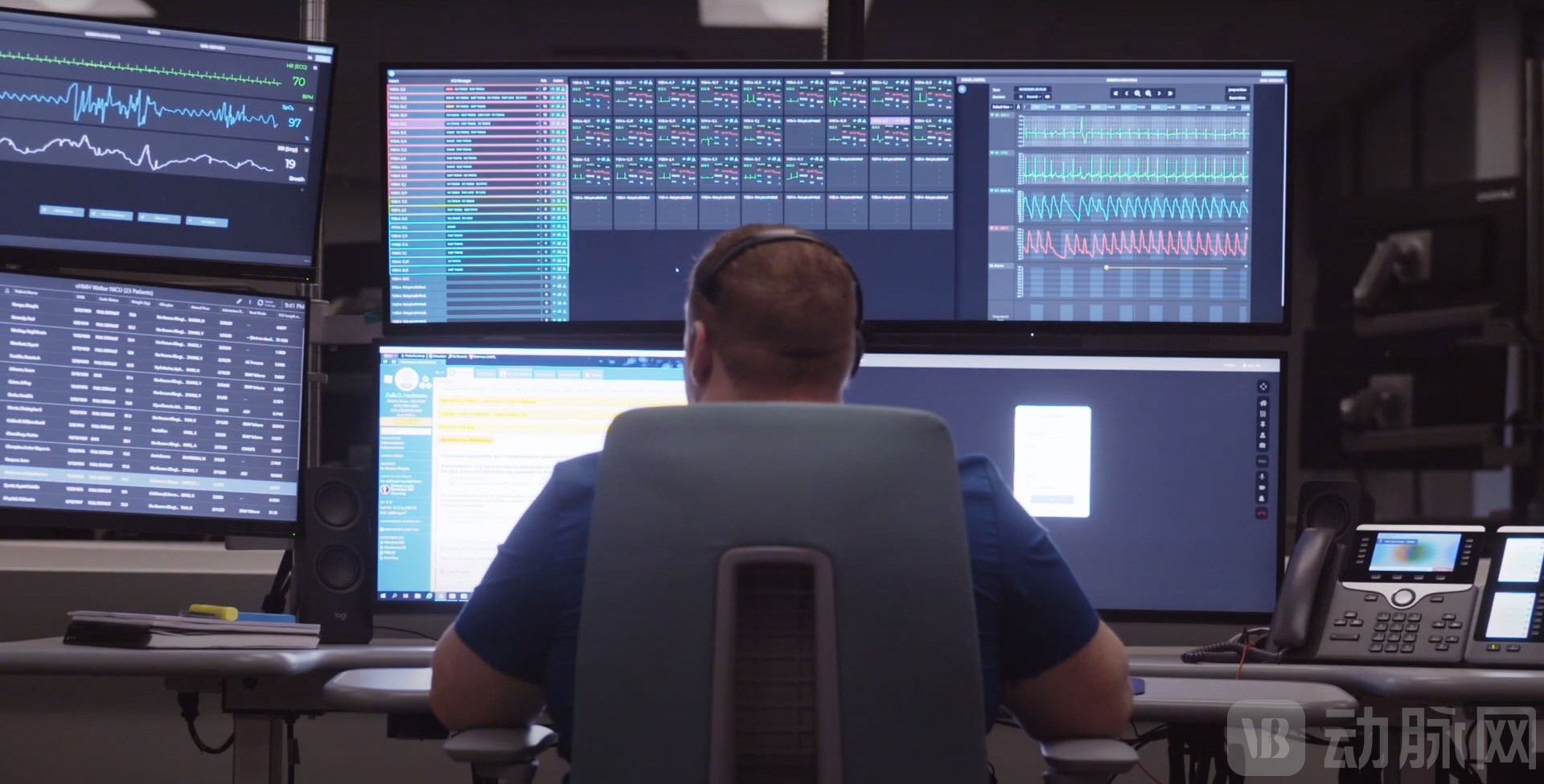
MIC’s Remote Monitoring Platform and vICU
Application-Based Customized Solutions
MIC’s Sickbay platform can assemble a variety of web-based applications, such as multi-patient monitoring, alarm management strategies, predictive analytics for patient deterioration, and research insights. These applications can be configured to meet the virtual care needs of specific hospitals.
For example, virtual intensive care units and remote monitoring applications can transform any hospital bed into a remotely monitored one within minutes. On any personal computer, tablet, or smartphone, healthcare professionals can remotely monitor near real-time and retrospective data, while leveraging unlimited historical data to create real-time risk calculators, virtual rounding reports, and patient-specific analytics.
Timely Data Notifications and Secure Communication
In virtual care programs, outdated data may lead healthcare providers to make erroneous clinical decisions. Sickbay’s built-in mechanism can detect latency in data transmission and immediately notify the clinicians accessing that data.
Sickbay provides secure password authentication when healthcare professionals share critical clinical information across mobile devices and computer systems. The web-based Sickbay also incorporates security features such as SSL encryption, session timeout, and single sign-on (SSO) authentication.
Low Maintenance Costs
Although the concept of the virtual intensive care unit (vICU) has existed for over two decades, its implementation remains limited due to high costs. For instance, establishing a vICU typically requires upfront investment in dedicated infrastructure, including hardware, software, and services. The cost of setting up advanced vICU equipment can exceed $50,000 per ICU bed. Additionally, managing data integration, interoperability, and security poses significant challenges.
Compared with traditional multi-device-intensive virtual care equipment, Sickbay can simultaneously monitor 100 hospital beds, resulting in lower usage costs and estimated savings of $100,000 to $500,000 over ten years. Furthermore, the built-in mechanisms of the Sickbay system enable the monitoring of diverse data and shared interface performance, while also notifying vendors upon detection of interruptions. This facilitates timely fault resolution and reduces subsequent maintenance costs.
MIC has formed strategic alliances with Intel, Dell, and Cisco, setting it apart from other companies in the field.
Leveraging Intel’s latest technologies, including Xeon processors, storage solutions, and Intel-optimized Python libraries, MIC has acquired the capability to integrate and process data from diverse formats and sources. This enables Sickbay to accelerate learning and research on physiological waveforms and other time-series datasets from connected medical devices.
MIC collaborates with Dell to run Sickbay’s vICU application on Dell’s large-format displays, leveraging Dell’s latest server hardware and long-term storage solutions such as Isilon and PowerStore.
In February 2020, MIC announced its latest strategic alliance and partnership with Cisco to leverage hospitals’ existing Cisco network infrastructure. This collaboration enables MIC to avoid installing and maintaining costly dedicated computer hardware at each hospital bedside. Meanwhile, hospitals can rapidly deploy and scale the collection of data from diverse medical devices, while ensuring that clinical staff have access to near real-time information across these devices.

MIC's Partners
Amid the COVID-19 pandemic, hospitals’ need for virtual intensive care units (vICUs) has become more urgent, requiring remote management of a large volume of ICU admissions.
In 2020, Medical Informatics Corporation (MIC) launched its “Service at Scale” initiative to facilitate broader deployment of the Sickbay platform while addressing the demands of the COVID-19 pandemic. Fifteen healthcare institutions, including Houston Methodist Hospital, integrated MIC’s Sickbay platform into their virtual ICU (vICU) and remote monitoring workflows through this initiative, which was partially funded by Intel Corporation.
Houston Methodist Hospital launched the vICU service line of its Medical Informatics Corporation (MIC) in March 2020, prior to the pandemic surge. Starting with 45 beds at the main hospital, the vICU service rapidly expanded to over 350 beds across eight facilities, including surge areas such as COVID-19 care units and emergency departments. Integrated data within the vICU includes real-time and retrospective waveform data from cardiac monitors, ventilators, pulse oximeters, and other devices.
“We are currently expanding the capabilities of our Virtual Operations Center to other areas across the entire hospital system to support multiple telehealth service lines and other monitoring needs, such as central telemetry and remote patient monitoring,” said Dr. Schwartz, Executive Vice President of Houston Methodist.
Currently,SickbayRecording data and remotely monitoring over 1,400 hospital beds across seven hospitals,Sickbay users currently access the system more than 2 million times per month.。This is a milestone.style performance.
However, the Sickbay solution far exceeds what a mere stopgap measure could achieve. During this “pandemic test,” MIC also enabled hospitals equipped with Sickbay to obtain data they had never had access to before.
Emma Fauss, CEO of Medical Informatics Corporation (MIC), stated: “The pandemic associated with the novel coronavirus has become overwhelming. We are honored to have the opportunity to help hospitals and healthcare workers on the front lines obtain the bedside data they need to deliver remote care, thereby protecting them from infection.”
In November 2022, MIC reached another key development milestone. It signed a resale agreement with Wilhelm, an integrated healthcare technology company based in Australia. Wilhelm is now authorized to resell the Sickbay clinical platform in Australia and New Zealand.
The collaboration between MIC and Wilhelm stems from a shared vision to address critical challenges facing today’s healthcare industry, including staff and bed shortages, as well as the need to establish an interconnected care infrastructure. In addition, Australia and New Zealand face unique challenges regarding the availability and standardization of electronic medical record (EMR) technologies. MIC will provide Wilhelm with a foundational architecture to help hospitals and healthcare systems in the region tackle these challenges.
Wilhelm’s spokesperson stated, “By leveraging technology to automate workflows and using virtual software to support staff, we can have a direct impact on patient care and staff efficiency. MIC’s Sickbay platform comes at just the right time, as demand from our hospital and healthcare workers continues to grow.”
MIC achieved significant milestones in 2022, from securing Series B funding to expanding into the Australian market. We will wait and see how MIC further expands its business strategy in the next step.