

Vaxxas Files for IPO Following $99.9M Raised Across Seven Funding Rounds to Advance Needle-Free Vaccine Platform

Vaxxas
Nanopatch Developer
Since January 8, 2023, China has implemented Class B management for COVID-19, with a focus on strengthening services and safeguards, and prioritizing prevention in the control of infectious diseases. As China’s approach to pandemic management evolves, the research, development, and vaccination of COVID-19 vaccines have once again become a focal point.
Vaccination is an effective measure for disease prevention and control. From the early practices of variolation and cowpox inoculation to the emergence of modern vaccine technologies, vaccine technology has undergone significant revolution and development over the past two centuries.Each vaccine developed stands as a testament to humanity’s struggle against disease, serving as a barrier to safeguard public health.
Vaccines are biological preparations for active immunization against infectious diseases, produced by artificially attenuating or inactivating pathogenic microorganisms (such as bacteria, rickettsiae, and viruses) and their metabolic products, or by using recombinant DNA technology.
Vaccines retain the ability of pathogens to stimulate the animal immune system. Upon exposure to these non-pathogenic forms of the pathogen, the immune system generates protective substances, such as immunological hormones, bioactive physiological agents, and specific antibodies. When the animal is re-exposed to the same pathogen, its immune system leverages immunological memory to produce increased levels of these protective substances, thereby preventing pathogen-induced damage.
Smallpox, which once raged worldwide, claimed countless lives. At that time, traditional Chinese medicine employed variolation to prevent smallpox, including four methods: wearing contaminated clothing (douyi), applying pustule fluid (doujiang), using dried scabs (hanmiao), and using fresh scabs (shuimiao).Inoculation with variola carried certain risks and was not widely adopted; nevertheless, its invention held significant importance in inspiring humanity to seek methods for preventing smallpox.
In the 18th century, Edward Jenner, a country doctor in England, treated a milkmaid and discovered that having contracted cowpox conferred immunity against smallpox. After investigating and confirming that this was not an isolated incident, he boldly inoculated an eight-year-old boy by injecting material from a cowpox pustule into his arm and subsequently exposed him to smallpox patients.The boy did not contract smallpox; Jenner’s trial was successful.
In 1798, Jenner published a paper titled An Inquiry into the Causes and Effects of the Variolae Vaccinae, and named this technique “vaccine,” a term derived from the Latin word vacca, meaning cow.
Thus, the initial form of vaccines emerged, marking the dawn of human immunology.
In the late 19th century, Louis Pasteur selected pathogenic microorganisms with strong immunogenicity, cultured them, inactivated them using physical or chemical methods, and then purified them to produce the vaccine, namelyThe inactivated vaccine that later became widely known to the public, after inactivation, they have lost their pathogenicity but retain their immunogenicity. Examples include the inactivated Japanese encephalitis vaccine, pertussis vaccine, and inactivated hepatitis A vaccine.
Inactivated vaccines typically use virulent strains as seed viruses, but attenuated (weak) strains also exhibit good immunogenicity.Live attenuated vaccines are developed through artificial directed mutagenesis, or vaccines are produced by screening for live microorganisms with highly attenuated virulence or essentially no toxicity from nature, and administering them to humans to prevent infectious diseases. Examples include the BCG vaccine, measles vaccine, and polio vaccine.
With the rapid advancement of molecular biotechnology, biochemistry, genetics, and immunology, the theoretical foundations and technological capabilities of vaccine development have been continuously refined and enhanced. Some traditional classic vaccines have been further engineered into new formulations, while novel vaccines—such as subunit vaccines, recombinant vaccines, and nucleic acid vaccines targeting various infectious and non-infectious diseases—are continually being introduced.
Subunit Vaccines, Also Known as Component Vaccines, such vaccines are produced by isolating natural proteins through chemical decomposition or controlled proteolytic hydrolysis, extracting specific protein structures from bacteria or viruses, and selecting immunologically active fragments. Subunit vaccines contain only a few major surface proteins, thereby eliminating antibodies induced by many irrelevant antigens, which reduces adverse reactions to the vaccine and vaccine-related diseases. Examples include meningococcal polysaccharide vaccines and influenza vaccines.
The application of recombinant gene technology has opened up a brand-new avenue for vaccine research.Genetic engineering vaccines are developed by inserting genes encoding effective specific antigens into easily proliferative vectors using modern genetic engineering techniques. These vectors express the effective specific antigens during proliferation, which are then harvested and used as vaccines. An example is the genetically engineered hepatitis B vaccine.
In 1990, the unexpected experimental results of Wolff et al. and Acell’s gene delivery system paved the way for the discovery of nucleic acid vaccines.Nucleic acid vaccines, also known as genetic vaccines, it involves the direct introduction of exogenous genes (DNA or RNA) encoding a specific antigenic protein into animal cells, thereby inducing an immune response against the antigenic protein in the host to achieve the purpose of disease prevention and treatment.
In addition to preventive vaccines, there are also therapeutic vaccines.Therapeutic vaccines are a form of active immunotherapy derived from the principles of passive immunity. They refer to interventions administered after infection or disease onset that induce specific (adaptive) or nonspecific (innate) immune responses in the host, with the aim of preventing disease occurrence or progression, or promoting recovery in already affected individuals. Since eliciting an immune response typically requires time, therapeutic vaccines are indicated only for chronic infections or tumors; they are generally not used for acute infections or rapidly progressing diseases.
The familiar form of vaccines is typically injectable vaccines., many people experience significant fear when receiving this type of vaccine. With the continuous advancement of vaccine technology, research has also begun into corresponding vaccine formulations.Some institutions and companies are dedicated to the development of needle-free vaccines., aiming to provide people with safer and more effective vaccine options and a more comfortable experience, reduce vaccination-related fear among the broader population, promote wider vaccine uptake, and help more people prevent and control diseases.
Headquartered in Brisbane, Australia, Vaxxas is a biotechnology startup focused on developing novel needle-free vaccination technologies.To date, Vaxxas has secured seven rounds of funding, totaling $99.9 million. Investors include the Australian Government, OneVentures, Uniquest, the Biomedical Advanced Research and Development Authority (BARDA), and the Bill & Melinda Gates Foundation.
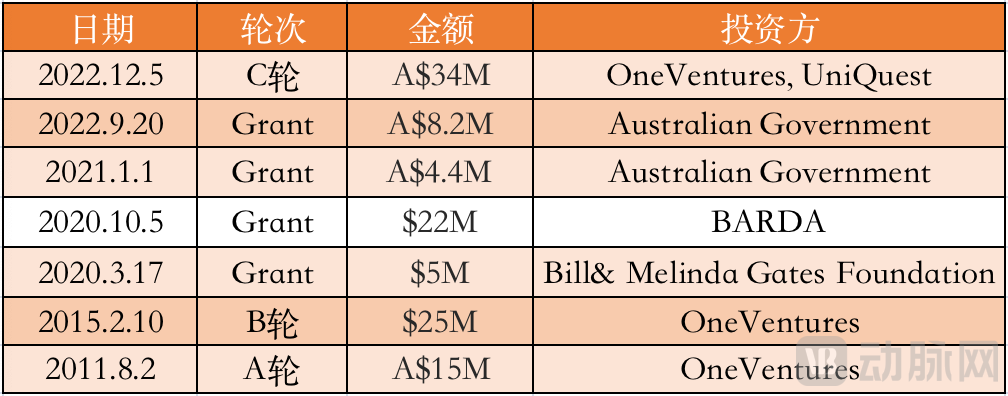
Figure 1: Vaxxas Financing-Related Data
Vaxxas, spun out of UniQuest, the commercialization arm of the University of Queensland, was founded in 2011. As a biotechnology startup, Vaxxas aims to enhance the performance of existing and next-generation vaccines through its proprietary High-Density Microarray Patch (HD-MAP), with initial applications focused on infectious diseases and oncology.
High-Density Microarray Patch (HD-MAP), or skin patch, is a stamp-sized patch featuring thousands of projections, each 0.25 mm in length.
Vaxxas applies the vaccine to the tips of microscopic projections under sterile conditions. The HD-MAP delivers vaccine antigens via these microscopic projections into the abundant population of immune cells located beneath the skin surface, triggering an immune alert and thereby eliciting a robust immune response in the body, all without causing pain.
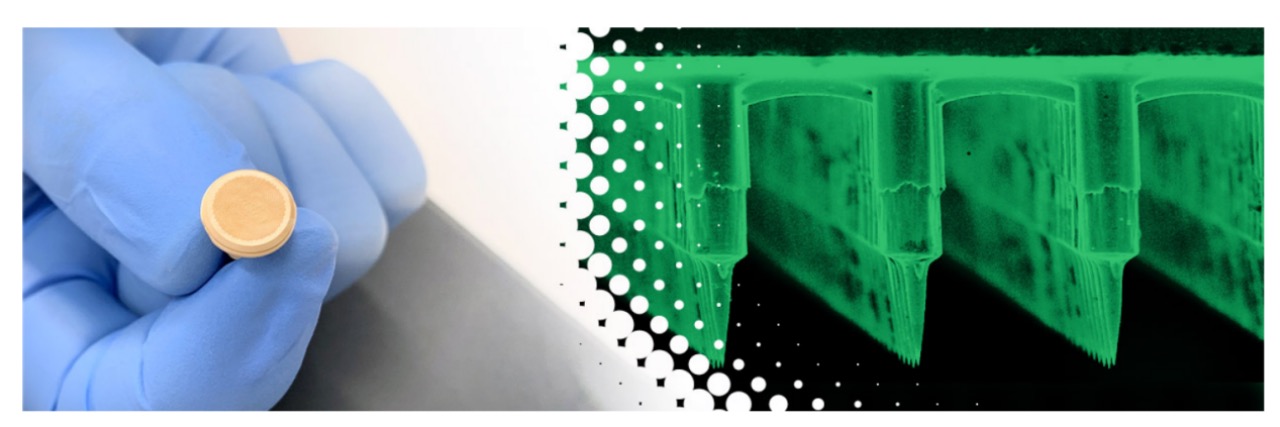 Figure 2: Morphology of the High-Density Microarray Patch (HD-MAP)
In addition to providing a better experience, patch vaccines also offer superior efficacy.
InPLoS MedExtensive laboratory tests published have found that Vaxxas’s HD-MAP patch vaccine demonstrates greater stability and retains higher potency during room-temperature storage and transportation compared to the traditional needle-based HexaPro SARS-CoV-2 spike protein vaccine. Furthermore, the patch vaccine is significantly more effective than conventional vaccination systems, eliciting an immune response equivalent to that of a “full” intramuscular injection dose with only a fraction of the dosage. This efficiency allows more vaccine doses to be produced from the same amount of antigen, thereby reducing costs.
Furthermore, the dry-coating technology of the patch eliminates the need for refrigeration during vaccine storage and transportation, thereby removing the resource burden of maintaining the cold chain and reducing logistics and storage costs.
Vaxxas places vaccine-coated HD-MAPs into single-use applicator devices, enabling individuals to self-administer vaccinations anytime and anywhere. This design is convenient and efficient, better meeting public vaccination needs while also satisfying the requirements for industrial-scale manufacturing and commercial logistics, thereby demonstrating strong potential for commercialization.
This needle-free vaccine also reduces the risk of needlestick injuries among healthcare workers and cross-infection between recipients, while decreasing medical hazardous waste associated with traditional needles, making it more environmentally friendly and safer.
Vaxxas’s patch technology originated from the research group led by Professor Mark Kendall at the Australian Institute for Bioengineering and Nanotechnology, The University of Queensland, which has conducted groundbreaking immunological research on HPV vaccines.
Mark Kendall served as the founder, Chief Technology Officer, and Director of Vaxxas from 2011 to 2015. As a Professor of Biomedical Engineering, Mark Kendall possesses extensive knowledge and academic experience, and he commercialized the Nanopatch technology, which represents the initial form of Vaxxas’s core technology.
David Hoey has served as CEO of Vaxxas since 2012, leading the company’s continuous growth. He brings over 30 years of executive experience in business development, strategic planning, and financing at technology companies, with expertise spanning preclinical development of small-molecule and biologic therapeutics, molecular diagnostic assays and platforms, and analytical instruments. David has closed more than $400 million in corporate partnership deals and equity financings across the United States, Europe, and Japan, and has secured contracts for research sponsored by the U.S. government.
 Figure 3: David Hoey, CEO
Angus Forster is the Chief Technology Officer of Vaxxas. With 20 years of experience in medical product development and commercialization, he oversees all aspects of Vaxxas’s research, development, and operations. Since 2012, Angus has established the Vaxxas R&D team, comprising more than 70 scientists, engineers, and professional staff, and has led three projects through Phase I clinical trials. He possesses extensive expertise in pharmaceuticals, formulation development, analytical sciences, medical device design and development, risk management, and quality systems.
 Figure 4: Angus Forster, Chief Technology Officer
In December last year, Doug Cubbin joined Vaxxas as Chief Financial Officer, becoming another key member of the leadership team. Due to Vaxxas’s development needs, the commercialization of its High-Density Microarray Patch (HD-MAP) vaccine delivery technology has been prioritized, creating an urgent need for a professional financial leader. With over 30 years of experience in finance, mergers and acquisitions, and business development, Doug Cubbin brings extensive expertise across diverse geographic regions, various market segments, and complex regulatory environments within the biopharmaceutical, medical technology, and logistics industries.
 Figure 5: Doug Cubbin, Chief Financial Officer
Vaxxas began a research collaboration with the global pharmaceutical company Merck (also known as MSD) in 2012. Merck provided funding to Vaxxas and secured access to the Nanopatch platform, thereby supporting Vaxxas’s goal of refining its technology through late-stage clinical trials.
Angus Forster stated that the collaboration with Merck signifies their endorsement of our technology and indicates that they will bring their specialized R&D expertise and capabilities to the project. Through this partnership, Vaxxas has received A$18 million in equity financing and option fees from Merck, and is eligible for future option, development, and commercial milestone payments.
Poliomyelitis was one of the most feared childhood diseases of the 20th century, causing tens of millions of cases of limb disability and irreversible paralysis. The polio vaccine is the most effective measure for preventing poliomyelitis. In 2014, the World Health Organization provided funding to Vaxxas to support its research on polio vaccination, particularly preclinical studies and manufacturing practices. Upon successful completion of this research, followed by all necessary clinical development and regulatory approvals, Vaxxas can contribute to a lasting polio-free world with its proprietary needle-free vaccine.
By 2020, Vaxxas had made significant progress.
Merck, which signed an agreement in 2012, utilizes Vaxxas’s proprietary High-Density Microarray Patch (HD-MAP) platform for the development of needle-free vaccines. Merck also retains options to use HD-MAP technology for two additional vaccines.
Vaxxas has also signed an agreement with Harro Höfliger, a specialist in pharmaceutical automation, to develop a production line capable of manufacturing tens of millions of devices per week. Forster stated that the deal with Harro Höfliger would help scale Vaxxas’s manufacturing processes to commercial levels. Vaxxas needs to identify, design, and construct a new facility for producing the patches and applicators.
After three years of the pandemic, people are gradually entering the post-pandemic era. Although SARS-CoV-2 continues to mutate and diverge, no longer possessing the lethality of the original strain, its transmissibility remains significant. The virus is still undergoing diversification, with increasingly sophisticated immune evasion capabilities that make it difficult to guard against, leading to multiple rounds of infection among citizens in many countries.
Vaxxas began developing patch-based vaccines against the novel coronavirus and conducting clinical studies in 2020, securing $22 million in funding from the United States in October.
In July 2022, Vaxxas CEO David Hoey stated in an interview with The Australian that Vaxxas had administered a patch-based vaccine to experimental mice, and the study found it effective against all major variants of COVID-19; the vaccine delivered via the patch was able to neutralize all known variants.
In November, the HexaPro-based HD-MAP COVID-19 patch vaccine was delivered for use in clinical studies. HexaPro is a second-generation version of the spike protein used in major U.S.-approved COVID-19 vaccines; it has been modified to be more stable and immunogenic than its predecessor, potentially covering all major SARS-CoV-2 variants.
Preclinical studies published in Science Advances and Vaccine indicate that HexaPro delivered via Vaxxas’s HD-MAP enhances viral neutralizing antibody and T-cell responses against all known variants of concern, including Alpha, Beta, Gamma, Delta, and Omicron, compared with needle-and-syringe vaccination using HexaPro.
The Phase I clinical trial evaluated the tolerability and immunogenicity of a COVID-19 patch vaccine in 44 healthy adults aged 18–50 years, all of whom had received three doses of an authorized COVID-19 vaccine, with the last dose administered at least four months prior to study enrollment.
In addition to demonstrating the safety of this candidate vaccine, the trial also aims to collect signals related to antibody and T-cell responses associated with the doses of the vaccine candidate.
In December, Vaxxas secured $23 million in Series C funding from UniQuest and One Ventures, which will accelerate the development of its COVID-19 vaccine patch candidate.Clinical plans, including the company’s needle-free COVID-19 vaccine candidate and the installation of its first manufacturing line, which has the capacity to support its initial products through late-stage clinical studies and early commercial production.
David Hoey stated that this financing reflects investors’ confidence in the immense potential of novel needle-free vaccination technologies. With a solid development foundation for its HD-MAP platform, Vaxxas is well-positioned to achieve commercialization.
In the near term, Vaxxas will continue to advance its needle-free COVID-19 vaccine program and other clinical initiatives, while executing its commercialization strategy by establishing commercial-scale manufacturing capabilities and high-throughput production lines.
Throughout its development, Vaxxas has conducted R&D and exploration across multiple disease areas, aiming to integrate vaccines with its High-Density Microarray Patch (HD-MAP) platform to deliver more effective and comfortable vaccination experiences.
Vaccines serve as the first “protective barrier” for individuals after birth. The pain associated with traditional vaccine administration may still constitute a childhood trauma for some, leading to a fear of injections. The advent of needle-free vaccines addresses this issue while providing more effective protection, representing a remarkable innovation.
Perhaps we can also look forward to this needle-free vaccine better combating the novel coronavirus, bringing an end to this pandemic as soon as possible.