

Bio-Materials-Based Biotech Aims to Break Through China's RNA Delivery Bottleneck: BaDa LianKang Files IPO Prospectus
The COVID-19 pandemic accelerated the industrialization of mRNA vaccines, and this technology still holds immense potential for application in other infectious diseases, cancer, and immunotherapy. Meanwhile, the entire RNA therapeutics sector offers new hope across various areas with unmet clinical needs.
The successful development of RNA therapeutics requires excellence in two key areas: first, the construction and synthesis technologies for genetic materials; and second, delivery materials and delivery platforms. Globally, gene editing and synthesis technologies have become relatively mature. However, the development of delivery technologies remains particularly challenging, with patent barriers posing a critical obstacle.
It is foreseeable that innovations in gene delivery technology have the potential to be game-changing.
This Chinese company, focused on the iterative advancement of RNA delivery technologies, deserves attention. Baida Liankang leverages in vitro synthetic biology technology to catalytically synthesize a series of biodegradable cationic polyester-based gene delivery materials, SuperPoly™ (SP), via immobilized enzymes, and has built a gene delivery platform (SuperPoly™ Platform) based on these materials. By leveraging its material innovations as a strategic entry point, the company operates as a CDMO for gene delivery, serving RNA enterprises and research institutions. Meanwhile, its material advantages also enable it to serve medical device and vaccine companies.

PNP Iterative Technology: From Yale to China
The PNP gene delivery materials currently developed by Baida Liankang originated from a study conducted by the company’s founder, Deng Yang, during his time at Yale University.
In 2008, Dr. Deng Yang, founder of Baida Liankang, earned his Ph.D. in Materials Chemistry from the University of Minnesota, Twin Cities, and subsequently joined Yale University as a postdoctoral fellow. After conducting pharmacological research for over two years in the Department of Pharmacology at Yale School of Medicine, he moved to the Department of Biomedical Engineering to continue his research on biomaterials and drug delivery systems in the laboratory of Mark Saltzman.
The Yale University research team led by Deng Yang has pioneered innovations at the source of lipid nanoparticle (LNP) technology, achieving the first enzymatic synthesis of the cationic polymer PACE for both in vitro and in vivo DNA delivery, thereby altering the structure of traditional LNP materials.
“Most institutions, including MIT and Harvard, rely on LNP technology. However, LNPs are nanoparticles assembled through van der Waals forces and electrostatic interactions between small molecules, making them highly unstable. Therefore, during our time at Yale, we utilized polymers with higher molecular weights for preparation, resulting in significantly more stable physicochemical properties of the nanoparticles.” By applying materials science principles to drive technological innovation, they have expanded the possibilities for pharmaceutical development.
Although the PACE material developed at Yale University at the time had room for improvement in delivery efficiency and its large-scale production was uncontrollable, Yale University still developed an intranasal mRNA COVID-19 vaccine based on it. In 2021, the university spun off a company called Xanadu Bio, which secured $12 million in funding by the end of 2022.
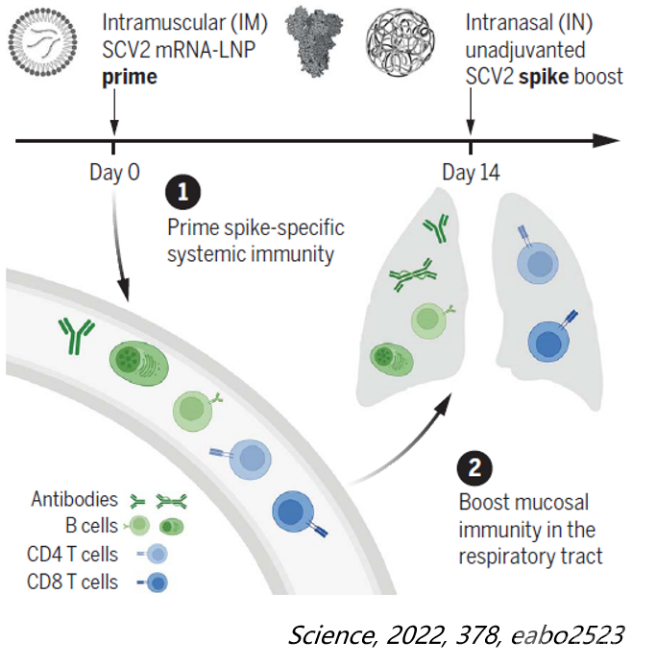
“I am confident that I can do a better job with Yale’s materials; this has been my dream ever since I left Yale in late 2014..” Thus, in the autumn of 2020, Deng Yang returned to China, secured his first round of financing, and began establishing Baida Liankang.
Under the constraints of patented delivery technologies, variations in material components are minimal, limiting the scope for innovation. Deng Yang cited cationic lipids in gene delivery materials as an example: “Cationic lipids are the core component of LNPs, and foreign companies have established extremely high patent barriers. It is difficult to break through these patent blockades merely by adjusting the proportion of cationic lipids.”
Building upon the materials developed at Yale University, Baida Liankang upgraded the polymer by incorporating a fourth monomer into the original three-monomer system. This modification altered the polymer structure and facilitated better control over molecular weight. Using in vitro synthetic biology approaches, the company employed immobilized enzymes to catalyze the synthesis of biodegradable cationic polyester-based gene delivery materials. The implementation of this concept proceeded more smoothly than anticipated, and around July 2022, the Baida Liankang team obtained their first batch of SuperPoly™ (SP) gene delivery material.
They found that SuperPoly™ (SP) gene delivery material is versatile for both in vivo and in vitro applications, primarily used for RNA delivery, but also applicable to the delivery of various other genes.This material demonstrates stable delivery efficiency for mRNA and circular RNA transfection at the in vitro cellular level, significantly outperforming the best commercially available transfection reagents. It exhibits excellent ethanol solubility, lower cytotoxicity, and a more environmentally friendly preparation process, while also being more amenable to scaled-up production., in terms of industrialization, it can either be integrated into existing lipid nanoparticle (LNP) manufacturing processes to replace cationic lipids for the preparation of Lipopolyplexes (LPP), or be used alone or in combination with other polymers for the industrial-scale production of polymer nanoparticles (PNP).
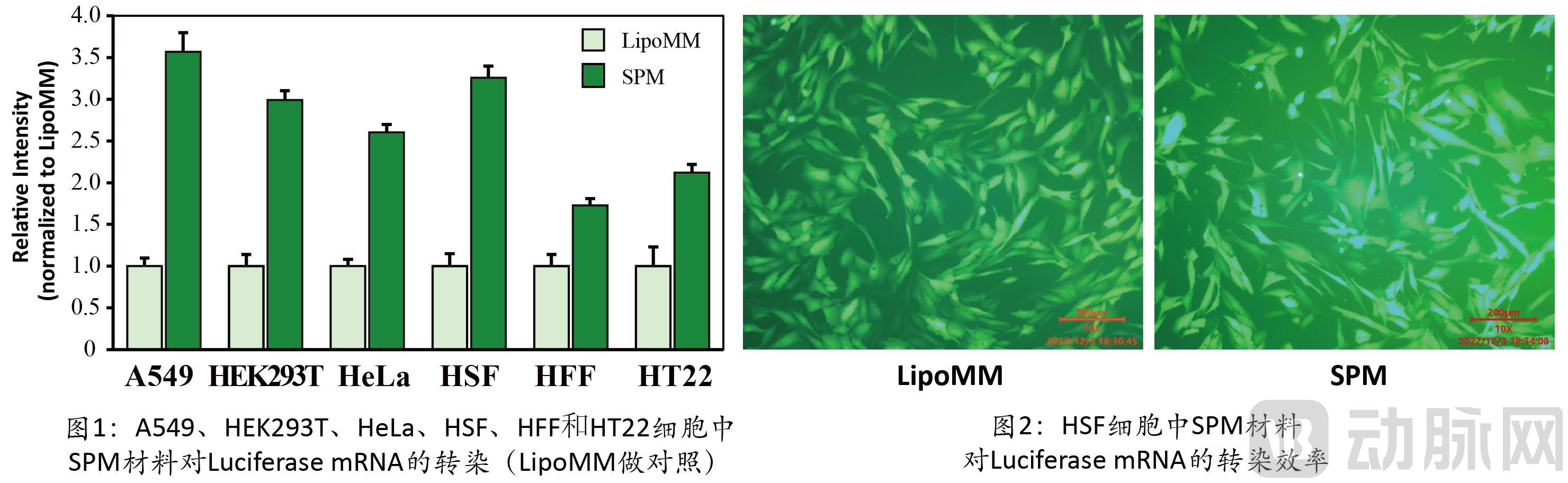
After more than a decade of incubation overseas, Dr. Deng Yang achieved successful results within just one year of returning to China, a feat he considers himself quite fortunate to have accomplished. In critical experiments, where there might be 100 possible approaches, the Baida Liankang team identified the optimal solution within their first two attempts. Much like his work a decade earlier in developing bioadhesive nanoparticle systems, Dr. Deng’s innate talent in biomaterials science played a pivotal role.
Baida Liankang holds independent intellectual property rights for this technology.“This may represent a significant breakthrough for our country in the gene therapy arena,” stated Dr. Deng Yang.SP™ gene delivery materials and delivery platforms can address the critical bottlenecks in gene delivery technology currently hindering RNA drug development.Meanwhile, he feels honored and excited to return to China to contribute to the development of biomedicine and the health of its people.
“Biomaterials are also utilized in the field of medical devices, including tissue regeneration, organoids, and scaffolds. In these contexts, biomaterials can even be the determining factor for the success of such projects.” Dr. Deng Yang believes that the role of biomaterials in the pharmaceutical industry deserves sufficient attention.
Transitioning from CRO Services to In-House Novel Drug Development, with a Planned Revenue of RMB 20 Million in 2023
During his tenure at the U.S. pharmaceutical company Insmed, Dr. Deng Yang accumulated extensive experience in gene delivery technologies. He is well-versed in a broad range of areas, from the industrial-scale manufacturing of lipid nanoparticles (LNPs) and polymeric nanoparticles to scalable targeted ligand conjugation techniques, as well as drug carrier characterization and preclinical animal studies.
Based on these validation results, Baida Liankang rapidly developed in vitro transfection reagents for mRNA, circular RNA (circRNA), DNA, and siRNA, and established mRNA delivery materials and platforms, as well as other in vivo gene delivery materials and platforms, for preclinical research and therapeutic applications. Currently, the company’s in vitro mRNA, circRNA, and DNA transfection reagents have entered the pilot-scale production phase and commercialization has commenced, with five orders secured in the two weeks preceding the Spring Festival. The in vivo mRNA and circRNA delivery materials and platforms are under discussion with several prominent domestic RNA therapeutics companies, with plans to make them publicly available following animal studies. Meanwhile, multiple research groups led by academicians and recipients of the National Science Fund for Distinguished Young Scholars are already engaged in collaboration discussions with Baida Liankang.
“The company plans to first enter the in vitro market for delivery materials this year and make an initial foray into related services, ‘hoping to achieve RMB 20 million in revenue in 2023, with material sales expected to account for RMB 12 million.’”
With the assistance of Plum Ventures, Dr. Deng Yang has connected with numerous friends in the business sector and has developed a detailed plan for the company’s business model. Dr. Deng Yang analyzes that platforms built upon this type of gene delivery material can serve not only basic scientific research but also early-stage development and manufacturing of gene therapies. Therefore,It can not only provide delivery materials to universities, research institutions, and innovative drug companies, but also offer full-chain services for gene therapies.。
In the field of medical devices, Baida Liankang is currently in discussions with leading domestic enterprises and has entered the equipment testing phase. Baida Liankang plans to continue expanding its market presence, stating, “If we develop high-quality instruments and equipment, we can also achieve mass production to help minimize costs for our partners.”
The short-term goal is to sell gene delivery materials and provide related services, while the long-term goal is to develop gene therapies.Deng Yang stated that the company must be self-sustaining from the outset, rather than relying solely on financing to pay its employees. The company may follow a development path similar to that of GenScript—starting with reagents and sequencing services in the early stages, and later establishing Legend Biotech to develop innovative drugs.
This year, Baida Liankang has also begun to explore drug development.Several companies have entered into drug co-development agreements with Baida Liankang, focusing on the development of nasal mucosal vaccines, 9-valent HPV vaccines, and RNA therapeutics for dermatological conditions.。
To support the company’s development, it is essential to continuously optimize team composition. In 2022, Professor Deng Yang submitted his resignation to the School of Pharmaceutical Sciences (Shenzhen) at Sun Yat-sen University in order to devote himself fully to his work at Baida Liankang. The Baida Liankang team currently comprises multiple technical experts in fields such as biomaterials, pharmaceuticals, and medical devices. Among its core members are two scientists specializing in preclinical and clinical trial design, who plan to return to China before the launch of pharmaceutical projects.
To further drive the company’s development, Baida Liankang needs to finalize its next round of financing as soon as possible. The funds will be used to industrialize gene delivery materials, advance the construction of a gene delivery platform, and complete the establishment of the sales team.