

Exclusive Interview with Professor Chu Wang of Peking University: Chemoproteomics Technology Driving Small-Molecule Drug Discovery
Throughout the history of medical and health development, multidisciplinary integration has always been a source of technological innovation, as best exemplified by the resumes of many Nobel laureates.
In October 2022, the Nobel Committee decided to award the Nobel Prize in Chemistry to American chemist Carolyn R. Bertozzi, Danish chemist Morten Meldal, and American chemist Karl Barry Sharpless, in recognition of their ““For the Development of Click Chemistry and Bioorthogonal Chemistry”Has made outstanding contributions.
Three scientists integrated knowledge from biology and chemistry to develop methods for the rapid, convenient, and accurate study of functional molecular reactions, thereby earning the Nobel Prize. In fact, this cutting-edge interdisciplinary technology has already been applied in numerous fields, including drug research.Chemical Proteomics。
Chemical proteomics is a very “young” discipline that was only recognized and began to flourish in the early 21st century, while research on chemical proteomics in China only gradually started a decade ago.
This story begins with a young biology student. In 2001, Wang Chu was working on his undergraduate thesis while also busy preparing for further studies abroad. At that time, he could never have imagined thatOver a decade later, he would independently pioneer research in a new discipline on this land.
Introducing Chemical Proteomics Research to China
In 2001, Wang Chugang graduated from the Department of Biology at the University of Science and Technology of China and immediately went to the United States for further studies, joining the University of Washington.Professor David Baker (elected to the U.S. National Academy of Sciences in 2006)laboratory. Professor David Baker is passionate about interdisciplinary research and places great emphasis on cultivating students’ interdisciplinary thinking and capabilities. When Wang Chu joined, the laboratory was investigating how toComputer-Aided Prediction and Design of Protein Structure and Function。
At the time, this was a highly avant-garde concept, and few biologists were willing to undertake such an endeavor. After all, analyzing proteins solely through an electronic display screen, without relying on any chemical reagents, seemed nothing short of fanciful. Nevertheless, Wang Chu took a keen interest in this approach. During his doctoral studies under the supervision of Professor David Baker, he achieved notable success and developed robust computational biological analysis skills.
In 2007, after earning his Ph.D. from Professor David Baker’s laboratory, Wang Chu began seeking a new research direction. At this time,Professor Benjamin Cravatt of the Scripps Research Institute in the United States (elected as a member of the U.S. National Academy of Sciences in 2014)The laboratory is recruiting researchers. Upon learning the news, Wang Chu volunteered himself and, leveraging his interdisciplinary background in computer science, chemistry, and biology, successfully joined theProf. Benjamin Cravattconduct postdoctoral research in the research group.
While working with Professor Benjamin Cravatt, Chu Wang felt that he was engaged in cutting-edge disciplinary research. This research is grounded in proteomics but delves even deeper—by integrating chemical probes with proteomic technologies, researchers not only identify protein types but also focus on protein activity states, structures, and ligand-binding capabilities, an approach now known as chemical proteomics.
At the end of 2013, Professor Wang Chu returned to Peking University and was appointed asDepartment of Chemical Biology, College of Chemistry and Molecular Engineering, initiated the establishment of a chemical proteomics research laboratory, filling an academic gap in this field within China.
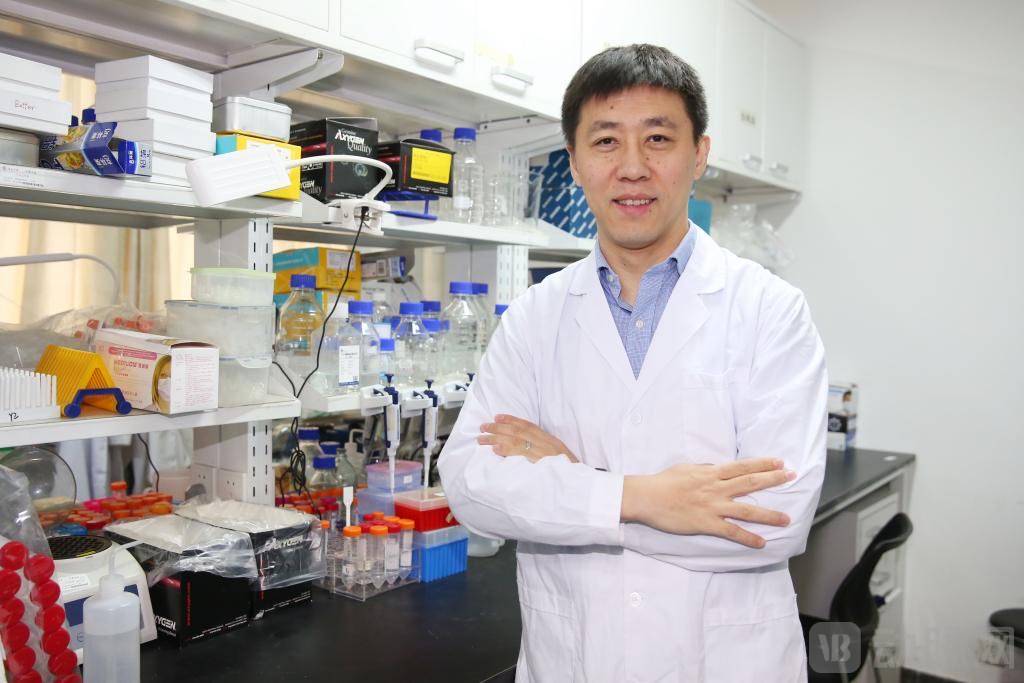
▲ Professor Wang Chu and His Laboratory
Peking University provided him with research funding, laboratory space, and a suite of cutting-edge instruments essential for conducting research, including high-resolution protein mass spectrometers. Meanwhile, Professor Wang Chu also holds appointments at the Peking University-Tsinghua University Center for Life Sciences and the Center for Synthetic Functional Biomolecules. These centers have furnished his research group with outstanding interdisciplinary talent and abundant academic resources, thereby facilitating research in frontier areas of cross-disciplinary life sciences.
With the efforts of Professor Wang Chu and support from various sectors, Peking University’s first research group dedicated to chemical proteomics has gradually moved onto the right track.
What Is the Utility of Chemical Proteomics?
Chemical proteomics is a branch of chemical biology that primarily utilizes chemical probes to explore protein functions at the omics level, including protein activity, substrate binding, and ligand accessibility. In the words of Professor Wang Chu:“Every protein in a living organism is like a sword; traditional proteomics focuses on the types and quantities of these swords, whereas chemical proteomics pays greater attention to what these swords can do and how to unsheathe the blades.”
Therefore, from the perspective of small-molecule drug development, chemical proteomics is a highly “practical” discipline and technology.
Humans have a centuries-long history of using small-molecule drugs to treat diseases. Many interactions between small-molecule compounds and protein molecules have been identified, enabling therapeutic effects through the modulation of protein function. However, current FDA-approved drugs target only approximately 800 targets, leaving a vast number of known disease-related targets “undruggable.” Meanwhile, the relationship between the functions of the majority of proteins and diseases still requires further exploration.
Therefore, identifying corresponding ligands (i.e., drug lead compounds) for a broader range of target proteins, and further developing corresponding drug molecules to modulate protein function for disease prevention and treatment, is a top priority in the field of drug research and development.
Starting from large-scale small-molecule libraries and employing various screening technology platforms to discover lead compounds against protein targets of interest is currently one of the primary strategies for developing “first-in-class” drugs. However, most existing drug screening technologies rely on purified proteins as the experimental system.
Target proteins often encounter numerous challenges during expression and purification, such as difficulties in selecting an appropriate expression system, achieving high purity, and maintaining structural integrity and biological activity. These challenges are particularly pronounced for membrane protein targets. Consequently, the initial step of target protein purification and preparation frequently becomes a critical bottleneck in drug discovery.
The advent of chemical proteomics technologies has revolutionized drug discovery fromPure Proteinintroduced into the systemLive CellsSystem. Taking the discovery of covalent drug lead compounds as an example, starting from a structurally diverse molecular library, once the cell system for screening (capable of stably expressing the target) is determined, screening experiments can be rapidly initiated. Treating with small molecules at the live-cell level ensures that proteins remain in their natural active state; subsequently, chemical probes are employed to capture and analyze the binding affinity of each small molecule to the target protein.
Leveraging the advantages of proteomic detection methods, a single screening experiment can enrich and detect the vast majority of cellular proteins in addition to target proteins, with precision down to the level of drug-binding pockets and amino acid residues. For instance, current related research technologies can cover more than 20,000 cysteine residue sites.
This is another advantage of the chemical proteomics technology platform, which distinguishes it from traditional single-target screening systems.This technology platform enables lead compound discovery for nearly all proteins in living cells, not only improving efficiency but also reducing risk to ensure that every screening experiment yields valuable results.
Professor Wang Chu stated, “This screening technology is akin to shooting ‘arrows’ at a ‘target.’ Since each lead molecule is not launched in a predetermined direction, if only a single fixed target is used, the probability of missing the target is high, and it remains unclear where each arrow has landed. However, by deploying multiple targets, at least one target will capture each shot, thereby allowing for precise mapping of the trajectory and target of every arrow.”
Certainly, in addition to the aforementioned applications, chemical proteomics technologies have also been widely employed in target discovery for bioactive molecules. Currently, R&D centers of international pharmaceutical companies such as Pfizer and Novartis are establishing and utilizing this technology platform. It can be said that this technology has transformed target discovery from“Experience Era” Advances to the “Precision Era”。
Phenotype-based drug discovery strategies have long played a pivotal role in the development of “first-in-class” therapeutics. However, once drug developers identify bioactive small molecules, they must devote substantial time and effort to “deconvoluting” their molecular mechanisms, namely, identifying the drug’s target.
Furthermore, “drug repurposing” is a direction of great interest to drug developers, as it can shorten the corresponding R&D cycle. However, whether drug targets remain consistent across different indication systems, and how to identify phenotype-related targets, are of significant importance for both drug repurposing and the elucidation of disease mechanisms.
“As introduced above, characterizing the interactions between small molecules and protein targets in live cells or even tissue systems is a strength of chemical proteomics technology. This is why, over the past decade, an increasing number of university research institutes and internationally renowned pharmaceutical development companies have begun to employ chemical proteomics techniques. Starting from a bioactive molecule and using disease- and phenotype-related cells as experimental systems, they design chemical probes to accomplish target discovery, thereby identifying one new target after another. I believe that in the future, chemical proteomics technology will be able to identify matching drug molecules for more proteins, helping to overcome more challenges in drug development,” Professor Wang Chu told VCBeat’s Orange Fruit Bureau.
“I encouraged him to become a professor, but he ended up as CEO”
In 2023, Professor Wang Chu will welcome a new cohort of students, prompting him to recall the early days when his laboratory was first established: “Back then, this place was just an empty room. I meticulously planned and procured every instrument and piece of equipment myself. Fortunately, I had a group of outstanding students.”
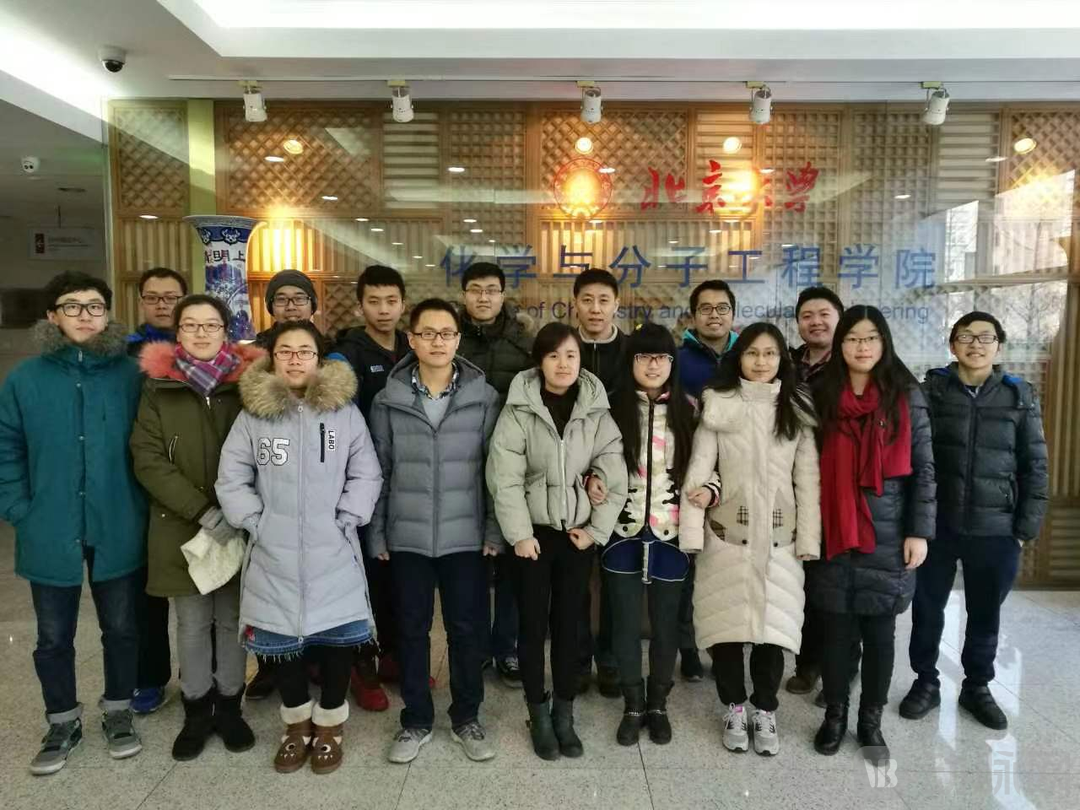
▲ Wang Chu’s research group (2016; Dr. Chen Nan is fourth from the left in the front row)
Among all students,Chen NanIt was the one that left the deepest impression on him. Chen Nan was among the first cohort of doctoral students supervised by Professor Wang Chu. When Chen first joined the laboratory, Professor Wang was still conducting research in the United States and could only provide remote guidance via phone calls and video conferences. To this day, Professor Wang often jokes with him, “You joined the lab even before I did!”
After earning his Ph.D. from Professor Wang Chu’s laboratory, Chen Nan went toProfessor Tarun M. Kapoor, The Rockefeller UniversityHe conducted postdoctoral research in the group, continuing his work in chemical proteomics while expanding into areas related to small-molecule drug discovery. In Professor Wang Chu’s eyes, Chen Nan has always been a highly resilient student with considerable scientific aptitude, and he often encouraged him by saying, “You could become a professor in the future.”
However, after returning to China, Chen Nan chose to start his own business—In 2021, ChomiX Biotech Co., Ltd. was established as China’s first biotechnology company dedicated to the research and development of innovative small-molecule drugs using chemical proteomics technologies.
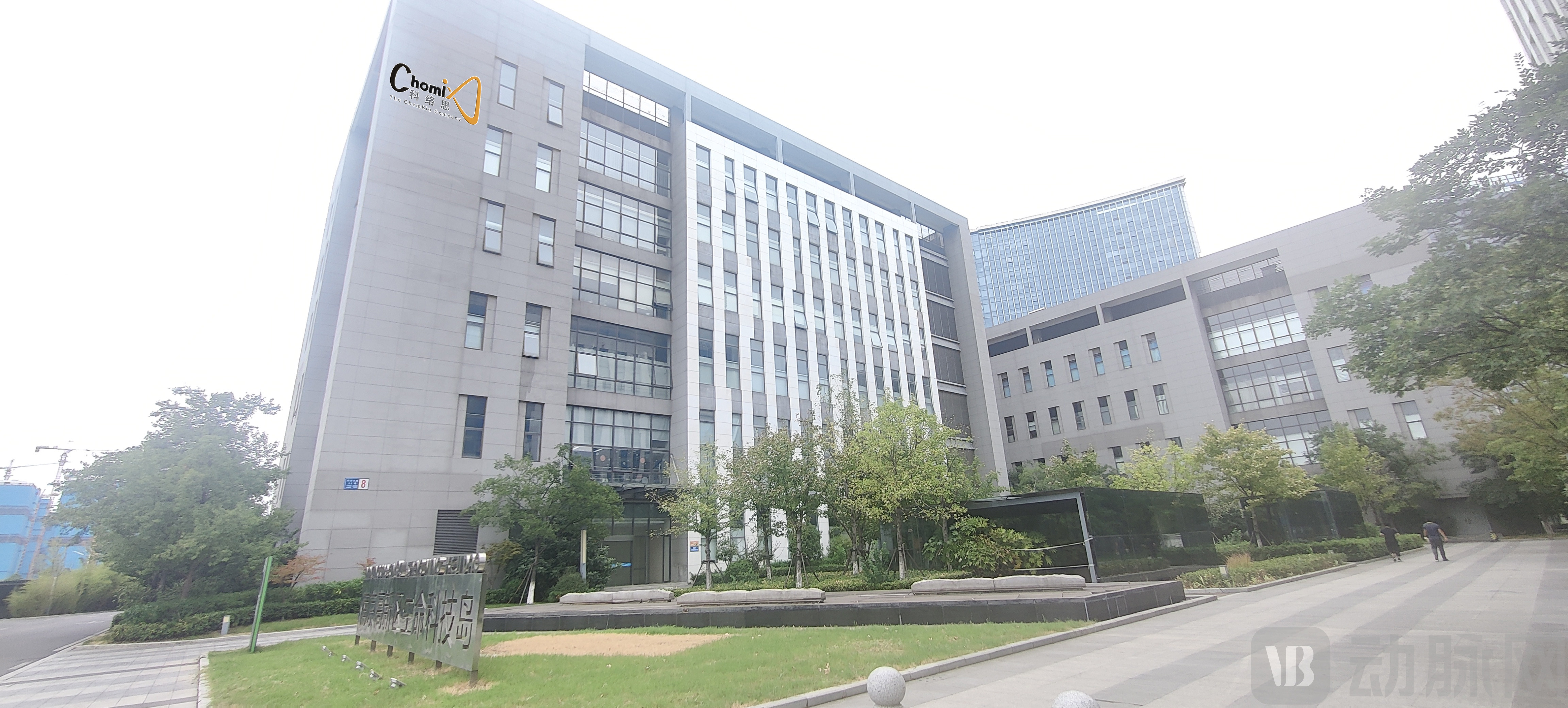
▲ ChomiX Biotech Co., Ltd.
ChomiX Biotech has, since its establishment, consistentlyCutting-Edge Chemical Proteomics TechnologiesCentered on this core, we have established a covalent drug lead compound screening platform and an active molecular target discovery platform. In the early stages of the company’s development, focusing on the field of innovative small-molecule drug discovery, we have promoted the industrial application of chemical proteomics technologies through collaborations with universities, research institutes, and pharmaceutical companies, thereby accelerating drug discovery and targeting more “undruggable” targets.
Initially, Professor Wang Chu lamented Chen Nan’s decision to “leave academia for business,” but over the past year of ChomiX Biotech’s development, he has identified new research directions—In the course of its collaborations with universities, research institutes, and innovative pharmaceutical companies, ChomiX Biotech has integrated the most cutting-edge basic scientific disciplines and current hotspots in drug R&D. Guided by these needs, the research direction of chemical proteomics has become more clearly defined.
Ultimately,Professor Wang Chu has also been appointed to join ChomiX Biotech., became the company's Chief Scientist, further strengthening the technical foundation of ChomiX Biotech. In addition to Professor Wang Chu,Academician of the Chinese Academy of Sciences and Professor Guo Zijian of Nanjing University; Professors Chen Peng and Chen Xing of Peking University; and Professors Zhao Jin, Li Jie, and Xie Ran of Nanjing UniversityAs leading scientific authorities have joined ChomiX Biotech, forming a “premium” scientific advisory team in the field of chemical biology in China, they are jointly promoting the industrial application of chemical proteomics technology in new drug development.
When discussing the future plans of ChomiX Biotech, Dr. Chen Nan, CEO, stated: “Over the next three to five years, ChomiX Biotech will continue to maintain close collaborations with universities, research institutes, and innovative pharmaceutical companies. We will further refine our two technology platforms, with a particular focus on building molecular libraries and constructing databases of drug–protein interaction networks in cells. Targeting more clinically challenging targets, we aim to develop innovative small-molecule drugs and contribute to the advancement of innovative drug development in China.”