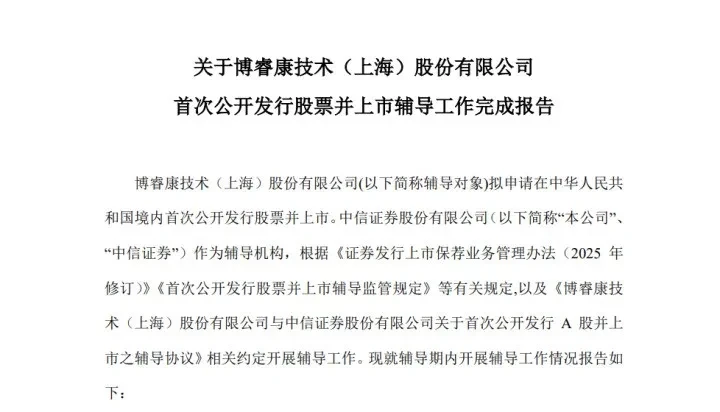
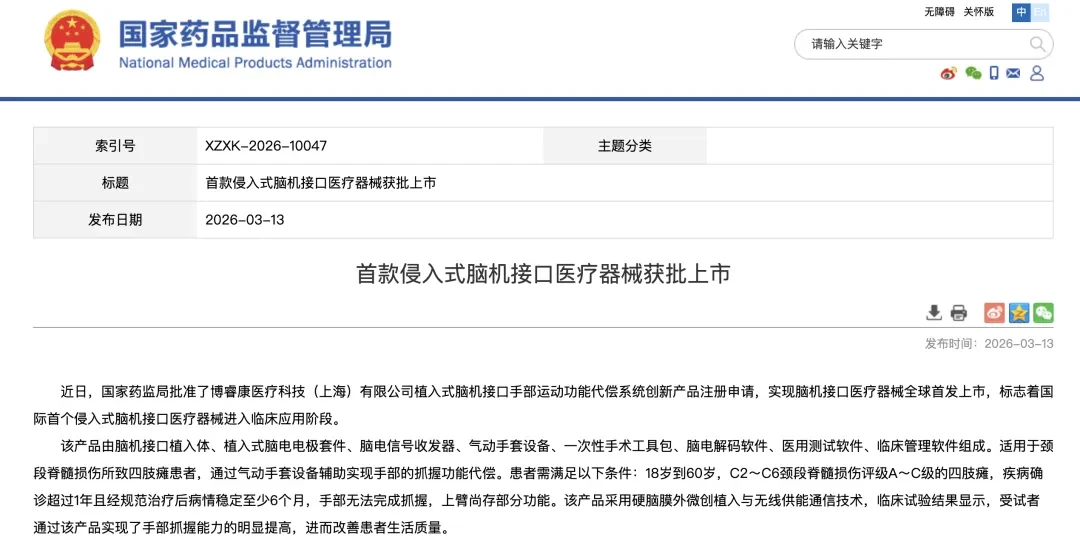
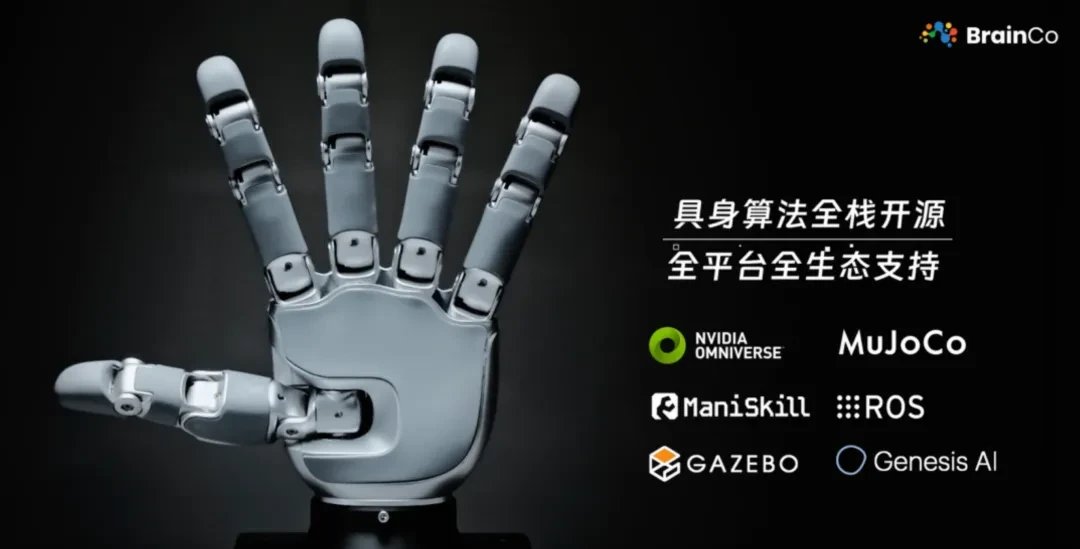
The race to become the first publicly listed brain-computer interface company is intensifying. On June 9, the IPO tutoring public notice system on the official website of the China Securities Regulatory Commission (CSRC) showed that the leading brain-computer interface companyNeuracleand its sponsoring broker, CITIC Securities, has submitted the "Report on Completion of Tutoring Work" to the Shanghai Securities Regulatory Bureau, with the company's tutoring status indicated as "Tutoring Work Completed." The company was established in 2011 year,The core team originates from the Neuroengineering Laboratory at Tsinghua University,NucleusCore ProductsThe minimally invasive implantable brain-computer interface system NEO hasObtainedThe World's First Implantable Brain-Computer Interface Registration Certificate. Public information indicates that its latest round of financing was the Series D+ round completed in 2025, with investors including Fortune Capital (Dachen Caizhi) and Zhongguancun Development Group, among others.Post-investment valuation reaches as high as RMB 3.5 billion to RMB 4 billion。 As early as this year,In late January, media outlets reported on another leading brain-computer interface companyBrainCoSubmitted the IPO application to the Hong Kong Stock Exchange on a confidential basis. BrainCoFounded in2015years, focusing on the global non-invasive brain-computer interface technology roadmap,It is the first unicorn in China's brain-computer interface sector. The company completed in January this yearApproximately RMB 2 billion in financing,Second in global brain-computer interface financing, second only to Musk'sNeuralink,andPost-money valuation as high as approximatelyUSD 1.3 billion (approximately RMB 8.8 billion). The frenzy extends beyond these two industry leaders, according toAccording to statistics from Yixian Insight,In the first five months of 2026, there were as many as 33 financing events in China’s brain-computer interface (BCI) sector, with total funding exceeding RMB 4.6 billion. The number of transactions has already surpassed the total financing rounds in this sector for the entire year of 2025, with the total financing amount being nearly three times higher. In the following section, we will focus on two leading brain-computer interface (BCI) companies currently in their IPO phase, primarily examining their technological pathways and commercialization progress. A Differentiated Showdown Between Two Technological Approaches Currently, there are two mainstream technological approaches in the field of brain-computer interfaces (BCI), and the two companies are the leaders in their respective paths. Neuracle is an invasive brain-computer interface, similar to Elon Musk’s Neuralink, that acquires precise neuron-level signals by implanting electrodes into the brain; however, this approach carries surgical risks. As a non-invasive brain-computer interface (BCI) technology, BrainCo typically trades off some precision for enhanced safety and ease of use. The company has developed a “solid-state gel electrode material” that achieves a signal acquisition accuracy exceeding 95% of that of medical-grade devices. In terms of product portfolio, Neuracle's core products areMinimally Invasive Brain-Computer Interface System NEO, featuring a "semi-invasive" approach that requires only minimally invasive surgery to implant a coin-sized device, thereby minimizing surgical risks. As of December 2025, the system has completed 32 implantation procedures, with a cumulative safe implantation duration approaching 5,000 days, and no device-related adverse events have been reported. BrainCoPossesses technologyIntelligent Bionic SeriesandSmart Health Series, the former is mainly oriented towards people with disabilities, including intelligent bionic hands andBionic leg; the latter targets a broader population, focusing on intervention and rehabilitation for brain disorders, as well as general brain health management. A comprehensive comparison reveals that,Neuracle inMedical SidePossessing exceptionally high technological barriers, as one of the earliest brain-computer interface companies in China, it primarily serves numerous hospitals, universities, and research institutions. And BrainCo, leveraging its non-invasive advantages inConsumer SideGreater commercialization potential, mediaPhysical Examination Report of the Company2025Annual revenue has reached the scale of hundreds of millions of yuan, primarily driven by core income from the dexterous hand business. Final Remarks: Although both companies are in the pre-IPO stage, they are pursuing different listing paths (STAR Market vs. Hong Kong Stock Exchange), with markedly divergent technological and commercial strategies, making it highly uncertain which will go public first. Looking forward to both parties in the subsequentMore details released in public disclosures allow us to gain further insights.Opportunities and Challenges in Industry Development. After all, neuroscience and artificial intelligence are two sides of the same coin; only through deep integration of these two fields can direct high-bandwidth connections between the human brain and artificial intelligence be truly realized. We believe that brain-computer interfaces will ultimately become the ultimate bridge between carbon-based intelligence and silicon-based intelligence.