

Pian Medical Advances Toward Global Leadership in Artificial Pancreas with Filing of IPO Prospectus
Not long ago, the headline “University of Cambridge Develops Artificial Pancreas to Aid Type 2 Diabetes Treatment” topped trending searches, once again elevating public attention on artificial pancreases to new heights.
An artificial pancreas system typically refers to an intelligent insulin delivery system comprising biosensors, continuous infusion devices, and control algorithms. Currently, the most common configuration consists of a Continuous Glucose Monitoring System (CGMS), an insulin pump, and a closed-loop algorithm. The CGMS continuously collects patient blood glucose data; the closed-loop algorithm issues commands to the insulin pump based on this glucose data and other relevant parameters; and the insulin pump promptly delivers insulin according to these commands, thereby achieving a closed loop from monitoring to treatment.
It offers significant advantages, including markedly improved glycemic control, enhanced quality of life for patients, avoidance of repetitive skin irritation and injury, and reduced complications. Consequently, it is widely recognized by both academic and industrial communities as the ultimate solution for diabetes treatment. Major international medical device and pharmaceutical companies, such as Medtronic and Abbott, have also strategically positioned themselves in this field.
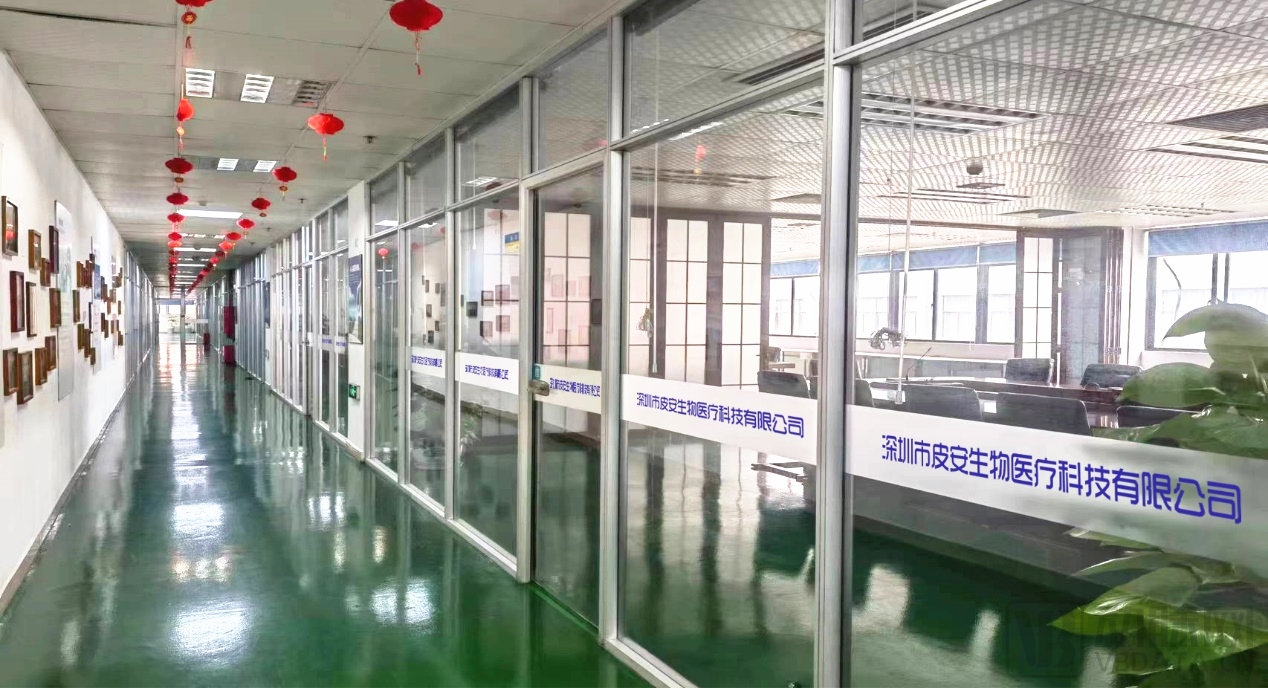
Multiple artificial pancreas systems have been launched in the United States and are rapidly gaining market penetration. In China, due to a later start, only one artificial pancreas system is currently available on the market, indicating substantial growth potential. Some ambitious startups have begun to position themselves in this sector and have achieved preliminary results.Shenzhen Pi’an Biomedical Technology Co., Ltd. (hereinafter referred to as “Pi’an Medical”)is a typical representative.
Since its inception, PiAn Medical has been committed to becoming a leading domestic manufacturer of diabetes medical devices. Its core products include continuous glucose monitors (CGMs), patch insulin pumps, and other medical devices.
The company’s name is derived from “picoampere,” the smallest unit of current generated when a CGM sensor converts glucose concentration into an electrical signal, while also connoting “robustness and safety.” The company’s team spans multiple disciplines, including chemistry, biology, materials science, mathematics, electronics, and chip technology, driving sustained innovation and boasting strong R&D capabilities.
Recalling the origins of his entrepreneurial journey, Yang Chao, founder of PiAn Medical, shared that seven years ago, his mother, who suffered from type 2 diabetes, was hospitalized. During her stay, her physician switched her treatment from oral hypoglycemic agents to insulin injections for glucose control. However, on the night of her first injection, she experienced hypoglycemia and fell into a coma. Fortunately, a nurse detected the condition in time during a nighttime round, averting a crisis. This incident gave Yang Chao a profound and firsthand understanding of the significant risks posed by hypoglycemia. At that time, the idea of working in the field of continuous glucose monitoring took root in his mind like a seed.
Around 2015, Yang Chao’s team partnered with a U.S. CGM company for product development. However, the partner’s stringent demands and biases further strengthened Yang Chao’s resolve to develop a domestically produced CGM, thereby eliminating reliance on foreign technology. With unwavering focus and strong execution, he founded Aishengsi Technology, which was recently renamed Pi’an Medical, to deeply cultivate the fields of diabetes management and out-of-hospital emergency care.
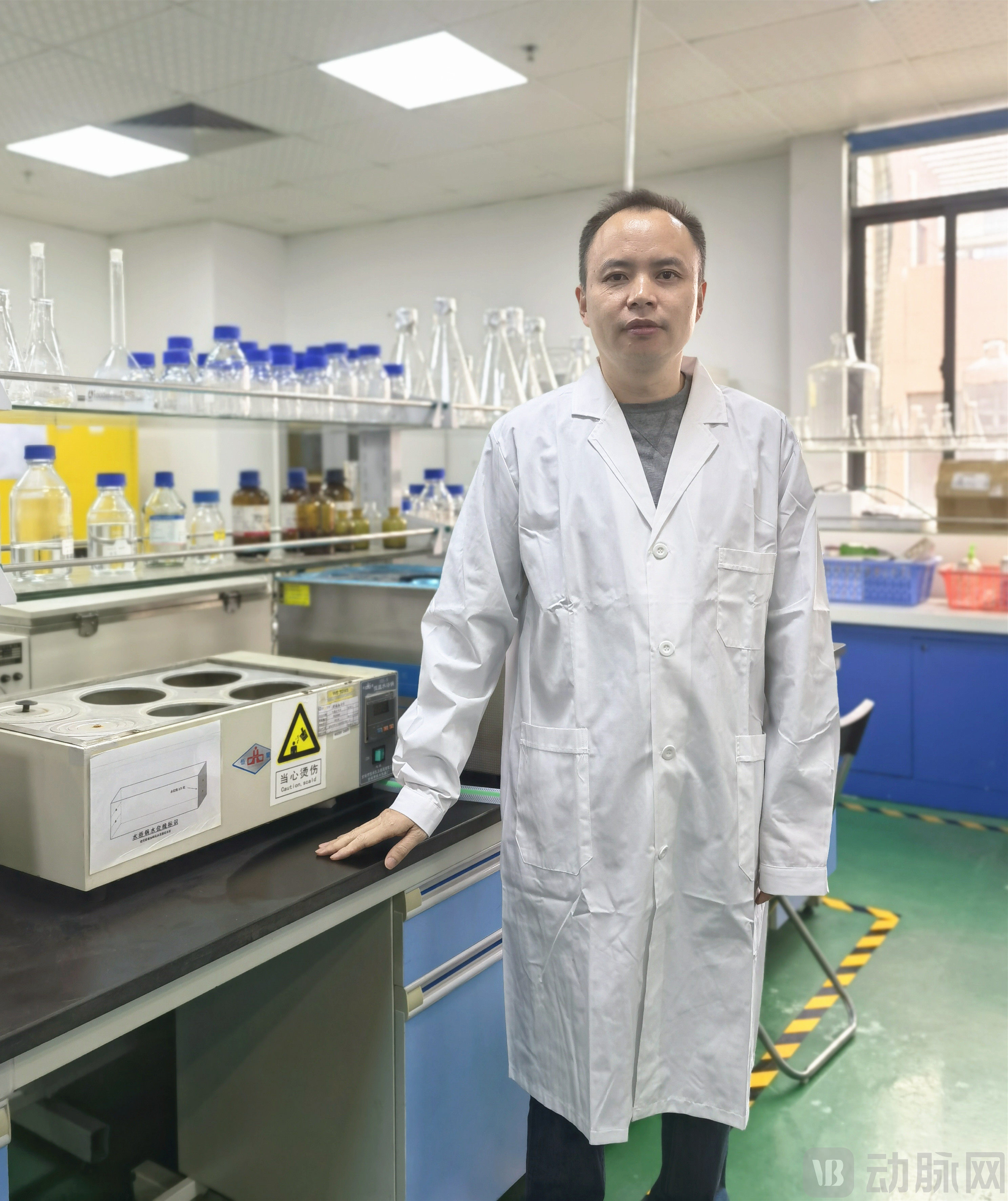
Yang Chao, Founder of PiAn Medical
According to Yang Chao, founder of PiAn Medical, insulin pump systems with infusion sets and insulin pens are currently the two mainstream categories of insulin delivery products. However, the former is bulky, lacks discretion, and features tubing that restricts patient mobility, is prone to occlusion, and carries a high price tag. The latter, while portable and convenient to use, requires multiple manual injections per day, offers limited dosing precision (with a minimum increment of 1 unit), and cannot provide continuous drug delivery. The emergence of the artificial pancreas effectively combines the advantages of both devices while overcoming their aforementioned limitations.
Pian Bio's artificial pancreas consists ofContinuous Glucose Monitor, Patch Insulin Pump, AI Big Data Center for Glucose Management, Medical-Grade Ambulatory Blood Pressure Monitoring WatchConsists of four parts.
Among these components, the continuous glucose monitor (CGM) serves as the foundation. It monitors patients' blood glucose levels in real time and uploads the data to a backend system, where intelligent algorithms analyze the information and issue injection commands to the insulin pump. Throughout this process, physicians can observe, analyze, and adjust treatment parameters in real time based on the backend data, thereby providing a dual layer of safety for effective glycemic control.
PiAn Medical's CGM adopts leadingThird-Generation Sensing TechnologyandInterpenetrating Polymer Hydrogels, with high monitoring accuracy (error within 9%), excellent biocompatibility, and strong resistance to protein adsorption. It has a long service life and can be used for continuous testing for 14 days.
In terms of insulin pump design, PiAn Medical has innovatively adopted a semi-disposable insulin pump design, making the product as thin and waterproof as a small leaf. To break down the high price barrier, PiAn Medical abandoned the traditional high-cost approach of "servo motor + gearbox," developed its own motor in-house, significantly reduced production costs and patient usage costs, lowered the threshold for first-time users, and made the product more accessible. Meanwhile, this product can simulate artificial pancreas drug delivery, enabling continuous automatic injection with a single-injection precision of up to 0.001 milliliters.
Medical-Grade Ambulatory Blood Pressure Monitoring WatchIt provides patients with 24-hour real-time ambulatory blood pressure monitoring and enables connection with family doctors to safeguard patient health. Furthermore, the product has obtained approval from the National Medical Products Administration (NMPA).
Pian Medical has independently developed both its hardware and software, establishing a closed-loop system for artificial pancreas monitoring, insulin delivery, and optimization. This comprehensive approach significantly enhances the accuracy, safety, comfort, and ease of use during blood glucose monitoring.
Ensuring the consistency and stability of CGM products is a challenge that every CGM company must face. To address this pain point, PiAn Medical has developed its own approach.
First, we drive R&D innovation from the foundational architecture. Whether it involves monomers, polymers, or intermediates, all are independently developed in-house, enabling precise quantification and control at every stage. Second, PIAN is equipped with advanced instruments and workstations, including NMR spectrometers, centrifuges, and reactors, to ensure quality throughout the reaction and testing processes. Furthermore, PIAN operates a fully automated production line as a “lights-out” factory, significantly enhancing production efficiency and stability through precise, controllable full-automation strategies.
According to data from the International Diabetes Federation (IDF), China had 140 million people with diabetes in 2021, making it the country with the largest diabetic population globally. The number increased by 56% from 2011 to 2021, and this figure is expected to continue growing at a high rate. However, the market penetration rate of Continuous Glucose Monitoring (CGM) systems remains very low. In 2020, the global CGM penetration rate among diabetic patients was approximately 5.3%, with about 45.8% in the United States, while in China it was only 0.6%. This represents a largely untapped market opportunity.
In the current global CGM market, multinational corporations such as Abbott, Medtronic, and Dexcom hold absolute dominance. China’s digital diabetes management sector is still in its early stages, with domestic CGM companies starting from a similar baseline.
Yang Chao explained to VCBeat that although some CGM companies have already received approval in China, comprehensively surpassing the industry giants requires breakthroughs in three key areas. First, obtaining domestic regulatory approval merely meets the baseline standard; to achieve comprehensive overtaking, companies must focus on strengthening their core competencies.Aligning with International Standards; secondly, CGM needs to simultaneously meetFlexibility (Soft Materials)、Product usage period: 14 days, calibration-free; finally,Reasonable Pricing, making it more affordable for a larger number of patients. This is also the goal that Pian Medical strives to achieve.
In terms of commercialization, Pian Medical has reached an agreement with a major domestic enterprise for the supply of 10 million sensors. As it moves forward, Pian Medical aims to bring together partners from across the industry chain and seek more like-minded collaborators. VCBeat also looks forward to seeing more responsible and capable Chinese medical device companies, like Pian Medical, take up the banner of domestic innovation and contribute Chinese wisdom to solving the challenges facing human development.